Western jewelry is an umbrella style, not one material, one motif, one region, or one level of craftsmanship. A small horseshoe stud, a turquoise-style pendant, a floral cuff, a leather-accented necklace, a geometric ring, and a dramatic cow-skull earring can all read as western for different reasons. Some communicate the look through recognizable ranch or rodeo imagery. Others use color, surface texture, scale, or a connection to denim, boots, hats, and open-landscape palettes.
The important distinction is between what you can see and what the evidence can prove. A blue-green center may create a turquoise-style color story without establishing natural turquoise. Silver-tone metal does not automatically mean sterling silver. Vintage-inspired texture does not establish age. A concho-like shape does not prove a specific maker, community, tradition, or origin. This guide uses a five-level Evidence Ladder to help you describe western jewelry accurately, choose the category that fits your body and wardrobe, and compare current products without turning an aesthetic impression into a factual claim.
The Western Jewelry Evidence Ladder
The Evidence Ladder separates five kinds of information that online listings often blur together. You can use the lower levels for style decisions, but you need higher-level documentation for material, maker, and provenance claims.
| Level | What you can evaluate | What it does not prove | Use it for |
|---|---|---|---|
| 1. Placement and silhouette | Earring, pendant, cuff, ring; compact, long, broad, layered, or articulated | Material, origin, comfort, weight, or age | Outfit balance and body-zone planning |
| 2. Motif and visual language | Cross, horse, cow skull, boot, hat, flower, moon, heart, or geometric medallion | Personal symbolism, belief, community, or maker intent | Theme strength and personal relevance |
| 3. Color and surface | Blue-green, silver-tone, gold-tone, darkened recesses, engraved, smooth, beaded, or leather-look | Natural stone, sterling silver, patina process, or genuine leather | Wardrobe coordination and style lane |
| 4. Documented composition and construction | Materials, plating, closure, measurements, stone or accent description, quantity, and assembly | Unstated maker, age, mine, nation, handmade process, or ethical claim | Compatibility, care, price comparison, and checkout |
| 5. Maker and provenance evidence | Named maker, documented community, origin, hallmarks, certificates, records, and traceable history | Anything beyond the scope of that evidence | Collecting, cultural attribution, authentication, and appraisal |
This ladder does not make fashion jewelry less enjoyable. It makes the description more accurate. A product can deliver a compelling western outfit role through color, shape, and motif without claiming a natural stone, precious metal, historic age, or culturally specific origin. When the higher levels matter to your purchase, pause until the listing or a qualified source supplies them.
Western Style and Southwestern or Native Jewelry Are Not Interchangeable Labels
Western-style jewelry is a broad commercial and fashion category. It can reference ranch life, rodeo imagery, desert color, frontier-inspired texture, country music styling, vintage Americana, or modern cowgirl fashion. Southwestern Indigenous jewelry traditions belong to particular peoples, artists, histories, techniques, and communities. A fashion item should not be assigned a specific Native identity because it uses a blue-green accent, silver tone, stamped-looking pattern, concho-like form, or squash-blossom-like silhouette.
Use the most precise supported phrase. “Western-style geometric earring,” “turquoise-colored pendant,” “silver-tone floral cuff,” or “vintage-inspired cross ring” describes visible and documented features. Terms such as Navajo, Diné, Zuni, Hopi, Pueblo, Native American, handmade, vintage, antique, sterling silver, and natural turquoise require appropriate evidence. If an attribution affects value or cultural meaning, consult the seller’s documentation and a qualified specialist rather than relying on a photograph or search result.
For historical context about identified works, the Heard Museum’s Southwest Silverwork resource shows why maker, period, form, technique, and community deserve specific documentation. That museum context should not be copied onto an unrelated fashion product.
Recognize Western Jewelry Through Six Visual Systems
1. Ranch and rodeo motifs
Horses, horseshoes, boots, hats, ropes, longhorns, cow skulls, stars, and saddlery-inspired details create the most literal western signal. They can make a compact piece read clearly even when the color and material are neutral. Literal motifs are useful when the wearer already has a personal connection to ranching, horses, rodeo, country events, or playful cowgirl styling.
Do not assume the wearer shares the motif’s meaning. A horse can represent an equestrian life, freedom, nostalgia, a favorite animal, or simply a graphic shape. A cross may be religious, cultural, decorative, or personal. Let the wearer define the relationship.
2. Turquoise-style color
Blue-green accents create strong contrast with denim, white, cream, black, rust, brown, and warm leather tones. That color relationship is one reason turquoise-style jewelry reads quickly in western outfits. Color is useful even when the listing does not document natural turquoise. Say “turquoise-style,” “turquoise-colored,” or use the product’s exact supported term until composition is clear.
3. Silver-tone, mixed-metal, and darkened texture
Bright or aged-looking metal surfaces, darkened recesses, rope-like borders, floral engraving, dotted texture, and raised geometric details can create a vintage-western impression. Appearance does not establish sterling silver, oxidation method, hand stamping, casting, age, or country of manufacture. Treat surface as a styling feature first and a material fact only when the listing says more.
4. Leather and cord
Leather-look straps, braided cords, layered strands, and saddle-inspired connections move the style toward ranch, boho-western, or festival territory. Check whether the material is documented as leather, synthetic, textile, or another composition. Review the closure, total length, moisture guidance, and contact with hair or clothing.
5. Floral and geometric forms
Flowers, petals, sunburst-like arrangements, hearts, moons, teardrops, crosses, and repeated geometric borders can feel western without showing a boot or horse. These forms are especially useful for someone who likes the color and texture of western style but does not want literal ranch imagery.
6. Statement scale
Broad earrings, visible pendants, stacked cuffs, and large ring tops make the accessory a focal point. Statement scale is not required, but it changes the outfit faster. A compact motif can support everyday wear; a broad silhouette can lead a concert, rodeo, party, or photo-ready look. Dimensions, weight information, movement, closure, and contact determine whether the scale is practical.
Use a Motif-by-Placement Map
| Motif or signal | Earrings | Necklaces | Bracelets | Rings |
|---|---|---|---|---|
| Turquoise-style color | Frames the face and reads in photos | Creates a centered neckline focal point | Adds color near denim, bags, and watches | Puts color into hand gestures |
| Cross | Visible and repeated as a pair | Central and potentially more symbolic | Can anchor a stack | Compact but close to daily hand activity |
| Horse or ranch image | Playful or highly literal | Creates a story pendant | Works as a charm or central plate | Needs enough top area to read clearly |
| Floral or geometric | Western texture without a literal ranch symbol | Supports layering and neckline rhythm | Repeats well across cuffs | Creates a visible top with flexible meaning |
| Leather or cord | Lightweight look but hair contact may matter | Strong ranch or boho-western direction | Casual texture with fit and closure questions | Less common; construction needs careful review |
The matrix is not a set of rules. It helps you decide where the western signal should live. If the face has a broad turquoise-style earring, the neckline can stay quiet. If a cross pendant carries the strongest meaning, use compact earrings. If a detailed shirt, hat, or scarf already occupies the upper body, move the focal point to the wrist or hand.
Choose a Western Style Lane
Modern minimal western
Use one compact motif, controlled geometry, or small blue-green accent with clean denim, tailoring, monochrome knitwear, or a simple dress. The western signal is present but does not dominate. This lane works well for a first piece and for wardrobes that avoid heavy layering.
Vintage-inspired western
Choose engraved-looking texture, darkened recesses, floral surfaces, teardrops, antique-tone color, or aged-looking metal. Describe it as vintage-inspired unless actual age is documented. Pair it with denim jackets, boots, patterned shirts, suede-look fabrics, or warm neutral layers.
Boho western
Combine turquoise-style color, beads, layered cords, leather-look accents, fringe, long drops, or mixed motifs. Leave spacing between moving pieces and check hair, bag straps, sleeves, and neighboring jewelry. Boho layering looks effortless only when the contact points are controlled.
Rodeo or concert western
Use one broad, high-contrast hero zone that remains visible across a venue or in photos. Test the jewelry with the actual hat, hair, neckline, jacket, bag, phone, and wristband. The country concert jewelry guide supplies a complete movement and venue map.
Romantic cowgirl
Floral forms, hearts, teardrops, soft blue-green color, compact crosses, and curved silhouettes create a gentler direction. Pair one textured piece with cream, soft denim, brown, dusty pink, muted green, or a flowing dress. A literal ranch motif is optional.
Statement maximalist
Layer motifs, metals, color, and scale deliberately. Repeat one connecting element—such as blue-green color, floral texture, or silver tone—so the combination has a visual sentence. Maximalism benefits from more measurement, not less: map pendant endpoints, earring movement, bracelet contact, and ring projection before wearing everything together.
Western Jewelry by Category
Western earrings
Earrings place the western signal beside the face. Studs and compact drops can support daily outfits; wide medallions, long leather-look forms, cow skulls, crosses, and turquoise-style statements can lead the look. Confirm whether the product requires pierced ears, whether the listing includes a pair, and what closure is documented. Compare length, maximum width, movement, and weight information with a pair you already tolerate.
Compare dimensions, closures and movement in Western Earrings when the face-level zone will be the hero.
Western necklaces
Necklaces connect the jewelry to the neckline. Pendant scale, chain or cord length, extender range, clasp, bail, and final endpoint determine how the piece works with shirts, dresses, jackets, and layers. A tall pendant can occupy the same vertical space as another necklace even when the chain lengths differ.
Use the live chain and pendant dimensions in Western Necklaces to map the full visible landing point.
Western bracelets
Cuffs, closed bangles, clasp bracelets, stretch pieces, and multi-piece sets need different measurement methods. A western cuff can carry engraving, floral forms, cross motifs, and turquoise-style accents in one concentrated zone. Check inner fit, opening, width, closure, permitted adjustment, watch contact, sleeve contact, and daily hand activity.
Compare constructions, wrist measurements and closures in Western Bracelets before styling.
Western rings
Rings deliver visible color and motif in a compact area, but they require the most exact sizing. Verify the size system, chosen finger, band width, setting profile, and whether an opening is decorative or designed for adjustment. Consider contact with phones, bags, desks, gloves, handwashing, and neighboring rings.
Use the Turquoise Rings collection to compare currently available silhouettes and product-page size information, then verify the selected ring’s documented fit, construction, care, price, availability, shipping, and returns before ordering.
Four Oroxen Western Jewelry Starting Points
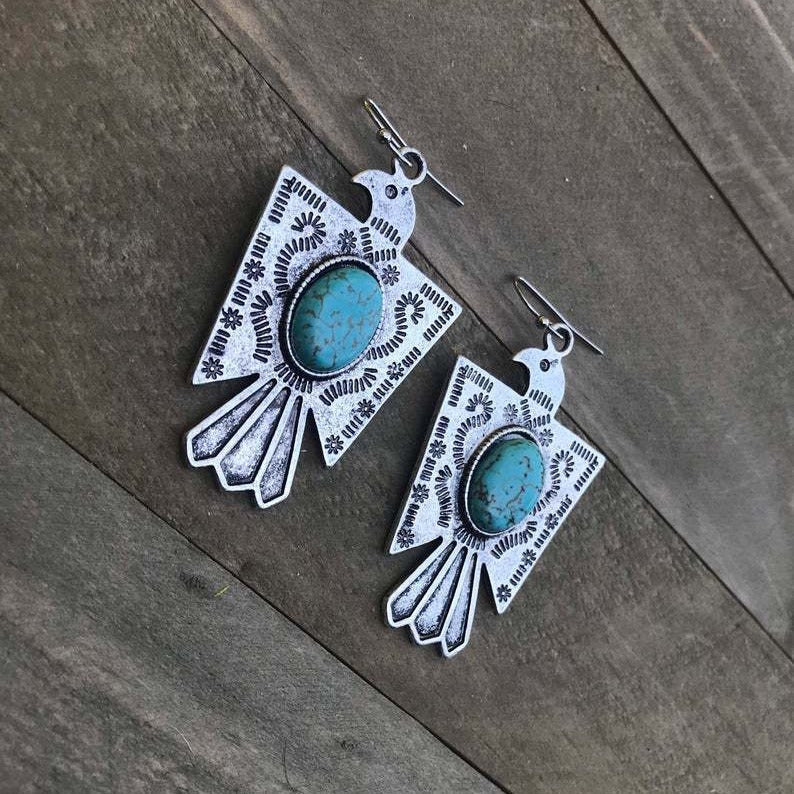
Turquoise Western Statement Earrings
The Turquoise Western Statement Earrings demonstrate a face-led western look: broad silhouette, turquoise-style center color, and vintage-inspired detailing. Use them when the neckline is visually quiet and the wearer already enjoys visible earrings. Review the current product page for options, closure, dimensions, materials, price, and availability.
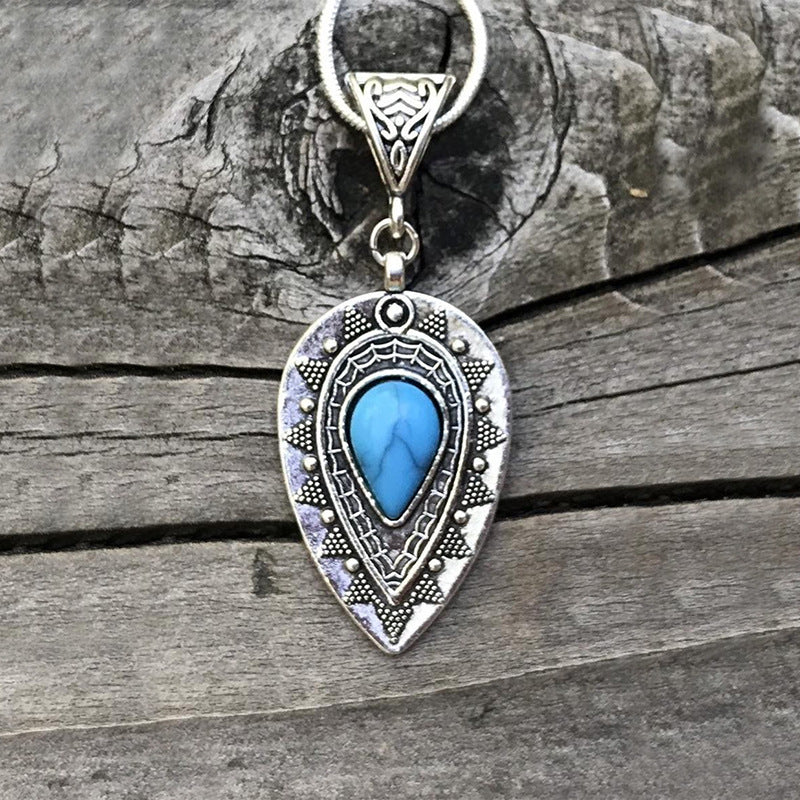
Turquoise Western Teardrop Pendant Necklace
The Turquoise Western Teardrop Pendant Necklace demonstrates a neckline-led approach. The centered blue-green accent and teardrop form can contrast with black, white, cream, denim, rust, and brown. Compare the current chain and pendant measurements with the intended neckline rather than assuming the product photograph predicts the endpoint.
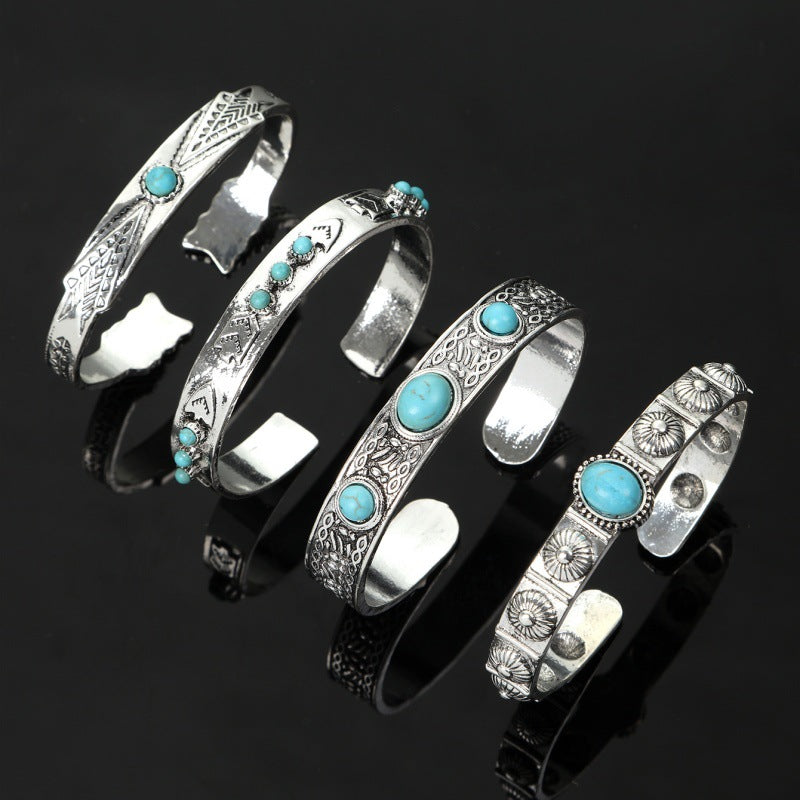
Turquoise Western Cuff Bracelet Set
The Turquoise Western Cuff Bracelet Set demonstrates wrist-level variation. A set can be used as one accent, a controlled pair, or a fuller stack after fit and contact are checked. Confirm the current set contents, individual construction, dimensions, opening, materials, and permitted adjustment before deciding how many pieces to combine.
Boho Vintage Geometric Cross Ring
The Boho Vintage Geometric Cross Ring demonstrates how one symbolic motif can place the western story on the hand. The cross should match the wearer’s preferences rather than an assumed meaning. Verify the selected size, band width, decorative profile, options, and adjustment guidance on the current page.
Compare these four placements in the curated Western Jewelry Bestsellers edit. The collection is designed as a compact starting point; the product pages remain the authority for current facts.
Build an Outfit with One Hero Zone
Divide the look into four jewelry zones: face, neckline, wrist, and hands. Give one zone the strongest color, motif, scale, or movement. A second zone may repeat one detail, while the other two remain quiet. This prevents recognizable motifs from competing and makes it easier to test comfort.
- Face hero: statement earrings, quiet neckline, one compact ring or no wrist stack.
- Neckline hero: visible pendant, compact earrings, simple wrist.
- Wrist hero: one cuff or controlled stack, clean earrings, high or detailed neckline.
- Hand hero: statement ring, compact earrings, optional simple chain.
A hero zone can be large or small. It is the zone with the clearest sentence. A compact horse stud may be the hero in an office outfit; a broad turquoise-style earring may be the hero at a concert. The method adapts to the wearer’s scale.
Six Everyday Outfit Formulas
White shirt, denim, and one blue-green accent
Use the white shirt as negative space and choose either earrings or a pendant. Repeat the accent once in a ring or belt detail only if the first piece remains dominant. This is a direct first step into western color without a full themed outfit.
Black dress and a centered pendant
A solid black dress gives the pendant contrast. Map its endpoint against the actual neckline and add the jacket after checking the collar and zipper. Keep earrings compact when the pendant is broad.
Knitwear and vintage-inspired earrings
Cream, oatmeal, muted green, brown, or rust knitwear supports aged-looking metal and floral texture. Check the earring edge against the collar and hair. Avoid stating that an aged-looking surface is antique.
Graphic tee and a wrist focal point
A graphic tee already supplies imagery, so move the jewelry story to one cuff or a controlled bracelet pair. Keep the active phone hand and watch position in mind. The look remains western without stacking several literal symbols near the shirt design.
Denim jacket and compact ring
Use one visible ring when the jacket collar, buttons, stitching, or patches already occupy the upper body. Check projection against pockets, zippers, and the phone. A compact hand-level motif can balance a detailed jacket.
Country concert layers
Add the expected hat, hair, bag, boots, fringe, jacket, and wristband before choosing the jewelry. Walk, turn, raise the phone, sit, and move the bag strap. Leave emotionally irreplaceable pieces at home when the environment is crowded.
How to Read a Western Jewelry Listing
- Category and quantity: confirm whether the listing is a pair, single piece, coordinated set, or multi-piece package.
- Dimensions: find total length, maximum width, chain or cord length, pendant height, bracelet interior, opening, band width, and setting profile.
- Construction: identify hook, post, leverback, clasp, open cuff, closed bangle, stretch element, adjustable section, or fixed band.
- Options: confirm the exact size, color, motif, quantity, and image selected before checkout.
- Materials: distinguish documented composition from color and style words.
- Movement and contact: consider hair, jaw, collar, neckline, bag strap, watch, desk, phone, gloves, and adjacent jewelry.
- Care: follow current instructions for water, sweat, cosmetics, cleaning, storage, bending, and separate packaging.
- Timing: read current processing, shipping, delivery, and return information before a dated event or gift.
If a fact affects allergy, fit, comfort, value, authenticity, or care and the listing does not answer it, do not fill the gap with the photograph. Ask, choose another product, or treat the unknown as a reason to wait.
Care Depends on Documented Materials and Construction
No single western-jewelry care method fits every product. Natural stone, stabilized stone, glass, resin, enamel, plated metal, base metal, sterling silver, leather, synthetic cord, adhesive, elastic, and mixed construction can respond differently to water, cleaners, heat, abrasion, cosmetics, and repeated bending. Use the current instructions for the exact item.
As a general organization method rather than a material promise, store pieces separately, close chains before storage, keep earrings paired, prevent broad surfaces from rubbing, and avoid crushing three-dimensional details. Put jewelry on after cosmetics when the product guidance supports that routine. Do not repeatedly reshape a cuff or open ring unless adjustment is explicitly permitted.
Independent Video: Silver and Turquoise Context
The following independent Arizona Experience video features silversmith and Navajo jewelry trader Mark Bahti discussing the origins of silver, turquoise, and other stones in contemporary Navajo jewelry. It provides cultural and material context for identified work; it does not authenticate, certify, or describe any Oroxen product. Keep that boundary clear while viewing.
Watch “Silver and Turquoise Jewelry” on YouTube. The publisher is responsible for the third-party content, and the video’s historical context should not be transferred to an unrelated fashion item.
A Ten-Step Western Jewelry Decision
- Choose the body zone: face, neckline, wrist, or hands.
- Name the style lane: minimal, vintage-inspired, boho, concert, romantic, or maximalist.
- Select one visual signal: motif, color, surface, leather or cord, or statement scale.
- Assign the hero: let one zone lead and the others support.
- Open the live page: read dimensions, construction, options, materials, quantity, care, price, and availability.
- Use the Evidence Ladder: remove any claim the available evidence cannot support.
- Compare a known piece: use an earring, necklace, bracelet, or ring you already wear comfortably.
- Test the full outfit: include hair, hat, collar, jacket, bag, watch, phone, and movement.
- Check timing and returns: protect event and gifting plans.
- Recheck the selected variant: confirm option, quantity, address, and current terms at checkout.
Frequently Asked Questions
What makes jewelry look western?
Usually a combination of silhouette, motif, color, surface, and styling context. Turquoise-style accents, silver-tone or mixed-metal looks, leather, engraved or floral texture, ranch imagery, crosses, geometric medallions, and statement scale are common signals. No single signal is required.
Is all western jewelry made with turquoise and silver?
No. Western-style fashion jewelry can use many materials and may create the look through color, shape, motif, or texture. A turquoise-colored center is not automatically natural turquoise, and silver-tone metal is not automatically sterling silver. Use the product specifications.
Is western jewelry the same as Native American jewelry?
No. Western-style is a broad fashion category. Native American jewelry is connected to particular artists, peoples, histories, and traditions. Do not assign a specific identity or origin from visual resemblance. Look for appropriate maker and provenance documentation.
What is a concho?
Concho and concha refer to an ornamental form with specific historical uses, often associated with decorated metal pieces on belts and western wear. A product with an oval or medallion-like shape should be called concho only when the description or evidence supports the term. For a focused discussion, read the concho earrings guide.
What is the easiest first western jewelry category?
Choose the category you already wear most. A moderate earring or pendant often introduces the style clearly, but the answer depends on piercing, comfort, necklace length, wrist fit, ring size, and daily routine. Familiar placement reduces uncertainty.
Can I wear western jewelry without western clothing?
Yes. A white shirt, black dress, solid knit, denim jacket, or simple tee can provide enough negative space. One accessory may be the only western element. This often makes the look easier to repeat.
Can I mix gold-tone and silver-tone western jewelry?
Yes, when the combination is deliberate. Repeat each tone at least once or use a mixed-tone hero piece as the bridge. Keep motif and scale controlled so the metal contrast has space. Verify materials independently from their color.
How many western motifs should I wear at once?
There is no fixed limit, but one literal motif usually communicates the theme. A second zone can repeat color or texture rather than adding another symbol. Maximalist combinations work best when one element connects the pieces.
How do I choose western jewelry as a gift?
Observe the recipient’s repeated category, color, scale, motif, and routine. Verify piercing, closure, length, wrist fit, ring size, materials, timing, and returns. Use the western jewelry gifts for her guide for the full Gift Friction Map.
How can I tell whether a product is authentic vintage, sterling silver, or natural turquoise?
A photograph and style title are not enough. Look for specific material, maker, hallmark, age, origin, treatment, and provenance information appropriate to the claim. For a valuable or culturally attributed piece, use a qualified specialist. This style guide is not an authentication service.
Final Checklist
- I know which body zone will carry the western story.
- I selected a style lane and one clear hero zone.
- I separated visible motif, color, and surface from material and provenance claims.
- I checked dimensions, construction, options, quantity, and documented materials.
- I tested hair, neckline, sleeves, bag, watch, phone, work, and movement contact.
- I used culturally specific terms only when the evidence supports them.
- I reviewed current care, price, availability, shipping, delivery, and returns.
Shopping specifically for women? Browse the two-tag Western Jewelry for Women collection, then use the RIDER purchase check to compare role, listing information, dimensions, everyday contact and return readiness.
Western jewelry works best when the visual story and the evidence are both clear. Choose the placement that fits your life, let one motif or color lead, and describe the product only as specifically as the current information allows. Turn the definition into complete denim, dress, boot, and workwear combinations with How to Style Western Jewelry. Then start with the Western Jewelry Bestsellers, compare Cowgirl Jewelry, explore Turquoise Jewelry, browse earrings, necklaces, bracelets, and rings, or return to the Oroxen home page.