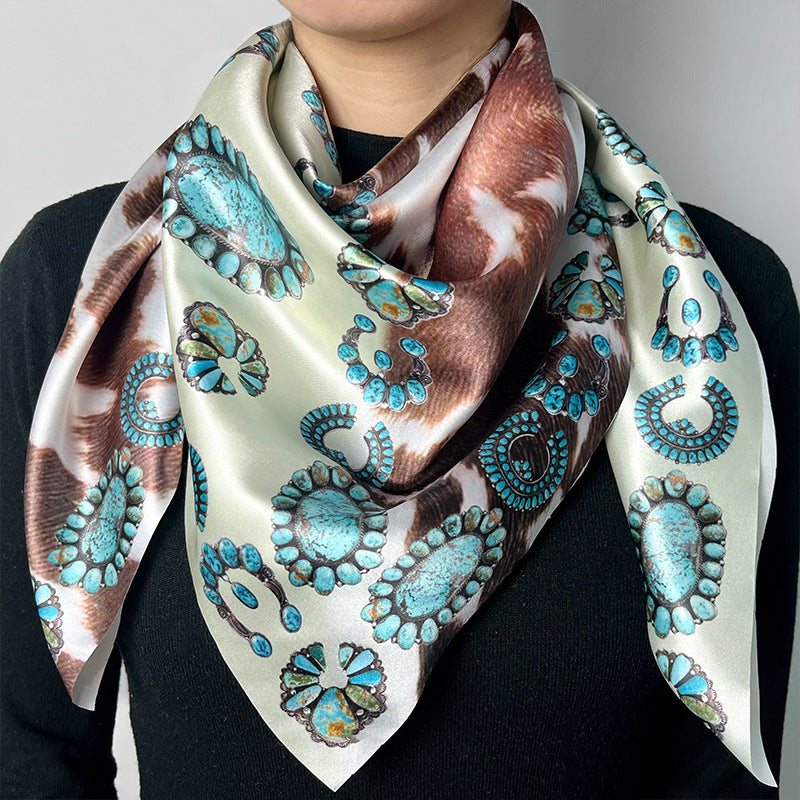
吧g'zhan
A capsule wardrobe is not a contest to own the fewest things. It is a small system in which most garments work together and each accessory has a repeatable job. For a cowgirl-style beginner, turquoise-colored jewelry can supply continuity across denim, white shirts, knits, dresses, jackets, and boots without requiring a different themed outfit every day.
This guide builds a seven-day capsule around two examples: the Western Turquoise Vintage Cross Jewelry for Women and the Western Turquoise Vintage Earrings. Their names and visible styling language describe appearance. They do not independently prove natural turquoise, metal identity, treatment, age, maker, origin, handmade status, or cultural affiliation.
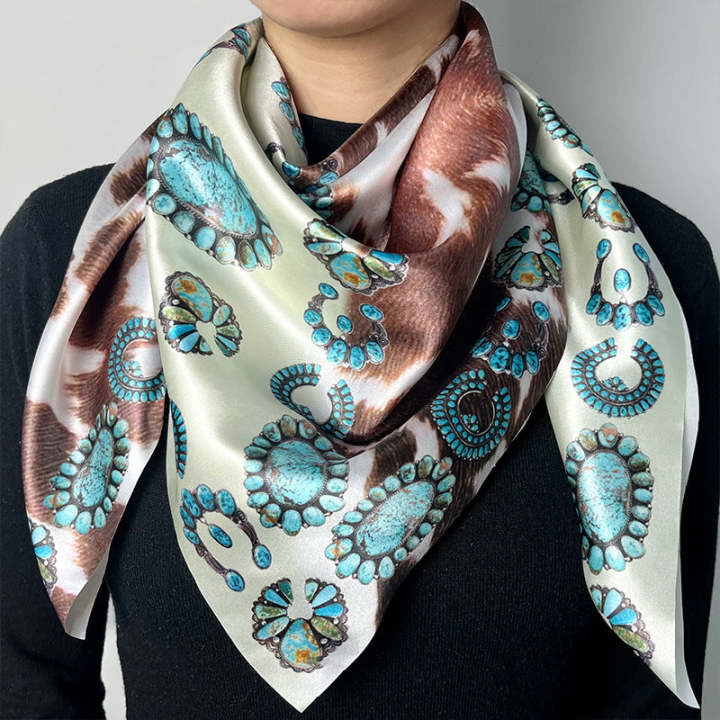
Quick Answer: Build Three Jewelry Roles, Not Seven Matching Sets
A practical capsule needs three accessory roles: a focal piece, a quiet supporting accent, and a no-jewelry or minimal-jewelry option. One turquoise-colored necklace can lead an outfit with a plain shirt. One earring design can bring color near the face when the neckline is already busy. A bare wrist or unadorned neckline keeps the system flexible.
Begin with eight garments, two footwear choices, one belt, one everyday bag, and no more than two jewelry products during the first test week. Photograph every combination you actually wear. The Turquoise Jewelry Guides hub can answer later questions, but the capsule itself should remain easy enough to assemble without consulting a mood board each morning.
The Eight-Garment Cowgirl-Style Starter Capsule
Choose garments already compatible with your climate, work, mobility, laundry routine, and personal dress rules. A useful starting set is:
- A white or cream button-front shirt.
- A quiet T-shirt or tank in white, charcoal, or warm neutral.
- A denim shirt or lightweight chambray layer.
- A dark knit, cardigan, or simple sweater.
- Mid- or dark-wash straight jeans.
- A second bottom such as black jeans, a denim skirt, or a neutral trouser.
- A simple dark dress.
- A denim, suede-like, leather-like, or canvas jacket appropriate to your conditions.
Add boots or loafers and one lower-profile casual shoe. This is a framework, not a uniform. Riders, office workers, travelers, parents, students, and people with sensory or mobility needs will make different substitutions. Function outranks the aesthetic label.
Choose a Color Bridge Instead of Matching Everything
Turquoise-colored detail often works as a bridge between blue denim and warm brown footwear, but it does not need to match either one precisely. Repeat the color once or let it stand alone. Too many near-matching blue-green accessories can turn a capsule into a coordinated costume and reduce the number of useful combinations.
Look at contrast as well as hue. A dark necklace may disappear against a black knit but become clear on white cotton. A visible earring can organize the face when a jacket introduces texture at the shoulders. For gender-inclusive selection questions and wearer-led styling, the turquoise jewelry FAQ for individual wearers offers a transferable decision method.
Use the Cowgirl Jewelry Collection as a Role Map
Browse the Cowgirl Jewelry collection with one role written at the top of your notes: “face-level accent,” “neckline focal point,” “wrist rhythm,” or “small repeatable detail.” This prevents visually similar items from entering the capsule without a reason.
Thumbnails can help compare silhouettes and color distribution, but they cannot establish fit, component identity, finish, construction, stone treatment, care, or durability. Open the exact product page and selected option. When a necessary specification is missing, label it unknown and ask. A small wardrobe does not benefit from a “versatile” accessory that is uncomfortable or undocumented in a way that matters to the wearer.
Product Role 1: A Cross-Design Neckline Focal Point
During the latest page review, the Western Turquoise Vintage Cross Jewelry for Women displayed $112.11 USD and two visible size choices labeled 90cm and 52cm, with 52cm selected. The page described Western, turquoise, and vintage styling for everyday, Western-inspired, occasion, and gift contexts. Price, selection, and availability may change, so verify them on the live listing.
The visible copy did not clearly state whether the two lengths map to otherwise identical products, the pendant dimensions, total mass, closure, chain or cord components, decorative components, finish, construction, treatment, or care. “Cross,” “turquoise,” and “vintage” should not be expanded into claims about age, faith, origin, material, or maker without explicit documentation.
Give this product one capsule role: neckline focal point. Test the selected length with the white shirt open at the collar, the quiet T-shirt, the dark knit, and the simple dress. Use a mirror and a conversation-distance photograph to check whether the pendant sits on fabric, crosses a neckline edge, disappears under a collar, or collides with buttons. Do not order a length based only on the model image; measure a necklace you already own and compare.
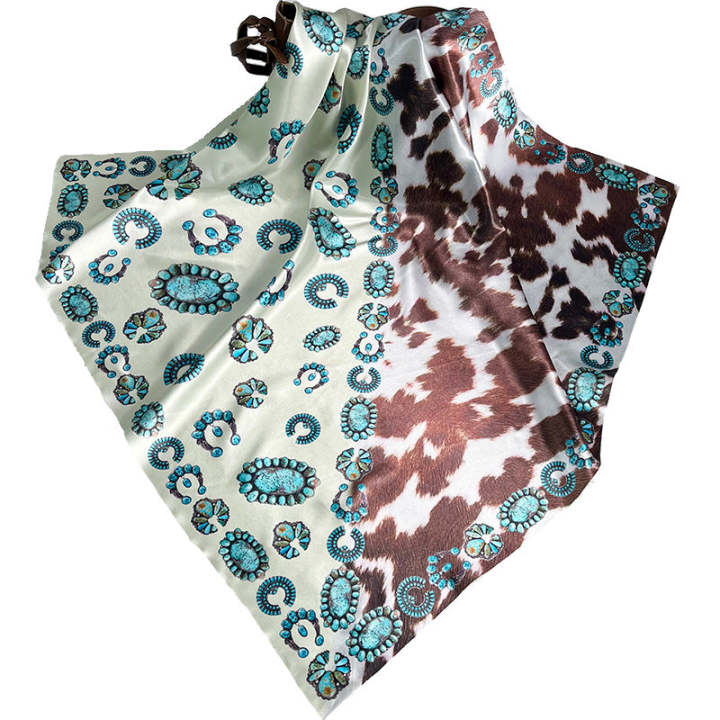
Four Outfit Cards for the Necklace Role
Card A: White Shirt and Straight Jeans
Open one or two buttons only if comfortable and appropriate. Let the necklace occupy the center line, keep earrings quiet, and choose a simple belt. If the pendant overlaps buttons awkwardly, change the shirt opening or test the other documented length rather than forcing the styling.
Card B: Dark Knit and Denim
The plain knit offers a broad background. Check whether the necklace remains visible and whether its texture catches the fabric. Avoid using a delicate knit until construction and snag risk are understood.
Card C: Simple Dress and Jacket
Use the necklace to create the Western note while the jacket supplies structure. Remove it if the lapel, zipper, scarf, and pendant compete at the same point.
Card D: T-Shirt, Denim Shirt, and Black Jeans
Leave the denim shirt open as a frame. The necklace should remain the central detail; an ornate buckle, large earrings, and a patterned bag are optional, not requirements.
Product Role 2: A Face-Level Accent
The Western Turquoise Vintage Earrings page displayed $126.25 USD and seven visible selections labeled Design 1 through Design 7 during review. The checked option was Design 1. The page described Western, turquoise, and vintage styling for everyday, Western-inspired, occasion, and gifting contexts.
The visible listing did not clearly provide a design-by-design inventory, exact height and width, total drop, projection, per-earring mass, attachment and backing, complete skin-contact and decorative components, finish, construction, treatment, or care. Map the selected label to its correct image and request missing facts before making decisions about comfort, sensitivities, value, or wear duration.
Give the earrings a different job from the necklace: bring a controlled accent near the face when the necklace stays home. The first week is a test of roles, so avoid wearing both products together immediately. Once each works independently, try a paired look with one element deliberately quieter.
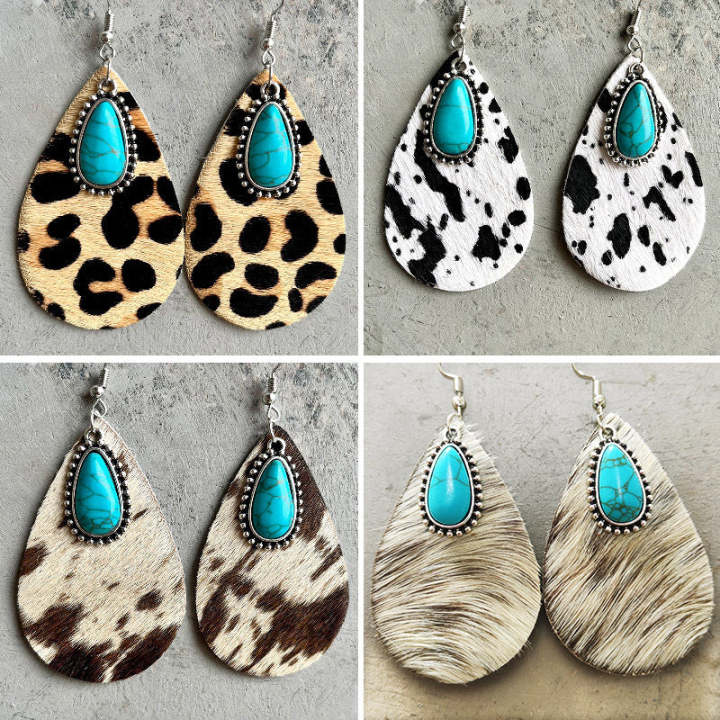
Three Outfit Cards for the Earring Role
Card E: Buttoned White Shirt and Dark Jeans
Keep the neckline closed or minimally open, skip the necklace, and let the earrings provide the highest face-level contrast. Test them with glasses, hair movement, a phone, and the shirt collar.
Card F: Dark Dress and Neutral Footwear
Use the earrings as the color event. A bracelet or ring can repeat texture only if it remains subordinate. The result can feel dressier without requiring a large jewelry set.
Card G: Denim Shirt and Neutral Bottom
Because denim already supplies blue, use a full-length photograph to determine whether the earrings are distinct or merely blend into the shirt. A warmer lip color, belt, or footwear may create balance without adding more jewelry.
A Seven-Day Rotation That Tests the System
| Day | Clothing formula | Jewelry role | Question to record |
|---|---|---|---|
| 1 | White shirt + jeans | Necklace focal | Does the selected length clear the buttons? |
| 2 | Dark knit + jeans | Earring accent | Is the attachment comfortable for the planned hours? |
| 3 | T-shirt + second bottom | No statement jewelry | Does the capsule still feel complete? |
| 4 | Dress + jacket | Necklace focal | Do the jacket and necklace compete? |
| 5 | Denim shirt + black jeans | Earring accent | Does the color remain distinct from denim? |
| 6 | White shirt + second bottom | One product, alternate styling | What changed with sleeves or neckline? |
| 7 | Best clothing formula | Optional controlled pair | Can one jewelry element remain clearly quieter? |
How to Use the Turquoise in Rings Video Responsibly
The YouTube video “Turquoise in Rings” by Turquoise in America shows a range of turquoise set in fine handmade American Indian jewelry from the Southwest, according to the channel's description. Its useful capsule lesson is visual rather than product-specific: scale, setting shape, color pattern, and overall presence can vary widely even within one broad jewelry subject.
That context must not be transferred to the Oroxen examples. The video does not authenticate, identify, price, date, or document the two products discussed here. It also does not make all turquoise-colored jewelry interchangeable with the specific cultural and handmade work it presents. Use it to practice careful observation and to understand why exact documentation matters.
Five Capsule Mistakes That Create Closet Friction
Buying Multiple Pieces for the Same Role
Three large turquoise-colored necklaces may all be attractive, but they compete for the same outfits. Fill a missing role before duplicating one already covered.
Calling Every Product “Everyday”
Everyday suitability depends on mass, fastening, movement, materials, duties, and individual tolerance. Marketing language does not replace a wear test.
Matching Every Western Detail
A cross motif, turquoise-colored accent, decorated buckle, boots, fringe, hat, and patterned bag do not all need to appear together. The focal-point method in the boho turquoise focal-point guide helps assign hierarchy.
Ignoring the No-Jewelry Outfit
A capsule should work when jewelry is unsafe, uncomfortable, restricted, or simply unwanted. If the clothing collapses without accessories, revise the garment mix.
Treating a Product Image as Documentation
Photographs cannot prove exact size, mass, composition, finish, treatment, durability, or origin. Keep “observed” and “verified” facts separate.
Fit, Safety, Care, and Cultural Respect Checklist
- Confirm the exact product option, current price, and availability.
- Request numerical dimensions, mass, closure or fastening, and intended fit.
- Request complete skin-contact and decorative components plus finish.
- Ask whether turquoise language refers to color, style, or a documented material.
- Obtain product-specific care instructions before using cleaners, water, heat, or abrasion.
- Remove jewelry for activities where snagging, impact, contamination, or equipment rules create risk.
- Do not attribute tribal identity, sacred meaning, handmade status, or regional origin without reliable documentation.
Stop wearing a piece that causes pain, numbness, broken skin, swelling, or a suspected reaction. A styling article cannot diagnose a medical condition or guarantee compatibility.
Frequently Asked Questions
How many jewelry pieces belong in a beginner capsule?
There is no universal number. Begin with two products serving different roles and one deliberate minimal option. Add only after repeated outfits reveal a genuine gap.
Can one necklace work across different necklines?
Possibly, but test the exact length against each neckline. Buttons, collars, fabric texture, pendant scale, and wearer proportions change the result. A stated length is useful only when mapped to the selected option.
Should the necklace and earrings be worn together?
Test them separately first. When paired, decide which leads and reduce the other. Comfort, attachments, scale, hair, and neckline determine whether the combination works.
How does a bracelet enter this capsule later?
Add it only if the capsule lacks a wrist role. The turquoise bracelet checklist provides a sleeve, movement, and stacking test before expansion.
Where should a beginner browse next?
After defining a missing role, compare the Western Jewelry collection. Keep a shortlist rather than adding several visually similar candidates at once.
Final Capsule Rule: Repeat Outfits Before Adding Products
A strong capsule becomes easier with repetition. Wear the same necklace with four clothing formulas, the same selected earring design with three, and one minimal outfit without either. Record comfort, compliments only as optional feedback, adjustments, snagging, and whether the piece made dressing faster.
Start at Oroxen when you have a defined role to fill, verify the exact selected option, and keep unknown facts visible. Cowgirl style can be expressive without being crowded; a small, honest system often creates more usable outfits than a drawer of unassigned accessories.