A turquoise-colored necklace can be an easy purchase to admire and a difficult purchase to evaluate. Product images answer the first question—“Do I like the look?”—but they may not answer where the pendant lands, which option appears in each photograph, what the listing actually confirms about materials, or whether the necklace can be returned after a fit problem. A good buying process closes those gaps before checkout.
This guide uses an evidence ladder rather than a list of universal claims. You will separate observed design from documented product facts, create a full-size landing-zone test, compare two current Oroxen necklace examples, calculate realistic use, inspect the return path, and prepare questions for anything the listing leaves unclear. “Turquoise necklace” is treated as shopping and style language unless the exact product page explicitly documents more. Color, pattern, and a product title do not independently establish a stone, treatment, metal, age, value, or origin.
Quick Answer: Complete the Evidence Ladder
Before buying, place each important belief on one of four rungs. The first rung is visible: you can see a teardrop, cross, geometric outline, blue-green area, chain, or color option in current images. The second is listed: the product page explicitly states a size, design, material, care direction, shipping condition, or return term. The third is confirmed: the seller answers a precise question about the selected item. The fourth is professional evidence: an independent expert, test, or formal documentation supports a claim that materially affects value.
Do not move a belief upward without evidence. A blue-green center may be visible, while natural turquoise remains unconfirmed. “Vintage-inspired” may be listed, while historical age remains unproven. Use the Turquoise Jewelry Guides hub for related decisions and the live Western Necklaces collection for current options. The product page at checkout remains the final source for price, availability, options, shipping, returns, and care.
Define the Purchase Before Comparing Products
Write a one-sentence job description for the necklace. Examples include: “a central pendant for plain shirts,” “a short accent that stays above a work neckline,” “a western-themed gift with an easy exchange path,” or “an occasional cross motif for concerts and dinners.” A product cannot be evaluated fairly until its intended job is known.
Add three non-negotiables and three preferences. Non-negotiables might include a documented length range, a specific motif, compatibility with a neckline, a stated material because of sensitivity, delivery before an event, or a return policy that permits a fit check. Preferences might include blue-green color, antique-silver appearance, a teardrop outline, layering potential, or a particular price range.
This distinction prevents a common error: rejecting a visually suitable necklace because it lacks a preference while accepting another that fails a true requirement. If the recipient needs a certain chain length, attractive photographs cannot compensate for missing fit information. If natural turquoise is essential, style language cannot replace material documentation.
Measure the Landing Zone, Not Just the Neck
Necklace fit involves the wearer, the chain, the pendant, and the clothing. A nominal chain length does not reveal exactly where a heavy pendant will settle, how an extender is used, or whether the piece crosses a collar, button, seam, or neckline. Begin with the outfit that will be worn most often.
Use a plain cord or ribbon to mark possible lengths. It should rest lightly; do not tighten it. Attach a paper shape approximating a small, medium, or broad pendant. Test the cord with a crew neck, open shirt, dress neckline, and outer layer. Sit, turn the head, raise the arms, and add the usual bag. Photograph the positions that remain visible and comfortable.
Record the vertical landing point rather than relying only on a circumference number: “two fingers below the collarbone,” “inside the open shirt,” or “above the jacket’s top button.” When the product listing documents dimensions, compare them with this position. When it does not, ask. Do not estimate physical size from a zoomed photograph, because image cropping makes very different necklaces fill the same screen area.
Audit the Product Gallery as a Sequence
Open every image in order and write what new information each one supplies. The first image may establish the main presentation. A second view may show profile, chain, closure, alternate design, or scale. Repeated images do not add evidence. Lifestyle photographs help with styling but may not provide accurate measurement or selected-option identification.
Use a simple gallery audit:
| Image question | Useful evidence | Unresolved issue |
|---|---|---|
| Which option is pictured? | Label, thumbnail order, or option-specific change | Main image may not represent the selected design |
| What is the outline? | Front and angled views | Dimensions may still be unknown |
| How is it worn? | Visible placement against a person or garment | Model proportions and chain adjustment can differ |
| How does it close? | Clear rear or clasp view | Closure may not be shown |
| What is it made from? | Nothing conclusive from color alone | Requires documented specifications |
If the gallery cannot connect option names to photographs, ask for clarification. Buying the wrong design because the first image was treated as universal is avoidable.
Read Product Language Literally
Words such as western, boho, vintage, geometric, statement, and turquoise often communicate an aesthetic. They can be useful for deciding whether a necklace suits denim, boots, workwear, a concert, or a gift. They should not silently become factual claims about age, mining source, tribal affiliation, stone identity, metal purity, handmade production, or treatment.
For a careful explanation of motifs and materials, read What Is Western Jewelry? Motifs, Styles, Materials & How to Choose. For a broader turquoise-oriented buying framework, use How to Choose Western Turquoise Jewelry.
When a claim affects willingness to pay or the way the piece will be cared for, look for an explicit specification. If it is absent, contact the seller. A precise question—“What material is documented for the selected center component?”—is more useful than “Is this real?” because “real” can mean different things to different people.
Build a Three-Product Shortlist
Use the Western Necklaces collection to select three different roles: one restrained option, one central pendant, and one motif-led statement. Do not save three nearly identical products. A range teaches you which design decision matters most.
Give each candidate a dossier with these fields:
- Planned outfit and neckline.
- Desired landing zone.
- Selected option and matching image.
- Documented length and pendant size, if provided.
- Documented materials and care, if provided.
- Current price and availability.
- Shipping deadline and return path.
- One unresolved question.
Remove a candidate when it fails a non-negotiable. Do not reward it for having a more dramatic hero image. The best product for this purchase is the one that fits the job with the fewest critical unknowns.
Product Option One: Turquoise Western Teardrop Pendant Necklace
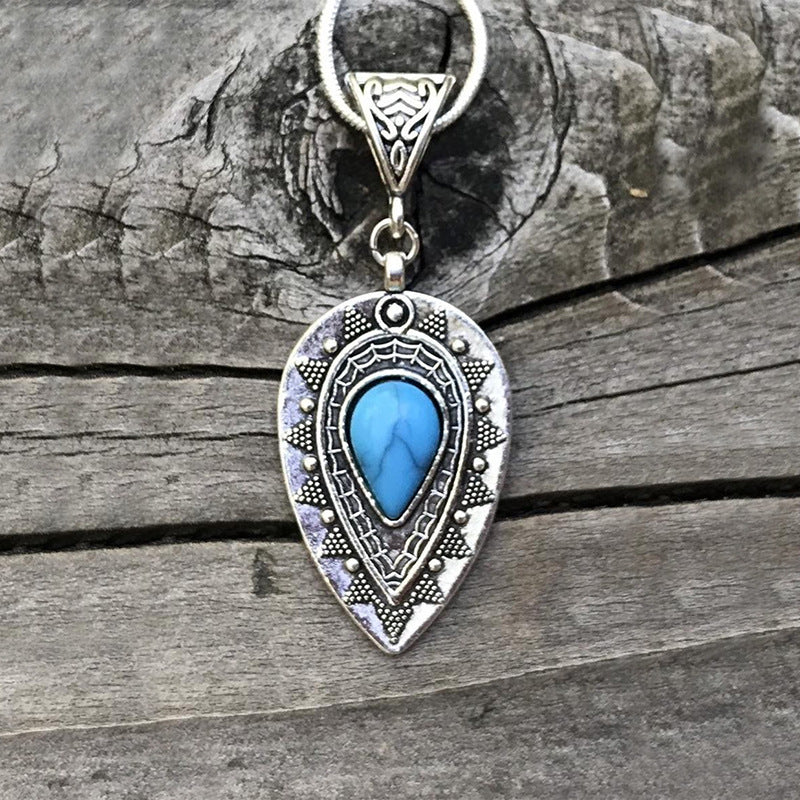
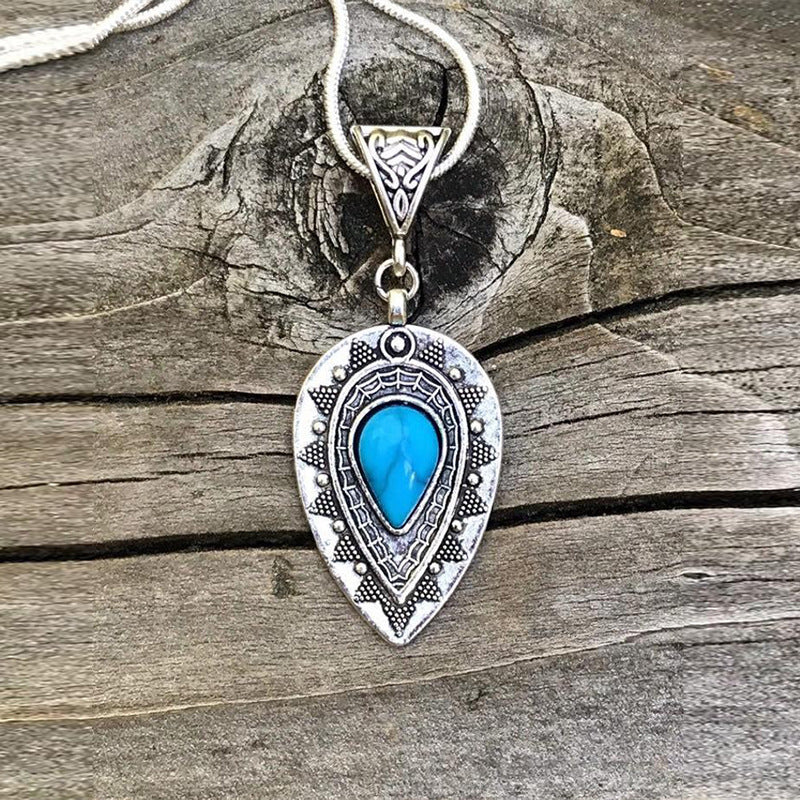
The live page for the Turquoise Western Teardrop Pendant Necklace currently describes a western pendant necklace with a turquoise-style center, a teardrop silhouette, vintage-inspired detailing, and an antique-silver color. It suggests denim, boots, shirts, dresses, layering, everyday outfits, western-themed events, and gifting.
This candidate suits a buyer who has already defined a central-pendant job. The teardrop outline can extend the vertical opening of a shirt or jacket and can provide one clear color accent over a solid base. Examine the image sequence for the shape of the pendant, surrounding detailing, chain presentation, and the relationship between the center and outer frame.
The public page reviewed for this draft displayed a color selector but did not expose a visible chain-length selector in its main text. That makes the landing-zone question important. Before ordering, confirm the full length, whether an extender is included, pendant dimensions, closure type, selected color, documented materials if important, and care instructions. Check the current listing again because options can change after this Hidden article is written.
Do not copy claims from another turquoise necklace onto this one. If the teardrop design and western styling are enough for the planned outfit, evaluate it as fashion jewelry on those terms. If a specific gemstone or metal is required, keep it on the shortlist only after that requirement is documented.
Product Option Two: Western Turquoise Vintage Geometric Cross Necklace
The current Western Turquoise Vintage Geometric Cross Necklace page presents a western, turquoise, vintage, geometric cross design. At the time of review, the selector listed Design 1, Design 3, and Design 4. Each option should be treated as its own product decision.
This candidate suits a motif-led job. A cross can have stylistic, personal, or religious meaning, so it should fit the wearer’s intention rather than being selected only because it appears in a western collection. Compare the exact option with the correct image. Note the outline, color placement, apparent pendant density, and how the design may sit against a solid shirt or open jacket.
The visible product text does not establish a specific stone, metal, historical age, or origin. It also does not make option-specific dimensions obvious. Verify chain and pendant measurements, closure, design correspondence, material documentation when required, care, current availability, and return conditions. A higher visual complexity may justify simplifying earrings and rings, but it does not justify assuming a higher material value.
Compare Realistic Use, Not Imagined Use
List ten occasions from the last ninety days, not the next imaginary year. Mark where the candidate necklace would have been appropriate, comfortable, and compatible with the clothing worn. If it fits six real occasions, it has a credible use case. If it fits one aspirational event, treat it as an occasion purchase.
A simple cost-per-planned-wear calculation can clarify budget: current item cost divided by the number of realistic wears during the first year. It is not a prediction of durability or resale value. It merely compares a frequent wardrobe tool with a rare statement purchase. Include the cost of any needed extender, storage case, or return shipping when applicable.
Then check care compatibility. A person who wears fragrance at the neck, swims frequently, or rarely removes jewelry may need a different routine or product. The right necklace is not only visually suitable; it is compatible with the wearer’s habits and the documented care guidance.
Review Shipping and Returns Before the Emotional Peak
Do not wait until the cart to read policies. Record the current processing and delivery information, order threshold promotions, destination eligibility, return period, acceptable condition, packaging requirements, and whether return shipping or fees apply. If the necklace is for a date-specific gift or event, leave time for delay, inspection, and exchange.
When the item arrives, photograph the sealed package and selected option label. Open it carefully, preserve packaging, and conduct an indoor inspection. Compare the received design with the order, check the closure and visible condition, test placement without exposing the necklace to fragrance, makeup, weather, or a full day of wear, and follow the return conditions.
If gifting, the recipient needs an easy exchange route. Our Western Jewelry Gifts for Her guide explains why giftability includes fit uncertainty, timing, packaging, and return practicality—not just appearance.
Use the Video to Improve Questions, Not Borrow Claims
The mapped educational video is “Watch This Before You Buy Turquoise – Know What You’re Buying” by GomeowCreations. It can help a shopper recognize that terminology, treatments, and evidence deserve attention. It does not authenticate the two Oroxen necklaces or provide product-specific specifications.
After watching, convert each useful lesson into a neutral question. Instead of concluding that an item contains a certain material, ask what the exact listing documents. Instead of diagnosing a treatment from a photo, ask whether the seller provides treatment information. Instead of applying a price comparison across unrelated constructions, compare products only after evidence places them in the same category.
Red Flags in Your Own Buying Process
You cannot identify the selected option in the gallery
Pause and ask. Do not assume the hero image matches the cart selection.
A material claim appears only in your interpretation
Move it down the evidence ladder. Color and style names are not documentation.
The necklace has no planned landing zone
Return to the cord test. Unknown placement creates preventable fit disappointment.
The return plan depends on “probably”
Read the live terms. Know deadlines, condition rules, packaging, and possible costs.
All shortlisted products look nearly identical
Add a restrained, central, and motif-led alternative. Contrast reveals preference.
Frequently Asked Questions
How should a beginner choose a turquoise-style necklace?
Define the necklace’s job, mark the landing zone, separate non-negotiables from preferences, and compare three genuinely different candidates. Verify critical product facts on the live page or with the seller.
Does turquoise color prove natural turquoise?
No. Color, pattern, and product naming do not prove stone identity, treatment, origin, or value. Require explicit documentation if those facts affect the purchase.
What dimensions matter?
Chain length, extension range, pendant height and width, and sometimes weight affect placement and comfort. Closure and adjustability also matter. Use the seller’s exact measurement method.
Can I estimate necklace size from a model image?
A model image offers styling context but not a reliable measurement for every wearer. Body proportions, camera angle, chain adjustment, and garment neckline change the apparent position.
How can I compare a teardrop pendant and a cross?
Compare the role rather than declaring a universal winner. A teardrop may support a vertical outfit line; a cross provides a motif-led focal point. Test both at the same landing zone and verify option-specific facts.
What should be checked immediately before checkout?
Review the selected design, corresponding images, documented dimensions and materials, care guidance, current price, stock, shipping estimate, return terms, and any unanswered product question.
A Pre-Checkout Record You Can Reuse
- Job: the necklace will be used for…
- Landing zone: it should sit at…
- Selected option: the cart and images both show…
- Documented facts: the live listing confirms…
- Unknowns: the seller still needs to answer…
- Realistic use: it fits these recent occasions…
- Return path: inspection and return must occur by…
Save the record with the order confirmation. It helps distinguish an unexpected product change from an assumption that was never confirmed.
Conclusion: Buy the Necklace You Can Describe Accurately
A strong necklace choice has a clear job, a measured landing zone, a selected option tied to the correct images, and an honest evidence record. You know which facts are visible, listed, confirmed, or still unknown. That discipline does not remove personality from the purchase; it gives personal taste a reliable foundation.
Build your shortlist in the live Western Necklaces collection, compare it with the broader Western Jewelry collection, and continue through Turquoise Jewelry Guides. Return to the Oroxen home page for current navigation and store information. Always recheck the exact product page before ordering.