Your first western-inspired turquoise ring should solve a real wardrobe problem, not create a new one. It needs to feel comfortable on the finger you actually plan to use, make sense beside the watch or bracelets you already wear, and have a visual scale that fits your everyday outfits. Those decisions matter more than chasing an undefined idea of the “best” turquoise ring.
This guide gives first-time buyers a repeatable way to compare turquoise jewelry rings without pretending that a product name or photograph proves a particular stone, metal, age, or manufacturing method. You will make a finger plan, test the visible size of a design, compare two Oroxen examples, build three outfit formulas, and finish with a product-page checklist. The result is a purchase decision you can explain in practical terms: where the ring will sit, when you will wear it, what the current listing confirms, and what still needs to be asked before checkout.
Quick Answer: Use a Four-Part Ring Test
A beginner can narrow the choice with four questions. First, which finger is available when you wear your normal watch, wedding jewelry, or everyday bands? Second, do you want the ring to be a small color accent or the visual center of the hand? Third, can the product page answer the fit, option, construction, care, shipping, and return questions that matter to you? Fourth, can you name at least three outfits that the ring will complete without requiring another purchase?
If an option passes all four tests, it is a useful candidate. If it only looks exciting in a close-up image but you cannot place it on a finger, pair it with existing clothes, or understand the selectable options, keep comparing. Start with the Turquoise Jewelry Guides hub for focused articles, then use the Western Rings collection to compare currently available silhouettes. Product availability and listing details can change, so the live page—not this article—is the final reference at the moment you order.
Separate the Look from the Material Claim
Online shoppers often use “turquoise ring” to describe a color family or western look. That phrase does not automatically identify natural turquoise, a simulated component, a treatment, a composite, a specific mine, a metal, or a historical period. The words “boho” and “vintage” may describe styling rather than origin or age. A blue-green area in a photograph cannot settle those questions by itself.
This distinction is useful rather than disappointing. It lets you judge what can be judged from the listing: overall shape, visible color relationships, arrangement of decorative elements, selectable options, how the design appears from different angles, and how it might occupy space on the hand. Material-sensitive claims belong in documented specifications or a direct answer from the seller. If natural stone, sterling silver, hypoallergenic construction, handmade production, or a particular cultural origin is essential to your purchase, do not infer it. Ask for confirmation before ordering.
For a wider explanation of western motifs, evidence boundaries, and shopping language, read What Is Western Jewelry? Motifs, Styles, Materials & How to Choose. That background makes product comparison easier because it keeps aesthetic preference and factual verification in separate columns.
Step One: Give Every Finger a Job
Do not begin with a product grid. Begin with your two hands. Put on the watch, bracelets, wedding band, signet, or thin stacking rings you regularly use. Then notice where visual and physical space remains. A statement ring can feel balanced on an otherwise quiet hand but crowded next to a large watch and several bracelets. A compact ring can disappear if every neighboring piece has strong color or texture.
Write a simple finger map. Mark each finger as unavailable, occasional, or preferred. Consider hand dominance: a ring on the dominant hand meets more door handles, bags, keyboards, tools, steering wheels, and phone edges. Think about the motion of the adjacent fingers as well. A wide or projecting top can look comfortable from above while pressing the neighboring fingers during a fist, handshake, or long period of typing.
Now choose the role of the new ring. A “daily accent” should cooperate with repeated tasks and familiar accessories. A “weekend focal point” can take more space because it is worn for fewer hours. An “occasion piece” may be selected primarily for its effect in photographs or beside a particular dress, jacket, or boot. None of these roles is better; the problem comes from buying an occasion-scale design and expecting it to behave like an invisible daily band.
A five-minute hand audit
- Photograph both hands with your usual accessories.
- Remove one item at a time and notice when the arrangement begins to feel empty.
- Circle the finger that could carry turquoise color without competing with another focal piece.
- List the three activities that finger performs most often.
- Decide whether the ring must survive a full workday or only a planned outing.
This audit prevents a common buying error: choosing the design in isolation and discovering later that it has no comfortable place in your existing jewelry routine.
Step Two: Test Visual Scale Before You Order
Product photography is designed to show detail, so a ring often fills most of the image regardless of its real size. Use every available photograph to look for scale references, side views, profile height, the relationship between the top and band, and how far decorative edges may extend. Do not assume that the first image represents every option listed under the same product title.
A paper mock-up is crude but surprisingly informative. If dimensions are documented, draw the top outline at full size on paper, cut it out, and place it over the planned finger. If dimensions are not shown, do not invent them from the screen. Instead, make three generic shapes—small, medium, and broad—and decide which range suits the hand. This will not establish fit, but it clarifies whether you want a quiet color note, a medium motif, or an expansive statement.
Check the ring from the angles other people will actually see. The wearer often sees the top; other people also see the side profile, the band, and the design while the hand is moving. A high or extended silhouette can interact with sweater cuffs, jacket pockets, gloves, hair, and handbag interiors. A lower-looking form may be easier to integrate into a daily routine, though only product-specific dimensions and a real wear test can confirm that.
Step Three: Build a Wardrobe Bridge
A ring earns repeat wear when it connects clothes you already own. Choose three anchor outfits from your wardrobe rather than imagining an entirely new western closet. One should be very casual, one should be your typical dressed-up look, and one should represent the season in which you expect to wear the ring most.
For the casual test, try blue denim, a white or cream top, and brown, black, or tan footwear. Turquoise color can become the single high-chroma detail while the rest of the outfit remains familiar. For the dressed-up test, use a solid dress or a simple blouse so the ring has room to register. For the seasonal test, check whether coat cuffs, gloves, knit sleeves, or summer activities make a large ring impractical.
Then decide whether you prefer repetition or contrast. Repetition means echoing the ring color once—in earrings, a scarf, a bag detail, or a small pattern. Contrast means letting the ring stand alone against warm leather, dark denim, cream fabric, or a black outfit. Beginners often find the second method easier because it avoids the pressure to match several blue-green tones exactly.
If you want more outfit logic before choosing the ring, use How to Style Western Jewelry with Denim, Dresses, Boots & Workwear. Its main principle applies here: establish one focal area, then let supporting pieces stay quieter.
Explore the Western Rings Collection with a Shortlist, Not a Scroll
Collection pages are useful for pattern recognition. Open the Western Rings collection, but do not compare every item at once. Save only three candidates: one visually restrained option, one middle option, and one statement option. This range teaches you more than saving ten similar designs.
For each candidate, record five observations in your own words: the overall outline, dominant color, visual weight, likely wardrobe role, and the first unanswered question. An unanswered question could concern size, adjustability, base material, surface finish, care, or how a particular option differs from the main image. The question column is important because it turns vague uncertainty into something the product page or seller can resolve.
| Comparison field | Candidate A | Candidate B | What you need to verify |
|---|---|---|---|
| Intended finger | Daily index or middle finger | Occasion finger | Available sizing or adjustment method |
| Visual role | Color accent | Main hand focal point | Dimensions and side profile |
| Wardrobe use | Denim and knitwear | Solid dresses and event looks | How edges interact with fabrics |
| Existing jewelry | Works beside a watch | Needs a quieter wrist | Comfort with neighboring fingers |
| Evidence gap | Material details | Care and construction | Seller or current listing response |
Do not score a product higher merely because its photographs are more dramatic. Score it according to your planned finger, intended frequency, wardrobe bridge, and amount of verified information.
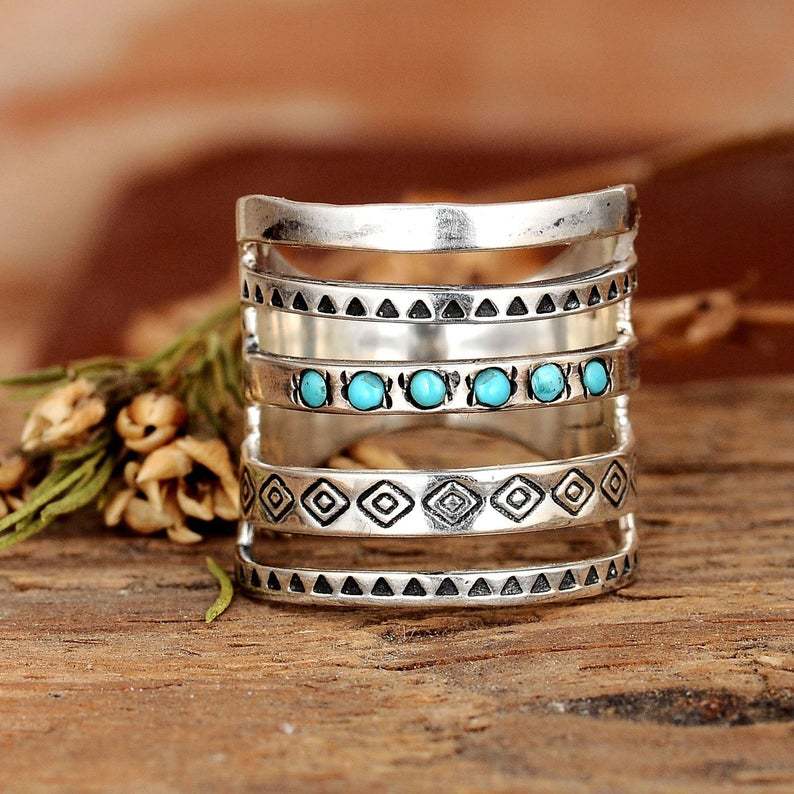
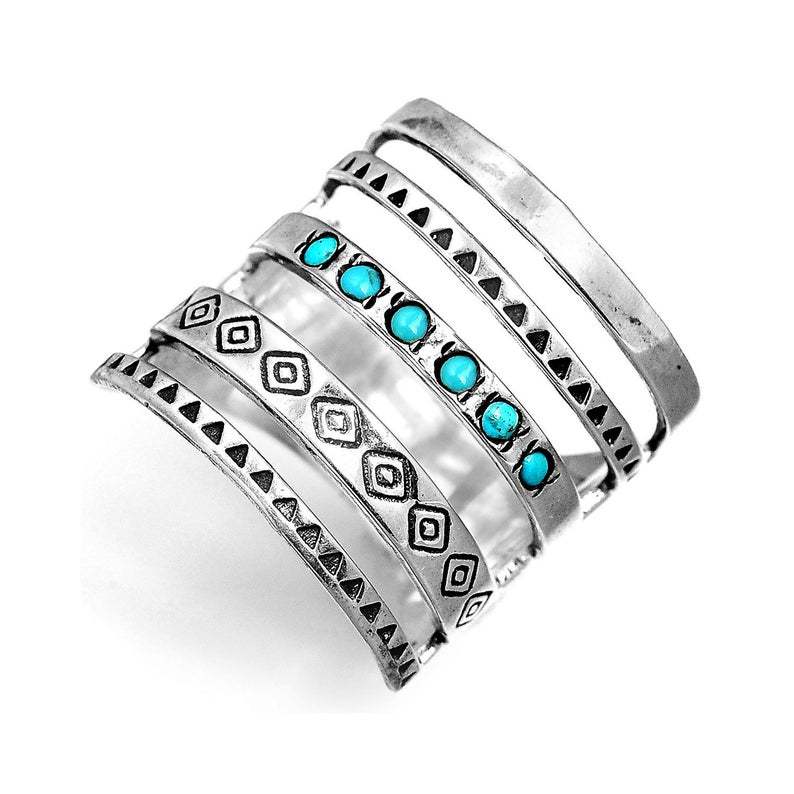
Oroxen Example One: Turquoise Boho Vintage Ring
The current page for the Turquoise Boho Vintage Ring presents a turquoise, boho, vintage style and invites shoppers to review the product images and selected color option. For a first-time buyer, the image set is the most useful starting evidence. Compare the top view with the angled views, note how the decorative area relates to the band, and identify which photograph corresponds to the option you are considering.
Use this candidate when your primary question is, “Can I add a western turquoise-colored accent without rebuilding the rest of my outfit?” Place it mentally beside a white shirt, a denim jacket, a plain tee, or a single-color dress. If the hand already carries a large watch or several bracelets, imagine the ring on the opposite hand. If you want to pair it with another ring, begin with one simple band and leave an empty finger between focal pieces until you know how the proportions feel.
The live page currently shows a color selector but does not present a visible size selector in the public product text reviewed for this draft. That is not a detail to guess. Before checkout, confirm what the selected option means, how fit is handled, and whether the available configuration suits the intended finger. Also check the latest price, availability, shipping information, return conditions, and any product-specific care directions because those fields may change after this Hidden draft is created.
A useful decision sentence would be: “I am considering this ring as the only colorful piece on my right hand, mainly with denim and neutral tops, provided that the seller confirms a suitable fit and the selected option shown in the photographs.” That sentence is more actionable than “I like turquoise rings” because it states role, hand, wardrobe, and verification condition.
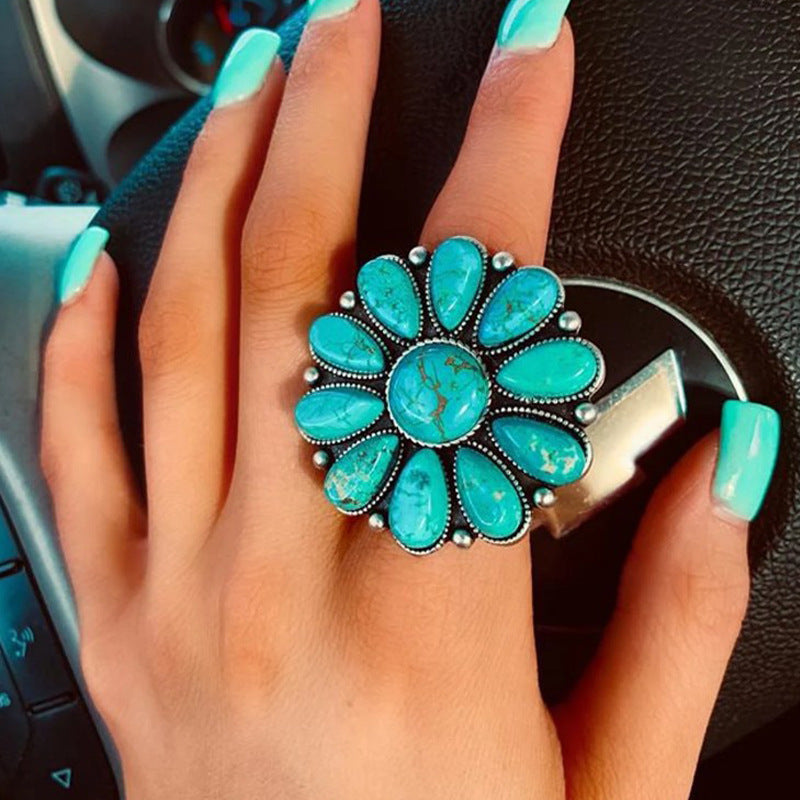
Oroxen Example Two: Turquoise Boho Vintage Statement Floral Ring
The Turquoise Boho Vintage Statement Floral Ring is positioned as a statement option, and its current public page shows an “Adjustable” size choice. Treat that label as the beginning of the fit conversation rather than a promise of universal comfort. Adjustment range, band shape, pressure distribution, and how often the ring is resized can matter. If those points are important, ask before ordering and avoid repeatedly bending an adjustable design without product-specific guidance.
The floral statement language suggests a different wardrobe role from a quiet band. Give it room. Try it as the primary jewelry feature with small earrings and no bracelet on the same side, or pair it with a simple pendant that sits far enough away that the two pieces do not compete in one visual area. In an event outfit, repeat one warm neutral from boots, belt, or bag so the ring’s blue-green color remains intentional rather than isolated.
Review multiple product views to see how the floral arrangement appears from the top and angle. Ask whether projecting areas may contact adjacent fingers or catch delicate fabric. If you plan to wear it with lace, loose knits, gloves, or a heavily textured jacket, include that fabric interaction in the decision. A statement ring can be perfect for a dinner, concert, portrait, or planned outing even if it is not the best companion for packing boxes or working at a keyboard all day.
How to Compare the Two Examples Without Declaring a Winner
The useful question is not “Which ring is better?” It is “Which ring better fills the role I wrote down?” If your role is a flexible everyday accent, prioritize a visually manageable footprint, compatibility with your dominant hand, and clear fit information. If your role is an occasion focal point, prioritize the effect from conversational distance, compatibility with sleeves and fabrics, and whether you are willing to simplify nearby accessories.
Return to the same three outfit photos for both products. Do not give one candidate a denim test and the other an evening-dress test; that comparison is biased. Place screenshots of both products beside each outfit. Reduce the images until the rings appear at a roughly believable hand scale. The one that still communicates the intended effect without overwhelming the outfit is usually the stronger stylistic candidate.
Next, compare evidence rather than adjectives. Which page makes the selectable option easier to understand? Which unanswered fit question is simpler to resolve? Do the images cover enough angles? Are you comfortable with what is documented about the product, or is a material or care fact essential to your decision? A beautiful candidate with a critical unanswered question belongs in the “ask first” column, not automatically in the cart.
Fit: Evaluate Comfort in Motion, Not Only at Rest
Finger circumference changes with temperature, time of day, activity, travel, hydration, and swelling. Measure or test at more than one moment instead of using a single hurried reading. Follow the sizing method provided for the exact product; a generic chart cannot override a seller’s own option system. If a ring is adjustable, confirm how the design is meant to be adjusted and whether doing so affects return eligibility.
Comfort has several dimensions. The band must pass the knuckle without excessive force and sit securely afterward. The top should remain reasonably oriented during normal movement. Decorative edges should not press the adjacent fingers. The profile should not interfere with a fist, phone grip, bag handle, or steering wheel. The ring also needs an exit plan: you should be able to remove it without panic if the hand becomes warm or swollen.
When a new ring arrives, test it indoors according to the return policy before wearing it for a full day. Begin with ten quiet minutes, then type, hold a cup, put on a jacket, open a bag, and wash your hands only if the product guidance permits water exposure. Check for pressure marks, rotation, catching, or a need to constantly reposition the design. Stop if there is pain, numbness, skin irritation, or difficulty removing the ring.
Create Three Outfit Formulas Before Checkout
Formula 1: White shirt, blue denim, one turquoise-colored ring
This is the clearest beginner formula because the ring supplies color while the clothes supply familiar structure. Keep earrings small or metal-toned and choose either a belt or boots as the main western cue. The ring does not need a matching necklace to look deliberate.
Formula 2: Black or chocolate dress with a statement hand
A dark solid field gives a floral or broad design visual space. Carry the ring on the hand most likely to appear in conversation or photographs, then keep that wrist relatively quiet. A bag with a warm leather tone can connect the western mood without repeating the turquoise color.
Formula 3: Denim jacket, neutral knit, mixed practical accessories
Here the challenge is crowding. If the jacket has strong metal buttons, the bag has hardware, and the wrist has a watch, choose one hand for function and the other for the ring. Roll or push the sleeve only if it feels natural and does not force the ring against the cuff. The design should survive the complete outfit, not only a cropped photo of the hand.
Photograph each formula in ordinary indoor light and near a window. Screen color and real-life lighting can differ, so the exercise is about placement and balance rather than predicting an exact shade from the listing.
Watch the Related Video with a Verification Notebook
The mapped video for this article is “Turquoise in Rings” by Turquoise in America. Use it as background education about how turquoise may appear in ring contexts, not as proof of the composition, origin, value, or construction of either Oroxen example. A third-party video does not inspect the exact items on the store.
Divide a notebook page into “general concept,” “product-specific claim,” and “question for the listing.” Put broad explanations in the first column. Any statement about a particular stone, mine, treatment, metal, setting, or value belongs in the second column and must not be transferred to a store product without direct evidence. Turn remaining uncertainty into a short question in the third column. This keeps a useful educational video from becoming an accidental product guarantee.
Plan Care Before the Ring Joins Your Routine
A ring touches more surfaces than many other jewelry types. It meets soap dispensers, desks, pockets, luggage, gym equipment, cookware, cosmetics, and door handles. That exposure makes care compatibility part of buying, not an afterthought. Ask what the documented materials and finish allow, whether the piece should be removed around water or chemicals, and how it should be stored.
Until product-specific instructions say otherwise, avoid assuming that a household cleaner, metal polish, ultrasonic machine, steam, soaking, or an online gemstone recipe is appropriate. Remove a fashion ring before activities that expose it to impact, cleaning products, swimming water, or repeated abrasion. Store it where the top cannot scrape another piece. If the construction is adjustable, do not make frequent shape changes merely to move it among several fingers.
The goal is compatibility. A buyer who never removes rings during household work may be happier with a different daily option and can reserve the turquoise-colored statement piece for controlled wear. Honest routine matching prevents disappointment better than an ambitious care promise.
Gift Buyers Need a Different Checklist
A ring gift contains a fit problem that earrings or many necklaces do not. Avoid guessing a finger size from appearance. If the product uses an adjustable format, verify the relevant range and how the adjustment is intended to work. If the recipient has arthritis, swelling, skin sensitivities, or strong material preferences, direct confirmation is more important than preserving a surprise.
Use the recipient’s existing jewelry to identify scale and motif preference. Do they wear one large ring or several narrow bands? Is their usual jewelry warm-toned, cool-toned, colorful, minimal, floral, geometric, or western-themed? Photographing a familiar ring beside a ruler can help when asking the seller about relative size, but it is not a substitute for the official sizing process.
Check the current return window, condition requirements, packaging, shipping timing, and whether selecting or adjusting an option affects returns. For broader gift planning, visit How to Choose Western Jewelry Gifts for Her. A considerate gift includes a low-pressure exchange plan.
Seven Beginner Mistakes to Avoid
- Buying from the first image: examine alternate angles and option-specific photos.
- Assuming turquoise color proves turquoise material: rely on documented specifications or a direct answer.
- Ignoring the planned finger: map the hand with your normal jewelry first.
- Choosing scale from a zoomed photograph: look for dimensions and use a paper range test.
- Matching every accessory: one color echo—or none—usually gives a cleaner first outfit.
- Treating “adjustable” as unlimited: ask about intended fit and adjustment before forcing the band.
- Skipping the live-page review: price, options, availability, policies, and descriptions can change.
Frequently Asked Questions About Turquoise Jewelry Rings
How should a beginner choose a turquoise-colored western ring?
Choose the finger and use case first. Decide whether you want an everyday accent or a statement piece, test its likely visual size against your hand and wardrobe, and verify the current product facts that affect fit and care. Compare at least two different silhouettes before ordering.
Which outfits are easiest for a first ring?
Neutral tops, denim, solid dresses, and simple leather accessories create an easy background. Let the ring be the principal color on the hand. You can add one small turquoise-colored echo later, but an exact set is not required.
Does “turquoise ring” always mean natural turquoise?
No. Shopping language may describe appearance or style. Natural material, treatment, origin, metal, and construction require explicit documentation. Ask the seller when any of those facts affect your budget, care plan, allergies, or expectations.
Is an adjustable ring guaranteed to fit everyone?
No. “Adjustable” does not establish an unlimited range or universal comfort. Confirm the intended adjustment method, relevant dimensions, return conditions, and whether the top and band work with your planned finger.
How can I compare two rings fairly?
Use the same hand, three outfits, planned occasion, and evidence checklist for both. Compare visual role and unanswered questions, not only price or the attractiveness of the first photograph.
What should I verify immediately before ordering?
Confirm the selected option, fit information, product description, documented materials if important, current price, availability, shipping timing, return policy, and care directions. Save questions for anything the live page does not make clear.
Your One-Page Decision Record
Before checkout, finish one sentence in each category:
- Placement: “I will wear this ring on…”
- Purpose: “Its main role is…”
- Wardrobe: “The first three outfits will be…”
- Comfort: “The movements and fabrics I must test are…”
- Evidence: “The live page confirms…”
- Open question: “Before ordering, I still need to ask…”
- Exit plan: “If the fit is wrong, the current return terms require…”
If you cannot finish the placement, purpose, and wardrobe sentences, the ring is not yet connected to your real life. If you cannot finish the evidence or exit-plan sentences, the listing needs another review. Waiting is part of good shopping; it gives preference and proof time to meet.
Conclusion: Choose a Role Before You Choose a Ring
A successful first western turquoise-colored ring is not necessarily the smallest, largest, brightest, or most elaborate option. It is the one with a clear job. You know the finger, the outfit, the occasion, the neighboring jewelry, the comfort tests, and the unanswered product question. That clarity turns a visual attraction into a repeatable decision.
Browse the live Western Rings assortment to make a three-item shortlist, then compare it with the broader Western Jewelry collection. For more definitions and decision tools, continue through Turquoise Jewelry Guides. You can also return to the Oroxen home page for current navigation, policies, and store information. Always use the live product page as the final authority for current options, price, availability, shipping, returns, and care.