Turquoise Rings and a Wedding Guest Look: A Proportion and Balance Guide
A turquoise-colored ring can be the smallest object in a wedding guest outfit and still become the detail people notice first. Hands appear in greetings, photographs, place settings, dancing, and the practical work of carrying a wrap or glass. That makes ring styling less about finding one “perfect” formula and more about deciding where the eye should pause while the hand remains comfortable.
This guide uses a reception silhouette ledger. It divides the outfit into five visual zones, records the jobs each hand will perform, and separates observable design from undocumented product facts. The ledger helps a guest decide whether a cross-shaped or geometric ring should lead, support, or sit out. It also creates a sensible path from ceremony restraint to reception movement without implying that a pictured turquoise-colored component has a particular material, origin, age, or cultural identity.
Quick Answer: Give the Ring One Clear Job
Choose the ring after the dress, suit, or separates and before adding every other accessory. Decide whether it will be the hand-level focal point, a bridge between turquoise color and another blue-green accent, or a quiet Western-inspired detail. Then remove competing pieces from the same visual zone. A visible ring generally needs less help when the outfit already includes an ornate clutch, decorated cuff, statement earrings, or patterned sleeves.
Check fit and function independently of appearance. A listing label such as Adjustable or One Size is not a finger measurement. Confirm the usable size range, band width, top dimensions, projection, mass, edges, materials, finish, skin-contact components, care, and current return terms before buying. If those details are unavailable, treat comfort and fit as unresolved rather than assuming the image answers them.
The Turquoise Jewelry Guides hub provides wider category navigation. The rest of this article focuses on the special constraints of a wedding guest day.
Build the Reception Silhouette Ledger
Draw five horizontal lines on a note: head, neckline, waist, hands, and shoes. Write every visible accessory beside its line. Add a star to the intended focal zone and a circle around repeated colors, shapes, or finishes. This is not a rule that every line must contain jewelry. Empty space is an active design choice because it lets a focal detail remain legible in a full-length photograph.
Next, record the dominant line of the outfit. A column dress creates a long uninterrupted path. A full skirt creates volume below the waist. A sharply tailored jacket makes shoulder and lapel edges important. Wide sleeves can already place movement beside the hands. A ring should answer that architecture: it may provide a compact punctuation mark, repeat one angle, or supply contrast. It does not need to duplicate every motif.
Finally, add a practical column for the day: invitation formality, ceremony setting, travel, meal, weather, dancing, and any venue guidance. The host's stated dress code comes before a generic jewelry suggestion. If a faith community, culture, family, or venue has particular expectations, ask a knowledgeable person rather than inferring them from photographs.
Proportion Starts with Distance, Not a Mirror Close-Up
Product photography and mirror close-ups enlarge a ring relative to the whole outfit. Test proportion at three distances. At arm's length, look for interference with sleeves and adjacent bracelets. Across a room, decide whether the hand detail still competes with the neckline. In a full-length phone photograph, confirm which zone attracts attention first. The three views answer different questions.
A broad top design can read as a compact statement even if the band looks narrow. A long sleeve with a fitted cuff places the ring at a clear endpoint; a flared or embellished cuff may surround it with movement. Bare forearms create more negative space, so the same ring can look stronger. Gloves, shawls, bags, and coat sleeves change that relationship during the day.
Use only a safe, correctly fitting item for a private styling rehearsal. Do not buy an unknown size merely to “test” it at the event. If a ring rotates, catches, pinches, or obstructs normal finger movement, the visual proportion is irrelevant. The published Western jewelry styling guide for denim, dresses, boots, and workwear offers additional examples of coordinating scale across a complete outfit.
Use a Hand-Workload Map Before Choosing a Finger
List the tasks expected from each hand. One hand may hold a phone, clutch, cane, child, program, plate, or partner's hand more often. The other may handle doors, transport, or serving utensils. Consider dominant hand, mobility aids, sensory needs, medical devices, swelling patterns, and any personal custom about ring placement. The wearer decides what is comfortable and appropriate.
Test the interaction between a ring and the exact bag closure, sleeve, and wrap planned for the event. Raised forms and projecting edges can behave differently from a low profile. Product images may suggest outline but do not establish projection, smoothness, or snag risk. Ask for dimensions and edge information instead of turning appearance into a construction claim.
Create an exit condition: if the ring becomes uncomfortable, there must be a clean, secure place to put it. A rigid compartment or appropriate pouch can be useful for temporary transport when it is compatible with the item, but generic packaging should not be described as archival storage for unknown materials. Never place a loose ring in an open clutch pocket beside keys, cosmetics, or liquids.
Build a Shortlist from Western Rings, Not from One Mood Board
Open the Western Rings collection and compare visible silhouettes before reading promotional adjectives. Sort candidates into compact, elongated, geometric, figurative, and clustered forms. Then note which forms echo the outfit and which supply contrast. A shortlist of two or three distinct outlines is more informative than ten near-duplicates.
For each candidate, make two boxes. The first is “shown or stated”: exact title, selected option, current price, visible form, seller wording, and documented size label. The second is “must confirm”: usable size range, dimensions, mass, materials, finish, component identity, care, availability, delivery, and returns. Only facts from the first box can support the initial comparison.
Use the wider Western Jewelry collection to check whether a ring is doing work already performed by earrings, a necklace, or a bracelet. The goal is not to assemble a matching set automatically. It is to allocate one purpose to each visible piece.
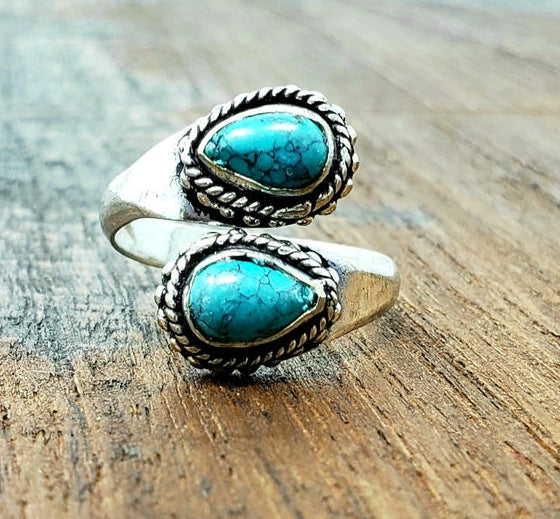
Option One: Turquoise Vintage Cross Ring
The live Turquoise Vintage Cross Ring page displayed $69.69 USD during review. The page showed a Color selector with two visible choices and a Size option labeled Adjustable. Its copy used turquoise, vintage, and cross design language and suggested casual, Western-inspired, occasion, and gifting contexts.
The inspected page did not state a numeric adjustable range, top dimensions, band width, projection, mass, materials, finish, identity of the turquoise-colored component, skin-contact components, item-specific care, maker, age, origin, or cultural affiliation. “Adjustable” should therefore enter the ledger as a seller option label, not proof that the ring fits every finger or can be repeatedly bent safely.
Visually, a cross-shaped arrangement can create strong vertical and horizontal directions at the hand. That may suit a streamlined outfit needing one defined shape. It can also compete with angular earrings, a crossbody strap, a decorated cuff, or other symbolic jewelry. The wearer should decide whether the form expresses their own taste and whether it is suitable for the specific ceremony and community.
Option Two: Turquoise Vintage Geometric Cross Ring
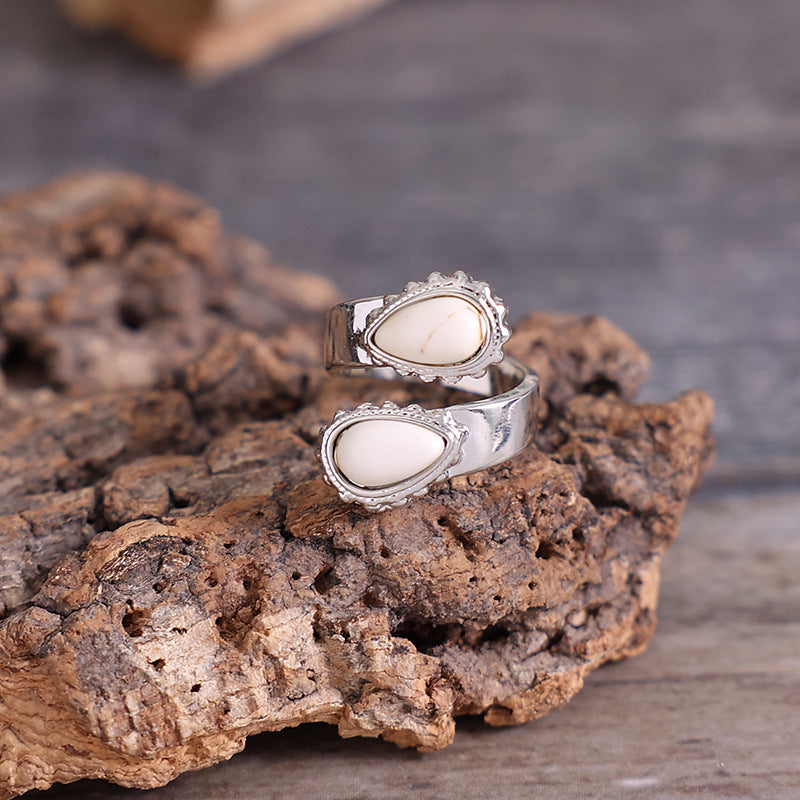
The live Turquoise Vintage Geometric Cross Ring page displayed $71.71 USD during review. It showed one visible Color choice and a Size option labeled One Size. The product text used turquoise, vintage, and geometric design language and suggested everyday, Western-inspired, occasion, and gifting use.
The inspected page did not provide a numeric finger size, usable range, top dimensions, band width, projection, mass, materials, finish, decorative-component identity, skin-contact components, item-specific care, maker, age, origin, or cultural affiliation. One Size is not a universal-fit guarantee. Ask the seller for exact measurements and construction information, then compare them with the wearer's needs and a current ring measurement.
Its visible geometric organization can be evaluated as a rhythm rather than a material claim. Repeated shapes may coordinate with pleats, checks, faceted bag hardware, or crisp tailoring. If the dress or jacket already contains several repeated motifs, the hand zone may need less pattern. Photograph the full outfit with a neutral stand-in of similar visual area before deciding.
Compare the Two Rings with an Evidence Gate
| Ledger question | Vintage Cross Ring | Vintage Geometric Cross Ring |
|---|---|---|
| Price observed during review | $69.69 USD | $71.71 USD |
| Displayed size label | Adjustable | One Size |
| Visible color choices | Two | One |
| Design vocabulary on page | Turquoise, vintage, cross | Turquoise, vintage, geometric |
| Numeric fit and material data | Needs confirmation | Needs confirmation |
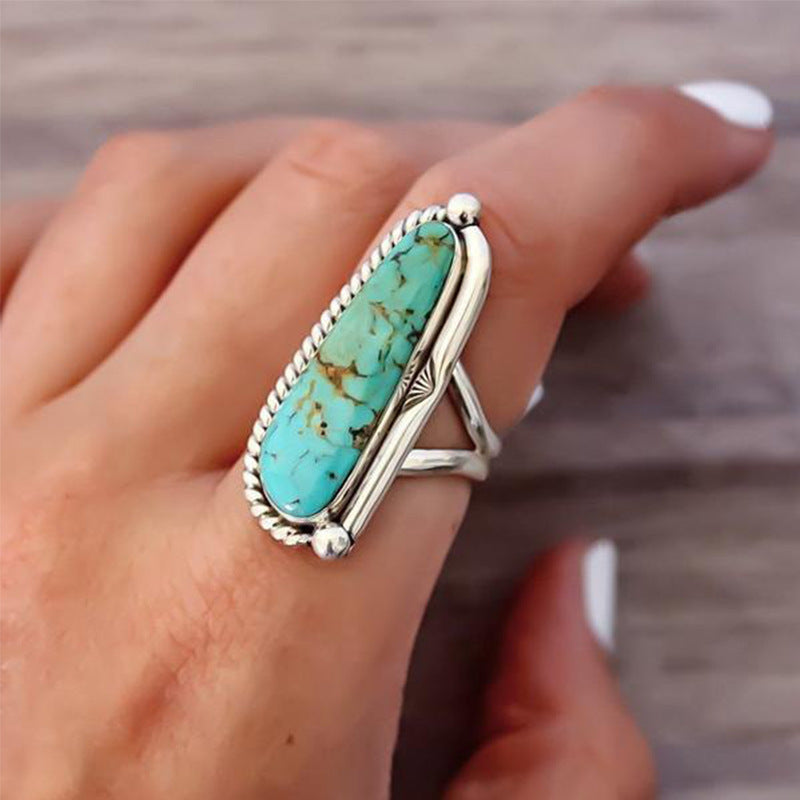
The small price difference does not identify a winner and proves nothing about material, construction, durability, or authenticity. The different size labels also cannot be compared without measurements. Pass a candidate through an evidence gate: exact option confirmed, fit documented, hand workload acceptable, motif welcomed, delivery practical, and return terms understood. If any required gate remains closed, pause the purchase.
The published complete Western turquoise jewelry buying guide supplies further questions for claims and product-page evidence.
Create Ceremony and Reception Versions
A wedding day changes over time. Build two versions from the same clothes. The ceremony version may use one ring, quiet earrings, and no bracelet in the hand zone. The reception version can add or substitute a piece only if it remains comfortable for eating, greeting, and dancing. This is an option, not a rule; some events and wearers benefit from one stable arrangement all day.
Write the switch in the ledger before leaving home. For example: “After photographs, remove the cuff and keep the ring,” or “Store the ring before dancing if it rotates.” A planned switch prevents accessories from being dropped into an unsafe pocket during a crowded moment. It also reveals whether the outfit depends on too many pieces to feel complete.
Country-music styling can inspire boots, denim accents, tooled textures, turquoise color, or Western motifs, but a wedding guest is still participating in someone else's event. The published country concert jewelry guide is useful for movement questions, while the invitation and venue determine wedding formality.
Related Video: Metadata, Not Unreviewed Advice
The corresponding video is “Men's Jewelry: All About Rings, Chains, & More Accessories” by Gentleman's Gazette. This article uses only its verified title, channel, URL, and broad relationship to ring and accessory styling. The video was not watched in full, so no specific statement, demonstration, fit rule, material claim, historical account, or recommendation from it is cited.
The video does not verify either Oroxen product. Gendered wording in a video or collection can serve navigation, but it does not restrict who may wear a ring. Use current product information, direct seller clarification, the wearer's own measurements and preferences, and appropriate professional evaluation when an identity or material claim matters.
Common Proportion Mistakes and Better Corrections
- Close-up bias: a product image is treated as proof of whole-outfit balance. Correction: test at arm's length, across a room, and in a full-length photograph.
- Every zone is filled: earrings, necklace, belt, bracelet, ring, bag, and decorated shoes all compete. Correction: star one focal zone and permit blank lines in the ledger.
- Size label becomes measurement: Adjustable or One Size is assumed to fit. Correction: request a numeric range and construction details.
- Color becomes composition: a turquoise-looking component is called natural turquoise. Correction: use appearance language until documentation supports more.
- Matching replaces hierarchy: every accessory repeats the same shape or color. Correction: assign lead, bridge, or quiet-support roles.
- Symbol is chosen for someone else: a cross or other visible form is added without checking meaning or preference. Correction: let the wearer decide.
- Reception movement is ignored: fit and snag risk are considered only while standing still. Correction: map actual hand tasks and create an exit condition.
For additional language that separates motif, style, and materials, read the published guide to Western jewelry motifs, styles, materials, and selection.
Frequently Asked Questions About Turquoise Rings for Wedding Guests
Which hand should carry the focal ring?
There is no universal hand. Consider personal practice, existing rings, dominant hand, tasks, accessibility, comfort, photographs, and symbolism. Test the planned placement with the actual sleeve and bag.
Can an adjustable ring be resized repeatedly during the event?
Do not assume so. Adjustable is the displayed option label for one reviewed product, not a construction or durability instruction. Ask for the numeric range and safe adjustment method for the exact item.
Should a turquoise-colored ring match the earrings exactly?
No. Exact matching is one possible approach, not a requirement. A ring can repeat only a color family or shape, or it can provide controlled contrast. Make one piece lead and keep the other quieter.
Is a cross-shaped ring appropriate at every wedding?
No universal answer applies. The wearer, couple, ceremony, community, and venue matter. Ask when uncertain and avoid inventing a meaning for the product.
How can a guest compare these two rings without verified materials?
Compare only documented and observable facts: title, current price, selected color option, displayed size label, visible outline, and product-page wording. Request the missing fit, component, care, and return information before making a material-dependent decision.
What should happen if the ring becomes uncomfortable during the reception?
Remove it before discomfort becomes an injury risk and place it in the planned secure compartment. Never force continued wear for photographs or because it was purchased for the event.
Where should the outfit planning continue?
Return to Oroxen, compare the linked ring and jewelry collections, and complete the five-zone ledger with the actual invitation, outfit, and hand workload beside you.
Conclusion: Balance Is a Recorded Decision
A successful wedding guest ring does not have to disappear or dominate. It needs one deliberate role, adequate empty space around that role, and a fit that survives the real work of the day. The reception silhouette ledger makes those decisions visible: five outfit zones, one focal star, repeated-shape circles, two hand-workload columns, and a planned exit condition.
Keep the evidence boundary just as clear. A photograph can show a turquoise-colored cross or geometric arrangement; it cannot establish composition, origin, age, comfort, or universal symbolism. Verify the exact option and dimensions, respect the wearer and occasion, and let proportion serve participation rather than compete with it.
t