A denim jacket can stay in a wardrobe for most of the year, but the jewelry around it should respond to weather, layers, movement, and the way a person actually gets dressed. Spring wind changes necklace placement. Summer heat moves the jacket from the body to an arm or bag. Autumn invites more texture. Winter adds scarves, gloves, and a heavier coat that can hide or press against jewelry. A useful seasonal plan therefore changes more than color.
This guide uses two current Oroxen listings as visual examples: Western Turquoise Vintage Cross Jewelry for Women and Western Turquoise Vintage Earrings. The necklace listing currently displays 90 cm and 52 cm options, but shoppers should confirm exactly what each measurement describes. The earrings offer Design 1 through Design 7, while dimensions, weight, post or hook type, and materials still require verification. Words such as “turquoise,” “Western,” and “vintage” may describe the listing or appearance; they do not independently prove gemstone identity, age, origin, or construction.
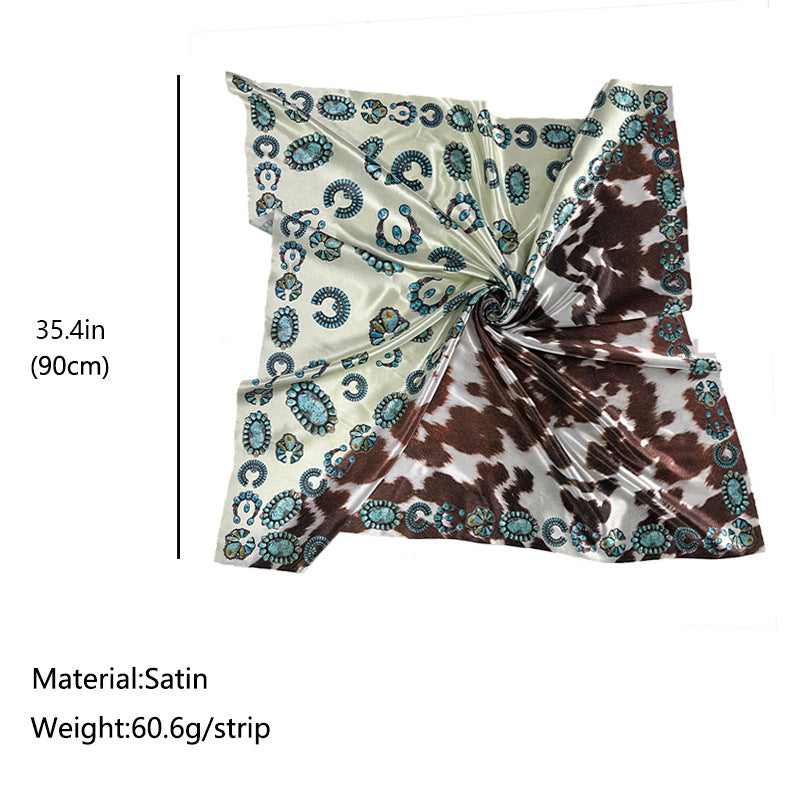
Quick Seasonal Framework
Start with one stable anchor: the denim jacket. For each season, change four variables in order. First, identify what touches the neck and ears. Second, decide whether the jacket will be worn, opened, buttoned, carried, or covered by a coat. Third, select one jewelry focal point. Fourth, test the complete outfit outdoors and indoors. This sequence prevents a necklace or earring choice from being made against an imaginary outfit.
A simple annual rotation might use a lighter necklace-and-earring relationship in spring, one heat-aware focal piece in summer, richer texture and controlled layering in autumn, and snag-resistant placement in winter. The goal is not to buy four separate jewelry wardrobes. It is to assign the same pieces different jobs. The Turquoise Jewelry collection can be used to compare current forms, while the broader Western Jewelry collection helps test whether another motif or silhouette fits the plan better.
Spring: Light Layers, Moving Collars, and Uncertain Weather
Spring outfits often include a T-shirt, blouse, thin knit, or dress under an open denim jacket. That creates a relatively clear chest area, but wind can move lapels, hair, and pendant chains. A long necklace may look balanced indoors and then swing, twist, or enter the jacket opening outdoors. Photograph the outfit with the jacket open and closed, then walk a short distance in safe conditions to observe movement.
If the 52 cm and 90 cm selectors on the necklace listing refer to wearable length, they would create very different relationships with a jacket. Do not rely on the selector alone. Ask whether the figure is chain length, total length, or another measurement, and request pendant dimensions. Map the confirmed measurement onto the actual spring top with a soft string. A pendant should remain visible in the intended opening without repeatedly striking a button, zipper, or belt buckle.
Rain and damp air also change the plan. Keep jewelry protected according to verified material and care instructions; do not assume that a turquoise-colored surface, metal finish, adhesive, cord, or coating tolerates water. Carry a small dry pouch if the weather is unstable. Remove a piece when conditions or care requirements make wear inappropriate rather than treating the jewelry as weatherproof.
Spring earring choice
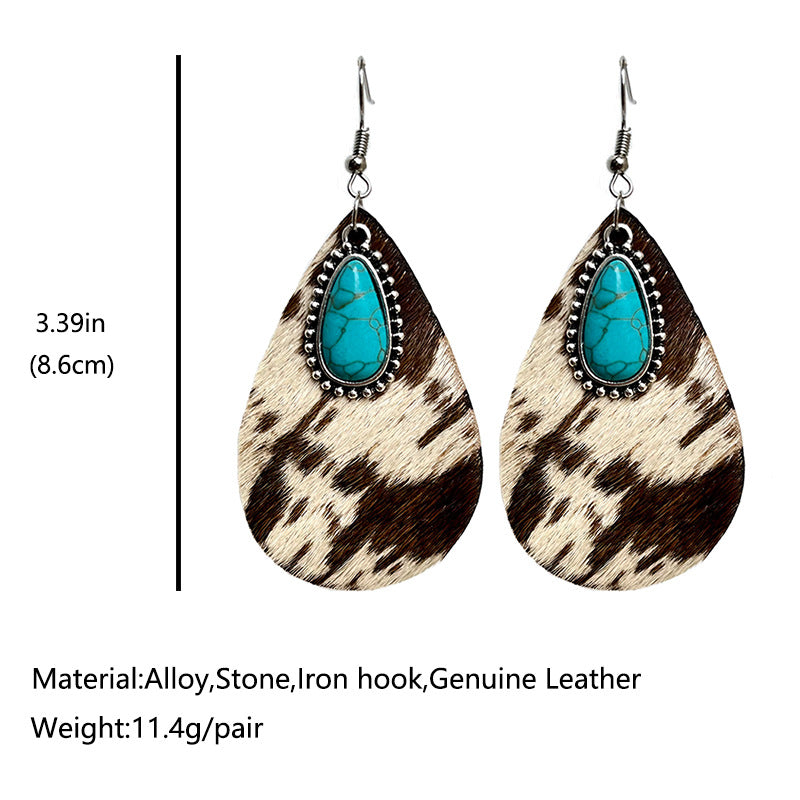
Wind, loose hair, scarves, and high collars can interact with earrings. Select one of Design 1 through Design 7 only after confirming its dimensions, weight, closure, and projection. A visually long design is not automatically heavy, and a compact design is not automatically comfortable. Wear-test the selected option with the exact collar and hairstyle. Turn the head, put on sunglasses, and lift the jacket collar to check contact.
A spring outfit usually benefits from one moving element at a time. If the necklace swings noticeably, choose a calmer earring profile. If the earrings are the focal point, keep the necklace inside a clean jacket-and-top frame. This is visual editing, not a rule about matching sets.
Summer: Heat, Sunscreen, Sweat, and a Jacket That Gets Carried
In summer, the denim jacket may serve as a cool-evening layer rather than an all-day garment. Build the outfit first without it. Check where the necklace sits on bare skin or a lightweight neckline, whether earrings touch hair, and whether the jewelry remains comfortable during normal heat. Then add the jacket for the evening version. The jewelry should work in both states instead of depending on a jacket that spends most of the day over an arm.
Sunscreen, lotion, fragrance, sweat, salt water, and pool chemicals may affect different materials and finishes differently. Apply personal-care products and allow them to settle before putting on jewelry, subject to the product’s verified care guidance. Keep pieces away from swimming and strenuous activity unless explicit documentation says otherwise. Clean only with methods appropriate to confirmed materials. Generic advice such as soaking, polishing, or using household chemicals can damage some constructions.
Carrying the jacket creates another friction test. A necklace can catch as the jacket is folded, tied at the waist, or placed over a shoulder. Earrings may meet the collar when the garment is lifted. Practice the transition slowly at home. If the jewelry interferes, put it into a protective pouch before rearranging the jacket. Convenience is part of successful styling.
Summer hierarchy
Against a simple tank, tee, or dress, turquoise-colored jewelry can have stronger contrast than it does against several autumn layers. Use that clarity. Choose necklace or earrings as the lead, then reduce the other. A long pendant can create a vertical line, while face-level earrings remain visible when the jacket is carried. Select the signal that fits the occasion and actual heat.
Autumn: Full Denim Texture and Deliberate Layering
Autumn is often the easiest season for a denim jacket to remain part of the full outfit. Turtlenecks, shirts, knitwear, boots, belts, and textured bags create a richer visual field. Jewelry needs enough contrast to be noticed, yet adding every Western cue can turn the outfit into a list of motifs. Decide which texture leads before adding accessories.
With a dark knit, a turquoise-colored cross necklace may become the central vertical shape. With a patterned shirt, it may work better over a quiet section or under an open collar. Measure the available space between neckline and jacket button line. If the confirmed necklace length places the pendant directly on a button or thick seam, choose another neckline, adjust only according to documented design, or select a different piece.
Earrings can balance the visual weight of boots and jacket pockets without repeating every detail. Try the selected design with hair up, hair down, and a hat if one is part of the outfit. Hat brim, hair texture, and jacket collar can change visibility. A face-level focal point is useful when a scarf has not yet entered the outfit.
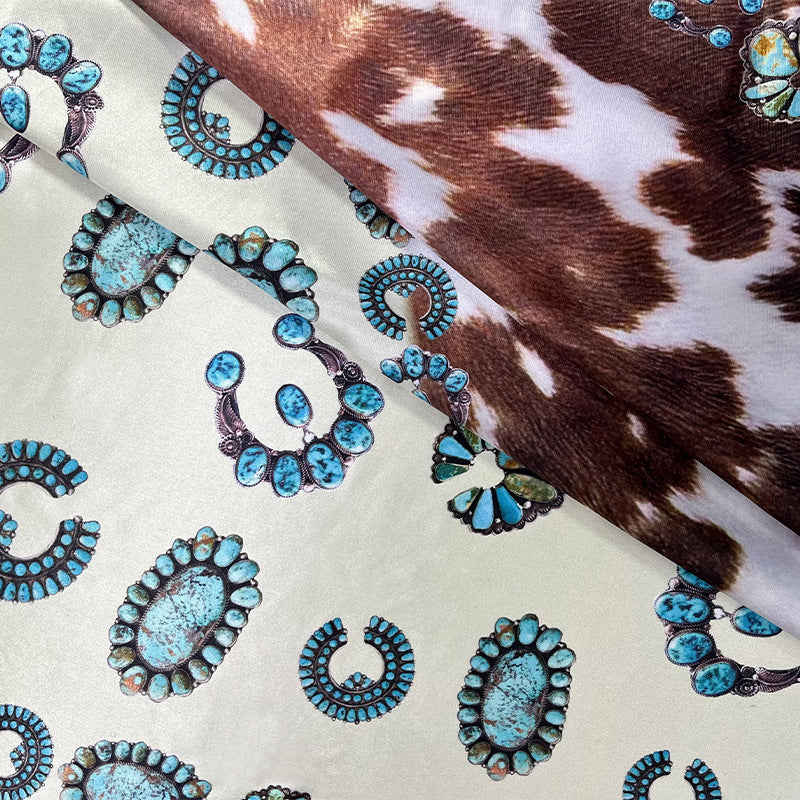
Build an autumn texture map
Lay the jacket, top, trousers or skirt, shoes, belt, bag, and jewelry on a neutral surface. Mark each item as smooth, woven, distressed, glossy, matte, patterned, or motif-led. If four or more areas demand equal attention, remove or simplify one before judging the jewelry. Then put the outfit on, because flat-lay balance does not account for body proportion or movement.
For more guidance on mixing jewelry with denim and workwear, read How to Style Western Jewelry with Denim, Dresses, Boots & Workwear. For a motif-first foundation, use What Is Western Jewelry? Motifs, Styles, Materials & How to Choose. Those public guides provide context; they should not replace option-specific product facts.
Winter: Coats, Scarves, Gloves, and Indoor Transitions
Winter adds the most physical interfaces. A scarf can cover a necklace and brush earrings. A high collar can push an earring forward. Gloves can catch rings or bracelets, and a coat closure can trap a long pendant. Begin with the warmest outdoor state, not the attractive indoor reveal. Put on the full coat, scarf, hat, and gloves, then move normally.
If a necklace sits underneath the scarf and coat, decide whether it is an indoor-only focal point. That can be practical: wear it against the underlying top, keep it protected while outdoors, and let it appear when layers are removed. Check that the pendant does not become trapped in the coat zipper or compressed by a heavy closure. Never adjust jewelry while walking through traffic or handling outdoor equipment.
For earrings, verify how the exact design works with hat edges, earmuffs, scarf loops, and the coat collar. A larger silhouette may be visible but more likely to contact fabric; a smaller one may be easier to manage but disappear outdoors. The correct choice depends on measurements, weight, closure, hair, and gear—not the season name.
Create an indoor transition sequence
Practice removing gloves, scarf, coat, and hat in the order you will use. Watch for catches at every step. Place removed layers somewhere stable before touching jewelry. If an earring loosens or the necklace shifts, correct it in a mirror. A small travel case can protect jewelry that must be removed. This rehearsal is especially useful before travel, restaurants, events, or workplaces with crowded coat areas.
One Denim Jacket, Four Different Jewelry Jobs
- Spring: manage wind and light-layer movement; use a controlled necklace path or edited earrings.
- Summer: style for the base outfit first; treat the jacket as a removable evening layer.
- Autumn: let one jewelry signal rise above richer textures without stacking every motif.
- Winter: prioritize clearance, snag testing, and the transition from outdoor layers to the indoor outfit.
This approach produces variety without pretending that a particular season requires a particular product. The same necklace may lead in autumn, remain protected until indoors in winter, sit more lightly in spring, and be replaced by earrings on a hot summer day.
Use a Twelve-Look Seasonal Contact Sheet
Create three full-body photographs per season: jacket worn, jacket open or partly removed, and the most realistic transition state. Keep camera distance and lighting reasonably consistent. Add a close image of the neck and ears only after the full outfit works. The resulting twelve-frame contact sheet reveals whether the annual wardrobe is genuinely varied or merely repeats the same pose.
Label each frame with temperature range, layer count, neckline, hair position, chosen jewelry role, and any contact problem. Do not use the sheet to score personal appearance. Use it to identify practical patterns. You may discover that a certain earring profile works best with tied-back hair, or that one necklace length repeatedly meets a jacket button. Those observations can guide later choices more reliably than seasonal trend labels.
Product-Page Questions Before Purchase
For the necklace, ask for chain length, total wearable length, pendant height and width, closure type, weight, and materials for the exact selected option. Confirm what “90cm” and “52cm” measure. Ask whether the length can be adjusted and whether the pendant is removable only if those functions matter to the styling plan.
For the earrings, identify the chosen design number and request front dimensions, projection, single-earring weight, closure or post type, and option-specific materials. Confirm whether the pictured color and finish correspond to that option. Seek care instructions and allergy-relevant information from the seller or manufacturer; listing names and photographs are not substitutes for documentation.
Also review price, availability, processing time, shipping destination, returns, exchanges, and any hygiene restrictions at checkout. These conditions can change. Save a dated record of the chosen option and the facts that mattered to the purchase.
How to Use the Supporting YouTube Video
The video Turquoise in Rings by Turquoise in America is ring-focused, while this article centers on necklaces, earrings, and denim layers. Use it only for broader questions it clearly addresses, such as vocabulary or the kinds of evidence an educational discussion may consider. Do not transfer a ring-specific statement to these products, and do not treat a third-party video as verification of Oroxen inventory.
After watching, return to the exact listing and separate three columns in your notes: visible product facts, seller-confirmed facts, and unresolved questions. This protects the styling plan from unsupported assumptions.
Care Changes With the Season, but Materials Still Come First
Spring may bring rain, summer brings perspiration and personal-care products, autumn adds rougher textiles, and winter adds pressure from scarves and coats. Those are exposure categories, not cleaning instructions. Follow care guidance matched to confirmed materials, construction, coating, stones or imitation components, adhesives, cords, and finishes.
After wear, inspect clasps, posts, hooks, chain links, and decorative connections. Store pieces separately so chains do not tangle and earring surfaces do not scratch one another. Use a dry, protected place away from direct heat and intense sunlight unless product documentation specifies something else. When damage, looseness, or an unknown reaction appears, stop wearing the piece until it can be assessed.
Frequently Asked Questions
Should turquoise-colored jewelry be matched to the same shade every season?
No. Exact color matching is optional and can look rigid. Compare visual temperature, saturation, finish, scale, and distance. One clear focal point plus a quieter echo is often enough.
Is a 90 cm necklace always better over a denim jacket?
No. First confirm what the measurement describes. Then test the verified length against the person, neckline, jacket hardware, belt, and activity. A long necklace can create a useful vertical line or an inconvenient collision point.
Can the same earrings work with hats and scarves?
Possibly, but exact dimensions, projection, closure, weight, hair, hat edge, scarf fabric, and coat collar all matter. Test the complete combination and choose safety and comfort over visibility.
Where can I learn more about choosing Western turquoise jewelry?
Read How to Choose Western Turquoise Jewelry: A Complete Style and Buying Guide. For face-level styling ideas, see the public Cowgirl Jewelry Style Guide: Earrings, Necklaces & More.
Where should I browse current products?
Compare the Western Necklaces collection, the broader jewelry collections above, or return to the Oroxen home page. Recheck current product details before making a decision.
Final Seasonal Checklist
- Confirm exact option, dimensions, weight, closure, materials, and care information.
- Build the real weather layer system before selecting the focal piece.
- Test jacket-worn, jacket-open, and transition states.
- Check contact with hair, collar, buttons, scarf, coat, hat, and bag.
- Use one dominant jewelry job and edit competing signals.
- Document unresolved facts and current purchase conditions.
A seasonal wardrobe works when jewelry remains deliberate through changing layers instead of looking correct for one still photograph. Keep the denim jacket as the anchor, give necklace or earrings a specific role, verify the exact product, and rehearse the transitions that weather makes inevitable. That is how one outfit idea becomes four practical, distinct, and wearable systems.