Turquoise Cowboy Jewelry: Statement Styling vs Everyday Styling
Turquoise cowboy jewelry does not arrive with a permanent volume setting. A pair of earrings can look dramatic beside a plain shirt, moderate under loose hair, or nearly hidden by a jacket collar. The same design may feel effortless for one wearer and impractical for another because their glasses, hairstyle, sensitivity, commute, workplace, or evening plan changes the mechanical result. “Statement” and “everyday” are therefore outcomes of a complete look and routine, not qualities that a product title can settle by itself.
This comparison uses a five-slider volume board: silhouette, contrast, motion, contact, and context. Move one slider up and another can come down. The goal is not to decide that statement styling is better than everyday styling. It is to create two documented settings from the exact selected item, test both, and learn which setting supports the wearer's actual day.
Quick Answer: Styling Changes the Volume; Specifications Set the Limits
For a statement setting, choose one visible focal zone and reduce competing jewelry, pattern, hardware, and color. For an everyday setting, prioritize predictable fit, low collision, manageable movement, a repeatable outfit formula, and care that fits the routine. Either setting may use the same earrings if the exact option is comfortable and the rest of the look changes.
Specifications come first. Confirm the selected option, pair quantity, dimensions, mass per earring, closure, backs, materials, finish, turquoise-looking component identity, skin-contact parts, care, availability, delivery timing, and return terms. Product words such as turquoise, cowboy, cowgirl, Western, vintage, statement, or cross do not prove natural turquoise, metal composition, age, maker, origin, tribe, nation, cultural affiliation, religious meaning, or handwork.
The Turquoise Jewelry Guides hub offers category navigation. Use the volume board below to compare complete settings rather than isolated close-up images.
Slider 1: Silhouette
Silhouette is the outline visible from normal social distance. Length, maximum width, negative space, decorative drop, and relationship to the jaw, neck, hair, hat, and collar all contribute. A complex close-up may become a simple dark or blue-green outline from across a room; a narrow moving piece may appear larger than its measurements suggest.
Statement styling raises silhouette by giving the outline open space. Wear hair up or behind the ear, choose a simple neckline, and reduce adjacent accessories. Everyday styling can lower silhouette with loose hair, a softer collar, a quieter shirt, or a smaller verified option. Do not conceal an item so completely that it catches without being visible.
Ask for dimensions rather than judging scale from a cropped image. Test a paper outline or measured stand-in against the face and collar before ordering. A model photograph cannot predict placement on another person.
Slider 2: Contrast
Contrast comes from color, value, surface, and background. Blue-green accents against black, white, cream, denim, or warm brown can become the first thing the eye sees. Similar-value clothing can soften the same piece. Screen color, photography, and lighting make exact matching unreliable.
A statement setting can make turquoise color the only saturated note. An everyday setting can repeat the color once in a small detail or place it beside a mid-value fabric so the transition feels quieter. Matching every accessory is unnecessary; one controlled relationship often reads more clearly.
Keep appearance separate from identity. Turquoise-style, turquoise-colored, or visible blue-green does not establish the decorative material. The published Western jewelry motifs, styles, and materials guide provides language for accurate observation without unsupported provenance.
Slider 3: Motion
Motion increases visual volume. A design that swings, rotates, catches light, or contacts hair may feel more statement-oriented than a still photograph suggests. It can also affect comfort, sound, phone use, and security.
For statement use, controlled movement may support a concert, dinner, portrait, or event look. Test head turns, walking, sitting, hugging, and the outer layer. For everyday use, the wearer may prefer low movement during commuting, work, childcare, headphones, or repeated phone calls. The best setting is the one that remains stable through the real schedule.
Motion cannot be inferred fully without dimensions, mass, closure, and construction. Ask for those facts. Stop wearing an item that pulls, pinches, opens, catches, or causes pain or irritation.
Slider 4: Contact
Contact is where styling becomes mechanical. Earrings can meet hair, glasses, hat brim, collar, scarf, coat, phone, headphones, or skin. Statement styling often increases exposed edge and movement, while everyday styling usually benefits from fewer collision points.
Create a contact map for the exact outfit. Put on glasses, hat, jacket, and any audio device. Use the phone, turn the head, bend, and remove the outer layer. Mark every repeated touch. One collision can sometimes be solved by changing hair, collar, or device; several collisions may require another product.
Skin contact also depends on materials and finish. A product page that omits posts, hooks, backs, and component composition cannot answer a sensitivity question. Request the facts that matter to the wearer and seek appropriate medical advice for allergy or skin concerns.
Slider 5: Context
Context includes venue, dress expectations, safety, weather, travel, work, and the wearer's comfort with attention. A design may be everyday in a creative workplace and statement in a conservative environment. A festival, date, wedding guest look, ranch event, office, and grocery run are not interchangeable settings.
For everyday styling, define the shortest repeatable formula: one reliable top, one outer layer, one hair plan, and one storage habit. For statement styling, define the event boundary: where the piece will be worn, when it can be removed, how it will be stored, and what fallback is available.
The published Western jewelry styling guide shows how context changes proportion across denim, dresses, boots, and workwear. Apply its method to the exact item and wearer.
Live Option A: Turquoise Western Statement Earrings
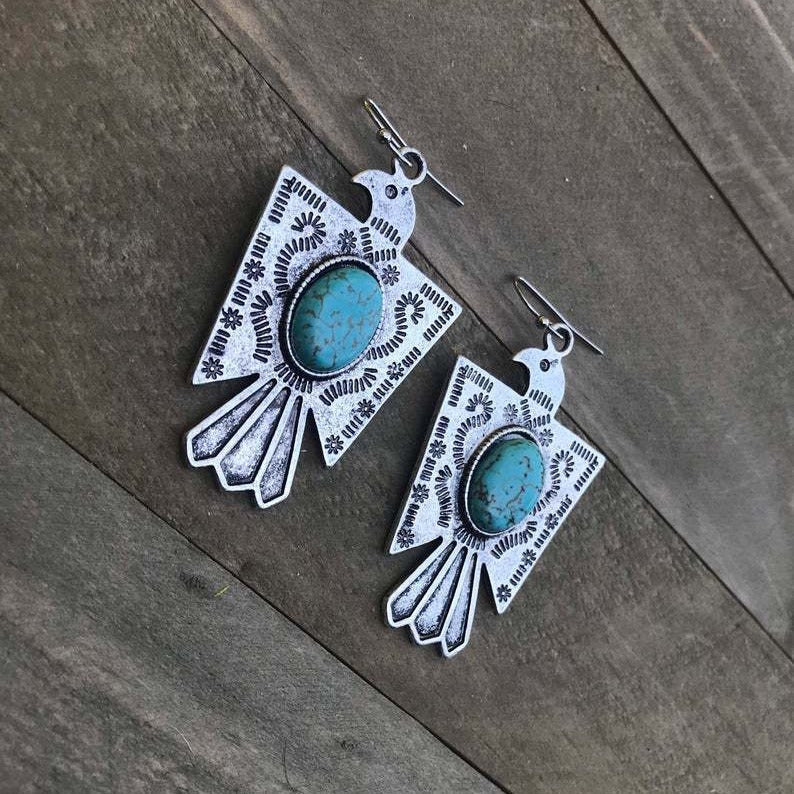
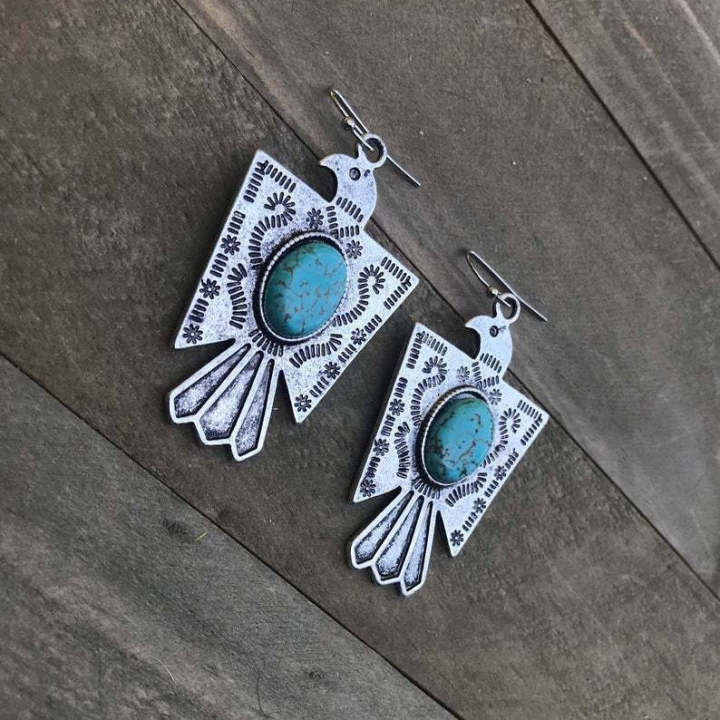
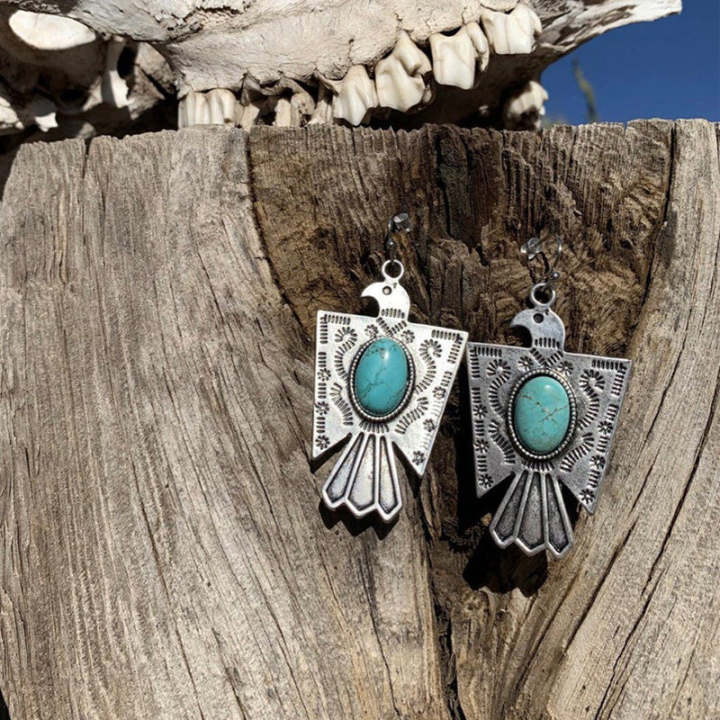
The live Turquoise Western Statement Earrings page displayed at $29.99 USD during review. Under Color, it showed one selected radio without a readable label. The page described Western statement earrings with turquoise, boho, and vintage-inspired design language and suggested denim, boots, dresses, simple necklaces, everyday outfits, festivals, Western-themed events, and gifting.
The product-specific text also described a sculptural silhouette, turquoise-style center stones or accents, and vintage-inspired detailing. Preserve “turquoise-style” rather than shortening it to a material claim. The inspected page did not state pair quantity, total dimensions, mass per earring, closure, backs, materials, metal, skin-contact components, item-specific care, maker, age, origin, or cultural affiliation.
As a statement setting, give the earrings the face zone. Use a plain neckline, reduce necklace scale, and photograph the look with hair in the intended position. As an everyday setting, test whether hair, collar, glasses, and phone can lower visual volume without creating contact. The $29.99 price does not establish materials, construction quality, comfort, or authenticity.
Record the exact selection as “one Color radio selected; label not readable.” Ask for the missing fit and component facts before choosing either setting.
Live Option B: Turquoise Statement Cross Earrings
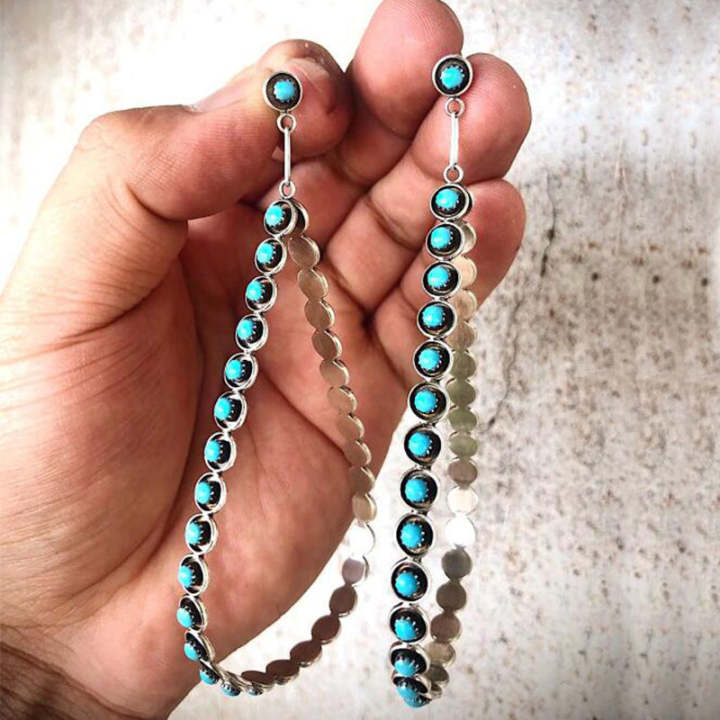
The live Turquoise Statement Cross Earrings page displayed at $127.26 USD during review. It also showed a Color heading with one selected radio and no readable label in the inspected state. The copy used turquoise, statement, and cross design language and suggested casual, Western-inspired, occasion, and gifting use.
The inspected text did not provide pair quantity, dimensions, mass per earring, closure, posts or hooks, backs, exact materials, finish, turquoise-looking component identity, skin-contact parts, item-specific care, maker, age, origin, or cultural affiliation. The price difference from Option A does not prove a quality, material, rarity, labor, or authenticity difference. Compare documentation and mechanics, not price stories.
A cross-shaped outline may carry religious, cultural, personal, or decorative meaning. The title identifies the seller's form label; it does not document denomination, history, sacred status, maker, or the wearer's belief. Choose the form intentionally for the context.
For statement styling, keep the neckline and other symbolic forms quiet. For everyday styling, test whether the outline, contrast, and movement remain comfortable through the wearer's routine. The correct choice can differ even when both pages use the word statement.
A Fair Comparison Board
| Criterion | Option A record | Option B record | Why it matters |
|---|---|---|---|
| Selected label | Unreadable Color radio | Unreadable Color radio | Prevents ordering the wrong option |
| Displayed price | $29.99 USD | $127.26 USD | Budget only; not quality proof |
| Included quantity | Not stated in inspected text | Not stated in inspected text | Defines what arrives |
| Dimensions and mass | Not stated | Not stated | Controls scale and comfort |
| Closure and backs | Not stated | Not stated | Controls security and contact |
| Materials and skin contact | Not stated | Not stated | Controls evidence, sensitivity, and care |
| Symbolic form | Western-inspired sculptural styling | Cross form in title | Context and personal intention |
Do not award a winner while the same blocking facts are missing from both columns. Ask the same questions and compare the same selected state. Browse the Turquoise Jewelry collection for more silhouettes and the Western Jewelry collection for quieter or differently structured alternatives.
Three Statement Settings
Portrait setting
Raise silhouette and contrast near the face. Use clean clothing, controlled hair placement, and minimal necklace scale. Test the actual camera distance and lighting.
Concert or festival setting
Allow color and motion to lead, but test security, crowd contact, weather, phone use, and venue rules. Keep a small storage pouch and fallback.
Dinner or occasion setting
Let the earrings carry the styling vocabulary while the neckline and hands remain quieter. Test greetings, outerwear, seating, and table movements.
Three Everyday Settings
Denim repeat
Create one dependable denim shirt or jacket formula. Keep other turquoise color limited and confirm that collar movement does not contact the earrings.
Work or commute repeat
Lower motion and contact. Test headphones, phone, coat, bag, and long wear. Choose comfort and security over the product's statement label.
Weekend neutral repeat
Use a plain top and simple footwear, letting the earrings provide one color note. Store them consistently after wear and follow item-specific care.
The country concert jewelry guide adds venue-specific questions, while the complete Western turquoise jewelry buying guide expands documentation checks.
Related Video: Metadata, Not a Product Comparison
The corresponding video is “Turquoise Necklaces” by John Hartman. Only its title, channel, URL, and broad turquoise-jewelry relationship are used for this draft. The video was not watched in full, so no scene, statement, demonstration, styling rule, material claim, authentication, history, valuation, or care recommendation from it is cited.
The title concerns necklaces, not the two earring pages compared here. Do not transfer necklace dimensions, construction, materials, provenance, movement, or care to earrings. The five-slider board and current product records remain the comparison basis.
Common Comparison Errors
- Statement by title: assuming the product always looks bold without testing clothing, hair, and distance.
- Everyday by size guess: calling an item practical without dimensions, mass, closure, or contact testing.
- Price as quality: treating the larger price as material or construction evidence.
- Color as gemstone: upgrading turquoise-style or visible blue-green into natural turquoise.
- Same questions, different standards: excusing missing facts for the preferred design.
- Symbol without context: assigning a cross or Western-associated form an undocumented meaning.
- One outfit test: deciding versatility from a single posed photograph.
Frequently Asked Questions
Can statement earrings become everyday earrings?
Yes, if the exact pair is comfortable, secure, compatible with the routine, and supported by a repeatable outfit formula. Lowering contrast, motion, or competing accessories can change the result.
Which option is more versatile?
The current pages do not provide enough fit and component data to prove a universal winner. Versatility depends on the wearer, measurements, closure, mass, context, and how many complete settings pass the test.
Does the cheaper option offer better everyday value?
Price alone cannot answer that. Compare included contents, verified specifications, comfort, use frequency, care, delivery, return terms, and the wearer's actual outfit needs.
Should a statement earring be paired with a necklace?
It can be, but give one zone priority. A simple necklace may support the earrings when neckline, scale, and symbolic forms do not compete. Test the complete look and physical contact.
How should an unreadable Color option be handled?
Record the selection exactly, save the current image, and ask the seller for the option name and mapping. Do not invent a label from appearance.
Where should the reader continue?
Visit Oroxen, build two volume-board settings for one shortlisted option, and resolve the first missing fact that can change fit, comfort, care, timing, or context.
Conclusion: Save Two Settings, Not Two Labels
Statement and everyday styling are useful only when they describe complete, testable settings. Raise or lower silhouette, contrast, motion, contact, and context while keeping the exact product facts fixed. A design can move between roles, but missing dimensions, mass, closure, materials, or option identity remain missing in both.
Choose the setting that supports the wearer's schedule and intended expression. Keep price separate from quality, color separate from gemstone identity, and form separate from undocumented meaning. When two settings survive the same fair test, turquoise cowboy jewelry becomes more versatile through deliberate styling—not because a product title promised that result.