How to Style Beaded Turquoise Jewelry with a Wedding Guest Look
A wedding guest outfit has to satisfy more than a color palette. It must respect the invitation, remain comfortable through the ceremony and reception, photograph well beside other guests, and avoid creating a problem when you sit, hug, dance, carry a bag, or add a coat. Beaded turquoise jewelry can contribute color and texture to that plan, but it works best when it has an assigned role instead of being added after the outfit is already visually full.
This guide uses a wedding-guest protocol: brief the event, map the outfit's visual zones, give one jewelry area priority, rehearse the complete look, and prepare a quieter fallback. It also separates styling language from product facts. A title or photograph may suggest turquoise color, beads, leather, vintage influence, or Western character. Those cues do not by themselves prove natural turquoise, bead material, metal content, age, handwork, maker, origin, or cultural affiliation.
Quick Answer: Use One Lead Zone and One Quiet Backup
Read the invitation before choosing jewelry. Note the stated dress code, ceremony setting, reception setting, time, likely weather, travel, and any host or cultural expectations that have actually been communicated. Build the clothing look first. Then decide whether the ears or neckline should lead. If statement earrings frame the face, leave the neck bare or restrained. If a necklace belongs in the open garment field, reduce the earrings and other nearby details.
Judge the result at conversation distance and in a full-body photograph, not only in a close-up mirror. Test the exact garment, hairstyle, outer layer, shoes, and bag. Keep a simple alternative ready: smaller earrings, no necklace, or one fewer decorative accessory. The aim is not to make every turquoise-colored object match. The aim is to let one deliberate element support the occasion while the guest remains easy to see, hear, approach, and photograph.
Readers building a broader research path can begin at the Turquoise Jewelry Guides hub. The protocol below is narrower: it is designed for the changing conditions of one wedding day.
Step One: Write an Invitation Brief Before Styling
Create a five-line event brief. Line one records only the dress code printed or directly communicated. Line two identifies the environments: indoor ceremony, outdoor ceremony, restaurant, ballroom, barn, garden, beach, private home, or another confirmed setting. Line three records the schedule and travel. Line four notes known host, religious, or cultural guidance. Line five lists practical constraints such as uneven ground, long standing periods, coat storage, heat, wind, or a bag requirement.
Do not invent a universal definition for labels such as formal, cocktail, festive, rustic, or Western. Interpret them with the invitation, location, time, couple's guidance, and your relationship to the event. When the information is unclear, ask the host or a designated contact a concise question rather than using jewelry to guess the theme. A motif that feels playful at one celebration may feel distracting at another.
The brief is also a boundary. A wedding guest is not the central subject, so avoid treating the outfit as a costume or attempting to imitate an identity, ceremony, or heritage. Use Western-inspired or turquoise-colored details as personal style choices only when they suit the communicated context. The published overview of Western jewelry motifs, styles, and materials can clarify visual vocabulary while reminding shoppers that appearance is not provenance.
Step Two: Map the Look into Four Visual Zones
Divide the complete outfit into four zones: face and ears, neckline and upper torso, hands and wrists, and waist, bag, and footwear. Stand several feet from the mirror and rank what attracts attention first, second, and third. The lead should be intentional. If every zone contains strong color, shine, movement, pattern, texture, or a recognizable motif, the eye has no place to rest.
Face and ears
Earrings share space with hair, glasses, makeup, headwear, collars, and the face itself. Their apparent scale changes when hair moves or is pinned. Test them while turning your head, speaking, hugging, using a phone, and putting on the outer layer. Obtain dimensions, mass, closure, skin-contact components, and care instructions for the exact option; photographs cannot predict comfort.
Neckline and upper torso
A necklace needs a clean garment field. Record the real neckline, collar, buttons, lapels, embroidery, straps, and fabric movement. Confirm the necklace's wearing length, endpoint, pendant dimensions, closure, components, and care before depending on a precise placement. A bare neck is not an unfinished area. It is often the negative space that makes earrings readable.
Hands and wrists
Hands appear in greetings, photographs, meals, and dancing. Keep rings and bracelets from colliding with sleeves, watches, clutches, glassware, or other hard surfaces. The hand zone can quietly repeat a color, but it does not need to duplicate the ear and neck zones.
Waist, bag, and footwear
Belts, buckles, bag hardware, embroidery, and decorated shoes can already carry strong visual information. A cross-body strap may also cross the necklace path. Put on the actual bag before approving the jewelry, and simplify above the waist if the lower zone is already busy.
The guide to styling Western jewelry with denim, dresses, boots, and workwear offers garment-based examples. For a wedding, filter every idea through the invitation brief rather than copying an outfit formula unchanged.
Step Three: Define What “Beaded Turquoise Jewelry” Means Here
People often use “beaded turquoise jewelry” as a search phrase for several different appearances: repeated blue-green units, bead-like shapes, a strand silhouette, decorative spacing, or a turquoise-colored focal surrounded by smaller elements. That phrase is useful for organizing style references, but it is not a material certificate. Before purchase, ask what every bead or decorative unit is made from, whether the turquoise description refers to color or identified material, what treatments or coatings apply, and which components touch the skin.
Create a short evidence card for each exact design:
- Product title, URL, selected option, current price, and review date.
- Exact included quantity and whether the photographed objects are part of that option.
- Measurements, mass, wearing length, projection, and closure.
- Documented materials, finishes, treatments, skin-contact components, and care.
- Current availability, expected delivery, return conditions, and a saved reference image.
- Unknowns that must remain unknown until the seller provides evidence.
Labels such as observed, documented, preference, current policy, and unknown prevent assumptions from turning into promises. Use observed for visible color or outline. Use documented for a specific statement on the selected listing. Use preference for your own comfort or taste. Use current policy for time-sensitive shipping, returns, or venue rules. Use unknown whenever a fact is missing.
Step Four: Assign Ceremony and Reception Roles
The same wedding may contain two different visual and practical environments. During a quiet ceremony, guests may sit close together, wear an outer layer, or follow particular customs. At the reception, jackets may come off, hair may change, and movement may increase. Decide whether the jewelry remains constant or whether one reversible change is useful.
A simple two-role plan works well. Ceremony role: one lead zone, controlled movement, no repeated adjustment, and complete compliance with the event brief. Reception role: retain the lead or make one documented change, such as removing a necklace after the garment field becomes busier or switching to a lighter earring option. Do not plan a complicated restyle in a restroom with no safe storage.
Photograph both stages. Confirm that the change does not create an empty-looking neckline merely because you expected a necklace to be present. Check how the ensemble appears standing beside people in varied colors and levels of formality. A good plan remains coherent when the photographer is several meters away and when the jewelry is barely visible.
Live Product Drill A: Let the Earrings Frame the Face
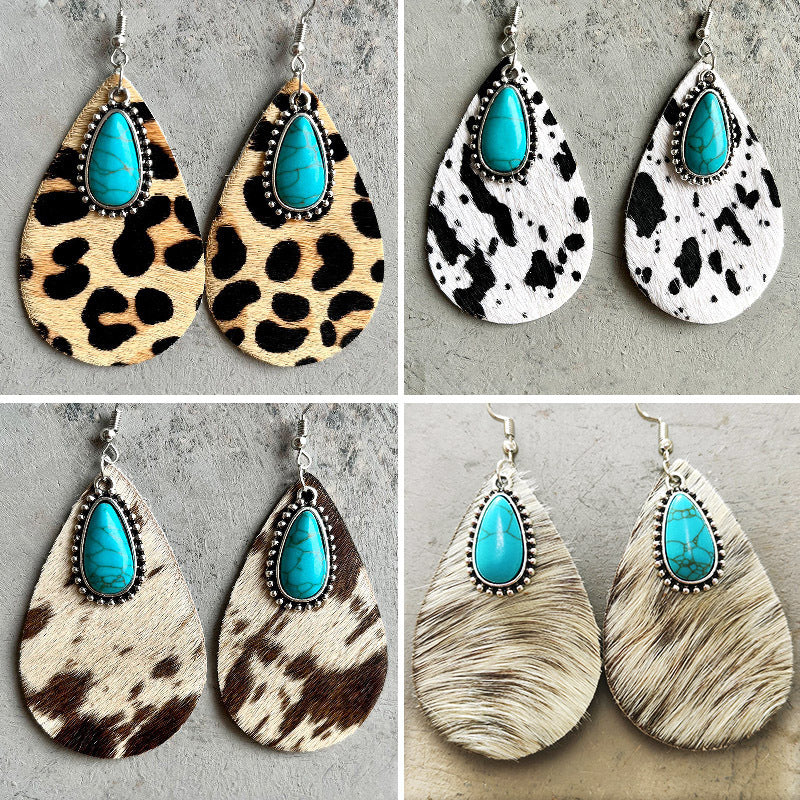
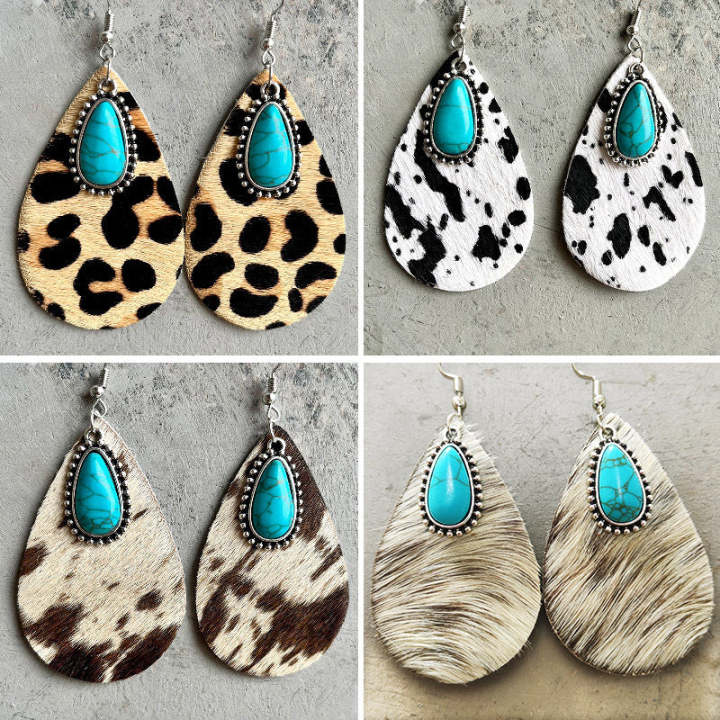
The live Western Turquoise Vintage Earrings page was reviewed on August 24, 2026. It displayed $126.25 USD and seven visible Size radios labeled Design 1 through Design 7, with Design 1 selected. The page describes a Western, turquoise-colored, vintage-influenced appearance and proposes everyday, Western-inspired, occasion, and gifting contexts.
Those facts support an earring-led styling test, not a material conclusion. The visible copy did not establish natural turquoise, bead material, metal composition, age, maker, origin, handwork, cultural affiliation, dimensions, mass, closure, skin-contact components, or care. It also did not make every gallery image part of the selected option. Record the chosen Design and request missing specifications before buying for a fixed date.
For the outfit test, use a dress, jumpsuit, or tailored separates with a quiet area around the shoulders. Try three hair positions: down, partly back, and up. Take a face-level photograph in the likely lighting, then a full-body photograph. If the earrings remain legible without competing with the neckline, they can lead. If they vanish, first change hair or reduce nearby detail rather than automatically adding a necklace. If they pull attention away from the overall formality, move them to another event or test a quieter Design.
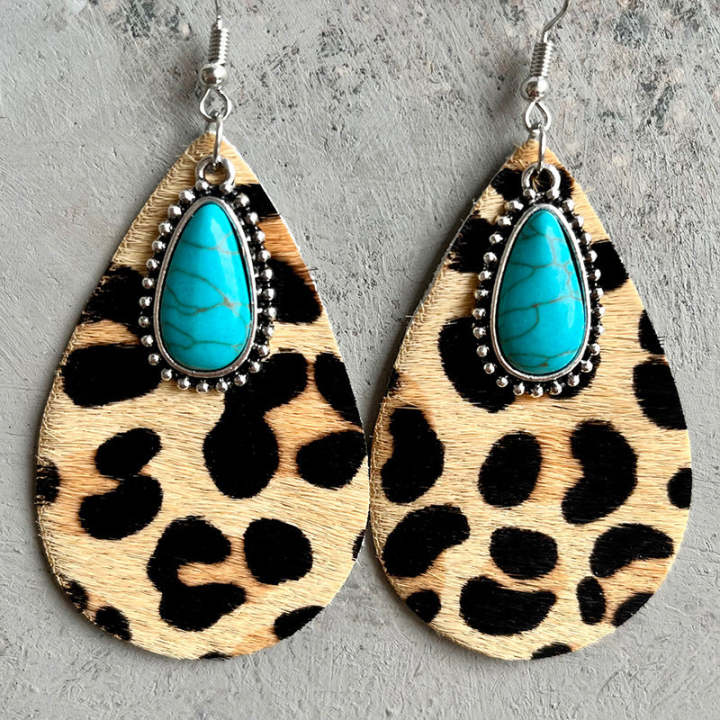
A practical earring-led formula is: solid or softly patterned garment, controlled neckline, no necklace, one quiet hand accent if desired, and a bag whose strap stays below the ear and collar zone. The formula is not a rule about formality; the invitation brief determines whether the garment and jewelry are suitable.
Live Product Drill B: Build Around the Necklace Field
The live Western Turquoise Vintage Floral Leather Necklace page was reviewed on the same date. It displayed $141.40 USD and five visible Size radios labeled Design 1 through Design 5, with Design 1 selected. Its current text presents Western, turquoise-colored, vintage-influenced styling and suggests casual, Western-inspired, occasion, and gifting use.
The words floral and leather appear in the product title, while the general visible description did not provide a component-by-component material statement. The page also did not document natural turquoise, bead composition, metal composition, treatment, age, maker, origin, cultural attribution, exact wearing length, pendant dimensions, mass, closure, skin-contact components, or care. Confirm those points for the selected Design rather than transferring details from a photograph or another option.
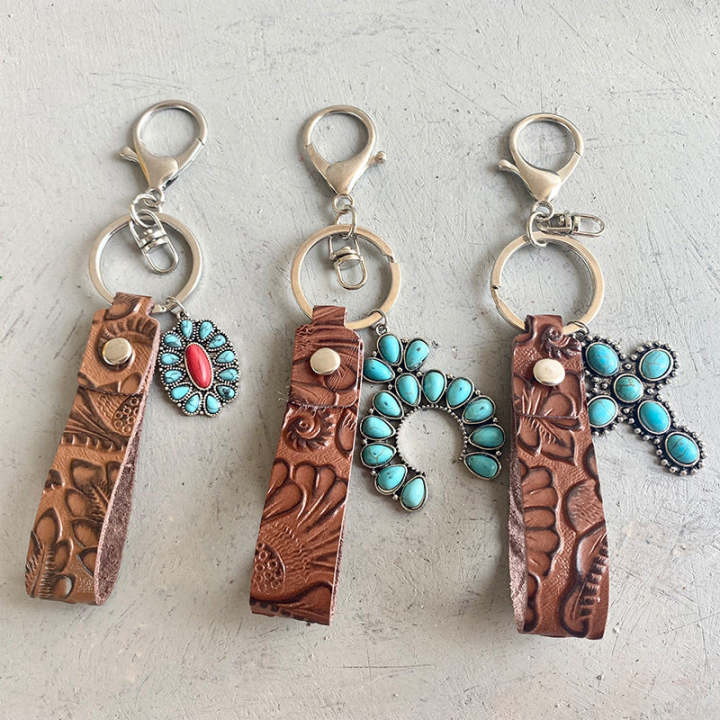
For a necklace-led look, begin with the garment rather than the jewelry. Put on the exact underlayer and outer layer, then use a temporary paper marker at the likely necklace endpoint. Check whether the marker crosses a seam, button, print, lapel, ruffle, corsage area, or bag strap. Only a verified wearing length can confirm the final landing point. When the necklace leads, select quiet earrings or none. Repeat its color once at most in a restrained hand, bag, or footwear detail; exact matching is unnecessary.
Use the Turquoise Jewelry collection to compare silhouettes and the Western Jewelry collection to compare broader styling directions. Compare the exact option pages, not category labels alone. The published Western turquoise jewelry selection guide supplies additional questions for building the evidence cards.
Three Wedding-Guest Outfit Protocols
Protocol A: Open neckline with an ear lead
Choose a garment whose neckline and shoulder area do not already contain dense trim. Test one selected earring Design with the planned hairstyle. Leave the neck bare, keep the hand zone quiet, and photograph the look with the bag. This protocol preserves face framing and reduces collision risk. It is useful only if the garment, earring specifications, and event brief support it.
Protocol B: Quiet ears with a necklace lead
Choose a neckline that creates an uninterrupted field at the necklace's documented length. Use small, quiet earrings or omit them. Keep the bag strap away from the necklace path, and test the outer layer. The necklace should look intentionally placed when seated as well as standing. If it drops into a complex print or catches a lapel, change the garment or leave the necklace out.
Protocol C: Patterned garment with a controlled color echo
When the dress or separates already carry floral, geometric, embroidered, or multicolor information, do not add another large motif automatically. Select one turquoise-colored accent in the ears, neck, hand, or wrist. Let it echo one minor garment color rather than matching the whole pattern. Remove another accessory if the first three points of attention are all decorative.
For each protocol, create a plain fallback: garment, shoes, bag, and either no jewelry or one verified quiet piece. The fallback is a complete outfit, not an admission that the original failed. It protects the day from weather, delivery, fit, irritation, damage, or a last-minute dress-code clarification.
What the Reviewed Earrings Video Adds
The 3-minute-8-second STYLE POINT video How to Style Earrings with Your Outfits presents multiple earring silhouettes beside different clothing examples. Its useful visual lesson is comparative: the apparent weight of an earring changes with garment detail, neckline area, hairstyle, and the amount of ornament already near the face. Small, linear, rounded, chandelier-like, and tassel-like forms do different jobs even when they all belong to one jewelry category.
Translate that lesson into a wedding rehearsal by comparing one variable at a time. Keep the garment and hair constant while changing the earring. Then keep the selected earring constant while changing the hair. Finally add the necklace, bag, and outer layer one at a time. This sequence reveals which object causes visual crowding or physical interference.
The video does not verify either Oroxen product. Its examples cannot supply material, dimensions, mass, closure, care, origin, cultural identity, or occasion approval for the live listings. It is a source of visual comparison, not a certificate or substitute for the invitation brief.
The Twenty-Minute Wedding Rehearsal
Minutes 0–3: Dress completely, including underlayers, hosiery if used, shoes, outerwear, bag, and hairstyle. Select the exact product Design. Do not evaluate jewelry against an unfinished outfit.
Minutes 3–6: Stand at conversation distance in ordinary room light. Rank the first three visual signals. Take front, side, and full-body photographs without a portrait filter. If the ear and neck zones both demand first attention, remove one.
Minutes 6–10: Sit, stand, walk, bend, turn the head, hug, use a phone, lift the bag, and put on the coat. Listen and feel for tapping, pulling, twisting, catching, or pressure. Stop if a closure shifts, the necklace enters the bag path, or the earrings contact the collar repeatedly.
Minutes 10–14: Simulate the reception. Move to music, reach across a place setting, hold a glass, and use the restroom mirror. Check whether the jewelry needs repeated correction. An accessory that stays comfortable for one posed photograph may not work for several hours.
Minutes 14–17: Try the fallback. Photograph it and confirm that it still looks complete. Put the unused jewelry in suitable protective storage rather than loose in the event bag.
Minutes 17–20: Review logistics: current order status, delivery margin, packaging, return conditions, weather, venue information, and any host update. Do not let a purchase deadline pressure you into an unsupported assumption.
A similar real-condition mindset appears in the published country-concert jewelry guide. A concert and a wedding are different occasions, but both reward testing for movement, outerwear, bags, duration, and current venue rules.
Stop Conditions and a Small Contingency Plan
Change or remove a piece when it causes pain, numbness, itching, heat, a damaged closure, visible coating loss, tangling, unsafe snagging, repeated contact with hard objects, or constant adjustment. Do not apply an improvised cleaner or repair during the event. Follow documented care for the exact materials, and ask the seller or an appropriate professional when composition or damage is uncertain.
Pack only what you can manage safely: a protective jewelry pouch or box, the quiet fallback if a change is realistic, and any item-specific care instruction that matters. Avoid storing different pieces loose together. Keep jewelry away from products or conditions that its documented care does not allow. If no care guidance exists, the cautious choice is to remove the item before activities that expose it to moisture, cosmetics, impact, or friction and to request proper instructions.
Common Styling Mistakes and Better Corrections
Using turquoise color as the entire plan
Color does not resolve scale, silhouette, movement, motif, neckline, or formality. Correct the look by assigning one lead zone and testing it against the complete garment architecture.
Stacking “wedding” accessories
A decorated dress, embellished shoes, dramatic earrings, necklace, bracelet, belt, and ornate bag may each look suitable alone. Together they can compete. Remove items until the first three visual signals are clear and intentional.
Assuming every Design shares specifications
Different option images can represent different forms. Record the exact selected Design and obtain its measurements, mass, closure, components, and included quantity. Do not treat gallery numbering as a contents list.
Waiting until the event morning
Late testing hides delivery, comfort, collision, and care problems. Rehearse early enough to use the quiet fallback without stress.
Borrowing authority from another source
A style video, guide, photograph, or another product page cannot prove facts about these products. Keep visual inspiration and listing evidence in separate columns.
Frequently Asked Questions
How should a beginner choose beaded turquoise jewelry for a wedding?
Start with the event brief and finished garment. Choose the ear or neck zone as the lead, then compare exact options for documented dimensions, mass, closure, components, care, availability, and returns. Treat “beaded turquoise” as a styling search phrase unless the listing verifies the actual materials.
Which wedding guest outfits work best with turquoise-colored jewelry?
No single garment is universally best. Quiet solid fields can make a focal piece easy to read, while patterned garments may need one smaller accent. The invitation, setting, neckline, hair, bag, outer layer, and the jewelry's verified fit determine the result.
Can the earrings and necklace be worn together?
They can be compared together, but that does not mean they should automatically be worn together. Test the exact Designs. If both zones compete, let one lead and remove or quiet the other. Also verify their specifications and collision paths before an event-length wear.
How can two options be compared without unsupported claims?
Use a side-by-side evidence card. Compare documented option label, price, included quantity, measurements, mass, closure, materials, care, shipping, and return information. Keep visible color or motif observations separate from unverified composition, origin, or age.
What should be checked again before ordering?
Reopen the live page and confirm the selected Design, current price, availability, delivery timing, specifications, care, and return conditions. Product pages and event details can change. Allow enough margin to inspect and rehearse the piece without relying on rushed delivery.
Where should the shopping path continue?
Return to Oroxen, compare the two linked collections, and save exact option evidence before deciding. The most useful next step is not adding another accessory; it is resolving the largest unknown in the current outfit plan.
Conclusion: Dress for the Whole Event, Not One Close-Up
Successful wedding-guest styling is a sequence of decisions. Respect the invitation, map the four visual zones, choose one lead, verify the selected product, rehearse both ceremony and reception conditions, and keep a complete quiet fallback. This process gives beaded turquoise jewelry a purposeful place without requiring every nearby object to match.
Use photographs for proportion and product pages for documented facts. Leave missing information visibly unknown. When comfort, evidence, or event guidance does not support the more elaborate version, simplify. A guest look is strongest when the person can participate in the day without the jewelry demanding attention, correction, or explanation.