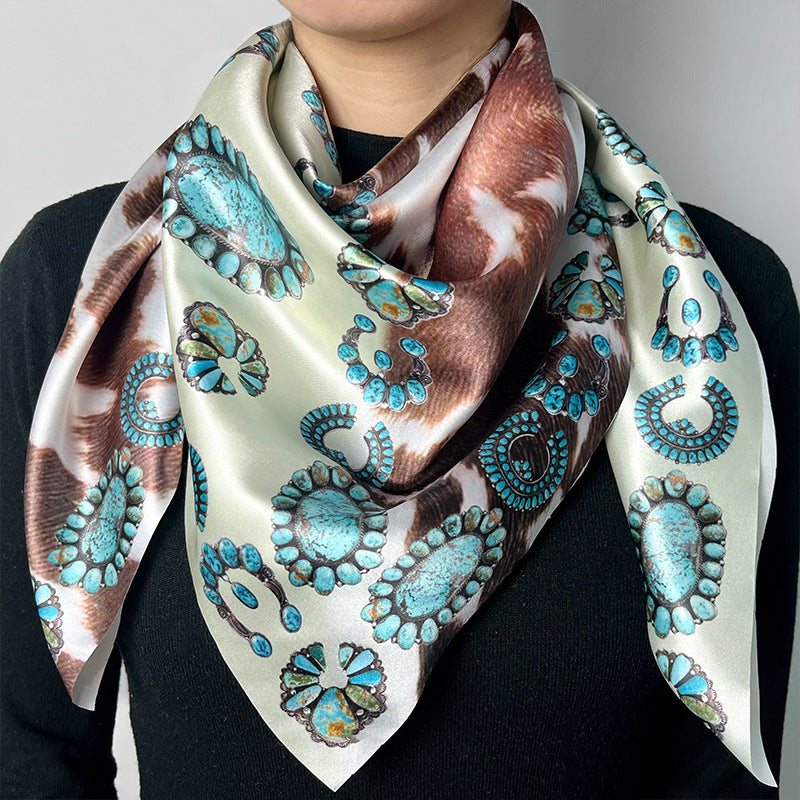
How to Make Turquoise Jewelry for Women the Focal Point of a Wedding Guest Look
Making turquoise jewelry the focal point of a wedding guest look does not mean making every accessory turquoise-colored or large. A focal point succeeds when attention reaches it easily and then returns to the wearer and outfit. The invitation, clothing silhouette, hair, makeup, bag, shoes, and movement all shape that route. When several zones compete, even a beautiful piece can disappear into visual noise.
This guide uses a four-frame attention route: doorway, conversation, portrait, and table. Each frame shows the guest at a different distance and from a different angle. The same exact item must remain appropriate, comfortable, and understandable across all four. “Turquoise jewelry for women” is an audience query, not a rule about who may wear a product, and it does not turn styling words into proof of material, origin, age, maker, or cultural affiliation.
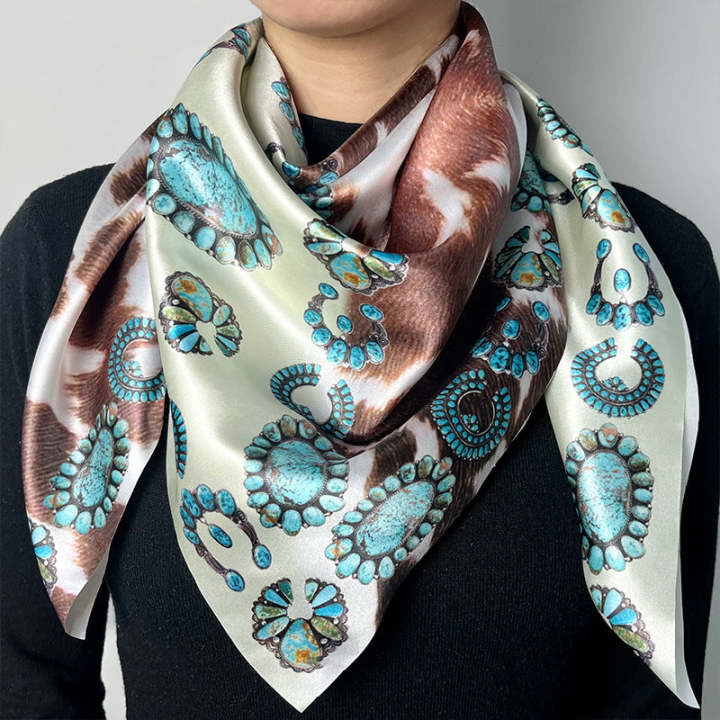
Quick Answer: Create One Clear Route
Choose one focal zone: face, neckline, or hand. Reduce competing color, pattern, shine, movement, and symbolic forms in the adjacent zones. Build one quiet bridge through a distant color echo, finish, or line, then leave deliberate plain space. Photograph the complete outfit at arrival distance, conversation distance, portrait framing, and seated table height.
Before styling, confirm the exact selected option, included contents, dimensions, mass, closure, materials, finish, decorative-component identity, skin-contact parts, care, availability, delivery timing, and return terms. A product name containing turquoise, Western, vintage, cross, stud, floral, geometric, or set does not prove natural turquoise, exact metal, historical age, maker, region, tribe, nation, religious meaning, or handwork.
Use the Turquoise Jewelry Guides hub to orient the category, then follow one attention route through the exact outfit.
Read the Invitation and Assign the Focal Zone
Check the invitation, wedding website, venue, time, season, and any cultural or religious guidance supplied by the couple. A formal evening, garden ceremony, courthouse gathering, destination wedding, and ranch celebration can support different levels of scale and movement. Host instructions take priority over general styling advice.
Write one sentence: “The focal zone is ___ because ___.” A neckline focal may support a plain dress or open jacket. A face focal may work with quiet neckwear and controlled hair. A hand focal may support a strong ring with restrained earrings. If the sentence names two or three focal zones, edit before shopping.
Western and turquoise language can describe a visual direction without establishing origin or identity. The published Western jewelry motifs, styles, and materials guide helps distinguish visible forms from documented provenance.
Frame One: The Doorway
The doorway frame shows the complete silhouette from several steps away. Clothing shape, hem, shoes, jacket, and bag are more visible than fine jewelry detail. A focal necklace or earring must therefore create a readable outline or color placement without relying on close-up texture.
Stand in the finished outfit and take a full-body photograph. Blur or reduce the image on the screen. Which zone remains strongest? If a buckle, print, shiny bag, or boot reaches attention before the jewelry, decide whether that is intentional. Lower one competitor rather than enlarging every turquoise accent.
A focal point should not erase the guest. Face and clothing should still establish the person and dress code before the accessory is inspected. The Western jewelry styling guide offers more full-silhouette proportion tests.
Frame Two: Conversation
At conversation distance, face, neckline, earrings, hair, glasses, collar, and upper garment interact. This frame determines whether the focal route feels deliberate or crowded. A necklace, statement earring, and detailed neckline can create three competing centers within a small space.
Turn the head, speak, use the phone, put on the jacket, and hug. Check whether the item hits a collar, catches hair, moves unpredictably, or disappears. Mechanical conflict can become more noticeable than style. If the face leads, simplify the neckline. If the necklace leads, choose earrings by quiet outline and verified comfort.
Do not assume a stud assortment is mechanically quiet. Stud dimensions, projection, mass, post, backing, and decorative edges still matter. “Everyday” wording is not a fit specification.
Frame Three: Portrait
Portrait framing can magnify a blue-green accent and symbolic form. Test hair up and down, glasses on, jacket open and closed, and the expected lighting. Exact color matching between the product page and clothing is unreliable because screens, photography, and venue light vary.
Use one bridge. A small turquoise-color repeat in a pocket, shoe, manicure, or fabric detail can connect the focal point without creating another equal center. The bridge should be noticed after the jewelry. If it appears first, lower its contrast or remove it.
Symbolic forms deserve intention. A cross, floral, geometric, animal, or Western-associated shape may be personal, religious, cultural, regional, or decorative. The seller's title does not document a complete meaning. Choose the form appropriately for the host, event, and wearer.
Frame Four: The Table
The table frame shows hands, sleeves, bag, glassware, utensils, rings, bracelets, and lower necklace movement. Sit in the complete outfit and reproduce ordinary dinner motions. A long item may reach a garment edge or place setting; earrings may contact a phone; bracelets and rings may strike the surface.
If the neckline remains the focal point, keep hand jewelry quiet. If earrings lead, the table frame can hold a small echo through one ring or manicure color. Do not add a stack because the portrait looked sparse. The seated outfit is a separate composition.
Plan safe temporary removal. Use a dedicated soft compartment or pouch, not a loose table surface or mixed bag pocket. Keep the item away from keys, liquids, perfume, cosmetics, sanitizer, and hard accessories until exact care instructions are known.
Live Option One: Two Length Labels for a Neckline Focal
The live Western Turquoise Vintage Cross Jewelry for Women page displayed at $112.11 USD during review. Under Size, it showed 90cm and 52cm, with 52cm selected. The visible copy used Western, turquoise, and vintage styling language and suggested casual, Western-inspired, occasion, and gifting use.
The length labels create two potential attention routes, but the inspected text did not define what the measurement includes. It did not state decorative width or drop, total mass, closure, adjustment range, included quantity, exact materials, finish, turquoise-looking component identity, skin-contact parts, item-specific care, maker, age, origin, or cultural affiliation.
Ask for a measurement diagram and written option-to-image mapping. Confirm whether 52cm or 90cm includes the closure and decorative portion. Use a string measured to the seller's definition on the intended body and clothing. Test doorway, conversation, portrait, and table frames before making the necklace-length item the focal point.
The cross term identifies a seller-labeled form, not a documented denomination, sacred status, history, or the wearer's belief. Preserve that boundary in both styling and product description.
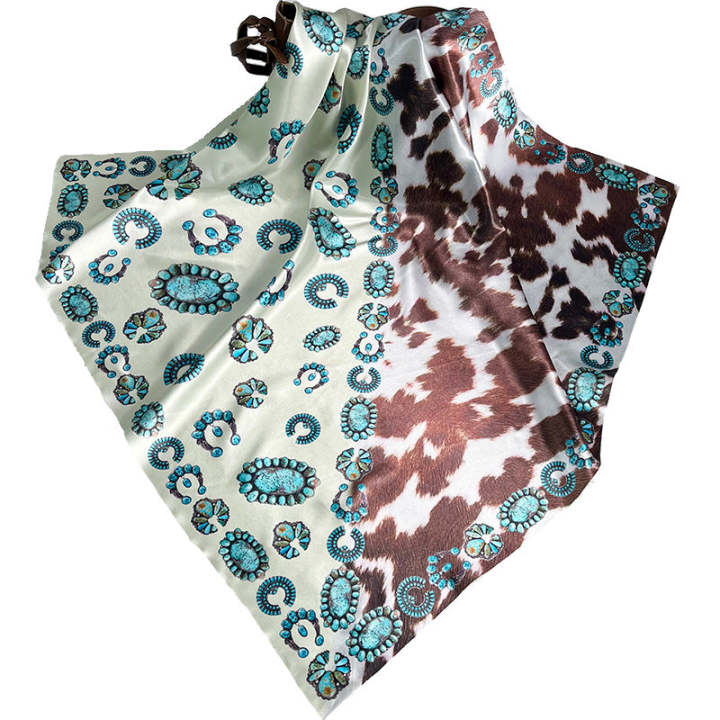
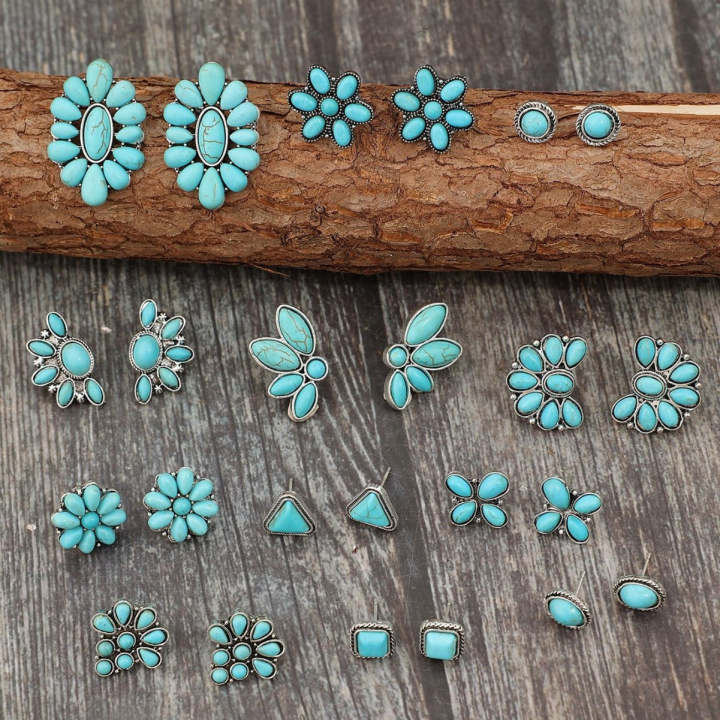
Live Option Two: A Stud Set with Conflicting Copy
The live Turquoise Western Stud Earring Set page displayed at $29.99 USD during review. It showed one selected Color radio without a readable label. Its product-specific section described a coordinated assortment of turquoise-style studs mixing floral, geometric, and classic shapes for everyday styling and gifting.
Earlier text on the same page referred instead to Turquoise Boho Vintage Statement Earrings and Western statement-earring styling. This is a copied-text conflict. Do not decide which paragraph is correct from preference. Ask the seller to confirm the exact selected item, included pair and piece count, option name, dimensions for each design, mass, posts, backs, materials, finish, skin-contact components, and care.
The inspected text did not state the exact assortment quantity or document natural turquoise, metal composition, maker, age, origin, or cultural affiliation. A collage can support visual comparison but cannot define what arrives.
For a face focal, select one confirmed stud pair or a coordinated group only after the contents are clear. Use hair and neckline to create open space, then test glasses, phone, outerwear, and portrait framing.
Five Focal-Point Formulas
Plain dress, neckline focal
Use one verified length option and quiet earrings. Let fabric color and neckline frame the item. Keep bag hardware and hand jewelry restrained.
Tailored separates, face focal
Choose a confirmed stud design, clean collar, controlled hair, and minimal necklace. Echo one color at the shoe or pocket only if needed.
Patterned dress, small face focal
Let the clothing remain the large-scale anchor and use one confirmed stud pair as a precise blue-green point. Skip the long necklace when it crosses the print awkwardly.
Monochrome outfit, longer neckline route
A measured longer option can create a vertical focal line when it clears jacket, waist, bag strap, and table movement. Verify the exact length definition first.
Strong boots or belt, quiet upper focal
When the ground or waist already carries Western-inspired texture, choose low-volume earrings or a simpler neckline placement. Distance between active zones creates clarity.
Browse the Turquoise Jewelry collection to compare focal zones and the Western Jewelry collection to find quieter supporting pieces. A collection provides options; only exact product records complete the decision.
Related Evening-Dress Video: A Clear Boundary
The corresponding video is “Proper Jewelry With an Evening Dress : Formal Wear for Women” by ehowbeauty. For this draft, only the title, channel, URL, and broad formal-outfit relationship are used. The video was not watched in full, so no rule, scene, example, demonstration, material claim, fit advice, or care recommendation from it is cited.
Formal wear is not identical to every wedding guest dress code, and a video cannot verify an Oroxen product. Follow the couple's instructions, use the four-frame attention route, and resolve item-specific facts through current pages and written seller answers.
Common Focal-Point Mistakes
- Everything is focal: necklace, earrings, belt, bag, and shoes compete equally.
- Close-up planning: the outfit is never viewed at doorway or portrait distance.
- Length without definition: 52cm or 90cm is used without knowing what is measured.
- Set by collage: visible studs are counted as included contents.
- Conflict erased: copied statement-earring copy is silently treated as stud-set evidence.
- Color becomes material: turquoise-style is upgraded to natural turquoise.
- Host context ignored: generic formal advice overrides the invitation.
The complete Western turquoise jewelry buying guide adds evidence questions. The country concert jewelry guide offers a contrasting movement context for testing assumptions.
Frequently Asked Questions
Should the necklace or earrings be the focal point?
Choose the zone that best supports the clothing, wearer, and verified mechanics. A strong neckline may favor earrings; a plain neckline may frame a measured necklace. Do not give both equal volume automatically.
Can turquoise-colored jewelry work with a patterned dress?
Yes. Use one small or clearly spaced focal zone and reduce exact matching. Photograph the complete pattern and jewelry together at normal distance.
Does “for women” limit who can wear the item?
No. It is audience and merchandising language. Suitability depends on the wearer's preference, exact fit, comfort, context, and product facts.
How many studs are included in the set?
The inspected text did not state an exact count. Ask the seller for a written included-contents list and option-to-image mapping before purchase.
Can 52cm be assumed to fit the shown neckline?
No. Confirm what is measured and test that length on the intended body and garment, including the decorative drop and closure.
Where should the shopper continue?
Visit Oroxen, choose one focal zone, and photograph the outfit in all four frames. Resolve the first product conflict or missing measurement before adding another accessory.
Run a Final Photograph Audit
Create one contact sheet with four uncropped photographs taken in similar light: full-body arrival, upper-body conversation, seated portrait, and hands at the table. Under each image, write the first three elements the eye notices. The intended jewelry zone should appear consistently without displacing the face, clothing silhouette, or event context. If the order changes dramatically, identify the cause—bag position, jacket edge, hair, print, hardware, or camera angle—before buying another accessory.
Repeat the audit after ten minutes of ordinary movement. Do not reset the necklace or earrings for the second set of photographs. Their natural resting positions are more useful than a carefully arranged pose. A focal plan that survives movement is stronger than one that exists only during setup.
Conclusion: Direct Attention, Do Not Demand It
Turquoise jewelry becomes a strong wedding guest focal point when the outfit gives attention a clear route. Doorway, conversation, portrait, and table frames reveal different competitors and mechanical problems. One focal zone, one quiet bridge, and deliberate plain space usually communicate more than repeated color and motifs.
Keep the route evidence-based. A length label needs a definition; a stud set needs an included count; copied text needs seller clarification; turquoise-style remains an appearance phrase. When the exact product and the complete event plan agree, the focal point can feel intentional without competing with the wearer, the hosts, or the celebration.