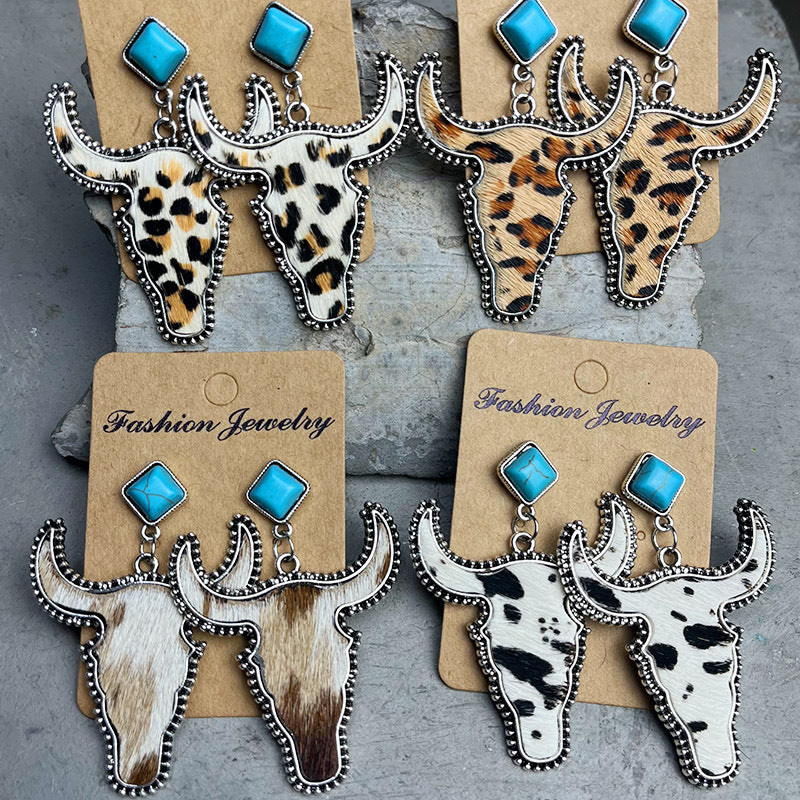
How to Make Men's Turquoise Jewelry the Focal Point of a Country Concert Look
A country concert outfit has to work in two very different environments. In the mirror at home, every detail is still and close. At the venue, the wearer may be walking through a parking lot, standing in a crowd, moving under uneven light, putting on hearing protection, checking a phone, and adding or removing a jacket. Men's turquoise jewelry becomes a useful focal point only when it survives both views. The goal is not to attach the largest possible accessory. It is to make one intentional area readable while the rest of the outfit supports it.
This guide uses an attention-budget map. Imagine the outfit has ten units of visual attention. Give six units to one jewelry zone, two units to a distant echo, and keep two units in reserve for the clothes, hat, boots, or belt that already have character. That simple allocation makes a turquoise-colored earring, pendant, ring, or bracelet look deliberate instead of crowded. It also leaves room for comfort and product verification, two things that photographs cannot settle on their own.
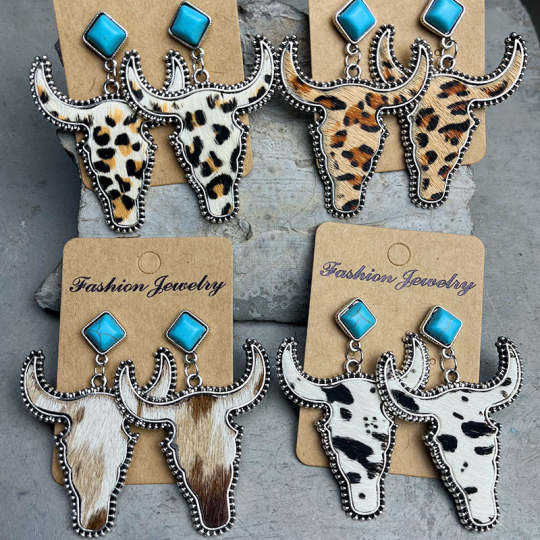
The Quick Answer: Give One Zone the Stage Light
Choose the body location that should be noticed first: ear, neck, hand, or wrist. Put the strongest turquoise-colored shape there, then reduce contrast and repetition everywhere nearby. If the earring is the lead, keep the neckline clean and let any ring or bracelet act as a small echo. If a necklace is the lead, use quieter earrings or no earrings. The focal point should remain identifiable from a normal conversation distance, not merely in a close-up product image.
For a country concert, test the focal piece with the actual hat, collar, eyewear, hearing protection, and jacket planned for the event. Turn the head, raise both arms, sit, walk, and simulate using the phone. An accessory that disappears under hair or collides with a hat band does not control attention. An accessory that catches clothing or becomes tiring has too much physical cost, regardless of how strong it looks.
Readers who want a broader category overview can start with the published complete guide to choosing western turquoise jewelry. For venue-specific planning across earrings, necklaces, bracelets, and rings, use the country concert jewelry guide as a second checklist.
Build an Attention-Budget Map Before Buying
Mark the existing high-contrast areas
Lay out the complete outfit and mark everything that already asks to be seen: pale stitching on dark denim, a bright buckle, a printed shirt, boot tooling, hat decoration, contrasting jacket hardware, or a large watch. These details spend attention before jewelry is added. A focal earring has an easier job beside a solid shirt and quiet collar than beside a patterned shirt, decorative hat, bright chain, and oversized buckle.
Next, divide the body into four zones: head, neckline, hands, and waist. Strong objects in adjacent zones compete more than objects separated by space. A pronounced earring and a tall necklace pendant both occupy the upper frame; a pronounced earring and a restrained ring are separated enough to read as lead and echo. This is why counting accessories is less useful than mapping where they appear.
Choose six units, not ten
The six-unit lead should have one or two clear reasons for being noticeable: color contrast, scale, motion, silhouette, or placement. It does not need all five. A compact turquoise-colored stud can lead when hair is short or pulled back and the shirt is quiet. A longer cow-skull-shaped earring can lead through motion and outline, so it may require fewer competing motifs. Trying to maximize color, scale, movement, shine, and symbolism at once usually turns the whole outfit into a single noisy block.
The two-unit echo should repeat only one property. It might repeat the blue-green color at the wrist, the aged-looking color at the belt, or an angular line in a ring. It does not have to be a matched set. The reserve protects the look from last-minute additions such as an event wristband, sunglasses, a jacket zipper, or merchandise purchased at the venue.
Start with the Collection, Then Verify the Exact Option
Use the Turquoise Jewelry collection to compare categories and visual roles, not as proof that every item contains natural turquoise. Product names, collection labels, colors, and styling language can describe appearance. They do not authenticate a stone, metal, coating, or manufacturing method. The exact product page and selected option remain the working record.
Before making a shortlist, record the product URL, current price, selected design, gallery image, and review date. Then look for dimensions, total mass, per-earring mass, attachment or backing, components, surface finish, construction, care instructions, and return conditions. If a field is absent, write “not stated” rather than estimating from the model, hand, ruler-free photograph, or product name. That gap is not automatically a reason to reject the design, but it is a reason to ask before ordering.
A good shortlist has a visual candidate and a verification plan. The visual candidate answers, “Could this lead the outfit?” The verification plan answers, “Can the exact option be worn safely and comfortably for the planned hours?” Those questions must not be collapsed into one.
Product Study One: Cow-Skull-Shaped Earrings as a Strong Lead
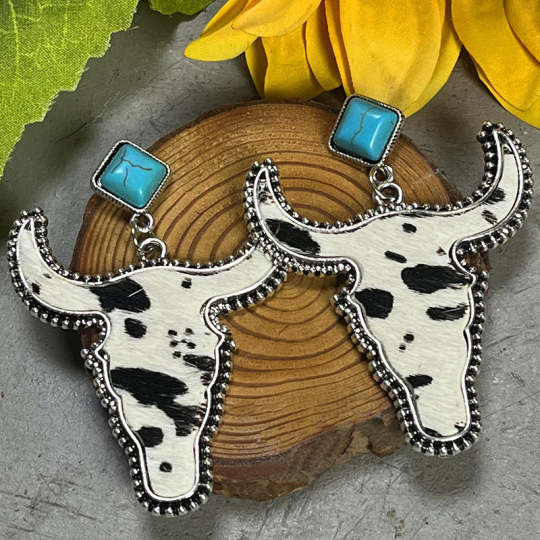
The Western Turquoise Boho Vintage Cow Skull Earrings page was reviewed on August 24, 2026. It displayed a price of $141.40 USD, four visible design choices labeled Design 1 through Design 4, and a sixteen-image gallery. Those are current page observations, not permanent promises. Price, availability, imagery, and options can change, so the selected design should be rechecked immediately before purchase.
The page describes a western, turquoise, boho design and says color may vary slightly by screen. It does not, in the visible information reviewed, establish natural turquoise, a particular metal, dimensions, drop length, mass, backing type, components, finish process, construction method, or care protocol. “Turquoise” in a title should therefore be treated as a product/style label unless the seller supplies material documentation for the exact option. A cow-skull outline should likewise be discussed as a visible motif, not as evidence of cultural origin, tradition, or artisan attribution.
How to style this visual role
Because a recognizable animal-head outline and a hanging form can create both motif and movement, begin with the ear zone as the six-unit lead. Pair it with a solid black, cream, charcoal, faded indigo, or brown upper layer. Keep the collar free of another large turquoise-colored object. A plain tee under a denim jacket works when the jacket hardware is modest and the collar does not touch the earring. A pearl-snap shirt can work when the snaps are not already the brightest feature.
Use a ring, narrow bracelet, or belt detail only as a distant two-unit echo. Repeat either the blue-green color or the weathered-looking color, not the full cow-skull motif. Repeating the same recognizable motif at the ear, necklace, buckle, and boot can make the look feel themed rather than composed. If the hat already carries decorative hardware, test the outfit once with the earring and once without the hat ornament.
What to verify for concert use
Ask for the exact drop length, width at the widest point, total and per-earring mass, post or hook type, backing, component description, and recommended care. Confirm whether the chosen design is sold as one earring or a pair. Test for contact with hat cords, hair, jacket collars, and over-ear hearing protection. If any of those facts remain unavailable, do not present the item as lightweight, hypoallergenic, secure, nickel-free, water-resistant, or suitable for prolonged wear.
Product Study Two: Vintage-Labeled Earrings as a Flexible Alternative
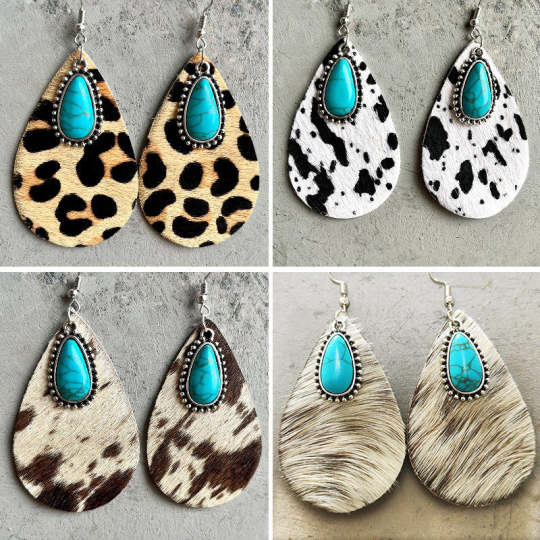
The Western Turquoise Vintage Earrings page was also reviewed on August 24, 2026. It displayed $126.25 USD, seven visible choices labeled Design 1 through Design 7, and a twenty-image gallery. The number of designs makes option control especially important: a fact visible in one gallery image may not apply to every selectable design. Save a screenshot of the selected radio button and matching image before checkout.
Visible copy calls the design western, turquoise, and vintage, but the reviewed page did not state the exact material identity, dimensions, weight, attachment, complete component list, finish, construction, or care method. “Vintage” can describe styling; it does not prove historical age. The same evidence rule applies to “turquoise.” Discuss the blue-green look that can be seen, but do not convert the label into a gemstone claim.
Use the selected silhouette, not the family name
Seven designs can occupy different attention budgets. A compact design may need exposed ears, a quiet shirt, and deliberate color repetition to become the lead. A longer or more articulated design may create enough motion to lead without additional turquoise-colored jewelry. Decide from the exact option, not from the shared product title. If the selection is small, reduce upper-body competition. If it is long or complex, clear the neckline and let the earring do more work.
For an everyday-leaning concert outfit, combine a quieter selected design with a washed denim shirt, dark jeans, and plain boots. For a sharper evening version, use a clean dark shirt or jacket, one controlled metal-color echo at the hand, and fewer decorative surfaces. The published guide to styling western jewelry with denim, boots, and workwear offers additional outfit relationships without requiring a matched set.
The Stage-Light Test: Four Distances and Four Movements
Most styling advice is judged at one distance. Concert clothes are not. Run a four-distance test under ordinary indoor light and, if possible, outdoors near dusk:
- Inspection distance: Confirm the exact option, edges, attachment, and any visible irregularities. This is a product check, not the final style view.
- Conversation distance: Stand about an arm's length away. The intended focal zone should be identifiable without searching.
- Phone-photo distance: Take a full-body photo without portrait-mode blur. Check whether the jewelry remains readable or is swallowed by pattern and hardware.
- Across-the-room distance: Look for a coherent color or silhouette impression. Fine details may disappear, but the outfit should still have one direction.
Then test four movements: turn the head through a comfortable range, raise the arms as if cheering, put on and remove the outer layer, and simulate inserting or adjusting hearing protection. Listen and feel for impacts or snagging. A focal piece should be visually present but physically boring: secure, predictable, and easy to forget once the event begins.
What the Men's Earring Video Adds—and What It Cannot Prove
Mardo's video “Men's Earring Shopping Guide: 4 Must-Have Styles to Elevate Your Look” presents four personal style categories: a decorated hoop, a plain hoop, a dangle, and a stud. The useful principle is not that every wearer needs those exact categories. It is the contrast between understated and more expressive choices, and the creator's repeated emphasis on individual comfort, wardrobe, preference, and personality. That supports the attention-budget method: select the role first, then choose a form that feels natural to the wearer.
The video shows the creator's own precious-metal and gemstone examples, but it is not evidence about either Oroxen product on this page. It does not establish their stones, metals, carat weights, settings, backings, durability, or fit. Its statements about what he wears daily or for special occasions are personal experience, not universal rules. Use the video to compare silhouette roles; use the current product listing and direct seller answers to verify the actual item.
Four Outfit Formulas That Keep One Focal Point
1. Outdoor general-admission formula
Start with a plain breathable tee, dark or medium-wash denim, broken-in boots, and a light overshirt. Give the ear zone the lead. Keep the neckline empty and use a small ring as the only echo. Secure phone, keys, and eyewear so repeated handling does not collide with the earring. Favor the exact design that passes the movement test rather than the one that looks largest in the gallery.
2. Arena formula
Use a darker shirt or jacket to create a clean background for blue-green color. Keep jacket lapels, drawstrings, and collar tips away from the ear. If over-ear hearing protection is planned, a compact option may be more practical than a hanging form; verify the actual dimensions and backing before deciding. Let a belt or boot stitch supply the distant echo instead of adding another upper-body accessory.
3. Pearl-snap formula
A pearl-snap shirt already places small repeated highlights across the chest. Choose either a compact earring with stronger color or a longer earring with a simpler outline. Do not add a large pendant merely because the shirt is western-inspired. Roll sleeves only if a bracelet will not compete with a prominent watch. The published explainer on concho earrings, scale, and comfort is useful when comparing another recognizable western-shaped ear accessory.
4. Minimal black-and-denim formula
Combine a black tee, black or dark jeans, a denim jacket, and plain boots. This quiet base gives the selected earring more of the attention budget. Repeat the jewelry's visible blue-green color once at the hand only if that second object remains small in the full-body photo. If the earring does not read at conversation distance, expose the ear or simplify the collar before buying a larger piece.
Common Failures and Fast Corrections
- Failure: every zone is a lead. Correction: photograph the outfit, circle the first three things noticed, and remove or quiet two of them.
- Failure: the name becomes a material claim. Correction: say “turquoise-colored,” “turquoise-style,” or use the exact product name unless material documentation is supplied.
- Failure: all designs are treated as identical. Correction: record the selected Design number and match it to its image before making any shape or fit statement.
- Failure: the focal piece disappears under styling. Correction: expose the ear, reduce nearby pattern, or change the background color before increasing jewelry scale.
- Failure: the piece wins the mirror but loses the venue test. Correction: rehearse with the hat, jacket, eyewear, bag strap, and hearing protection.
- Failure: motif repetition becomes costume-like. Correction: repeat color or surface mood once, not the same recognizable symbol across every accessory.
- Failure: comfort is inferred from a photograph. Correction: obtain dimensions, mass, and attachment details, then use a return-ready first fitting.
Frequently Asked Questions
Can men wear earrings listed without a gender label?
Style categories do not determine who may wear an item. The practical questions are whether the wearer wants the design, has the appropriate piercing or attachment requirement, can verify the exact option, and finds the dimensions, mass, backing, contact, and movement comfortable.
Must turquoise-colored jewelry match a turquoise shirt or belt?
No. Exact matching can flatten the focal point. A neutral outfit often gives the blue-green area more clarity. If color is repeated, keep the repeat smaller and farther from the lead.
Which of the two product pages is better for a focal point?
The answer depends on the selected design, because the pages show four and seven choices respectively. Compare the exact silhouettes, then request dimensions, mass, and attachment information. The shared title cannot decide the role for every option.
Does “vintage” mean the earrings are old?
Not on the evidence reviewed. It is safe to treat “vintage” as styling language unless age and provenance are documented for the exact piece.
How many other accessories should be worn?
There is no universal number. Map zones instead. One strong ear-zone lead plus one restrained hand- or waist-zone echo is a useful starting point. Remove the echo if the hat, shirt, buckle, or jacket already supplies it.
What should be confirmed before ordering?
Confirm the exact included quantity, option, dimensions, total and per-item mass, attachment or backing, full components, material identity, finish, construction, care, current availability, delivery estimate, and return terms. Save the page state because prices and choices may change.
Final Pre-Concert Checklist
- One body zone clearly owns about six of the ten attention units.
- The product link, selected design, current price, image, and review date are recorded.
- No material, age, artisan, cultural-origin, comfort, or durability claim exceeds the listing evidence.
- Dimensions, mass, attachment, components, finish, care, and included quantity are confirmed or explicitly marked unknown.
- The full outfit passes inspection, conversation, phone-photo, and across-the-room views.
- The jewelry passes head turn, arm raise, outer-layer, phone, and hearing-protection tests.
- A secure case or pouch is ready if the piece must be removed.
Conclusion: Make the Choice Legible
The best focal point is not automatically the biggest accessory. It is the clearest decision. Assign one jewelry zone the stage light, give a distant detail a quiet echo, and leave reserve for the rest of the outfit and venue. Then verify the exact product option with the same care used to plan the styling. That sequence lets men's turquoise-colored jewelry look intentional without turning an attractive label into an unsupported claim.
Explore additional shapes in the Western Jewelry collection or begin again from the Oroxen homepage. Whatever category you choose, let visible evidence govern the description, let movement govern the fit decision, and let one zone—not every zone—carry the concert look.