How to Build a Wedding Guest Look Around Turquoise Southwestern Jewelry
Building a wedding guest look around turquoise Southwestern jewelry begins with space, not with shopping. A dress, jumpsuit, or tailored separates already create lines at the face, neckline, waist, wrists, and shoes. Jewelry adds another set of lines, colors, shapes, and movement. When every zone asks for attention, the outfit becomes difficult to read. When one zone leads and the others support it, a blue-green accent can feel deliberate without taking over the occasion.
This guide uses a five-zone floor plan: face, neckline, hands, waist, and ground. You will assign one zone as the focal room, create a bridge to one supporting zone, and leave at least two quiet. The method is useful for a necklace-length option, an earring design, or a mix of accessories, while keeping product facts, dress-code requirements, cultural language, fit, and care separate.
Quick Answer: Choose One Lead Zone and One Bridge
Start with the invitation and the finished clothing silhouette. Decide whether the face or neckline will lead. If a necklace-length piece is the focal point, simplify earrings and keep the hand zone restrained. If earrings lead, create open space around the face and let any necklace or belt become a quiet bridge. Repeat turquoise color once at most through a small detail, then stop matching.
Before committing, verify the exact selected option, included contents, dimensions, mass, closure, materials, finish, decorative components, skin-contact parts, care, availability, delivery timing, and return terms. A word such as turquoise, Southwestern, Western, vintage, cross, or statement describes only what the current product page actually supports. It does not establish gemstone identity, metal composition, age, maker, region, tribe, nation, handwork, or cultural affiliation.
Use the Turquoise Jewelry Guides hub to navigate the category, then return to the exact product and outfit floor plan before checkout.
Read the Invitation Before Drawing the Floor Plan
The couple's instructions outrank a general styling formula. Check the invitation, wedding website, venue, time, season, and any host-provided cultural or religious guidance. “Wedding guest” is not one dress code. A formal indoor evening, a daytime garden ceremony, a courthouse celebration, and a ranch venue can make the same jewelry scale feel very different.
Write down four constraints: expected formality, weather, movement, and fabric. Formality affects visual volume; weather affects layers and skin contact; movement affects security and comfort; fabric affects catching and contrast. Add a fifth constraint if the day involves travel, multiple venues, a coat check, or a tight delivery schedule.
Do not turn “Southwestern” into a claim about identity or origin. In this article, turquoise Southwestern jewelry is a search and styling phrase for blue-green accents and Western-inspired visual vocabulary. Specific sacred, tribal, national, regional, maker, historical, or material claims require reliable item-specific documentation. The published Western jewelry motifs, styles, and materials guide explains how to describe what is visible without assigning unsupported provenance.
Zone 1: Decide Whether the Face Leads
The face zone includes earrings, hair accessories, eyewear, hat, neckline edge, and makeup contrast. It receives attention in greetings and portraits, so it often works as the natural lead. If earrings have strong color, length, movement, or outline, leave space around them. An elaborate hairstyle, high collar, patterned scarf, and large earrings can compress the same small area.
Test with the actual hairstyle and glasses. Turn the head, look down, hug, and put on the outer layer. Check whether an earring meets hair, collar, veil-like fabric, phone, mask if needed, or another accessory. A product photograph shows the design at close range; it cannot prove comfort or predict the guest's complete face zone.
When the face leads, the bridge can be a small color repeat at the wrist or a restrained metal-color echo in the bag hardware. The neckline and waist should then become quieter rooms. Quiet does not mean empty; it means visually subordinate.
Zone 2: Map the Neckline Before Choosing Length
Draw the clothing neckline as a boundary. A pendant or necklace-length item can sit inside that boundary, cross it, or fall below it. Each relationship changes the result. A clean gap often reads more clearly than a pendant that repeatedly lands on the exact edge of a V-neck, lapel, button placket, or embellished panel.
Use a string or existing necklace to test the stated length on the intended body and clothing. The same labeled length lands differently according to neck circumference, height, torso proportions, pendant dimensions, and garment construction. Add the pendant or decorative drop to the total visual reach; a length label alone may describe only part of the piece.
The published guide to styling Western jewelry with dresses and other wardrobe foundations provides more neckline and proportion examples. Treat them as methods to test, not rules that guarantee a fit.
Live Example One: A Two-Length Cross-Jewelry Listing
The live page for Western Turquoise Vintage Cross Jewelry for Women displayed at $112.11 USD during review. Its Size selector showed 90cm and 52cm, with 52cm selected. The page used Western, turquoise, and vintage styling language, suggested casual, Western-inspired, occasion, and gifting contexts, and asked buyers to review the images and selected option because screen color may vary.
That gives the floor plan a useful branch: compare the 52cm and 90cm labeled options against the exact neckline. It does not establish which part the length measures, the pendant or decorative dimensions, total mass, closure, extender, included quantity, exact materials, finish, turquoise-looking component identity, skin-contact parts, or item-specific care. The inspected text also did not document a maker, age, origin, or cultural affiliation.
Ask for a measurement diagram and a written option-to-image mapping. Confirm whether the stated length includes the closure and decorative portion, whether the selected option is one piece, and where its lowest point should fall. Do not refer to an observed cross-shaped element as a documented religious, historical, or cultural object unless the seller provides appropriate context. A cross form can be visually important without the page proving a particular meaning.
Zone 3: Keep the Hand Area Useful
The hand zone includes bracelets, rings, manicure, watch, corsage, clutch, phone, and bag hardware. It appears in candid photographs and interacts with nearly everything. When the face or neckline is already the focal room, one quiet hand detail is usually enough. Repeating every color and motif at the hand can make the outfit look assembled from a theme list.
Carry the actual bag and imitate dinner movements. Hold a glass, use utensils, check a phone, and greet someone. Remove or relocate an accessory that catches, presses, hits the table, or blocks a necessary movement. Fit and function are part of styling because an accessory that needs constant correction becomes the center of the wearer's attention.
If the jewelry selection includes no wrist or ring piece, allow the hand zone to remain quiet. Empty space is a design decision. It can make the turquoise color at the face or neckline appear more intentional.
Zone 4: Use the Waist as a Bridge, Not a Second Focal Point
The waist zone includes belt, buckle, waistband, jacket closure, bag position, and any print transition. A small shared finish or geometric line can connect a turquoise accent to the outfit. A large belt, high-contrast buckle, detailed bag, and long jewelry piece may all converge here, creating a visual traffic jam.
Photograph the full outfit with arms relaxed. Close the jacket or coat and place the bag where it will actually rest. If the necklace-length option, buckle, and bag hardware overlap, simplify one component or change its position. Evaluate the silhouette from normal social distance, not only through magnified accessory details.
A bridge should be noticed after the focal point. If the eye lands on the waist first, the bridge has become a lead. That may be a valid outfit, but then reduce the face or neckline accordingly.
Zone 5: Let Shoes and Hem Establish the Ground
The ground zone contains shoes, boots, hem, hosiery, and the visible relationship to the venue surface. It stabilizes the entire look. Western-inspired boots can communicate enough direction that jewelry does not need to repeat every Western-associated motif. A simple shoe can instead give a stronger jewelry piece more room.
Check standing and seated proportions. A long hem may hide most of the footwear; a shorter hem makes the ground zone more prominent. Venue safety and comfort matter more than forcing a thematic match. Grass, gravel, stairs, sand, and long periods of standing can all change the best shoe decision.
Once the ground is stable, look upward and count the active zones. One lead, one bridge, and two or three quiet zones usually create more clarity than five equal statements.
Live Example Two: Seven Earring Designs Need Seven Records
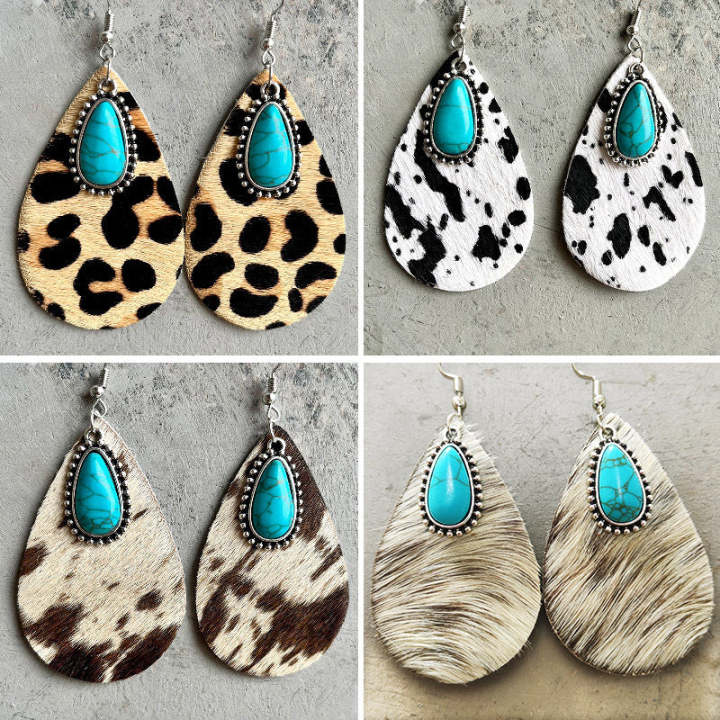
The live Western Turquoise Vintage Earrings page displayed at $126.25 USD during review. Its selector listed Design 1 through Design 7, with Design 1 selected. The visible copy described Western, turquoise, and vintage details and mentioned casual, Western-inspired, occasion, and gifting use.
Do not treat the seven labels as a single fit profile. Each visible design may differ in outline, movement, length, width, closure, and visual weight. The inspected text did not state exact dimensions, mass per earring, pair quantity, posts, hooks, backs, skin-contact components, materials, finish, decorative-component identity, or item-specific care. It also did not provide cultural origin, maker, or age documentation.
Create one record for each shortlisted label. Add a screenshot, date, displayed price, included contents, dimensions, mass, closure, materials, care, and seller answer. Compare only after the record is specific. If the earring will lead the face zone, test it with hair, glasses, collar, outerwear, and portrait framing. If a necklace-length piece already leads, choose the earring option by restraint rather than by matching every visible feature.
Three Complete Floor Plans to Rehearse
Plan A: Neckline lead
Begin with a plain neckline and the exact 52cm or 90cm option after confirming how the length is measured. Use small or visually quiet earrings, minimal hand jewelry, restrained waist hardware, and footwear chosen for the venue. The bridge can be one turquoise-color echo in a bag detail or manicure, but it is optional.
Plan B: Face lead
Select one documented earring design and leave breathing room around the face. Skip the long necklace or choose a subordinate neckline detail only after a full-outfit test. Keep the hand quiet, use the waist to repeat one finish rather than one motif, and let shoes support the dress code.
Plan C: Quiet jewelry, expressive clothing
When the dress, jumpsuit, or suit already has strong print, texture, embroidery, or hardware, choose the lowest-volume verified option or wear no additional necklace. A small turquoise-colored accent can still connect to the look without becoming its subject. The floor plan is successful when the guest appears first and the styling vocabulary appears second.
For buying questions that sit behind all three plans, consult the complete Western turquoise jewelry buying guide. It helps organize component, fit, and documentation questions without filling unknowns.
Use the Related Video Within a Clear Boundary
The corresponding video link is “Bridal Accessories To Wear On Wedding Day” by Nayri - Wedding Fashion Expert. For this draft, only the title, channel, URL, and broad wedding-accessory relationship are used. The video was not watched in full, so this article does not cite any scene, advice, demonstration, product, material, etiquette rule, or other claim from it.
The title addresses bridal accessories, while this article addresses a guest. That difference matters. A bride's clothing, photography priority, ceremony role, and host authority cannot automatically be transferred to a guest. Use the video as adjacent inspiration only; follow the couple's instructions and verify every Oroxen product fact on the exact selected page.
Common Floor-Plan Errors
- Five active zones: face, neckline, hands, waist, and shoes all compete. Choose a lead and demote at least two.
- Length by label alone: 52cm or 90cm is accepted without learning what is measured. Request the measurement definition and diagram.
- Design by collage: a multi-option page is treated as one item. Record the exact label and image.
- Material by color: turquoise-looking components are called natural turquoise without documentation. Preserve the page's actual certainty.
- Origin by style word: Southwestern or Western is used as proof of cultural source. Keep style and provenance separate.
- Portrait-only testing: the look is never checked with coat, bag, sitting, greetings, or movement.
- Deadline blindness: delivery and return timing are checked after the purchase. Build a decision deadline before ordering.
The published country concert jewelry guide offers a different event context and can help expose assumptions. A wedding guest plan usually needs a separate volume, movement, and etiquette calibration.
Frequently Asked Questions
Can a wedding guest mix a turquoise-colored necklace and earrings?
Yes, when one piece leads and the other is subordinate, the invitation permits the styling, and both exact options pass fit and comfort checks. Matching color alone does not create balance. Test the face and neckline together with the finished clothing.
Is 52cm or 90cm better for a dress?
Neither label is universally better. Confirm what the measurement includes, map it on the wearer's body, add the decorative drop, and compare it with the neckline, waist, jacket, and bag. The best length avoids awkward edge collisions and remains comfortable during movement.
How many turquoise accents should appear?
There is no fixed number. One focal piece may be enough. A second small bridge can create continuity, while a third or fourth repeat may turn the color into a theme. Use full-outfit photographs to decide.
Do Western or Southwestern labels prove origin?
No. They may be merchandising or style descriptors. Specific origin, maker, tribe, nation, age, handwork, material, or cultural affiliation needs reliable item-specific documentation.
What must be confirmed before ordering earrings?
Confirm the selected design, included pair quantity, dimensions, mass per earring, closure, backs, materials, finish, skin-contact parts, decorative components, care, availability, delivery estimate, and return terms.
Where should the shopper continue?
Browse the Turquoise Jewelry collection to create a short list, compare it with the broader Western Jewelry collection, and return to Oroxen when the floor plan and verification record agree. Collection browsing helps compare silhouettes; it does not replace exact product facts.
Conclusion: Give Every Accessory a Place
A clear wedding guest look does not require every accessory to match. It requires each accessory to have a place. Let the invitation define the boundaries, choose one lead zone, build one bridge, and protect quiet space around both. Then test the exact selected item on the wearer's body with the actual clothing, bag, layers, and movement.
The five-zone floor plan also makes uncertainty visible. An unverified length, material, closure, pair quantity, or return deadline belongs in the product record, not under the styling imagination. Resolve the unknowns that can change fit, comfort, meaning, timing, or care. When the plan is complete, turquoise Southwestern jewelry becomes one considered part of the celebration rather than a collection of competing signals.