“Men’s turquoise jewelry” is useful as a shopping phrase, but it does not have to function as a dress code. Product categories can point toward larger motifs, substantial hardware, darker finishes, or familiar Western forms without determining who may wear them. A black dress offers a particularly clear base for testing those forms because it separates silhouette from color and makes proportion easy to study.
This guide builds an outfit around two current Oroxen examples: the Western Turquoise Vintage Floral Leather Necklace and the Turquoise Statement Cross Earrings. Their titles describe visible style direction. They do not independently verify natural turquoise, vintage age, leather composition, metal identity, origin, production method, or cultural affiliation. Confirm the exact option’s materials, measurements, construction, and care before purchase or wear.
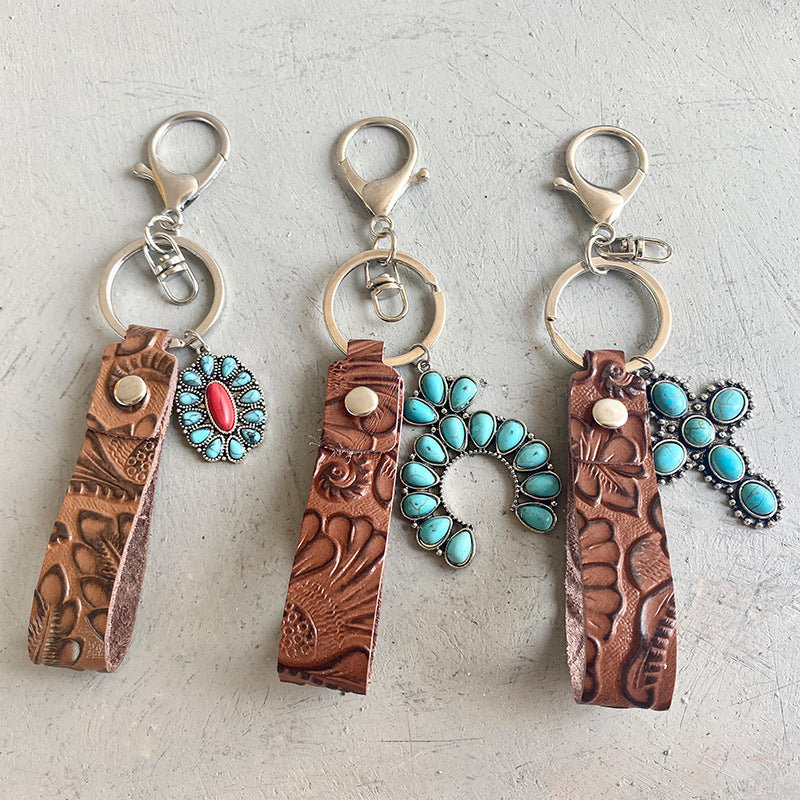
Quick Answer: Translate the Category Into Shapes
Build the look by translating “men’s” into observable design variables: width, length, motif, color coverage, apparent finish, texture, and visual weight. Choose one variable to lead. Then make the black dress, shoes, bag, outerwear, and supporting jewelry respond to it without copying every detail.
Use the necklace as the leader when the dress provides a clean neckline and chest area. Use the earrings as the leader when hair and neckline leave open space near the face. Do not start with both at full intensity. Test each product separately, verify its physical facts, and combine them only if the outfit retains one obvious hierarchy and comfortable clearance.
The public guide to Western jewelry motifs, styles, materials, and selection helps separate visual vocabulary from unsupported material or origin claims.
Step 1: Describe the Dress as Architecture
Ignore jewelry for a moment. Record neckline shape, collar depth, shoulder line, sleeve volume, waist placement, hem, texture, visible seams, and hardware. These features create the architecture that accessories must occupy. A high neck offers a continuous dark field. A deep V creates a vertical opening. A square neck emphasizes horizontal lines. An asymmetrical neckline already directs the eye.
Photograph the dress from normal viewing distance with arms at rest. Draw a vertical center line from face to footwear and mark the strongest horizontal interruptions: collar, bust seam, waist, pockets, and hem. A long pendant can reinforce the vertical line, while wide decorative components may echo or compete with horizontal construction.
Note fabric behavior without guessing composition. Does the surface absorb light, reflect it, wrinkle, stretch, or catch on raised objects? Does the collar move when sitting? Does a jacket change the neckline? These observations matter more to jewelry placement than a generic “little black dress” label.
Step 2: Define What the Category Means for This Outfit
Create three columns headed “keep,” “reinterpret,” and “leave out.” Under “keep,” list the features you genuinely want—perhaps a substantial motif, dark apparent finish, floral Western detail, or blue-green focal color. Under “reinterpret,” write features you want in a different scale or placement. Under “leave out,” identify signals that would turn the outfit into a costume or conflict with the occasion.
This exercise prevents gendered merchandising from making the decision for you. A buyer can prefer broad or narrow forms regardless of gender. The useful question is whether a feature supports the intended silhouette, setting, comfort, and self-expression.
Browse Turquoise Jewelry by shape rather than gender label. Compare where color appears, how much visual area the piece occupies, and what clothing clearance it likely needs. Confirm all measurements on the product page or with the seller before treating scale as fact.
Step 3: Choose a Vertical Leader
A black dress can be read as a sequence of zones: face, neckline, waist, hands, and feet. Place the strongest turquoise-colored area in one zone. If the necklace leads, keep earrings, waist hardware, and shoes quieter. If the earrings lead, protect negative space around the face and allow the dress neckline to remain simple.
Use distance to create an echo. A necklace can be balanced by a small opposite-hand ring or a restrained boot detail rather than an equally strong belt at the same center line. Earrings can be echoed by a compact bag detail. The echo should confirm the palette without becoming a second leader.
The public Western jewelry styling guide explains the Lead–Echo–Quiet method across clothing categories. Here, “quiet” does not mean plain; it means subordinate to the chosen jewelry role.
Necklace Option: Build From the Collar Outward
The current necklace page presents five visible choices—Design 1 through Design 5—under a selector labeled “Size.” These are design names, not disclosed measurements. The listing title combines Western, turquoise, vintage, floral, and leather language, while the visible page does not establish exact necklace length, component dimensions, weight, closure, materials, finish, or care for each design.
Before styling, ask which images match the selected design. Request total length, adjustment range, widest component, drop, profile, weight, fastening method, component materials, finish, construction, and care. If “leather” is important, ask exactly which part uses it and whether composition is documented. Do not convert a title word or visible texture into proof.
Create a life-size placement test. Mark the confirmed length on a cord and trace the main decorative shape on paper. Wear both with the dress, then add the intended jacket. Photograph the look open and closed. Check whether the necklace crosses a seam, button, zipper, or belt, and whether the collar pushes it away from the body.
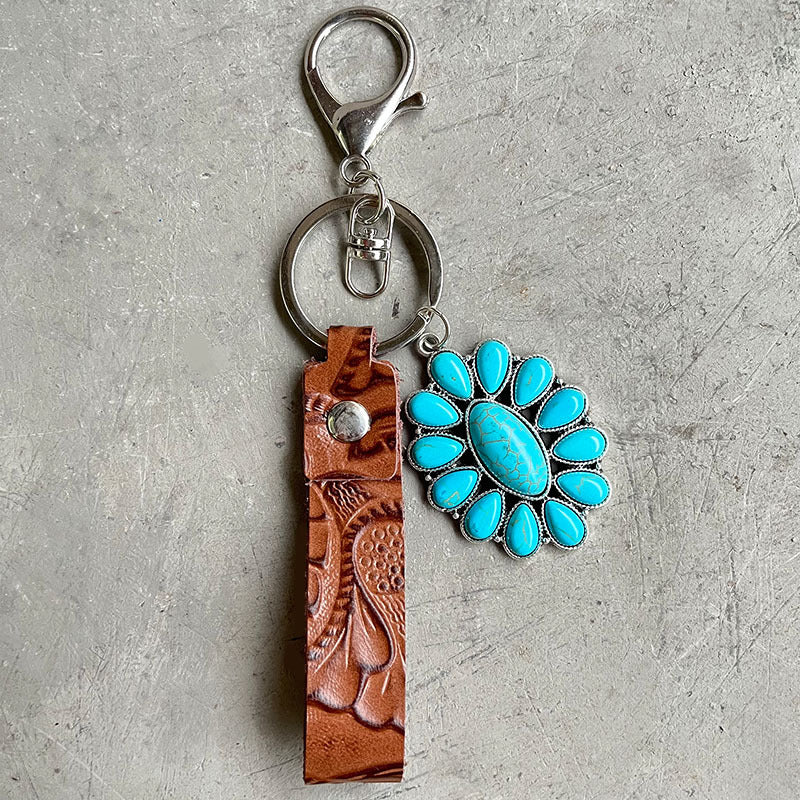
If the necklace contains several visible shapes, let it occupy the only dense accessory zone. Choose simple earrings or none, a bag with limited hardware, and shoes that anchor the silhouette without introducing another large motif. If the selected design proves narrower or lower contrast, the outfit can support a stronger face-level element—but confirm this from the exact option, not the family title.
Earring Option: Build From the Face Downward
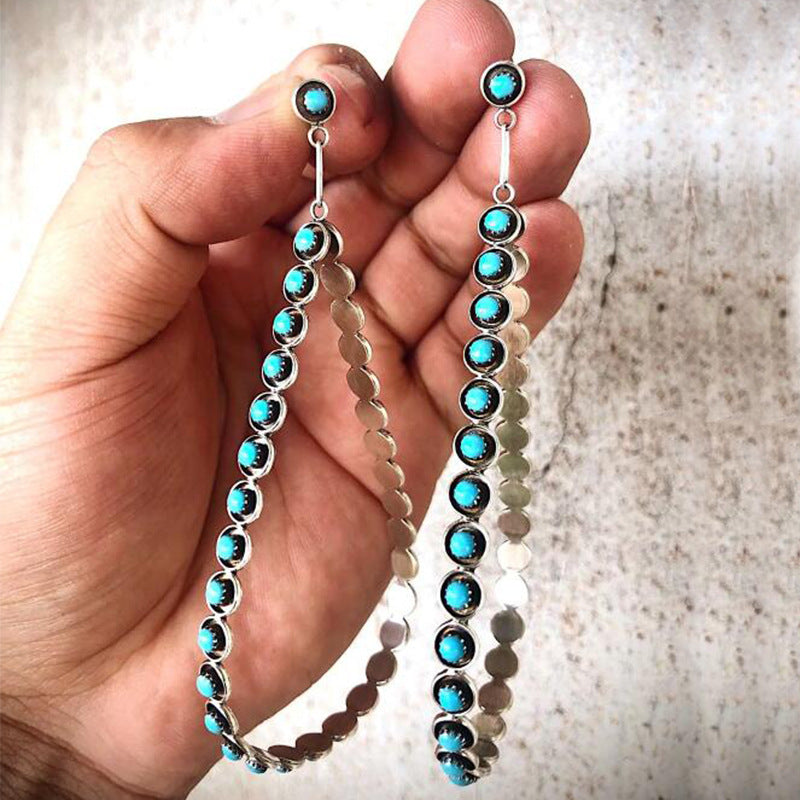
The current Turquoise Statement Cross Earrings page shows one visible color option and describes a turquoise-colored statement cross design. It does not visibly provide exact height, width, drop, profile, per-earring weight, closure, component materials, finish, construction, or care. Request those facts before assuming the earrings are suitable for long wear or a particular neckline.
A cross is a specific motif with potential personal or religious meaning. Decide whether it belongs in the intended setting and whether the wearer or gift recipient welcomes it. Do not treat “Western” styling as a universal explanation for the symbol.
When the earrings lead, photograph hair up and down, turn the head, and check collar and shoulder clearance. Keep the necklace absent during the first test. Add the black dress shoes and bag, then decide whether the middle of the body actually needs another focal point. Often it does not.
Can the Necklace and Earrings Work Together?
Possibly, but the answer depends on the selected necklace design and verified earring scale. Combine them only after each works independently. Put both on with no belt, bracelet, or statement ring. Step several feet from the mirror and photograph the full silhouette.
Ask three questions. Can you name the leader immediately? Is there empty space between the face and necklace composition? Do the motifs form a relationship without duplicating every detail? If both pieces demand equal attention, choose one, select a quieter necklace design, or create more distance through neckline and hair.
Physical compatibility matters too. Turn the head, bend, add outerwear, and handle the bag. Earrings should not contact the necklace or collar. Necklace components should not catch the dress. Remove one piece if clearance or comfort declines.
Four Black-Dress Outfit Formulas
Formula 1: Necklace Leader, Bare Face Frame
Wear the necklace with small neutral earrings or none, a simple black dress, quiet shoes, and a bag without competing hardware. This formula is useful when the neckline leaves a stable field for the necklace. Let the floral or turquoise-colored detail carry the Western reference.
Formula 2: Cross Earrings, Open Neckline
Use the statement earrings with an open or visually clean neckline and no necklace. Add one small ring or narrow bracelet as a distant echo after verifying materials and care. Keep hair positioned so the earrings remain visible without catching.
Formula 3: Necklace With Denim Outer Layer
Add a denim jacket or shirt and retest the necklace against collar, seams, buttons, and hardware. The blue field can connect visually with turquoise-colored details without an exact match. Reduce other Western motifs because the denim already adds contextual information.
Formula 4: Earrings With Structured Boots
Let earrings and boots balance across a long vertical distance. Choose a restrained belt and bag. Decorated boots require quieter face-level scale; plain boots can support a stronger earring. Judge the relationship in a full-body frame, not separate close-ups.
Use a Proportion Ledger
Score the outfit in five zones: face, neckline, waist, hands, and feet. Give the leader three points, an echo one point, and a quiet zone zero. Aim for one three-point zone and no more than two one-point zones. This is a diagnostic tool rather than a rule.
If the outfit looks top-heavy, do not automatically add a large belt. First reduce face or neckline density, change hair, or simplify the necklace design. If the lower half feels disconnected, shoes or bag can echo apparent finish or geometry without repeating turquoise color.
Compare a statement version and an everyday version with the public turquoise-style jewelry visibility and wear-grid guide. A merchandising label does not determine which version a wearer should choose.
Comfort and Movement Audit
Wear the complete formula at home for twenty minutes. Sit, walk, turn, reach, use the phone, open the bag, add the jacket, and fasten a seat belt. Track contact, sound, shifting, hair catching, collar interference, and any pressure. Test the clasp and closure only as directed; do not bend components to make them fit.
Inspect the dress for snagging and the jewelry for movement after the rehearsal. A style that requires constant repositioning is not finished. Adjust placement, change one accessory, or choose another verified option. Stop using damaged jewelry or any item associated with irritation.
For a country-music event, add venue rules, crowd density, dancing, weather, and travel storage to the audit. The public country concert jewelry guide provides a more detailed event checklist.
How to Use the Ring Video Carefully
The supplementary video is Turquoise in Rings by Turquoise in America. Its page was accessible during drafting, but no transcript was available. This article does not quote the video or use it to authenticate either Oroxen product.
Watch the complete video to observe how a compact turquoise-colored focal area can function on the hand. Translate only general composition questions—scale, visibility, spacing, and relationship with clothing—to the black dress. Independently verify material, origin, maker, treatment, value, cultural, and care claims. A third-party ring video cannot establish the composition of a necklace or earrings.
Buying and Verification Checklist
| Field | Necklace question | Earring question |
|---|---|---|
| Option | Which images belong to Design 1–5? | What exactly is included in the visible color option? |
| Dimensions | Total length, drop, width, profile, adjustment | Height, width, drop, profile, per-earring weight |
| Construction | Clasp, connectors, component attachments | Closure, post or hook, decorative attachments |
| Disclosure | Materials, finish, any leather component, care | Materials, finish, stone or stone-like element, care |
| Use | Neckline, seam, hardware, bag and seat-belt contact | Hair, collar, shoulder, hat and headphone contact |
Save written answers and current return terms before checkout. When the item arrives, photograph and measure it before altering, cleaning, or wearing it for an extended period. Keep packaging until option, structure, fit, and comfort have been checked.
Frequently Asked Questions
Can anyone wear jewelry marketed as men’s?
Merchandising labels are navigation tools, not universal wearer restrictions. Choose by verified size, construction, comfort, meaning, outfit role, and personal preference.
Does a black dress make substantial jewelry look too heavy?
Not automatically. A clear neckline, controlled accessory hierarchy, and sufficient negative space can support a substantial piece. Test the actual dimensions and full silhouette.
Should the necklace sit inside or outside the neckline?
Use verified length and pendant dimensions to test both positions. Avoid unstable placement across a collar edge, seam, or button. The best position remains comfortable through movement.
Can the cross earrings be worn with the floral necklace?
Only if one remains the leader, there is visual and physical clearance, and both pieces pass individual fit and movement checks. Their exact measurements are essential.
Does “leather necklace” prove genuine leather?
No. Ask which component the word describes and request documented composition for the selected option. Do not infer material from texture or title alone.
Where should I explore related silhouettes?
Compare current forms in Western Jewelry and use the public cowgirl earrings and necklaces guide for additional placement ideas without treating gendered category names as limits.
Final Build Sequence
- Map the black dress architecture and movement.
- Translate the merchandising category into preferred shapes and scale.
- Select either neckline or face as the first jewelry zone.
- Verify the exact product option, measurements, materials, construction, and care.
- Add one distant echo and leave the remaining zones quiet.
- Photograph the complete outfit with outerwear, bag, and shoes.
- Run a movement rehearsal and remove anything that interferes.
Visit Oroxen for current product and store information. The strongest black-dress outfit does not depend on whether a necklace or earring was placed in a men’s or women’s category. It depends on an honest reading of shape, verified physical facts, a deliberate hierarchy, and a wearer who can move through the real setting with confidence.