trFrom Casual to Dressy: Styling a Turquoise Western Ring for a Wedding Guest Look
A turquoise Western ring can change a wedding guest outfit without changing the dress, suit, or shoes. The hand appears in greetings, photographs, drinks, dinner, dancing, and phone use, so a ring can carry more visual and mechanical weight than its size suggests. Moving from casual to dressy is not simply a matter of adding sparkle or stacking more pieces. It requires controlling how the hand relates to the invitation, clothing finish, other jewelry, table setting, and the wearer's actual finger.
This guide uses a three-act hand rehearsal: arrival, ceremony, and reception. Each act has its own formality, contact, and movement demands. The ring remains the same documented object while the outfit setting changes around it. That makes it possible to build a casual, polished, or dressier version without assuming that “adjustable,” “one size,” “turquoise,” or a close product image proves fit or material.
Quick Answer: Dress the Setting, Verify the Ring
For a casual wedding guest look, let the ring provide one clear blue-green or Western-inspired accent beside simple fabric and restrained hand accessories. For a polished middle setting, repeat one finish or color at a distance and keep the ring as the hand focal. For a dressier setting, improve fabric, tailoring, spacing, manicure coordination, and the quality of the overall silhouette rather than stacking every available piece.
Before any styling, confirm the exact selected color and size state, internal diameter or circumference, intended fit range, band width and thickness, top dimensions, mass, adjustment guidance, materials, finish, turquoise-looking component identity, skin-contact parts, care, availability, delivery timing, and return terms. A product title does not prove natural turquoise, metal composition, age, maker, origin, tribe, nation, cultural affiliation, religious meaning, or handwork.
The Turquoise Jewelry Guides hub supports broader research. Use the hand rehearsal to decide whether the exact option belongs in the event plan.
Begin with the Invitation, Not the Ring
Check the invitation, wedding website, time, venue, weather, and any cultural or religious guidance provided by the couple. “Casual,” “cocktail,” “formal,” and venue descriptions may be interpreted differently, so host instructions are authoritative. A daytime garden ceremony, courthouse gathering, ranch celebration, and evening ballroom do not create the same hand styling context.
Write three boundaries. The visual boundary defines how much color, motif, and scale the outfit can support. The mechanical boundary identifies gloves, coat, clutch, phone, table, and activity. The timing boundary establishes when the item must arrive for measurement, inspection, rehearsal, and a lawful return if needed.
Western and turquoise are style or merchandising words only at the level documented by the page. The published Western jewelry motifs, styles, and materials guide helps describe visible cactus, cross, floral, or other forms without assigning unsupported provenance or meaning.
Measure the Finger Before Choosing Formality
Finger size can change with temperature, time, activity, travel, and swelling. Measure the intended finger using an appropriate method and compare with the seller's exact size chart or internal dimensions. “Adjustable” does not state the starting size, final range, adjustment method, or safe number of adjustments. “One Size” does not identify the internal diameter or guarantee fit.
Ask for band width and thickness as well as the top dimensions. A wide band may fit differently from a narrow one. A tall or broad top can meet adjacent fingers, sleeves, gloves, bag handles, or tableware. Mass and weight distribution affect rotation. A product image alone cannot establish these mechanical facts.
Do not repeatedly bend or force a ring without written adjustment guidance. Structural parts, finishes, connections, or decorative settings can be affected. Stop using a ring that causes pain, numbness, pinching, skin injury, or instability and seek appropriate advice for health concerns.
Act One: Arrival
Casual setting
Use a simple dress, jumpsuit, shirt-and-trouser combination, or restrained denim only when the invitation allows it. Let the ring provide the primary color accent. Keep the watch, bracelet, and bag hardware quiet so the hand does not become a cluster of unrelated details.
Polished setting
Add structure through a jacket, cleaner fabric, or coordinated footwear. Echo one ring property at a distance: a small blue-green stitch, one warm finish, or a floral line. Do not require exact color matching across screens or unrelated products.
Dressier setting
Use refined fabric, tailoring, and deliberate empty space. The ring can remain the hand focal while earrings or necklace become subordinate. Dressiness comes from coherence and condition, not from maximum quantity.
During arrival, test transport, outerwear, bag, ticket or phone, and greetings. A ring that catches the coat or turns during a handshake needs a mechanical solution before a style upgrade.
Act Two: Ceremony
The ceremony usually lowers movement and raises contextual sensitivity. Sit, stand, hold a program, and place the hands naturally. Check whether the ring presses adjacent fingers, contacts a chair or mobility aid, catches fine fabric, or creates a distraction. Quiet operation can make a large ring feel more appropriate than a smaller but unstable one.
Symbolic forms need intention. A cross or cactus may be read as religious, regional, cultural, or decorative depending on context. The product title records the seller's label, not a complete history or the wearer's belief. When a form could be sensitive in the ceremony, follow host guidance or choose a neutral alternative.
Photograph the hands at normal portrait distance. A close-up magnifies every detail; ceremony photographs often show the ring as one small part of a larger composition. If the ring becomes the only visible story, reduce contrast elsewhere or select a quieter exact option.
Act Three: Reception
The reception adds glassware, utensils, plates, bags, dancing, photographs, and frequent phone use. Sit at a table during the home rehearsal. Lift a glass, use utensils, open a clutch, type a message, and stand. A top-heavy ring may rotate; a wide ring may press; a raised form may catch.
For a casual reception, keep one ring and a simple sleeve. For a polished version, add one distant echo through earrings, shoe detail, or bag hardware. For a dressier version, coordinate the ring with fabric sheen and the hand's overall condition while preserving space. A stack is optional and should be tested for contact, combined width, and comfort.
Bring a small soft compartment or pouch for safe temporary removal. Keep the ring separate from keys, coins, liquids, perfume, cosmetics, and loose hard accessories. This is a travel separation step, not universal long-term care for undocumented materials.
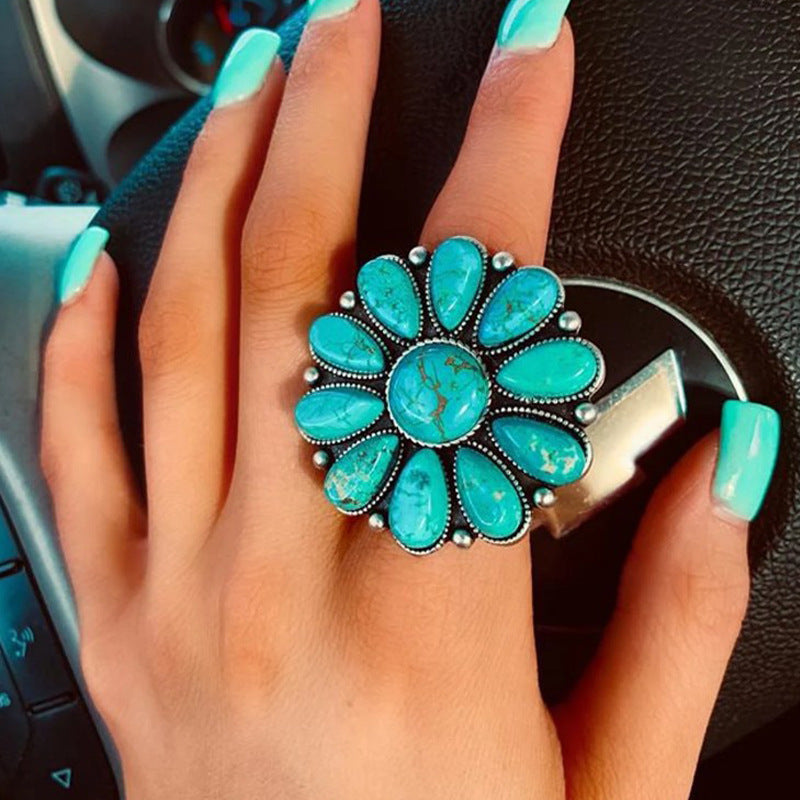
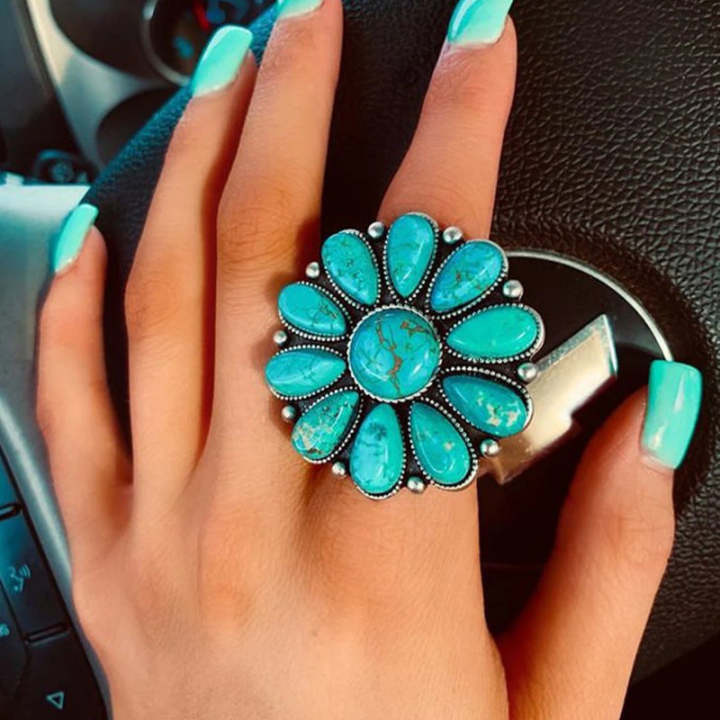
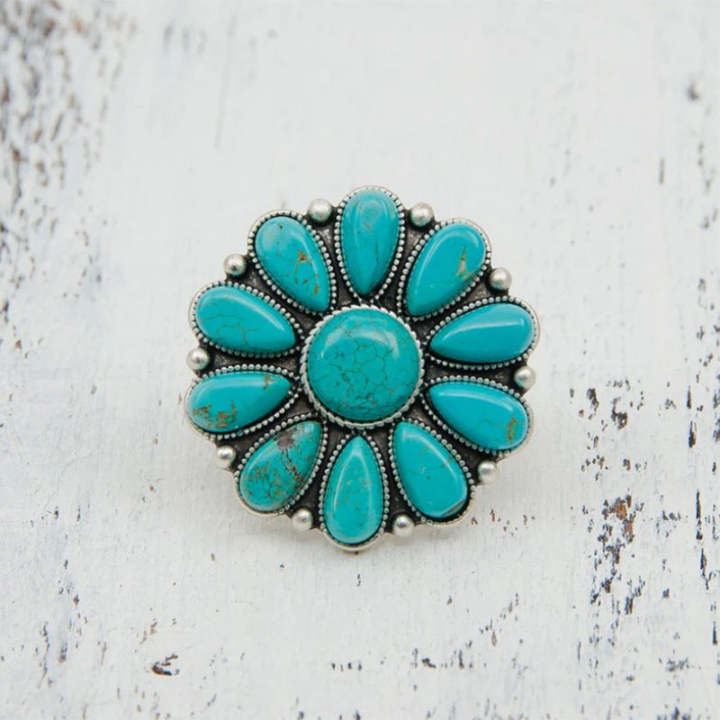
Live Option One: An Adjustable Floral Ring
The live Turquoise Boho Vintage Statement Floral Ring page displayed at $75.75 USD during review. It showed one selected Color radio without a readable label and a Size option labeled Adjustable selected. The visible copy used turquoise, boho, vintage, statement, and floral styling language and suggested everyday, Western-inspired, occasion, and gifting use.
The inspected text did not state the starting size, fit range, internal diameter, adjustment method, band width, top dimensions, mass, exact materials, finish, turquoise-looking component identity, skin-contact parts, item-specific care, maker, age, origin, or cultural affiliation. The Adjustable label should therefore remain a question about mechanism rather than a guarantee of universal fit.
Ask the seller for a measurement diagram, the intended finger range, whether adjustment is performed once or repeatedly, and which part may be moved. Confirm the included quantity and exact selected Color option. For styling, a floral outline can serve as the hand focal in all three acts, while fabric and other jewelry change the formality setting.
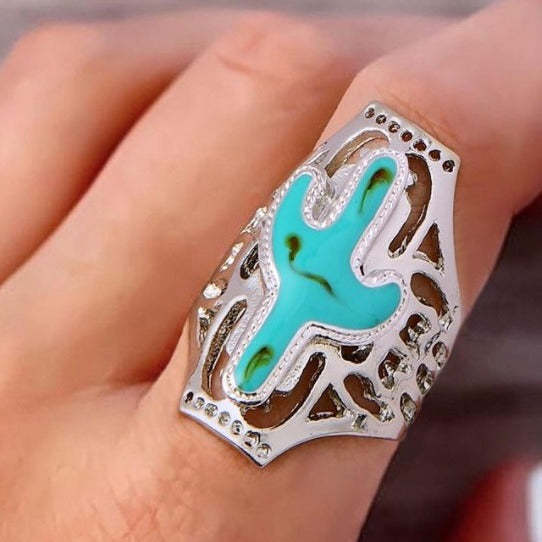
Live Option Two: A One-Size Cactus Cross Ring
The live Turquoise Cactus Cross Ring page displayed at $74.74 USD during review. Under Color, it showed two radio choices; the first was selected, and neither label was readable. Under Size, One Size was selected. The copy used turquoise, cactus, and cross design language and suggested everyday, Western-inspired, occasion, and gifting contexts.
One Size does not disclose an internal measurement. The inspected text did not state size range, adjustability, band width, top dimensions, mass, materials, finish, turquoise-looking component identity, skin-contact parts, care, maker, age, origin, or cultural affiliation. Ask the seller to map both Color choices to images and to confirm the exact ring dimensions and mechanism.
The cactus and cross terms identify visible or seller-labeled forms, not a documented cultural or religious history. Choose the design with awareness of the event and wearer. From casual to dressy, change the surrounding contrast, fabric, and accessory hierarchy while keeping the product facts fixed.
A Casual-to-Dressy Control Panel
| Control | Casual | Polished | Dressier |
|---|---|---|---|
| Fabric | Simple matte base | Structured or smoother base | Refined fabric with controlled sheen |
| Ring role | Single color accent | Hand focal with one echo | Hand focal within formal hierarchy |
| Other jewelry | Minimal | One subordinate zone | Coordinated but spaced |
| Hand accessories | Simple watch or none | Quiet hardware | Deliberate manicure and spacing |
| Mechanical test | Daily movement | Outerwear and bag | Greetings, table, photos, dancing |
Browse the Western Rings collection to compare silhouettes with the same control panel. Use the broader Western Jewelry collection to decide whether another accessory should lead. The published Western jewelry styling guide offers additional clothing structures.
Use the Bridal Video Only as Adjacent Metadata
The corresponding video is “Bridal Accessories To Wear On Wedding Day” by Nayri - Wedding Fashion Expert. Only the title, channel, URL, and broad wedding-accessory relationship are used. The video was not watched in full, so no scene, recommendation, etiquette rule, product statement, material claim, fit advice, or care method from it is cited.
The title addresses bridal accessories, while this article addresses a guest's ring. A bride and guest have different roles, clothing priorities, and host authority. Do not transfer bridal advice automatically, and never use the video as evidence for the two Oroxen products.
Common Styling and Buying Mistakes
- Adjustable equals universal: accepting the label without a starting size, range, or method.
- One Size equals measured: treating a generic option as an internal dimension.
- Dressy means more: adding rings, bracelets, and hardware until the hand has no hierarchy.
- Price proves quality: reading a one-dollar difference as material or construction evidence.
- Color proves turquoise: converting a blue-green photograph into a gemstone claim.
- Motif proves meaning: assigning floral, cactus, cross, or Western forms an undocumented identity.
- Portrait-only testing: skipping bags, greetings, table contact, phones, and dancing.
For evidence questions before purchase, use the complete Western turquoise jewelry buying guide. The country concert jewelry guide provides a contrasting movement environment that can expose fit assumptions.
Frequently Asked Questions
Can a large turquoise-colored ring work at a formal wedding?
It can when the invitation and host guidance permit it, the ring's exact fit is secure, and the remaining outfit creates a clear hierarchy. Formality comes from the complete setting, not ring size alone.
Which finger should carry the ring?
Choose an intended finger that fits the documented size, avoids interference with other rings and tasks, and has appropriate personal or cultural meaning. Test both appearance and mechanics. There is no universal best finger.
Can an adjustable ring be resized repeatedly?
Do not assume so. Ask the seller for exact adjustment instructions and structural limits. Repeated bending can affect undocumented materials, finishes, or settings.
Should the ring match the necklace?
Exact matching is optional. Let one zone lead and connect the other through one property such as color family, line, spacing, or finish. Keep physical contact and symbolic forms in mind.
How should a ring be removed during the reception?
Use a dedicated soft compartment or pouch and keep it away from hard objects and liquids. Follow the seller's item-specific care. Do not leave it loose on a table or in an open bag.
Where should the shopper continue?
Visit Oroxen, compare the linked collections, and run the three-act hand rehearsal with a measured stand-in. Resolve the first fit, material, care, or timing question before ordering.
Conclusion: Formality Changes Around a Verified Ring
A turquoise Western ring can move from casual to dressy when fabric, spacing, other jewelry, and hand styling change around it. The ring's mechanical facts do not change. Adjustable and One Size remain incomplete without measurements and guidance, while color and motif remain appearance until documentation supports more.
Rehearse arrival, ceremony, and reception. Let each act reveal a different collision, context, or hierarchy issue. When the exact ring fits securely and the complete look respects the invitation, dressiness can come from disciplined editing rather than accumulation. The result keeps the hand expressive, comfortable, and present throughout the celebration.