Cowgirl Turquoise Jewelry Gift Guide for Country-Music Fans
Cowgirl turquoise jewelry can feel like an obvious gift for someone who enjoys country music, denim, boots, Western-inspired outfits, or blue-green accents. The recipient still has to wear, store, and care for the exact item. An attractive image does not reveal earring weight, closure, skin-contact components, included quantity, or whether the recipient wants a cow-skull form near the face. A good gift therefore needs more than a theme match.
This guide builds a gift acceptance packet. Before purchase, the giver prepares five cards: permission, identity, wearability, timing, and fallback. The packet can be placed in a note or kept privately as a decision record. Its purpose is to make the gift easier to accept, exchange, or decline without pressure while keeping turquoise, cowgirl, Western, boho, vintage, and country-music language at the level supported by current pages.
Quick Answer: Gift Choice Before Gift Surprise
Start with what the recipient has chosen, worn, saved, or requested. Confirm whether earrings are welcome, whether animal or symbolic forms suit their taste, and whether they have fit, weight, closure, material, or sensitivity requirements. If the information is private or unknown, use a shared shortlist, gift card, or exchange-friendly presentation rather than guessing.
For the exact shortlisted option, record the selected label, included pair and piece count, dimensions, mass per earring, closure, backs, materials, finish, turquoise-looking component identity, skin-contact parts, care, availability, delivery estimate, and current return or exchange terms. Product images and prices do not prove those facts.
Browse the Turquoise Jewelry Guides hub for category orientation. The five cards below turn the inspiration into a recipient-centered decision.
Card One: Permission
Permission asks whether the gift category, body placement, and visible form are welcome. Earrings involve pierced or non-pierced needs, closure preferences, weight tolerance, skin contact, and personal presentation. A recipient who likes country music may not want cow-skull earrings; a recipient who loves cowgirl styling may prefer a ring, necklace, or bracelet instead.
Ask without demanding the answer you hope to hear. A shared board with three silhouettes can preserve some surprise while giving the recipient control. For a highly personal, religious, cultural, or animal-associated form, direct choice is often kinder than a reveal.
Gendered collection or product language is merchandising, not a rule about who may wear the item. “For her,” “women,” and cowgirl can help navigate a store while the recipient's identity and preference remain authoritative.
Conduct a Five-Minute Wardrobe Interview
Ask the recipient to choose between pairs of ordinary situations rather than judging abstract style words: hair up or down, small outline or visible drop, quiet everyday wear or occasional focal piece, one motif or mixed assortment, denim shirt or dress, concert or non-concert use. Record the choices without translating them into a product immediately. This short interview can reveal that the recipient likes turquoise color but not skull forms, enjoys Western boots but prefers simple earrings, or wants an option that works with glasses and headphones.
Next, identify three garments or accessories the recipient already wears often. Compare neckline, collar, hair, hat, and hardware with the published Western jewelry styling guide for denim, dresses, boots, and workwear. The goal is not to copy an outfit; it is to locate the gift's likely contact points and visual role. A product that supports three real outfits is usually a more defensible shortlist candidate than one supported only by a themed mood board.
Card Two: Identity
Identity records the exact page, selected option, date, image, and seller wording. If a page offers Design 1 through Design 4 or Design 1 through Design 7, write the selected label and save the corresponding image. Do not remember only the collage. Confirm whether the listing includes one earring, one pair, multiple pairs, backs, packaging, or other parts.
Separate visible observations from documented claims. Turquoise color, cow-skull outline, floral shape, geometric line, and vintage-inspired appearance can be described. Natural turquoise, exact metal, age, maker, handwork, region, tribe, nation, cultural affiliation, or sacred meaning require reliable item-specific documentation.
The published Western jewelry motifs, styles, and materials guide provides more vocabulary for keeping appearance and identity separate.
Card Three: Wearability
Wearability asks whether the exact item works with the recipient's body, routine, and accessories. Request total length, maximum width, decorative drop, projection, mass per earring, closure, posts or hooks, backs, and all skin-contact components. A styling phrase such as everyday or occasion does not answer comfort.
Consider glasses, hair, facial hair, hat, collar, scarf, coat, headphones, phone, workplace, travel, and expected movement. Do not conduct a physical test on behalf of the recipient when the gift is new. Provide measurements and a return path so they can evaluate it safely.
Care is part of wearability. Ask for instructions for the exact option and materials. Avoid universal water, chemical, polishing, ultrasonic, heat, or other advice when components are undocumented. A gift that cannot fit the recipient's care routine may be less useful than a simpler choice.
Card Four: Timing
Timing includes availability, order date, delivery estimate, inspection time, event date, return window, return exclusions, and condition requirements. The product pages reviewed for this article displayed free shipping on orders over $59 and 30-day returns, but banners and policies can change. Read the full current terms and checkout estimate.
Set a private decision deadline early enough to receive and inspect the item. Do not remove protective materials, alter the item, or discard packaging before the return requirements are understood. If the gift is for a concert, birthday, or holiday, have a printable note, digital gift, or existing small item ready if delivery changes.
A late product should not create pressure to keep an unsuitable item. Separate the celebration from the shipping event.
Card Five: Fallback
The fallback states what happens if the recipient does not want, cannot wear, or cannot use the exact item. Include order information, return deadline, exchange steps, and an explicit no-pressure message. Offer to handle the administrative work.
Possible alternatives include another selected design, another jewelry category, a store credit when available, a concert-related experience, or no replacement. The point is not to rescue the original idea; it is to protect the recipient's choice.
Use a small soft pouch or separate compartment for presentation and travel only when compatible with the item and return terms. Do not promise that generic packaging is archival storage for unknown materials.
Gift Option One: Four Cow-Skull Earring Designs
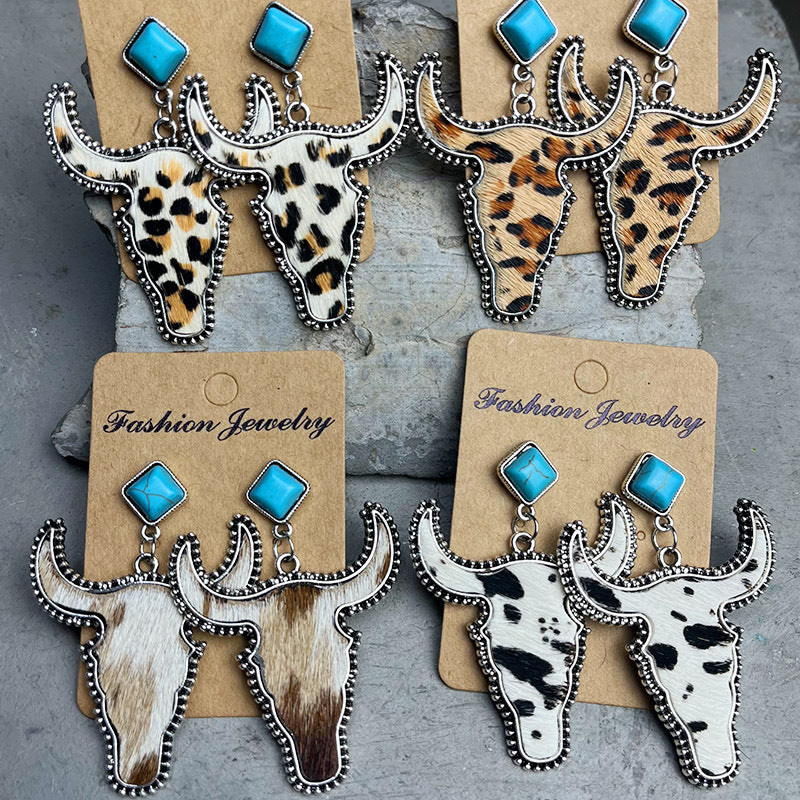
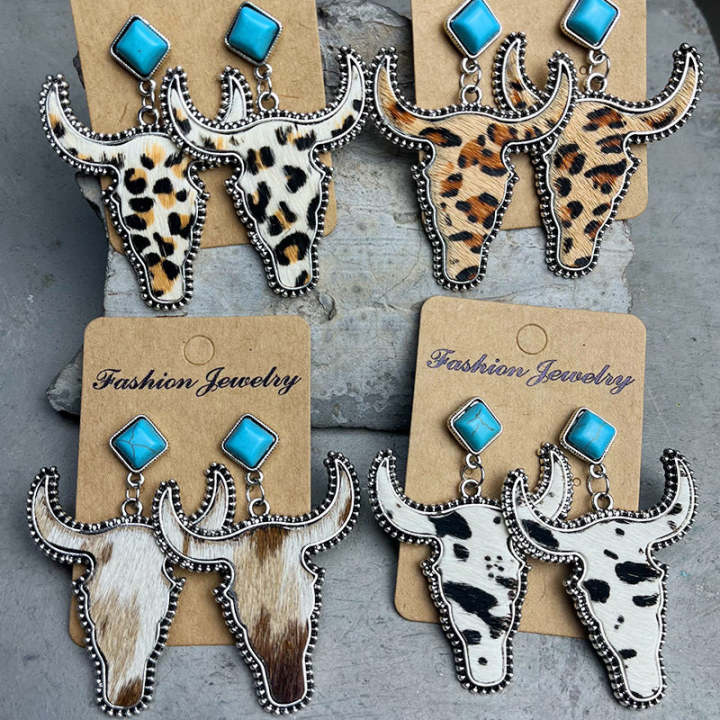
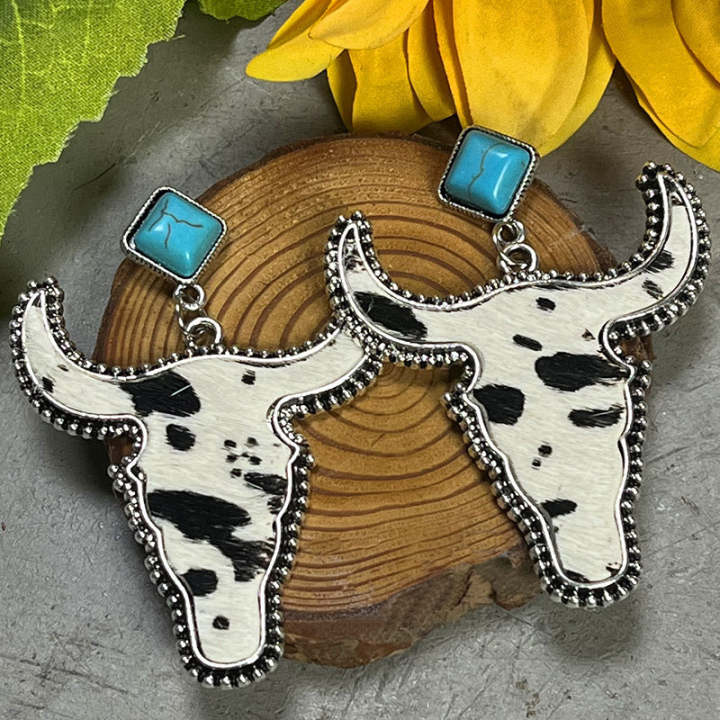
The live Western Turquoise Boho Vintage Cow Skull Earrings page displayed at $141.40 USD during review. Under Size, it listed Design 1 through Design 4, with Design 1 selected. The visible copy used Western, turquoise, boho, vintage, and cow-skull language and suggested everyday, Western-inspired, occasion, and gifting use.
The inspected text did not state exact pair quantity, dimensions, mass per earring, closure, backs, materials, finish, turquoise-looking component identity, skin-contact parts, item-specific care, maker, age, origin, or cultural affiliation. The four designs need separate identity and wearability cards.
This option may suit a recipient who has specifically chosen cow-skull imagery and visible Western-inspired earrings. It is not automatically appropriate for every country-music fan. Ask whether the form, scale, and body placement are wanted. Price does not prove materials, construction quality, authenticity, or gift suitability.
Gift Option Two: Seven Western Earring Designs
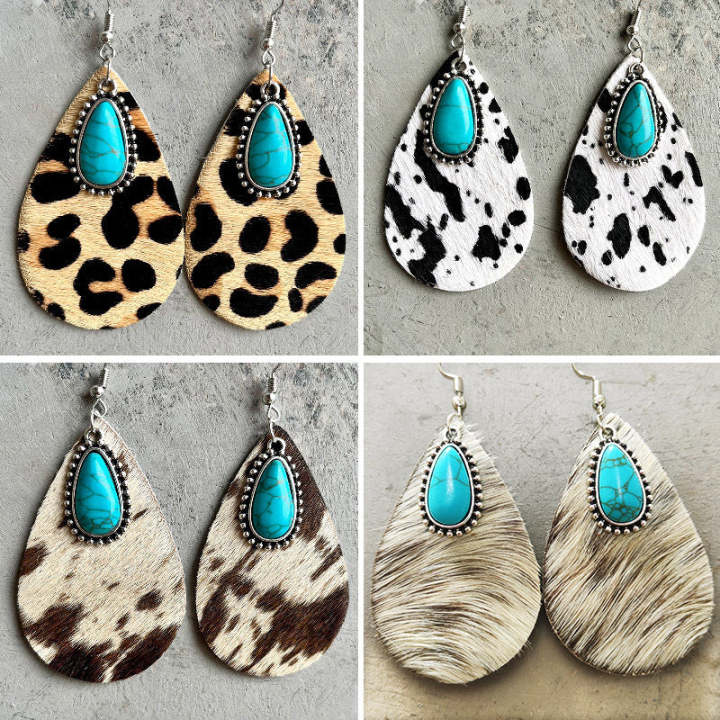
The live Western Turquoise Vintage Earrings page displayed at $126.25 USD during review. Under Size, it listed Design 1 through Design 7, with Design 1 selected. Its copy used Western, turquoise, and vintage styling language and suggested casual, Western-inspired, occasion, and gifting contexts.
The inspected text did not document pair quantity, dimensions, mass, closure, backs, materials, finish, decorative-component identity, skin-contact parts, care, maker, age, origin, or cultural affiliation. A seven-design listing may give the recipient more visual choices, but it also requires an exact option-to-image map and separate specification record.
This page may work better for a shared shortlist because the recipient can choose among several visible outlines. Do not assume the designs share the same weight, closure, scale, or material. Ask the same questions for the selected label.
A Recipient-Centered Comparison
| Question | Cow-skull listing | Western earrings listing |
|---|---|---|
| Visible choices | Design 1–4 | Design 1–7 |
| Current selected option | Design 1 | Design 1 |
| Displayed price | $141.40 USD | $126.25 USD |
| Strong form cue | Cow-skull wording | General Western/vintage wording |
| Pair count | Not stated in inspected text | Not stated in inspected text |
| Fit and component data | Needs confirmation | Needs confirmation |
Do not choose the lower price, larger design count, or stronger motif as a universal winner. Ask which form the recipient wants and which page can provide acceptable fit and component evidence. Browse the Cowgirl Jewelry collection for another category and the Jewelry Gifts for Her collection for a wider gift shortlist.
Related Buying Video: Use Metadata Only
The corresponding video is “Buying Turquoise” by Turquoise in America. Only the title, channel, URL, and broad buying-topic relationship are used. The video was not watched in full, so no statement, demonstration, recommendation, material identification, authentication, value, history, care method, or seller endorsement from it is cited.
The video cannot verify either Oroxen earring listing. Use the gift acceptance packet, current product pages, written seller clarification, and appropriate professional evaluation when a material or origin claim matters.
Presentation Without Pressure
Write a short card: “I chose this because it reminded me of your style. The receipt and return details are included, and I am happy to exchange or return it—no explanation needed.” Place product facts on a separate slip so the emotional note is not a sales pitch.
If the recipient values provenance or materials, state only what is documented. “Turquoise-colored Western-inspired earrings” can be honest when natural turquoise or metal is not established. Do not add a fictional artisan, origin story, spiritual property, or cultural narrative to make the gift sound more significant.
The complete Western turquoise jewelry buying guide offers more evidence questions. The country concert jewelry guide helps test movement if the gift is intended for live music.
Common Gift Mistakes
- Music taste becomes jewelry consent: liking country music is treated as permission for a particular form.
- Collage becomes contents: visible earrings are counted without an explicit included-quantity statement.
- Design count becomes versatility: several labels are assumed to share fit and construction.
- Price becomes authenticity: a higher price is used as natural-turquoise or quality proof.
- Story replaces documentation: an origin, maker, or cultural meaning is invented for presentation.
- Deadline removes choice: the recipient feels obliged to keep an item because the return window is short.
- Surprise outranks comfort: fit, closure, weight, or sensitivity questions are deliberately avoided.
Frequently Asked Questions
Is jewelry a good surprise gift for a country-music fan?
It can be when the category, body placement, form, fit, and return flexibility are known. Otherwise, a shared shortlist or gift credit can preserve choice and still feel thoughtful.
Does a cow-skull form suit every cowgirl outfit?
No. It is a distinct visible form. The recipient's preference and context decide whether it belongs in their style.
Which of the two options is easier to gift?
Neither is universally easier because both pages omit important wearability data. The easier option is the one the recipient chooses and the seller can document well enough.
Can price be used to infer natural turquoise?
No. Obtain specific material documentation. Price alone cannot identify the decorative component or prove authenticity.
What if the gift arrives late?
Give the fallback note or digital choice on time and deliver the item later only after inspection. Do not let shipping pressure remove the exchange option.
Where should the giver continue?
Visit Oroxen, create a recipient-approved shortlist from the linked collections, and complete the five cards before purchase. One clear preference is more valuable than another guessed product.
Conclusion: The Best Gift Includes an Easy Yes or No
Cowgirl turquoise jewelry can be a meaningful gift for a country-music fan when the recipient recognizes their own choice in it. Permission identifies the right category and form. Identity prevents option errors. Wearability protects comfort. Timing preserves the return path. Fallback makes acceptance genuinely optional.
Keep the story honest and the evidence exact. A design label is not a measurement, a photograph is not an included-contents list, and a price is not material proof. The strongest gift packet gives the recipient both a thoughtful reason for the choice and a simple way to choose something else.