Cowboy Turquoise Jewelry Through the Seasons: A Wedding Guest Look Edition
A wedding invitation may say cocktail, garden, ranch, barn, formal, or casual, but it rarely explains what a guest's jewelry will meet between arrival and the last dance. Spring wind can move hair across earrings. Summer heat changes what feels comfortable at the neckline. Autumn layers add collars and wraps. Winter coats create repeated dressing and undressing. Cowboy turquoise jewelry needs a plan that connects the invitation to those changing conditions.
This guide uses a four-envelope weather kit. Each seasonal envelope holds an outfit plan, a movement check, a backup route, and a list of facts still needed from the seller. The method supports turquoise-colored, Western-inspired styling without calling an undocumented component natural turquoise or inventing a maker, place, age, tradition, or meaning. It also keeps the couple's dress code and the wearer's comfort above a generic “cowboy” theme.
Quick Answer: Style the Transition, Not Just the Photograph
Choose one primary jewelry role for the day: focal earrings, a small coordinated stud, or another category. Then rehearse the transitions the invitation implies—vehicle to venue, outdoor to indoor, ceremony to meal, and seated conversation to dancing. The same earring may be visually balanced in a still photograph yet conflict with a hat brim, scarf, high collar, loose hair, headset, or coat.
Confirm wearability separately. Request included quantity, dimensions, mass per earring, closure, posts or hooks, backs, materials, finish, turquoise-style component identity, all skin-contact parts, care, availability, delivery estimate, and current return terms. A seller phrase such as statement, stud set, everyday, occasion, or gifting does not answer those questions.
Use the Turquoise Jewelry Guides hub for broader category reading. For this wedding plan, open four envelopes and write one condition-specific decision in each.
Prepare the Four Envelopes
Label the envelopes Spring Shift, Summer Pause, Autumn Layer, and Winter Threshold. You do not need four separate outfits. The labels are planning lenses that reveal what an accessory does when wind, heat, fabric, or outerwear changes. Inside every envelope, place four cards: visual role, contact points, removal plan, and missing evidence.
The visual-role card says lead, bridge, or background. Lead means the earrings are the main upper-body accent. Bridge means they connect one blue-green or Western-inspired detail to the rest of the outfit. Background means they stay subordinate to a neckline, textile, hat, or other focal element. Write only one role; “everything is a statement” produces no hierarchy.
The contact-points card lists hair, ear, glasses, hearing device, hat, collar, wrap, coat, phone, and anything else that may touch the earring. The removal card names a safe location and moment if wear becomes uncomfortable. The evidence card separates observed or stated facts from unanswered questions. This last card prevents a seasonal styling story from becoming an unsupported product story.
Spring Shift: Plan for Wind, Moisture, and Changing Rooms
A spring wedding can move from warm sunlight to a cool ceremony or damp evening. Focus first on moving layers. A loose wrap, trench collar, umbrella strap, or windblown hair may enter the earring zone. If the planned piece has a projecting or dangling form, rehearse with the exact outer layer and hairstyle in a private, controlled setting. Do not infer snag resistance from a photograph.
Spring palettes often include soft colors, floral prints, and lighter fabrics, but cowboy turquoise jewelry does not have to mimic every color. One turquoise-style accent can interrupt pale fabric with a clear point, or it can echo a small bag or belt detail. When the dress is already floral, a simple geometric earring may create needed structure. When the clothing is plain, a larger sculptural outline may be the lead.
Do not apply universal water advice to an item with undocumented components. Weather uncertainty makes a backup especially useful: a recipient-owned stud with known care requirements, no earring at all, or a different jewelry category. The backup is not an admission that the outfit failed; it is part of responsible event planning.
Summer Pause: Reduce Contact and Heat Traps
For summer, create a pause test. Wear the complete upper-body arrangement for a short, safe interval indoors: hair, eyewear, hat if applicable, neckline, and an already-owned earring of comparable known size. Pause while seated, standing, turning, using a phone, and carrying a drink. Notice pressure, noise, repeated contact, and whether the accessory obstructs normal movement.
Heat and humidity can change personal comfort, but this guide cannot predict a body's reaction or an unknown material's behavior. Confirm skin-contact components and care before purchase. People with sensitivities should rely on their own needs and qualified advice, not a style label. Keep the removal plan simple and never force continued wear for photographs.
A summer outfit may expose more neckline and arm space, making earrings look visually stronger. Add necklaces only if they have a separate purpose. The published Western jewelry styling guide for dresses, denim, boots, and workwear offers more ways to distribute accents across an outfit rather than clustering them all near the face.
Autumn Layer: Recalculate the Earring Zone
Autumn introduces texture: velvet, wool-like surfaces, suede-look accessories, patterned jackets, scarves, and structured collars. These elements change both scale and contact. Reopen the envelope after the coat, wrap, or jacket is selected. A large earring that balanced a simple dress may compete with a textured lapel. A small stud can become a useful quiet point when the clothing carries the season's visual weight.
Color coordination does not require an exact turquoise match. Compare temperature and contrast: blue-green against rust, cream, dark denim, charcoal, brown, or black. Use natural light and indoor light because phone screens and venue lighting alter appearance. Describe the observed color without assigning mineral composition.
If a cowboy hat or Western-inspired boot is part of the outfit, decide which object carries the theme most clearly. The earrings may bridge rather than lead. The published guide to Western jewelry motifs, styles, and materials helps keep design vocabulary distinct from construction claims and cultural identity.
Winter Threshold: Test Every Dressing Boundary
Winter creates thresholds: coat on, coat off; scarf on, scarf off; indoor ceremony, outdoor photographs; heated room, cold transport. Test the sequence, not only the final look. If an earring requires special attention every time a collar moves, decide whether the visual benefit is worth the handling burden.
Remove or put on jewelry only in a calm, well-lit, secure place if that action is appropriate for the exact item and wearer. Do not handle a small component beside an open car door, drain, grate, crowded coat check, or snowy path. The removal card should name a closed compartment, not “pocket.” Keep return-condition requirements in mind before changing packaging or wearing a new purchase to an event.
Dark winter clothing can make turquoise-style color highly visible. That contrast may be enough; a matching necklace or ring is optional. Photograph the coat-on and coat-off versions. If both need different focal pieces, simplify the plan or designate one piece for the indoor version with a safe transition.
Browse the Collection with a Season Filter
Use the Turquoise Jewelry collection as a visual index. Instead of scrolling for the most dramatic image, ask a seasonal question: Which outline leaves room for a spring wrap? Which upper-body accent works without a summer necklace? Which shape stays readable beside an autumn collar? Which option is simplest at a winter coat threshold?
Then open the broader Western Jewelry collection to check alternative body placements. If the ear zone is crowded by hair, headwear, outerwear, or a hearing device, a ring or another category may support the intended color and style more comfortably. Gendered or themed navigation is not a rule about who may wear an item.
Shortlist no more than three options at a time. Save the exact page, option, date, image, and seller wording. Promotional category names can help locate a product, but current item-specific evidence must support fit, components, care, availability, and returns.
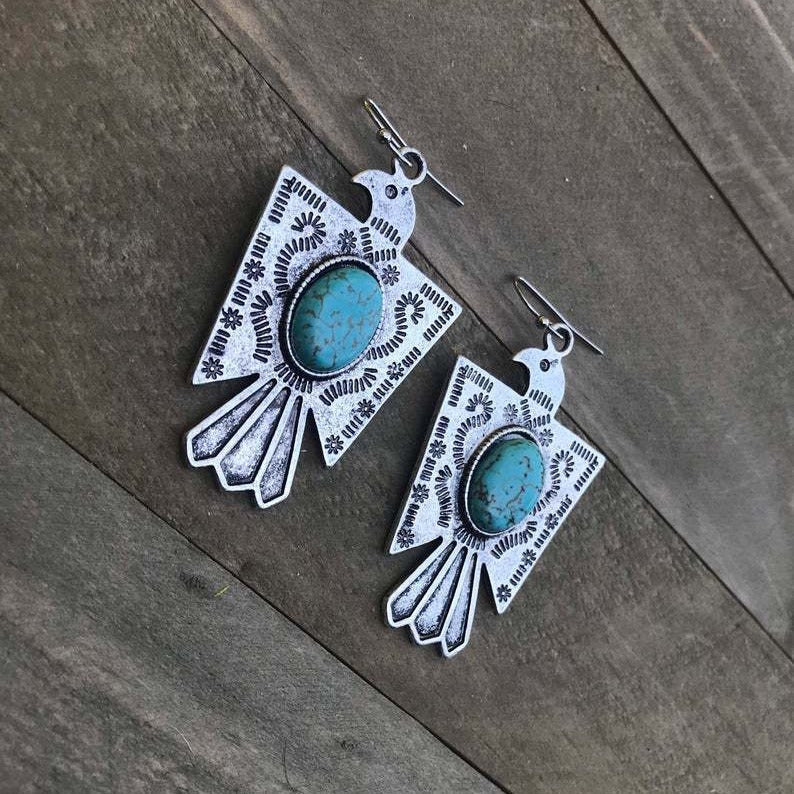
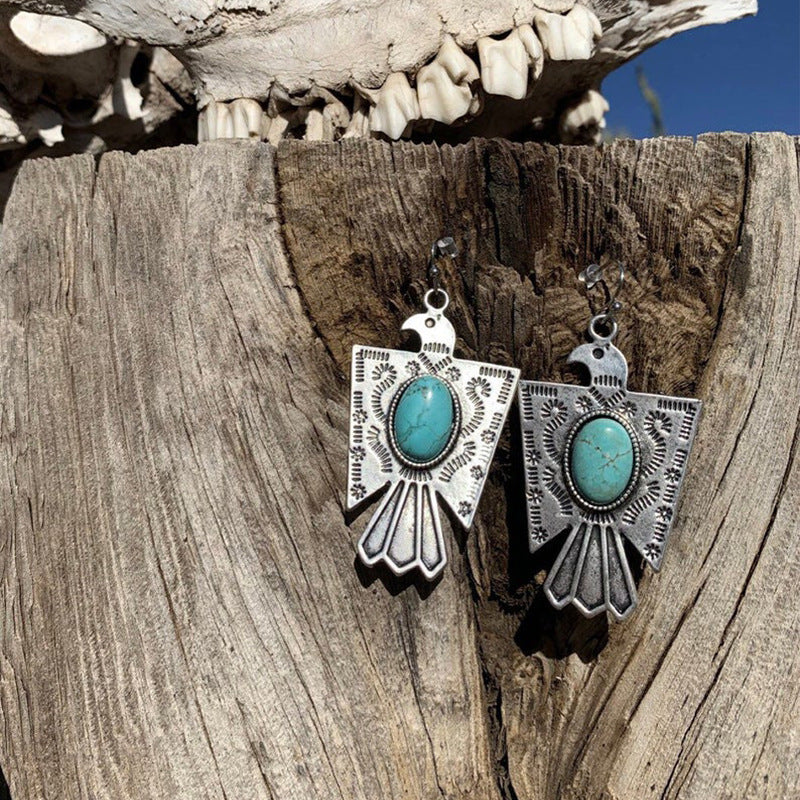
Product Path One: Turquoise Western Statement Earrings
The live Turquoise Western Statement Earrings page displayed $29.99 USD during review. It showed one visible Color choice. The page described Western statement earrings with turquoise, boho, and vintage-inspired design language and suggested pairings with denim, boots, dresses, and cowgirl looks. It also used the phrase turquoise-style center stones and described a sculptural silhouette.
The inspected page did not state included pair or piece quantity, dimensions, mass per earring, closure, posts or hooks, backs, materials, finish, exact component identity, skin-contact parts, item-specific care, maker, age, origin, or cultural affiliation. “Turquoise-style” is appearance language; it is not a natural-turquoise claim.
This option belongs on the lead card when the wearer wants the ear zone to carry the outfit. Spring hair and wraps, an open summer neckline, autumn collar texture, and winter coat handling all need separate checks. A statement silhouette should not be assumed heavy, light, smooth, or snag-resistant without documentation.
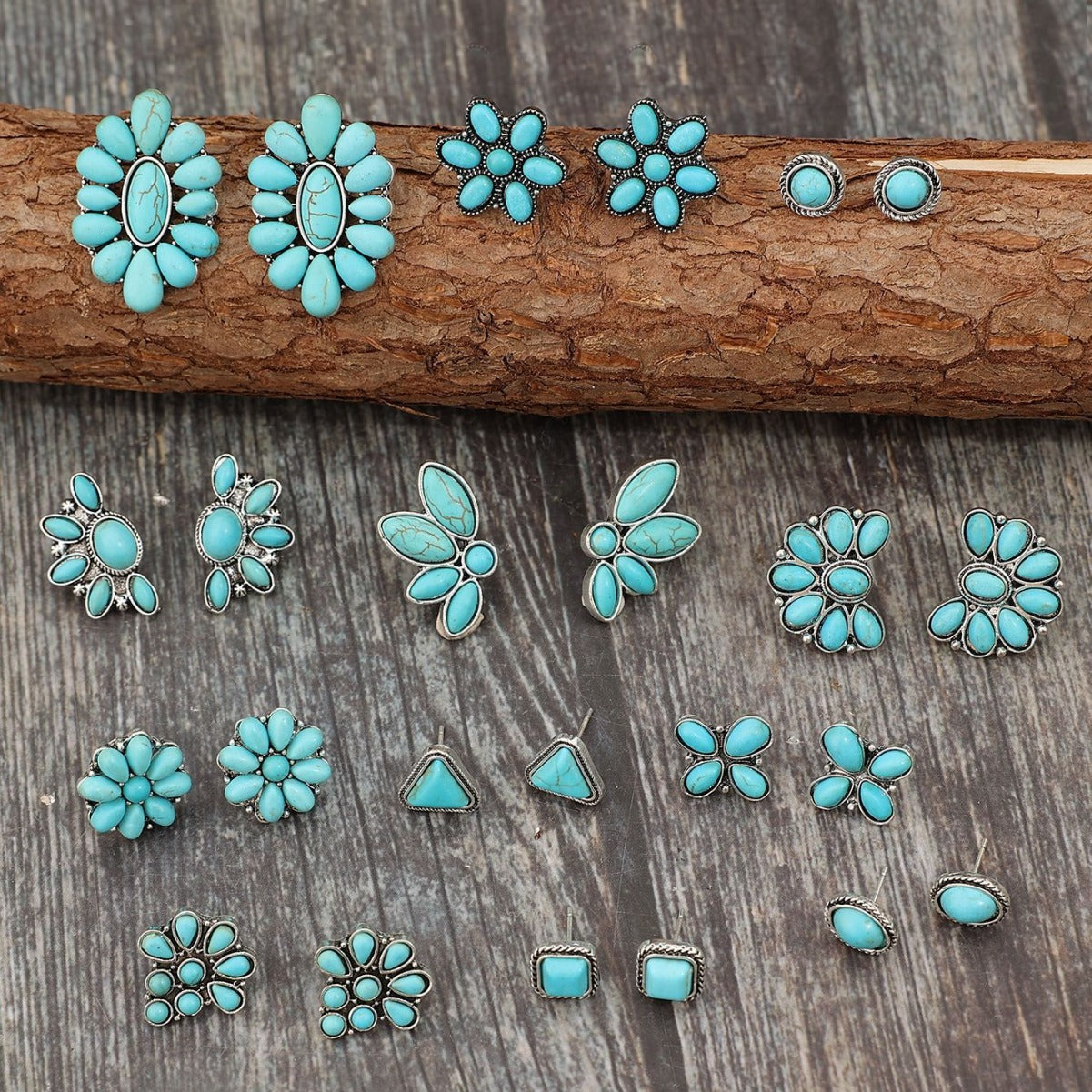
Product Path Two: Turquoise Western Stud Earring Set
The live Turquoise Western Stud Earring Set page also displayed $29.99 USD during review and showed one visible Color choice. Its page described a coordinated assortment of turquoise-style studs using floral, geometric, and classic shapes. The surrounding copy also used turquoise, Western, boho, vintage-inspired, denim, boots, dresses, and cowgirl styling language.
The inspected text did not provide the included number of pairs or pieces, an image-to-piece contents map, dimensions for each shape, mass, posts, backs, materials, finish, component identity, skin-contact parts, care, maker, age, origin, or cultural affiliation. The word set does not establish contents. Ask for an exact written list and verify that the selected product image corresponds to what ships.
A documented smaller stud could work as a bridge or background choice, but the page did not publish the measurements needed to call any piece small. The assortment may support several seasonal outfits only if the buyer knows which pieces are included and whether their fit and components suit the wearer.
Make a One-Year Wedding Guest Matrix
| Season lens | Statement path | Stud-set path | Evidence required |
|---|---|---|---|
| Spring shift | Check hair and wrap movement | Confirm exact chosen piece | Dimensions, closure, backs |
| Summer pause | Reduce competing neckline pieces | Check skin-contact components | Mass, materials, care |
| Autumn layer | Rebalance beside collar texture | Use only if contents are mapped | Included quantity and image map |
| Winter threshold | Rehearse coat and scarf sequence | Prepare a secure compartment | Projection, handling, returns |
The matrix does not crown a universal winner. Both reviewed pages displayed the same price, and price cannot establish materials, comfort, construction, or authenticity. Choose the path whose exact item the wearer wants and whose missing evidence can be resolved before the event.
Related Video: Use Only Verified Metadata
The corresponding video is “Turquoise in Rings” by Turquoise in America. Only the verified title, channel, URL, and broad topic relationship are used here. The video was not watched in full, so this article does not cite or summarize any statement, demonstration, material identification, history, value claim, care recommendation, or buying advice from it.
The video title concerns rings, while the two product examples in this guide are earrings. It therefore serves only as related turquoise-jewelry metadata, not evidence for their identity or wedding suitability. For product-specific decisions, use current pages, written seller clarification, the wearer's needs, and appropriate professional evaluation.
Movement Rules Borrowed Carefully from Live Events
Wedding receptions and concerts can share standing, crowds, music, photography, and movement, but they are not the same event. Use the published country concert jewelry guide for questions about motion and accessory interaction, then restore the invitation, ceremony, host, and venue to the center of the decision.
Do a movement rehearsal without imitating risky crowd conditions. Turn the head, sit, stand, use a phone, put on outerwear, and carry the planned bag. Stop if an item catches, pinches, presses, or interferes with equipment. Do not shake, pull, bend, wet, heat, or chemically test an undocumented product.
Common Seasonal Styling Errors
- One photograph becomes a year-round plan: contact with coats, scarves, hair, and wraps is ignored.
- Seasonal color becomes material proof: turquoise appearance is called natural turquoise without documentation.
- Set becomes contents list: the product title is used to infer quantity or matching backs.
- Statement becomes weight: visual scale is mistaken for measured mass or comfort.
- Cowboy theme outranks the invitation: styling disregards stated formality or community context.
- Every accessory repeats the theme: boots, hat, belt, earrings, necklace, bracelet, and ring compete.
- Removal has no destination: an uncomfortable earring is placed loose in a bag or pocket.
The published Western turquoise jewelry buying guide adds a product-evidence path to the seasonal envelopes.
Frequently Asked Questions
Can the same cowboy turquoise jewelry work in every season?
Possibly, but the surrounding layers, contact points, comfort conditions, and dress code change. Reopen the relevant envelope and repeat the check rather than assuming a prior outfit transfers unchanged.
Are statement earrings always too much for a wedding?
No. Their suitability depends on the invitation, ceremony, wearer, outfit hierarchy, documented fit, and comfort. A statement piece can lead when competing details are reduced.
Is the stud set automatically the safer or lighter option?
No. The inspected page did not publish dimensions, mass, backs, materials, or exact contents. Obtain those facts for the selected piece.
Must turquoise-colored earrings match a turquoise ring?
No. Exact matching is optional. Repeating only one color family or allowing the earrings to stand alone often creates a clearer hierarchy.
How should a guest handle an outdoor-to-indoor transition?
Rehearse outerwear and hair changes, identify a calm transition point, and carry a secure storage option. Keep the jewelry on if that is simplest and comfortable; change only when the plan is safe.
What facts matter before purchase?
Confirm exact option and contents, measurements, mass, closure, backs, materials, finish, skin-contact components, care, availability, delivery, and current return requirements. Documented answers matter more than seasonal labels.
Where should the reader continue?
Visit Oroxen, review the linked collections and guides, and build one seasonal envelope for the actual invitation rather than an imaginary event.
Conclusion: Four Envelopes, One Respectful Outfit
Cowboy turquoise jewelry can move through spring, summer, autumn, and winter when planning follows the event's transitions. Spring tests wind and wraps. Summer reduces heat and contact. Autumn recalculates texture. Winter rehearses every coat threshold. Each envelope gives the jewelry a role, names contact points, protects an exit route, and records the evidence still missing.
Keep the language honest: turquoise-style color is visible; material identity requires documentation. Keep the outfit generous: the couple's occasion remains central, and the wearer can remove or replace any uncomfortable piece. Seasonal style succeeds when the guest can participate fully from arrival through farewell.