Boho Turquoise Jewelry Care Guide: How to Store Pieces Without Tangling
Tangles are rarely created by a jewelry box alone. They begin when a necklace is placed without its closure secured, an earring is left beside an unknown finish, a multi-piece set is stored as one bundle, or a travel pouch lets every component move against every other component. Boho turquoise jewelry may combine color, repeated units, pendants, hooks, links, motifs, cords, chains, or mixed-looking surfaces, so the safest storage plan starts with separation and documentation rather than a universal cleaner.
This guide builds a parking map. Every exact product option receives an inventory card, an individual parking space, a contact rule, and a stop rule. The map is useful even when materials remain unknown because it reduces friction, pressure, moisture exposure, loss, and accidental mixing. It does not identify natural turquoise, metal, leather, coating, adhesive, age, maker, origin, handwork, or cultural affiliation from appearance.
Quick Answer: Separate First, Clean Only with Evidence
Photograph each piece before handling it. Record the exact option, included quantity, dimensions, mass, closure, materials, finishes, treatments, care instructions, and current condition. Fasten closures when the design permits, place each necklace or component in its own suitable compartment or pouch, keep earrings paired without forcing posts or hooks, and prevent hard surfaces from pressing or sliding against decorative faces.
Store jewelry in a clean, stable, dry location away from bathrooms, direct sun, heat, cosmetics, fragrance, household chemicals, and loose hard objects. Do not assume that water, soap, alcohol, baking soda, toothpaste, vinegar, oil, silver dip, steam, an ultrasonic cleaner, or a polishing cloth is safe for an unidentified component. When the product page does not provide material-specific care, remove loose surface dust only with a method confirmed appropriate for the exact item or ask the seller or a qualified professional.
The Turquoise Jewelry Guides hub organizes related product and styling education. The storage system below is intentionally conservative because preservation starts by avoiding unnecessary contact.
Create an Intake Record Before the Jewelry Box
Treat arrival or first inventory as a check-in. Work over a clear, padded surface with clean, dry hands. Open one product at a time so components are not mixed. Take front, back, side, closure, connection, and option-label photographs in neutral light. Do not enhance color or remove marks digitally; the images should record condition, not create a sales photograph.
The intake card should contain:
- product title, live URL, purchase or review date, and exact selected option;
- written included quantity and a numbered component list;
- measurements, mass, closure, opening, or wearing mechanism;
- seller-documented materials, finish, treatments, skin-contact components, and care;
- visible condition, including loose parts, bends, surface changes, damaged links, and missing pieces;
- current shipping, return, repair, or support information that may matter;
- unknowns that must not be filled from color, price, title, or another product.
Assign every photograph and storage space the same short code. If an earring pair is Design 3, the card, pouch, and image folder should all say Design 3 rather than a guessed description. If a set is called Three-Piece Suit but its components are not identified in text, record “component A, B, C pending written confirmation” instead of naming them from a picture.
The published Western turquoise jewelry selection guide contains additional specification questions that belong on the intake card.
Design the Parking Map
Draw the storage area as individual bays. A bay can be a suitable small box, divided tray, lined compartment, or item-specific pouch, provided its materials and construction do not create a new risk for the jewelry. Do not assume every soft-looking fabric, foam, plastic, paper, adhesive, or anti-tarnish product is chemically compatible with unknown finishes.
Long pieces
Give necklaces or long connected components a straight or gently curved route with the closure secured when appropriate. Keep the chain, cord, and pendant from crossing themselves. Use one bay per item unless an item-specific organizer provides verified separation. Avoid tight knots, sharp folds, or hanging arrangements that place unsupported weight on a weak connection.
Earrings
Keep pairs together but prevent decorative faces, hooks, posts, or hard edges from scratching each other. Do not push an earring through unknown foam or fabric merely to make a display card. Use a holder appropriate to the documented closure and weight. Keep backs or removable parts in the same labeled bay.
Multi-component selections
Inventory each component before separating it. Give every part a sub-code and its own contact boundary. Store the product card with a small diagram so the set can be reconstructed without piling pieces together. If components must share a container, create physical partitions rather than relying on one loose pouch.
Rings and cuffs
Use a bay that prevents rolling, stacking pressure, and contact with chains or decorative faces. Do not force an open cuff into a smaller shape or use another piece as a spacer. A storage system should support the object as documented, not reshape it.
Browse the Turquoise Jewelry collection to see how many silhouettes may require different parking routes. Use the Western Jewelry collection to compare other categories. A collection reveals variety; the exact product page determines what is known about one item.
Use a Four-Level Contact Rule
Level 0 — No contact: decorative faces, unknown finishes, chains, hooks, posts, and hard components stay physically separated. This is the default when composition is unclear.
Level 1 — Supported same-item contact: parts of one documented item may rest in their intended relationship when the storage method does not create pressure, knots, or abrasion. Examples include a fastened chain laid in a single smooth route or an earring back stored beside its matching earring within a divided bay.
Level 2 — Temporary handling contact: two pieces are near each other only during a controlled outfit comparison on a padded surface. Return them to separate bays immediately.
Level 3 — Wear contact: components meet during actual wear only after closures, lengths, masses, movement paths, and care compatibility are understood. Repeated knocking, scraping, or tangling is a stop signal.
The rule makes “keep pieces separate” operational. Separation is not a vague instruction; it is a decision about which surfaces, edges, closures, and decorative components may meet, for how long, and under what supervision.
Live Care Example A: Cow-Skull Earrings
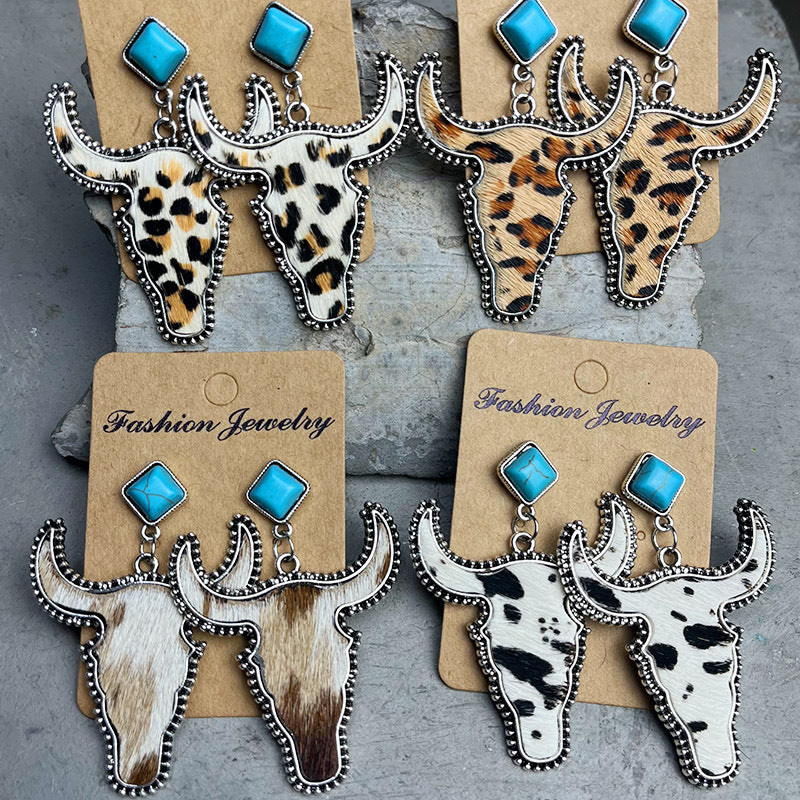
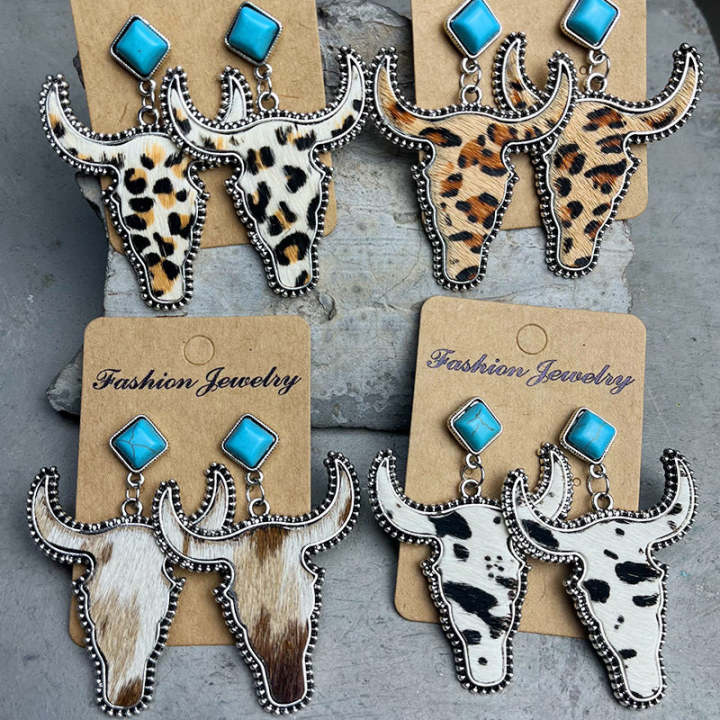
The live Western Turquoise Boho Vintage Cow Skull Earrings page was reviewed on August 24, 2026. It displayed $141.40 USD. Four visible Size radios were labeled Design 1 through Design 4, with Design 1 selected. The page presents Western, turquoise-colored, boho, vintage-inspired, and cow-skull visual language and proposes everyday, Western-inspired, occasion, and gifting contexts.
The visible page did not document natural turquoise, metal composition, age, maker, origin, handwork, cultural affiliation, dimensions, mass, closure, skin-contact components, treatments, or care. It also did not promise that every object pictured across the gallery belongs to one selected Design. A care plan therefore begins by saving the exact Design image and requesting the missing specifications.
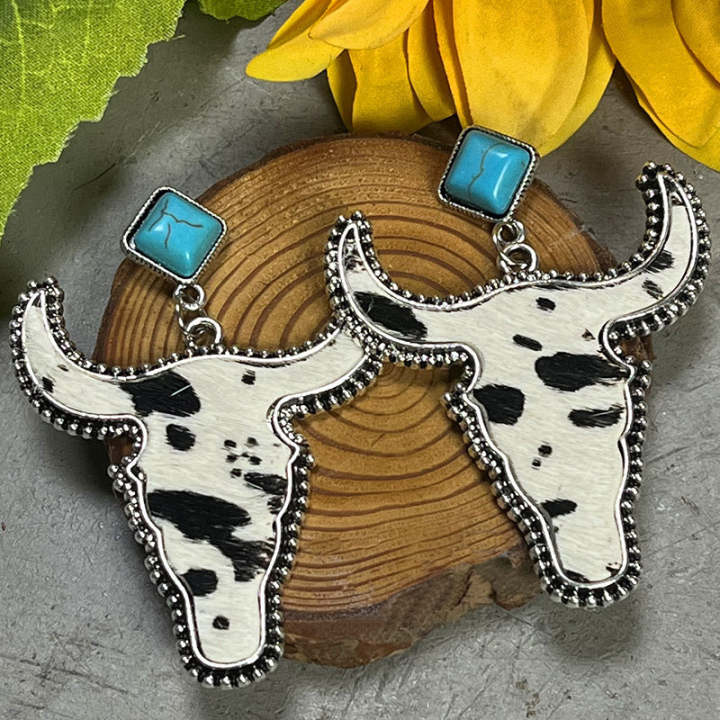
Create a left and right bay inside one labeled pair compartment. Support the decorative faces without placing weight on projecting parts. Keep hooks, posts, backs, connecting rings, or other closures in their natural position after identifying the selected Design. Do not use a generic liquid cleaner or metal polish because the page does not identify every surface.
Before and after wear, compare the item with the intake images. Look for a displaced connection, bent hook or post, loose decorative component, surface change, or missing back. Stop wearing and cleaning when damage or irritation appears. Secure professional or seller guidance rather than forcing a repair.
Live Care Example B: Three-Piece Jewelry Set
The live Turquoise Boho Vintage Geometric Floral Jewelry Set page displayed $116.15 USD. One visible Set radio was labeled Three-Piece Suit and selected. The current copy uses turquoise-colored, boho, vintage-inspired, geometric, and floral appearance language and suggests casual, Western-inspired, occasion, and gifting use.
The option name establishes a three-piece concept but the inspected visible text did not identify the three components individually. It also did not provide component-level dimensions, masses, closures, materials, treatments, skin-contact parts, care, maker, origin, age, handwork, or cultural attribution. Obtain a written included-contents statement tied to the selected option before creating permanent labels.
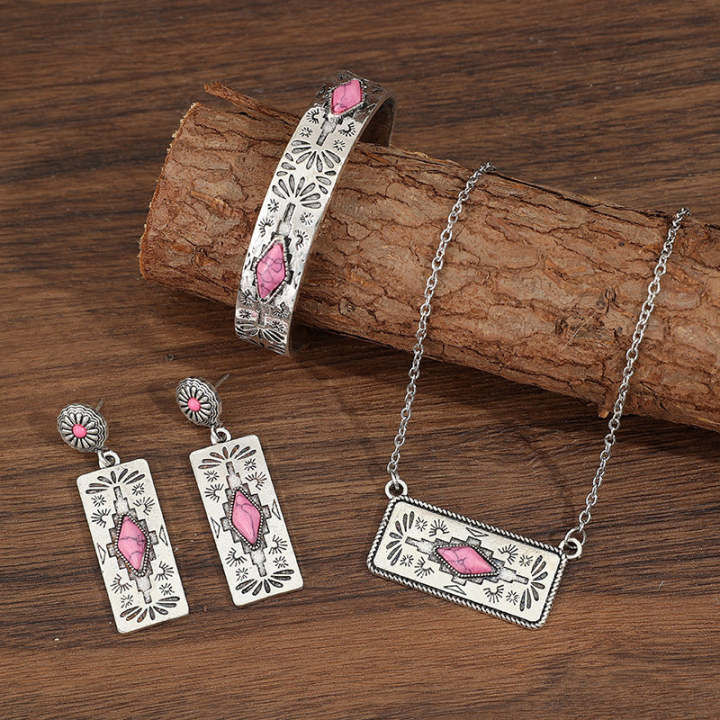
Prepare one outer set box and three interior bays marked A, B, and C. Put a thumbnail photograph on the inventory card, not loose against the jewelry. Record every closure, connection, surface, and movement path separately after the contents are confirmed. A necklace-like component requires a no-crossing route; an earring-like component requires paired support; a bracelet or ring-like component requires protection from rolling and pressure.
Do not clean the three components together simply because they share a product title. Different-looking surfaces, adhesives, cords, chains, or decorative units may require different instructions. The correct routine may be three separate routines, one for each documented component.
Build a Low-Risk Handling Kit
A storage kit can be useful without becoming a chemical laboratory. Include a clean padded work surface, neutral labels placed on containers rather than jewelry, a soft air blower designed for gentle dust displacement if appropriate, clean dry handling tools suited to the documented object, separate suitable pouches or compartments, a small ruler, a scale only if needed and safe, and the printed or digital condition cards.
Exclude mystery polishing cloths, abrasive brushes, household cleaners, dips, powders, oils, adhesives, rubber bands, paper clips, loose pins, and unverified anti-tarnish products. A soft tool is not automatically safe; fibers can catch a prong or connection, and a treated cloth can contain compounds unsuitable for an unknown finish.
The safest routine may be observation only. If the item is dry, stable, and free of loose surface debris, unnecessary cleaning can add risk without improving storage. When the item needs intervention, identify the materials and obtain instructions first.
Corresponding Care Video
The corresponding YouTube reference is the 1-minute-8-second video Episode 9: Turquoise Care and Cleaning Guide from Amitis Art. Its title and channel place it directly within turquoise-care education.
Use the video as general educational media, not as permission to apply a technique to the Oroxen products. A method demonstrated on identified turquoise, silver, or another documented object may be unsuitable for an unidentified coating, adhesive, decorative component, cord, finish, or mixed-material set. The two live product pages above remain the source for the limited item-specific facts in this guide.
Travel Without Creating a Mobile Tangle
Travel storage needs a rigid plan because motion continues for hours. Use a container that holds each bay in place when turned, carried, or placed under another object. Fasten appropriate closures, route long pieces without crossings, protect projecting earring parts, and keep set components separated. Photograph the packed layout so every piece returns to the same location.
Carry only the items required for confirmed outfit roles. Avoid leaving jewelry loose in a handbag, checked bag, vehicle, bathroom, or cosmetic pouch. Keep it away from liquids, fragrance, lotion, makeup, keys, chargers, and hard accessories. Review current travel, venue, and security requirements before the event.
The published guide to styling Western jewelry with denim, dresses, boots, and workwear can help define which pieces actually need to travel. Assigning an outfit role before packing reduces unnecessary handling and keeps extra items in their labeled home bays.
The published country-concert jewelry guide provides another real-condition framework for bags, outerwear, movement, and venue rules. Apply the logistics, not the occasion assumptions.
Run a Monthly Condition Loop
Choose an interval that matches actual wear and the documented care requirements. Open one bay at a time. Compare the item with its intake images under similar light. Check closures, connections, alignment, surface, decorative-unit stability, pouch condition, labels, and signs of moisture or contamination. Record observations without attempting a repair during inspection.
After wear, let any product-specific routine finish before storage. Never trap confirmed moisture in a closed pouch. Do not leave jewelry exposed indefinitely while “airing” it in a dusty, humid, sunny, or high-traffic location. Return the item to its coded bay only when the documented process permits.
The published Western jewelry overview can help maintain accurate visual descriptions. It cannot replace material-specific care instructions.
Frequently Asked Care Questions
How often should boho turquoise jewelry be cleaned?
There is no universal interval. Follow the care instructions for the exact documented materials and condition. Inspection can be scheduled; cleaning should happen only when necessary and with an appropriate method.
Can turquoise-colored jewelry be washed with soap and water?
Color alone cannot answer that question. Water and soap may affect some finishes, adhesives, cords, coatings, stones, or metals. Use item-specific guidance and avoid immersion when compatibility is unknown.
How should necklaces be prevented from knotting?
Secure the closure when appropriate, route the piece without crossings, prevent the pendant from moving through the chain or cord, and give it an individual compartment. Do not hang a heavy pendant from a weak connection or fold a necklace sharply.
Should all three pieces of a set share one pouch?
A shared outer container can preserve the set relationship, but interior separation is safer than one loose compartment. Identify the exact three components and give each its own bay so surfaces and closures do not rub or tangle.
What should happen when a finish changes or a part loosens?
Stop wearing, cleaning, and adjusting the item. Photograph the change, isolate the piece, review current support or return information, and consult the seller or an appropriate professional. Do not conceal the condition with an unverified polish, coating, or adhesive.
Where should readers continue?
Return to Oroxen, open the exact product page, and complete the missing fields on the intake card. A correctly labeled empty bay is better than mixing an undocumented piece into the collection.
Conclusion: Storage Is a Record of What Must Not Touch
A reliable jewelry box is not defined by velvet, drawers, or appearance. It is defined by controlled contact. Each selected option has an identity, each component has a bay, every long piece has a route, and every unknown remains visible on the card. That system prevents many tangles before a cleaning decision is even needed.
For the cow-skull earrings and three-piece geometric floral set, the current pages provide styling and option information but not enough material-specific evidence for a universal cleaning recipe. Photograph, separate, support, keep dry conditions stable, and stop when damage or composition uncertainty matters. Good care preserves both the object and the accuracy of the story attached to it.