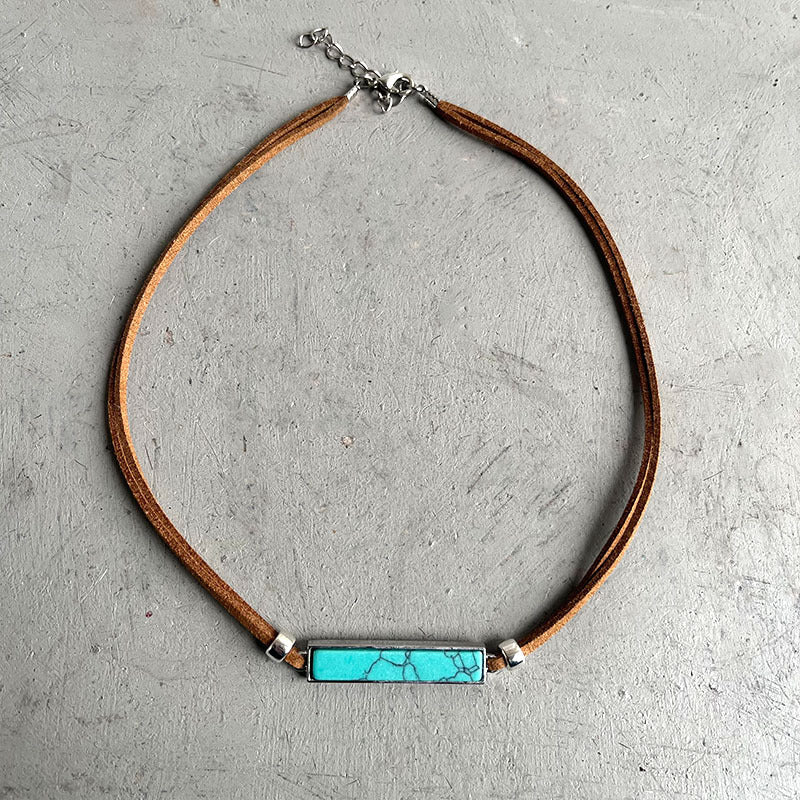
A Checklist for Wearing Turquoise Necklaces with a Rodeo Outfit
A rodeo outfit is not finished when every item merely looks good on a bed or hanger. It is finished when the hat, neckline, necklace, shirt, jacket, buckle, bag, and footwear continue to work together while the wearer walks, sits, turns, reaches, passes through entry, and spends hours in a changing environment. A turquoise-colored necklace can give the outfit a clear center, yet it can also disappear into embroidery, strike a buckle, catch a jacket edge, or depend on product details that the listing does not currently establish.
This guide treats outfit preparation as a rodeo readiness board. Each checkpoint ends in one of three results: Pass means the evidence supports the plan; Adjust means the styling idea can be changed without abandoning the necklace; and Stop means a missing fact, venue rule, comfort issue, or safety concern must be resolved before the piece is worn. The board separates visual judgment from product evidence so that an attractive gallery photograph never becomes an invented claim about stone, metal, size, origin, or durability.
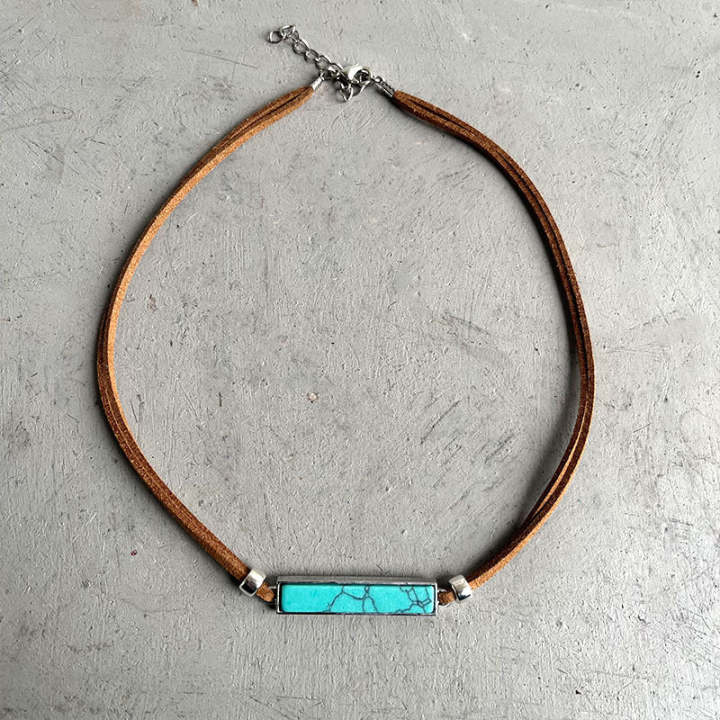
The One-Minute Rodeo Necklace Check
Before building the detailed board, state the plan in one sentence: “This necklace will be the main jewelry focal point over this specific top at this specific event.” Then answer seven short prompts. Which exact necklace option is selected? Where will its lowest point land? What else occupies that area? Does the wearer welcome the motif? Are all skin-contact components documented? What movements will happen? What current venue, weather, travel, and storage conditions apply?
A Pass requires an answer supported by direct observation, current documentation, a measurement, a wearer preference, or a current policy. An Adjust might mean opening the jacket, changing the shirt, removing a second necklace, reducing earrings, choosing a smaller buckle, or moving the bag strap. A Stop is appropriate when essential measurements, components, care limits, option identity, or venue rules remain unknown. “It probably works” is not a fourth result.
Readers who want broader category vocabulary can begin at the Turquoise Jewelry Guides hub. The readiness board in this article has a narrower job: convert a rodeo-outfit idea into a documented, rehearsed wearing plan.
Checkpoint 1: Write an Exact Kit Manifest
List every item that can affect the necklace: base layer, shirt or dress, jacket, scarf, hat, earrings, bracelets, rings, belt, buckle, bag strap, sunglasses, lanyard, and any outerwear expected after sunset. Name colors and visible lines, but also note physical features such as snaps, raised embroidery, fringe, lapels, pockets, stiff seams, and hardware. These features create the actual operating space around a pendant.
Next, record the necklace by its current title, URL, selected option, and reference image. Do not substitute a family name such as “turquoise necklace” for the exact selection. Product families can contain different pendants, cords, chains, finishes, closures, and lengths. If the page offers Design 1, Design 3, and Design 4, the manifest must say which design is under review. A screenshot made on the planning date can preserve what the option looked like without claiming that price or availability will remain unchanged.
Finally, identify the outfit leader. If the necklace leads, other high-contrast objects should support rather than compete with it. If the hat, embroidered yoke, or buckle leads, the necklace may need a quieter silhouette or a less interrupted background. The published guide to styling Western jewelry with denim, dresses, boots, and workwear is useful when translating that hierarchy into garment choices.
Checkpoint 2: Map the Necklace Landing Zone
The landing zone is the part of the outfit occupied by the necklace at rest and in motion. Mark the upper boundary at the neckline, the lower boundary at the pendant endpoint, and the side boundaries created by lapels, collars, braids, bag straps, or jacket edges. A clear zone gives the eye an uncomplicated route to the necklace. A crowded zone causes the jewelry to merge with buttons, embroidery, pockets, or buckle hardware.
Use verified measurements, not a model photograph, to predict placement. Obtain the wearable length, any adjustment range, pendant height and width, connector length, projection, mass, and closure for the exact option. Tie a cord to the documented wearing length, attach a paper outline representing the pendant, and try it with the real clothing. Photograph the result standing, seated, and with the jacket both open and closed.
If those measurements are not documented, the checkpoint cannot receive a Pass. It can still receive Adjust: keep the concept provisional, contact the seller, or choose an option with a fuller specification. A gallery crop establishes appearance, not scale. A label such as “Design 1” identifies a choice, not a length.
Checkpoint 3: Test Visual Traffic, Not Just Color
Turquoise color can form a strong contrast with brown leather, cream, black, white, rust, and many denim washes, but color matching is only one layer. The eye also follows shape, edge, repetition, and brightness. A cross-led geometric pendant introduces straight and diagonal directions. A teardrop pendant introduces a tapered vertical direction. Shirt plackets, pointed yokes, lapels, belt tips, and boot stitching may repeat those lines or challenge them.
Stand at conversation distance and take a full-outfit photograph. Then convert the photo mentally into large shapes: hat, face, neckline, necklace, torso, buckle, footwear. If three pieces shout at equal volume, reduce one. The solution might be smaller earrings, fewer rings, a quieter belt, a plain shirt panel, or a necklace-free option. Do not solve every competition by adding another matching turquoise-colored item.
The public overview of Western jewelry motifs, styles, materials, and selection can help name visual features. It cannot authenticate the material, maker, geographic origin, cultural affiliation, or age of an individual necklace; those facts need their own documentation.
Checkpoint 4: Run the Rodeo Movement Circuit
A necklace that passes a mirror check can fail during ordinary event movement. Rehearse a short circuit in a clear, private space: walk, sit, stand, turn the head, reach for a pocket, use a phone, lift and lower a bag, put on the jacket, remove the jacket, and bend only as the event normally requires. The purpose is not to stress the jewelry. It is to discover collisions, swinging, snagging, pressure, repeated adjustment, or visual displacement before departure.
Watch the relationship between the pendant and the buckle. If they meet while seated, shorten or remove the necklace, change the garment endpoint, use a smaller buckle, or select a different piece. Check whether a crossbody strap drags the chain, whether fringe enters the pendant, and whether a collar folds over the necklace. Stop the test immediately if the wearer feels pulling, pinching, heat, itching, sharp contact, or another discomfort.
Event conditions also matter. Recheck the current venue’s entry policy, permitted items, seating or standing arrangement, and any activity-specific requirements. Consider temperature, rain, dust, crowding, travel, and secure storage. The published country-concert jewelry guide supplies a wider event checklist that also adapts well to many rodeo spectator settings. Current venue instructions always outrank a general styling article.
Checkpoint 5: Separate Product Evidence from Appearance
Create an evidence row for stone or center material, treatments, metal and every skin-contact component, coating or finish, construction, dimensions, mass, closure, adjustment, care, included contents, maker, origin, and any cultural attribution. Fill a field only when the exact selected option has current supporting documentation. Leave an honest blank where the listing is silent.
Turquoise-colored appearance does not by itself identify natural turquoise. Antique-silver color does not establish sterling silver. “Vintage-inspired” is a style description unless age and provenance are supplied. Likewise, a cross, geometric form, or Western label does not prove a maker identity, region, tribe, spiritual meaning, or production method. The wearer decides whether a motif is appropriate personally, while the seller or maker must support product-specific factual claims.
Use the published complete Western turquoise jewelry selection guide to build stronger questions. The guide can improve the inspection process, but it cannot fill evidence blanks for a different listing.
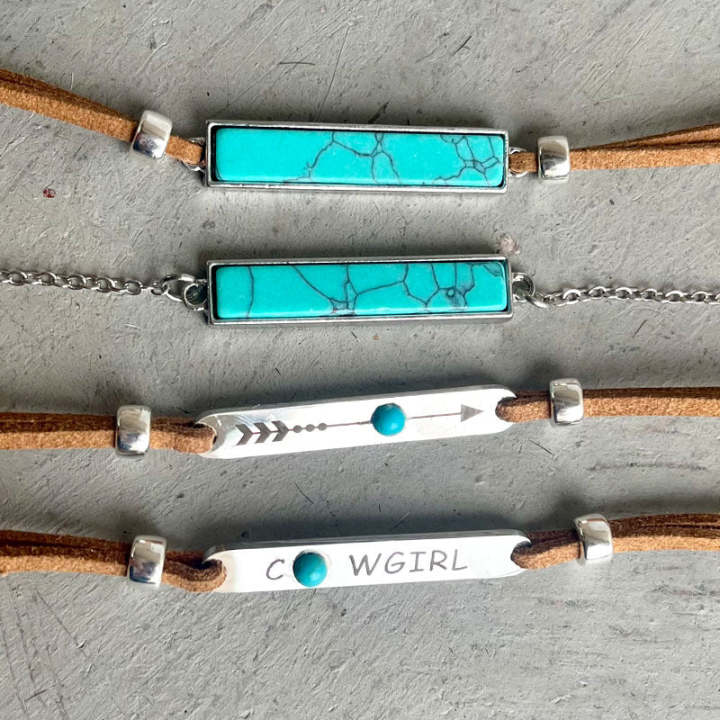
Field Drill A: Western Turquoise Vintage Geometric Cross Necklace
The live Western Turquoise Vintage Geometric Cross Necklace page was reviewed on August 24, 2026. It displayed $126.25 USD. Three visible Size choices were labeled Design 1, Design 3, and Design 4, with Design 1 selected. Gallery numbering extended through fifteen, with a skipped number in the visible sequence.
The current title and page copy support a Western, turquoise-colored, vintage-inspired, geometric, cross-led appearance. The page presents it for everyday outfits, Western-inspired looks, occasions, and gifting. On the readiness board, those statements help with visual traffic and intended styling context. They do not establish natural turquoise, metal composition, age, maker, geographic origin, handmade production, cultural affiliation, dimensions, mass, closure, wearing length, or included quantity.
For a rodeo outfit, begin with the selected Design and a plain shirt panel. Plot the pendant only after the measurements are confirmed. Decide whether the cross is welcomed by the wearer before treating it as the focal point. Match the selected label to the current gallery image, and ask what exactly arrives; a gallery containing several designs is not proof that all pictured items are included. Because price, choices, availability, shipping, and returns can change, reopen the live page near purchase time.
Field Drill B: Turquoise Western Teardrop Pendant Necklace
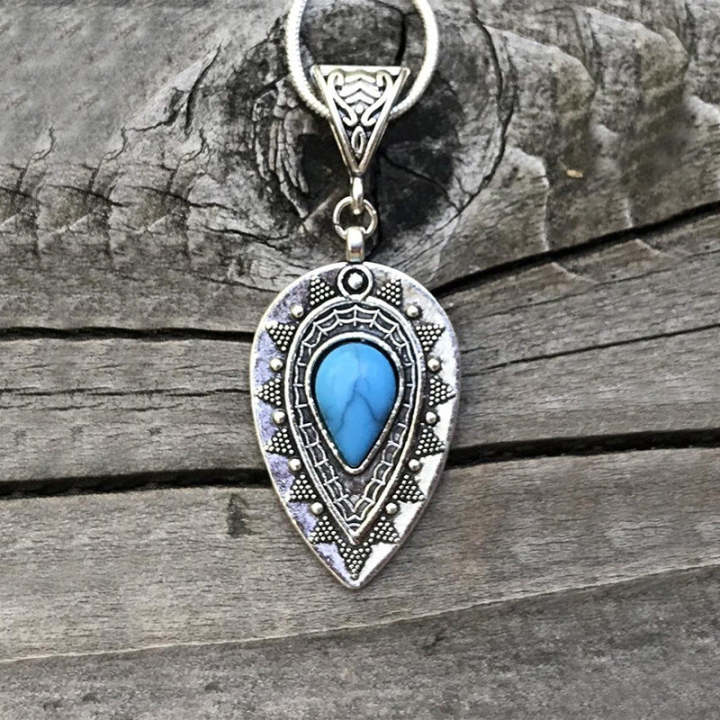
The live Turquoise Western Teardrop Pendant Necklace page was reviewed on the same date. It displayed $39.99 USD, one visible Color radio, and gallery numbering through eleven. The listing describes a Western pendant, vintage-inspired statement direction, teardrop silhouette, turquoise-style center stone, and antique-silver color. It suggests denim, boots, shirts, dresses, solo wear, layering, events, everyday outfits, and gifting.
Those details make a useful visual hypothesis: place the tapered pendant on an uncluttered vertical area and let it create the outfit’s downward line. The page did not visibly provide the wearable length, adjustment, pendant dimensions, mass, closure, or a complete option-specific component disclosure. Therefore, the landing-zone and component checkpoints remain open until further documentation is obtained.
The listing’s Materials & Care panel says details may vary by product option. It tells the shopper to keep the jewelry dry, avoid direct contact with perfume or lotions, store it in a soft pouch when it is not worn, and review the product images for the exact finish and design. Put those instructions on this necklace’s field card. Do not generalize them into care advice for every turquoise or turquoise-colored piece.
Checkpoint 6: Compare the Two Necklaces Without Inventing a Winner
Comparison should identify which unknowns matter, not manufacture a universal recommendation. The geometric cross option introduces cross symbolism and multiple visible Design choices. The teardrop option presents one visible Color control and explicit care wording. Their current displayed prices differ substantially, but price alone does not establish material, durability, comfort, value, or suitability.
Make two columns. Under each, record the selected visual, documented measurements, component disclosure, motif decision, care, event rehearsal result, current price, current availability, shipping expectation, and current return terms. Use “not stated” instead of guessing. If one option has the better-documented landing zone and the other has the preferred appearance, the board reveals the next action: request missing information, change the outfit, or keep shopping.
Do not assume both necklaces can be layered simply because the teardrop page mentions layering. A safe and visually deliberate stack requires the exact wearing lengths, endpoints, pendant projections, masses, closures, surfaces, and movement paths of both pieces. Until those facts are known and the real pieces have passed a gentle rehearsal, treat layering as an untested styling idea.
What the Corresponding Video Adds
The 6-minute-27-second video Turquoise Necklaces is presented by John Hartman. It shows examples from the presenter’s own context and explains that the broad necklace category can include turquoise bead necklaces, pendant-led necklaces, and combinations with different visual structures.
That distinction helps the readiness board because a strand distributes color and volume around more of the neckline, while a pendant concentrates attention near an endpoint. The video can suggest what silhouettes to observe and what questions to ask. It is not evidence for either Oroxen listing, and its demonstrated pieces must not be used to claim the Oroxen products’ stone identity, mine, treatment, silver content, maker, construction, measurements, age, or origin.
A Departure Timeline for the Rodeo Outfit
Several days before
Confirm the exact event, destination, weather outlook, venue rules, transportation, and storage plan. Complete the item manifest. Reopen the chosen product page and save the selected option, current image, price, availability, shipping estimate, and current return information. Ask any unanswered component, measurement, care, or included-contents questions early enough that the answer can influence the decision.
The day before
Run the full landing-zone and movement circuit with the actual clothing. Check the outfit in indoor light, daylight, and a phone photograph. Remove competing elements. Pack a soft storage pouch only if that method matches the product-specific care instructions. Prepare a simpler fallback necklace or a necklace-free version so that a weather, comfort, venue, or outfit change does not create a rushed decision.
Before leaving
Apply perfume, lotion, sunscreen, or hair products in a way consistent with the exact jewelry’s documented care; the teardrop listing specifically says to avoid direct perfume or lotion contact. Check the closure and the necklace’s relationship with jacket, scarf, bag, and buckle. Stop wearing the piece if a component appears damaged, the fit has changed, or discomfort begins.
At entry and during the event
Follow current staff instructions and venue policy. If outerwear is removed, repeat the visual and collision check because the landing background has changed. After sitting, confirm that the pendant does not meet the buckle or chair hardware. If the environment becomes crowded, wet, dusty, or otherwise incompatible with the documented plan, use the prepared storage or fallback branch.
After returning
Remove the necklace deliberately rather than pulling it over a hat or hair accessories. Follow the exact product’s care guidance, note any issue that appeared during wear, and store the piece appropriately. The review closes the loop: it turns one outing into better evidence for the next outfit without creating universal claims about other jewelry.
Frequently Asked Rodeo Necklace Questions
Should the necklace always match the buckle?
No. Matching every color and motif can make the outfit visually crowded. Decide which item leads, then coordinate through one restrained relationship such as line, color temperature, or shape. Also test for physical contact; a visually related buckle and pendant may still collide when seated.
Can a product photograph tell me the necklace length?
No. Perspective, cropping, styling, and the model or display surface can distort perceived scale. Use a documented wearing length and pendant dimensions for the exact option, then reproduce them with a cord and paper outline over the intended clothing.
Does a turquoise-colored center prove natural turquoise?
No. Color and matrix-like appearance do not establish identity or treatment. Request option-specific documentation describing whether the material is natural, treated, stabilized, dyed, reconstructed, composite, simulated, or used only as a color description.
Can the two example necklaces be worn together?
Possibly as a visual concept, but the current pages do not supply enough fit and construction information to confirm it. Verify both wearable lengths, endpoints, adjustments, pendant dimensions, mass, closures, surfaces, and care limits, then run a gentle movement rehearsal with the actual pieces.
What is the fastest responsible decision when information is missing?
Mark the checkpoint Stop, identify the exact missing fact, and choose a reversible next action: ask the seller, select a better-documented option, change the outfit, or wear no necklace. Guessing is not faster if it creates a return, discomfort, missed event, or unsuitable gift.
Build the Next Outfit from a Connected Path
Browse the Western Necklaces collection when the outfit needs a necklace-specific shortlist. Use the broader Western Jewelry collection when comparing necklaces with earrings, bracelets, rings, and other supporting categories. A collection is a discovery surface; every shortlisted product still needs its own evidence row and readiness circuit.
Final Readiness Decision
A turquoise necklace is ready for a rodeo outfit when the exact option is recorded, its landing zone is established with evidence, the wearer accepts the motif, the visual hierarchy is clear, the movement circuit reveals no unresolved problem, product-specific material and care questions are handled, and current venue conditions support wearing it. If any controlling fact remains missing, use Adjust or Stop rather than forcing a Pass.
Return to the Oroxen homepage for current navigation and live product information. The strongest rodeo outfit is not the one carrying the most Western-coded details; it is the one whose pieces have defined roles, documented limits, and a practical fallback.