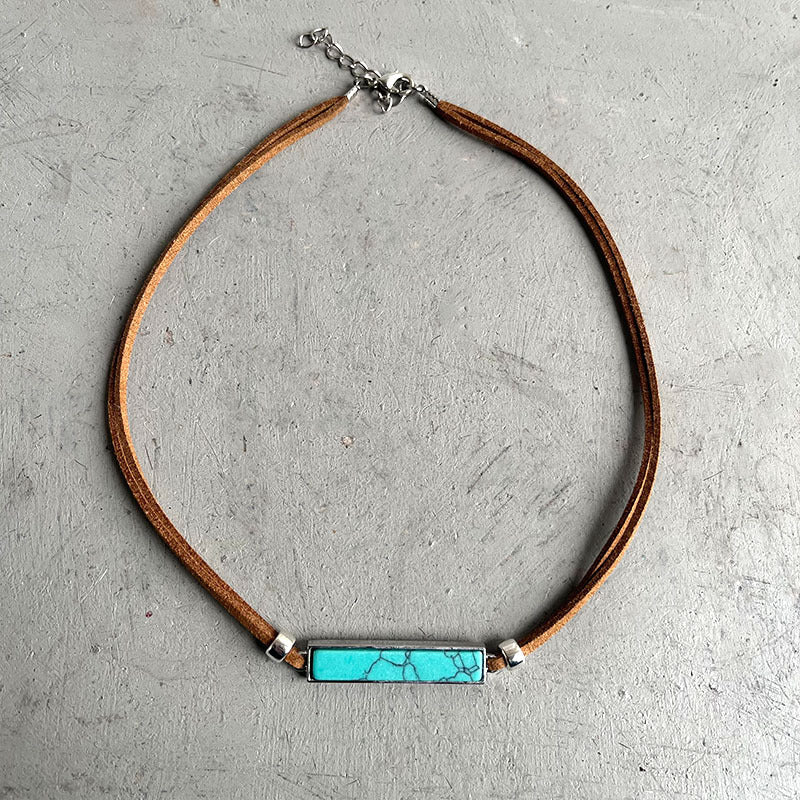
7 Ways to Wear Turquoise Necklaces for a Wedding Guest Look
A wedding guest does not need seven necklaces to create seven necklace looks. One well-chosen pendant can change roles when the garment field, hairstyle, outer layer, earrings, bag, and amount of surrounding detail change. The useful question is not “What matches turquoise?” It is “What job should the necklace perform in this version of the outfit?”
The seven methods below form a role library. Each method has an outfit condition, a focal rule, a rehearsal test, and a stop condition. They are not seven dress-code rules. The invitation, host guidance, setting, and the exact product specifications remain authoritative. Turquoise, vintage, Western, geometric, cross, teardrop, boho, or antique-silver language may describe appearance; it does not automatically identify stone, metal, age, maker, origin, or cultural affiliation.
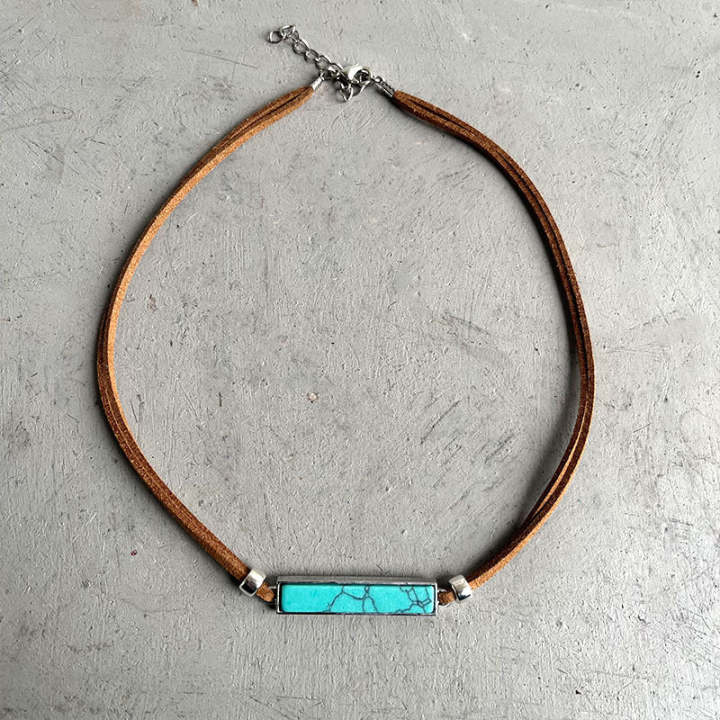
Quick Answer: Change the Surroundings, Not the Evidence
Choose the exact necklace option and record what the current page actually documents: selected design, price, included quantity, total wearing length, extension, pendant dimensions, mass, closure, components, care, availability, delivery, and returns. Keep missing fields unresolved. Then vary only one styling condition at a time. Start with an open garment field, add or remove a jacket, change hair position, quiet the earrings, or move from one necklace to a verified two-length layer.
Take a front photograph, a seated photograph, and a full-body photograph for every method. Test walking, turning, hugging, dining, carrying the bag, and putting on the outer layer. The winning method is the one that remains visually clear and physically uneventful. A necklace should not need constant centering, untangling, or protection from the clothing.
The Turquoise Jewelry Guides hub provides the wider subject map. This page concentrates on seven practical transformations of the neck zone.
Prepare One Necklace Role Card
Before trying the seven methods, make one card for the selected product option. The front of the card holds the product title, live URL, option label, review date, current price, and reference image. The back has four columns:
- Known construction: written materials, components, closure, dimensions, mass, and care.
- Visible design: color, outline, motif, spacing, and apparent visual weight.
- Wear result: garment pairing, endpoint, comfort, movement, and collision notes.
- Unresolved: facts not established for the exact option.
Do not move a visible feature into the construction column. A blue-green center may be described as turquoise-colored or turquoise-style when that is the seller's wording; it is not a natural-turquoise conclusion. Antique-silver color is not a metal assay. Vintage-inspired is not a date.
Keep the invitation beside the card. A motif or level of ornament that feels appropriate at one wedding may not suit another. When host, religious, or cultural direction is relevant, follow that direction and ask a concise question if necessary. The Western jewelry motifs and materials overview can help name visual features without inventing provenance.
Way 1: Make the Necklace the Only Upper-Body Focal
Begin with a dress, jumpsuit, blouse, or shirt that provides a quiet field around the pendant. Use small earrings or none, avoid a decorated collar, and keep the bag strap out of the necklace path. Let the pendant be the first piece of ornament visible above the waist.
This method works when the necklace's documented endpoint falls inside the quiet field. Confirm that the pendant does not touch a seam, button, lace edge, neckline trim, or belt when standing and seated. Photograph the outfit from conversation distance. If the necklace vanishes, first reduce nearby detail instead of adding more turquoise-colored accessories.
Stop condition: the pendant crosses a garment boundary, the option lacks essential fit information, or the symbol dominates beyond what the invitation context supports.
Way 2: Place the Pendant over a Quiet High Neckline
A high neckline can become a continuous background for a pendant, provided the fabric is quiet and the real necklace length places the focal well below the collar edge. This is different from dropping a necklace into bare skin. Fabric color, texture, folds, seams, and static behavior all affect contrast and movement.
Use a temporary paper outline only after obtaining pendant dimensions. Move, sit, and put on the jacket. Check whether the pendant flips, clings, slides sideways, or pulls the fabric. Avoid treating a model photograph or close product crop as a guarantee of scale on the wearer.
Best supporting choices: controlled earrings, simple hair near the shoulders, and minimal hardware above the waist. Stop condition: the pendant distorts the garment, catches the fabric, or becomes lost in texture.
Way 3: Use an Open Jacket as a Visual Frame
An open blazer, denim layer, cardigan, or other event-appropriate outer piece creates two vertical edges around the necklace. Those edges can focus attention, but they can also collide with the chain or pendant. Put on the exact underlayer and jacket, then test both open and temporarily closed positions.
The necklace should remain visible when the wearer sits and when the lapels shift. Keep pins, brooches, pocket trim, and strong buttons from competing with the pendant. If the jacket will be removed at the reception, approve the underlayer version separately; a necklace framed perfectly during arrival may feel overlarge after the frame disappears.
The published guide to Western jewelry with denim, dresses, boots, and workwear offers more layer examples. Recheck every one against the wedding dress code.
Way 4: Repeat Turquoise Color Once, Not Everywhere
Use the necklace as the main turquoise-colored object and repeat that color once in a minor area: a small detail in the print, a restrained ring, a discreet bag accent, or another verified component. The repeat should connect the outfit without forming a chain of identical turquoise-colored statements from head to toe.
Color matching is not required. Lighting, screens, fabric, finish, and surrounding neutrals change how blue-green tones appear. Instead of demanding an exact match, compare temperature, saturation, visual weight, and distance. A subtle echo often looks more intentional than earrings, necklace, bracelet, ring, buckle, boots, and bag all claiming the same color.
Stop condition: the eye jumps among several equally strong turquoise areas or the color repeat requires an unsupported material claim.
Way 5: Keep the Necklace Constant while Hair and Earrings Change
Use one necklace through ceremony and reception, but alter the face-framing zone. Hair down can soften the line near the shoulders; hair partly back or up can increase the visibility of earrings and the necklace chain. Select one hair plan for each stage and photograph both.
If the reception hair position makes the earrings stronger, remove or quiet them rather than adding another necklace. Test whether hair tangles in the chain or closure and whether the earring path overlaps the necklace visually. This method creates a genuine second look without carrying a second pendant or attempting a complicated change.
Stop condition: hair repeatedly catches, the closure remains unsupported by specifications, or the reception version creates two upper-body leaders.
Way 6: Convert a Day Look with Accessory Subtraction
Instead of adding sparkle or another turquoise piece for evening, remove one competing object. The transition might be jacket off, hat off, decorative belt removed, earrings reduced, or bag changed to a quieter shape. The necklace remains the anchor while the background becomes simpler.
This method is useful when ceremony and reception differ in lighting, temperature, or movement. Rehearse the exact subtraction and decide where the removed item will be stored. A change is not practical if it requires unsafe jewelry storage, a large bag that violates current venue rules, or repeated handling of a delicate necklace.
Stop condition: removing the object exposes a garment seam or neckline conflict that the object previously hid. Approve both stages as complete outfits.
Way 7: Layer Only Two Verified Lengths
Layering is the most information-intensive method. Both necklaces need documented lengths, extension ranges, pendant dimensions, masses, closures, components, and care. Draw the two endpoints on the garment and reserve clear vertical separation. The quieter necklace supports; the turquoise necklace leads.
Wear the pair for a movement rehearsal. Check crossing, twisting, clasp migration, hair contact, jacket contact, and friction between finishes or decorative components. Do not use a generic anti-tangle trick unless it is appropriate for the specific closures and weights. If the pieces repeatedly meet, return to one necklace.
Stop condition: missing specifications, visible tangling, hard-component collision, or care guidance that makes contact undesirable. One well-placed pendant is a complete method, not a failed layer.
Live Styling Candidate A: Geometric Cross Route
The live Western Turquoise Vintage Geometric Cross Necklace page was reviewed on August 24, 2026. It displayed $126.25 USD. The visible Size choices were Design 1, Design 3, and Design 4, with Design 1 selected. Design 2 was not shown as a visible radio in the inspected page state.
The page supports Western, turquoise-colored, vintage-inspired, and cross appearance language, plus everyday, Western-inspired, occasion, and gifting contexts. It did not establish natural turquoise, metal composition, vintage age, maker, origin, handwork, cultural affiliation, wearing length, extension, pendant dimensions, mass, closure, components, treatments, or care.
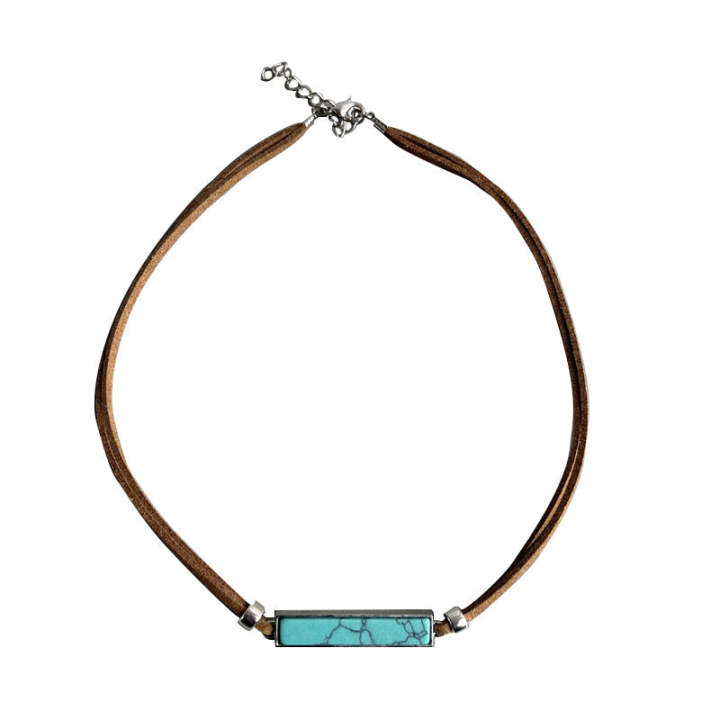
Use the geometric cross route for Ways 1, 3, or 6 when the selected Design, verified dimensions, symbol context, and garment field support it. Its recognizable motif can carry the focal role without a second strong necklace. Confirm the exact Design before purchase because gallery images are not an included-design promise.
Live Styling Candidate B: Teardrop Route
The live Turquoise Western Teardrop Pendant Necklace page displayed $39.99 USD. One visible Color radio was selected without a readable label in the inspected state. The page describes a teardrop pendant with a turquoise-style center stone, antique-silver color, and vintage-inspired detail. It suggests wearing the necklace alone or layering it with simpler necklaces.
The Materials & Care panel says details can vary by option and advises keeping the jewelry dry, avoiding direct perfume or lotion contact, storing it in a soft pouch, and reviewing images for exact finish and design. The page did not provide a complete material list, natural-turquoise confirmation, metal composition, length, extension, pendant dimensions, mass, closure, skin-contact components, maker, origin, age, handwork, or cultural attribution.
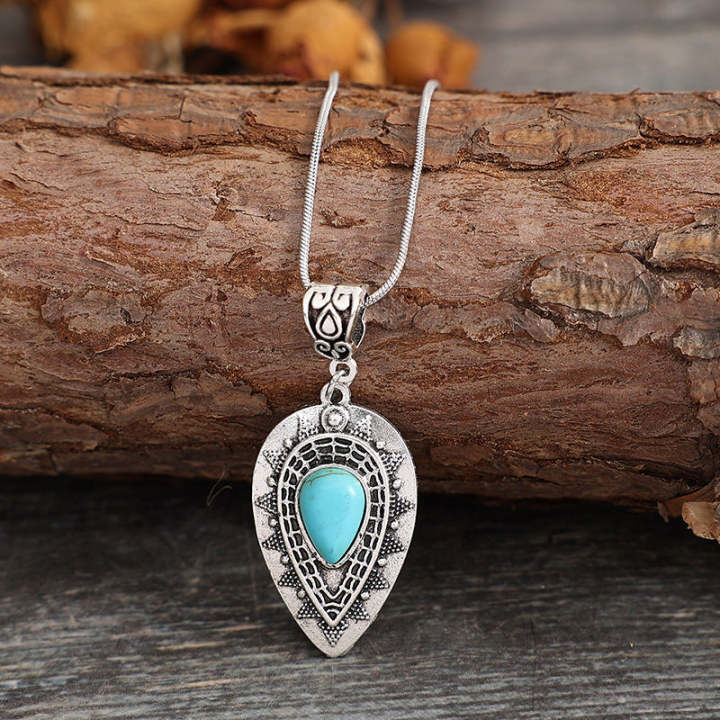
Use the teardrop route for Ways 2, 4, or a carefully verified Way 7. The narrower visual outline may suit some vertical garment fields, but a photograph cannot confirm the real landing point. Follow the stated care guidance and simplify the plan if length or component uncertainty prevents a safe layer.
Browse the Western Necklaces collection for other silhouettes and the Western Jewelry collection when the neck zone should yield to another accessory category. Compare exact product pages after using collections for discovery.
Corresponding Bridal Accessories Video
The corresponding YouTube reference is the 46-second video Bridal Accessories To Wear On Wedding Day from Nayri - Wedding Fashion Expert. Its title and channel place it in the wedding-accessory planning topic.
The reference concerns bridal accessories, while this article serves wedding guests. Bridal priority, dress construction, tradition, and photography do not automatically create a guest rule. Use the link as adjacent inspiration only. It does not verify either Oroxen necklace, approve a symbol for a particular event, or establish material, fit, care, origin, or value.
Run a Seven-Look Contact Sheet
Photograph each method in the same location, camera height, and lighting. Use one frame without a necklace as the baseline. Under every image, record first visual focal, necklace endpoint, garment interference, bag interference, outerwear result, comfort, and unresolved facts. Compare full figures rather than zoomed pendant crops.
Remove a method if it succeeds only in one posed angle. Rank the survivors for ceremony, reception, travel, and fallback. The published Western turquoise jewelry selection guide provides additional specification questions, while the country-concert jewelry guide offers a useful model for movement and venue-condition testing.
Frequently Asked Questions
Do all seven methods require seven different necklaces?
No. The purpose is to give one verified necklace several distinct surroundings and roles. Change the garment field, frame, hair, earrings, color repeat, or number of layers while keeping the necklace facts constant.
Which method is safest when length is missing?
Do not promise a product fit without the length. Use a no-necklace baseline, request measurements, and treat paper placement as a garment-field experiment only. Ways 1 through 6 still require a confirmed endpoint before the event.
Can boho turquoise jewelry work at a formal wedding?
Boho is not a universal dress-code decision. Review the invitation, venue, time, host guidance, garment, exact product, and wearer preference. A quiet single focal may integrate better than multiple motifs, but the event context is decisive.
Can the cross and teardrop necklaces be layered together?
Only after both exact options have documented lengths, dimensions, masses, closures, components, and compatible care. Test separation and movement. If either piece lacks essential information or the motifs compete, wear one.
How should the necklace be stored during an outfit change?
Follow product-specific care. The teardrop page recommends a soft pouch and keeping the item dry. Do not place jewelry loose with keys, cosmetics, or hard accessories. If suitable storage is unavailable, plan a look that does not require a change.
Where can readers continue?
Visit Oroxen, compare silhouettes in the two linked collections, and create one role card for the preferred exact option. Do not add a second necklace until the first has a verified job.
Conclusion: Seven Roles, One Controlled Focal
The best variety comes from changing relationships, not multiplying accessories. A turquoise jewelry necklace can lead against an open field, sit over a quiet high neckline, appear inside a jacket frame, repeat color once, stay constant through a hair change, gain emphasis through subtraction, or join one verified layer.
Every method still depends on the invitation, exact option, specifications, care, comfort, and real movement. Keep appearance words in the styling column and material or origin claims in the evidence column. When only one route remains clear after the contact sheet, choose it confidently; editing six weaker ideas away is part of good wedding guest styling.