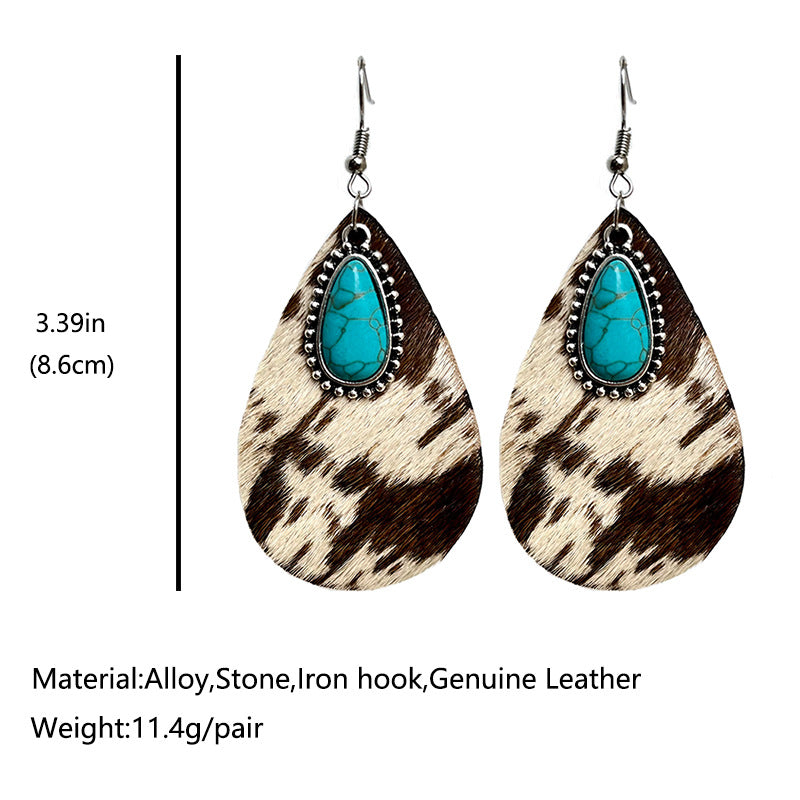
7 Ways to Wear Faux Turquoise Jewelry for a Rodeo Outfit
Faux turquoise jewelry can bring a controlled blue-green accent, a repeatable pattern, or a bold western-inspired shape to a rodeo spectator outfit. The useful word is can. “Faux” is a material category, not a casual synonym for every turquoise-colored product. Use it only when the seller or reliable documentation identifies the decorative material as faux, imitation, simulated, manufactured, resin, glass, composite, reconstructed, dyed substitute, or another specific non-natural-turquoise construction.
The seven outfit methods in this guide begin with a label-first rule: write the material status before writing the styling plan. A documented faux item may use its exact disclosed term. An item with a blue-green center but no material statement remains “material not stated.” Natural turquoise is also a claim that needs evidence. Accurate labels allow faux jewelry to be appreciated on its own terms instead of being presented as something it may not be.
Quick Answer: Label First, Choose One Lead, Rehearse the Outfit
Confirm what the blue-green component actually is. Then select one lead zone: ear, neck, wrist, hand, or waist. Let nearby jewelry support rather than duplicate the lead. Verify dimensions, mass, attachment, complete components, finish, construction, included quantity, and care for the exact selected option. Finally, rehearse the outfit with the real hat, hair, eyewear, collar, jacket, bag, phone, seating posture, hearing protection, and venue requirements.
The seven methods below are visual formulas, not material or comfort guarantees. A faux component can be combined with metals, coatings, adhesives, cords, leather, synthetic leather, stones, glass, or other parts that require different care. Product evidence remains specific to the exact item.
For a category-level comparison of material claims, read the published complete guide to choosing western turquoise jewelry. The published western jewelry motifs and materials guide explains why appearance, style, age, and composition should stay separate.
Before the Seven Ways: Make a Two-Line Product Caption
Every candidate receives two lines. Line one records visible styling: category, shape, color, selected design, and intended outfit role. Line two records evidence: exact decorative material, other components, treatment, dimensions, mass, attachment, finish, construction, care, and included quantity. The first line may be complete while the second remains mostly blank.
For example: “Blue-green floral necklace, Design 3, intended as the chest focal point.” Then: “Decorative material not stated; cord or chain material not stated; leather component not established; length, mass, clasp, finish, construction, and care not stated.” This caption is more useful than calling the product faux because it looks manufactured or natural because it has matrix-like markings.
Browse the Turquoise Jewelry collection for shapes and color placement, but do not let the collection title fill the evidence line. A collection is navigation, not authentication.
Way 1: Let Earrings Lead a Clean Denim Base
Start with a solid white, cream, black, faded blue, olive, or brown shirt and straightforward denim. Add the exact earrings as the only large blue-green area. Use a simple belt and quiet hat band. The outfit gains western direction through the ear silhouette without requiring a matching necklace, bracelet, and ring.
Move hair deliberately. Hair fully behind the ear exposes the complete design; hair surrounding a large earring can break the outline into fragments. Test both rather than assuming one is better. Add the actual hat and glasses, then turn the head, use a phone, look down, and put on hearing protection where relevant.
If the item is documented faux, use the exact term in the outfit record. If it is not, call it turquoise-colored or quote the product name while stating that material is unconfirmed. Obtain height, width, drop, projection, per-earring mass, attachment, backing, components, finish, care, and whether the listing includes a pair.
Way 2: Give a Floral Necklace a Solid Background
A floral necklace already combines a recognizable form with color and surface detail. Place it against a simple dark tee, plain dress, or restrained shirt. Keep earrings compact or absent. If the jacket has decorative lapels, embroidery, fringe, or large hardware, photograph the necklace with the jacket open, closed, removed, and carried.
Do not repeat several large floral objects at the ear, chest, belt, bag, and boot. One distant, smaller echo is enough: a subtle boot stitch, small ring, or restrained buckle curve. Exact color matching is unnecessary because screen display and event lighting can shift the appearance.
“Leather” in a title is not a complete component statement. Ask which exact part is leather, whether it is natural, synthetic, bonded, coated, or another material, and what care applies. A faux turquoise component would not answer the leather question, and a leather component would not identify the blue-green element.
Way 3: Use a Pearl-Snap Shirt as Rhythm, Not Competition
Pearl-like snaps create repeated highlights down the shirt. Pair them with one focal category. Statement earrings can sit above the snap rhythm while the chest stays clear. A necklace can interrupt the vertical line intentionally, but only when its verified length places the pendant in a stable area.
Count the shirt's other active features: yoke contrast, piping, embroidery, pocket shape, pattern, and collar points. Remove or simplify another accessory when the jewelry disappears into those details. Do not solve visual competition by automatically buying a larger item.
For earrings, check collar and snap contact in profile. For a necklace, check pendant collision with the snaps, seat belt, bag strap, and jacket. The published guide to western jewelry with denim, dresses, boots, and workwear provides additional shirt and outerwear relationships.
Way 4: Build a Day-to-Evening Layer Change
Use a plain base and a removable workwear-inspired jacket. During the day, wear one verified earring design or a restrained necklace. In the evening, remove the jacket and allow the same item to gain contrast rather than adding several new accessories. A change in background can create more impact than a change in quantity.
Rehearse the jacket path. Sleeves, collar, lining, zipper, snaps, and hair can contact earrings or a necklace during removal. Carry the jacket over the intended arm and add the real bag. If jewelry must be removed, use a rigid or semi-rigid case with a dependable closure; do not put loose pieces in a pocket with keys or a phone.
Faux materials are not one durability class. Resin, glass, composite, dyed material, coating, adhesive, metal, cord, and leather-like components can react differently to heat, sweat, sunscreen, perfume, water, and friction. Exact care instructions decide the plan.
Way 5: Separate the Hat Story from the Jewelry Story
A decorated hat band may already contain blue-green color, conchos, geometric shapes, or metal-colored details. Decide whether the hat or jewelry leads. When the hat leads, choose smaller verified earrings or a lower, quieter necklace. When earrings lead, use a simple band and leave visible space around the ear.
Test the brim in front, profile, and three-quarter photographs. A wide brim can visually frame the jewelry without touching it; cords and band details can create actual contact. Add glasses and hearing protection. Rotate, tilt, and remove the hat using the motion the wearer will actually use.
Do not call a hat detail or jewelry center faux turquoise because the colors appear similar. Record each item's material independently. One may be documented natural, one documented imitation, and one unspecified. Coordinated appearance does not require identical composition.
Way 6: Use One Blue-Green Echo at a Distant Zone
Let earrings lead, then place a small echo at the hand, wrist, belt, or boot. Or let the necklace lead and use one compact earring or ring. The echo may repeat color, curve, geometric line, or an antique-looking color without reproducing the whole motif.
Use a full-body photograph to decide whether the echo connects or competes. Cover it with a hand or remove it, then compare the images. If the lead becomes clearer without the echo, leave the outfit simpler. More coordinated pieces do not automatically create more coherence.
Keep physical tasks in view. A wristband, phone, bag, cup, payment device, seat arm, and jacket already occupy the hand zone at a rodeo. A decorative echo that interferes with the day is not supporting the outfit.
Way 7: Mix Two Motifs Only After Assigning Different Jobs
A floral necklace and a geometric or western earring can work together when they operate at different scales. Make one motif readable at first glance. Let the second appear only after closer inspection. Keep the shirt and hat restrained, and avoid adding a third large symbol at the buckle.
Verify the exact option because multi-design pages may show different silhouettes, attachments, lengths, and included pieces. “Design 1” measurements cannot be assumed for “Design 6.” Save the selected label and matching image. Test the combination from the front and profile; two good individual products can still collide or tangle together.
This method works with documented faux jewelry or with material-unknown pieces, but the label must stay accurate. Mixing motifs does not combine their evidence. Each item keeps its own material, finish, construction, care, and uncertainty.
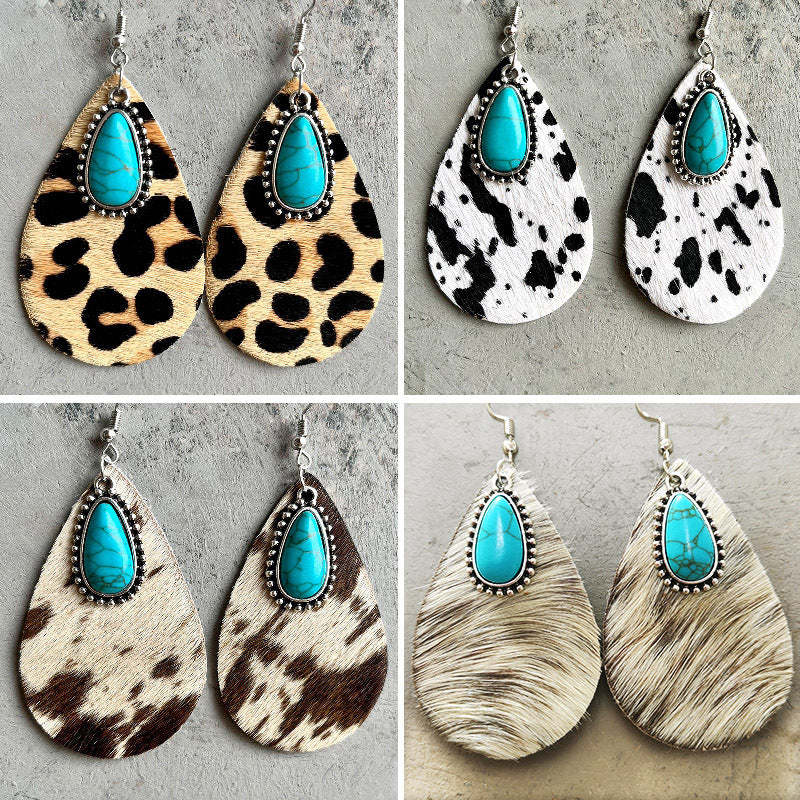
Product Study One: Western Turquoise Vintage Earrings
The Western Turquoise Vintage Earrings page was reviewed on August 24, 2026. It displayed $126.25 USD, seven visible Size choices labeled Design 1 through Design 7, and a twenty-image gallery. Current copy describes a western, turquoise, and vintage design for everyday, western-inspired, occasion, and gifting contexts.
The visible information reviewed did not identify the blue-green parts as faux, imitation, simulated, natural turquoise, or another exact material. It also did not state documented age, dimensions, drop, mass, attachment, backing, included quantity, complete components, finish, construction, or care. Therefore this listing is a material-unknown styling example, not a confirmed faux-turquoise product.
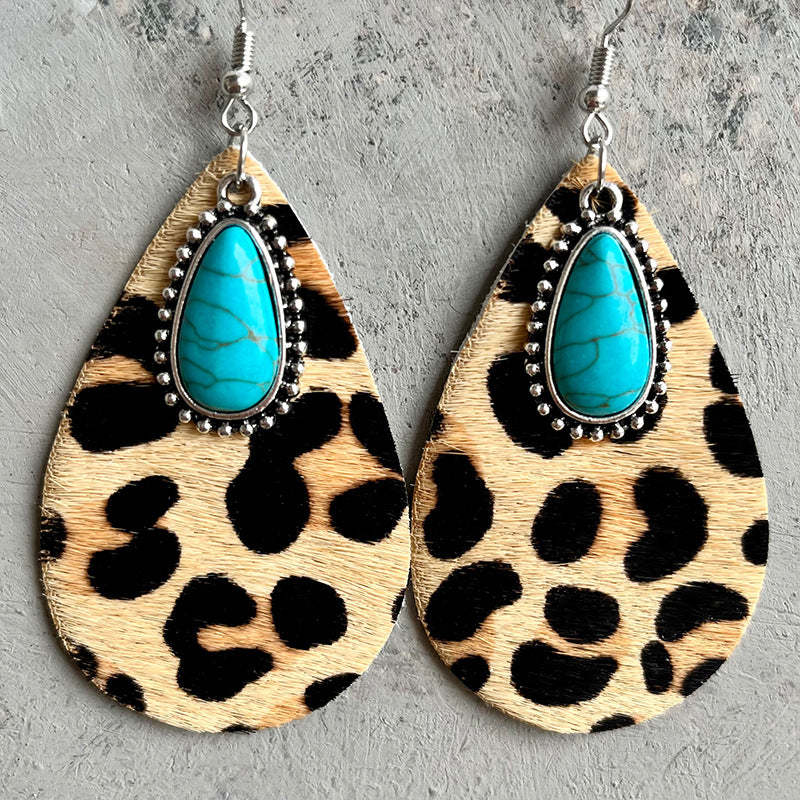
How to use the seven ways with this listing
First match Design 1–7 to the correct gallery image. Assign its visible silhouette to one of the seven formulas, then request the physical and material evidence. A longer-looking design may need the clean denim base or simplified hat method; a compact-looking design may support the pearl-snap or two-motif method. These are provisional visual roles until exact size, mass, attachment, and included count are confirmed.
Do not use one gallery image to promise how another Design moves. Ask whether the price applies equally to every option, what exactly arrives, and whether care or return conditions differ. Save the answers with the selected label.
Product Study Two: Western Turquoise Vintage Floral Leather Necklace
The Western Turquoise Vintage Floral Leather Necklace page was checked on August 24, 2026. It displayed $141.40 USD, five visible Size choices labeled Design 1 through Design 5, and a twenty-image gallery. Current copy describes western, turquoise, and vintage styling for everyday, western-inspired, occasion, and gifting contexts.
The title includes “Floral Leather Necklace,” but the visible page reviewed did not provide a complete component statement identifying which part, if any, is leather. It did not establish natural or faux turquoise, documented age, full wearable length, extension, floral or pendant dimensions, mass, clasp, components, finish, construction, or care. This is also a material-unknown example.
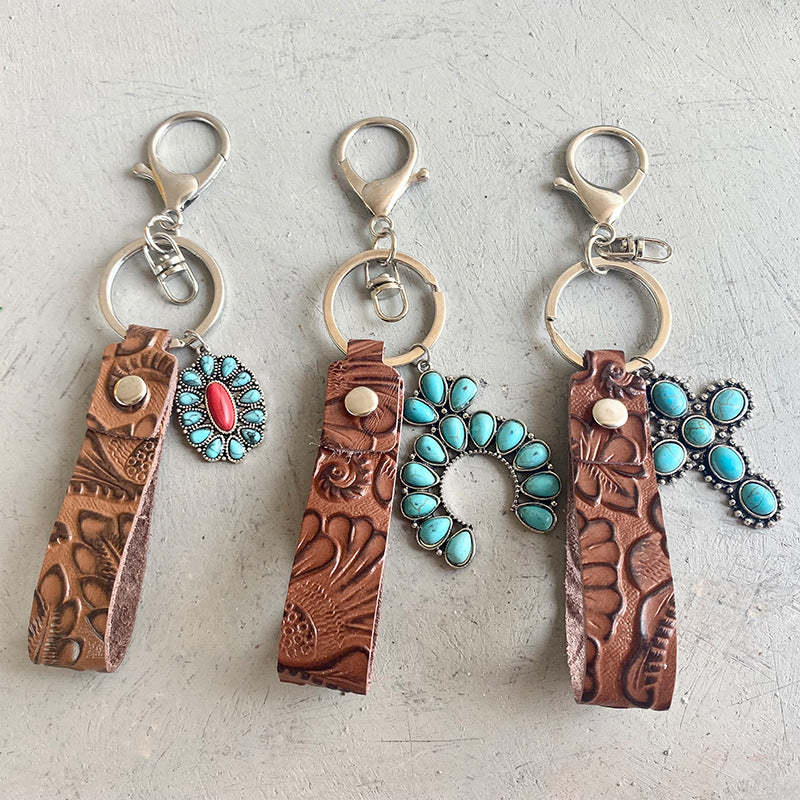
How to use the seven ways with this listing
Begin with Way 2: a solid background and a quiet ear. If layering is needed, use Way 4 and change the jacket rather than adding a second pendant. For Way 7, pair the floral form with a much smaller geometric earring only after lengths, movement, attachment, and physical contact are tested.
Ask which Design matches the intended image, the exact wearable length and extension, pendant or floral dimensions, total and component mass, fastening, materials, treatment, leather identity, finish, construction, and care. Do not use leather conditioner or natural-stone cleaner based only on title and appearance.
Compare the Two Material-Unknown Examples
| Decision field | Earring family | Floral necklace family |
|---|---|---|
| Visible choices | Design 1–7 | Design 1–5 |
| Best first formula | Clean denim base | Solid neckline background |
| Main contact questions | Ear, hair, hat, glasses, phone | Neck, collar, jacket, bag, seat belt |
| Faux status | Not established | Not established |
| Critical missing evidence | Size, mass, attachment, count, materials, care | Length, mass, clasp, leather/component identity, care |
The displayed prices and equal gallery counts do not make the items materially comparable. Earrings and necklaces solve different outfit and contact problems. Choose by intended role and evidence completeness, not by which title sounds more authentic.
What the JTV Video Adds—and What It Cannot Add
JTV's short video “Wear It With Style: Turquoise Jewelry” presents turquoise jewelry as capable of making a bold statement or adding a subtler detail. That contrast maps well to the seven ways: one product may lead while another operates as a distant echo.
The video page refers generally to turquoise as a gemstone. It does not authenticate either Oroxen product or establish that a blue-green component is natural, faux, glass, resin, composite, treated, or another material. It cannot determine dimensions, mass, attachment, leather content, comfort, durability, or care. Use the bold-versus-subtle idea for composition and the exact product evidence for labeling.
Rodeo Spectator Rehearsal
- Verify current venue, bag, screening, and prohibited-item rules.
- Put on the exact shirt, jeans or dress, boots, belt, hat, eyewear, jacket, and bag.
- Add only the selected jewelry formula and preserve one lead zone.
- Turn, sit, stand, use the phone, open the bag, handle a cup, and remove the jacket.
- Add hearing protection and event wristband space where applicable.
- Prepare a secure case and remove jewelry if contact, pain, damage risk, or activity rules require it.
The published country concert jewelry guide offers additional spectator checks that can be adapted to a rodeo only after confirming the exact venue and event conditions. Do not apply spectator advice to riding, competition, ranch work, animal handling, or equipment use.
Frequently Asked Questions
Is faux turquoise always resin?
No. Faux is a broad label that may refer to different disclosed materials and constructions. Use the seller's exact term and request complete components and care. Do not guess from appearance.
Are the two Oroxen products in this article faux turquoise?
The visible information reviewed did not establish that. They are included as material-unknown styling examples and as demonstrations of questions a buyer should ask.
Is faux turquoise lower quality than natural turquoise?
There is no universal answer. Quality depends on accurate disclosure, design, components, construction, finish, durability evidence, care, fit, and whether the item performs its intended role. Material category and quality are separate questions.
Can faux turquoise jewelry get wet?
Only exact material, finish, adhesive, cord, metal, and care information can answer. Do not assume water, sweat, sanitizer, perfume, sunscreen, or cleaner tolerance.
How many blue-green pieces should be worn at once?
Start with one lead and one smaller distant echo. Add another only when the full outfit remains clear and every piece passes the contact test. There is no required number.
Can faux jewelry be worn with a cowboy hat?
Yes when the exact hat, hair, glasses, earrings, necklace, and hearing protection do not create unresolved contact. Material category does not determine physical compatibility; dimensions and movement do.
What should be documented before ordering?
Save the exact option, image, price, included quantity, dimensions, mass, attachment or clasp, components, material and treatment statement, finish, construction, care, availability, delivery, and return conditions.
Final Label-First Checklist
- The term faux, simulated, imitation, natural, leather, metal, or vintage is supported or left unknown.
- The exact Design label and matching image are saved.
- Dimensions, mass, attachment or clasp, included quantity, components, finish, construction, and care are verified.
- One of the seven formulas assigns a clear lead and supporting role.
- Hat, hair, glasses, collar, jacket, bag, phone, seating, hearing protection, and wristband are tested.
- Venue rules, secure removal, storage, delivery, and returns are planned.
Conclusion: Faux Works Best When the Label Is True
Faux turquoise jewelry can be bold, quiet, playful, coordinated, and useful in a rodeo spectator outfit. Its styling value does not depend on pretending it is natural turquoise. Label the material accurately, choose one lead zone, select one of the seven methods, verify the exact product, and rehearse the complete day.
Explore additional silhouettes in the Western Jewelry collection or return to the Oroxen homepage. Let appearance inspire the outfit, let evidence name the material, and let the wearer and the event determine which formula belongs at the rodeo.