A black dress gives turquoise-colored jewelry immediate visibility, which is exactly why small styling errors become obvious. When the dress removes most competing color, the eye notices scale, motif, placement, hardware, sleeve contact, and whether accessories form a hierarchy. The solution is not automatically less jewelry. It is a clearer division of roles.
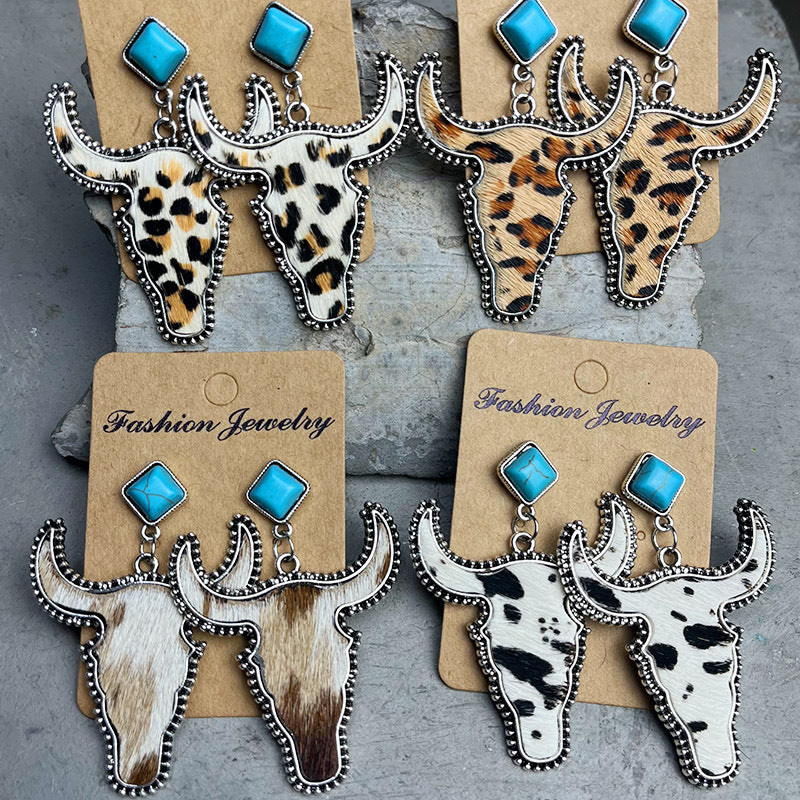
This mistake-focused guide uses two current Oroxen examples: the Western Turquoise Boho Vintage Cow Skull Earrings and the Western Turquoise Vintage Earrings. Their product names communicate visual style. They do not by themselves verify natural turquoise, vintage age, metal composition, origin, production method, or cultural affiliation. Confirm all material, size, construction, and care facts for the exact selected design.
Quick Answer: Avoid Equal Competition
The most common error is giving every accessory the same visual importance. A black dress can support a turquoise-colored focal point, but earrings, necklace, bracelets, rings, belt, boots, bag, and outerwear should not all demand first place. Choose one leader, allow one or two quiet echoes, and let the remaining elements support the silhouette.
Begin with the dress rather than the jewelry. Map neckline, sleeve, fabric sheen, texture, hardware, waist detail, hem, and movement. Then select a jewelry location that the dress leaves visually open. Test the finished outfit from normal distance and in motion, not only through close-up photographs.
For a broad foundation, review the public Western jewelry styling guide for denim, dresses, boots, and workwear. The mistakes below apply its hierarchy and contact-point principles specifically to a black dress and face-level jewelry.
Create a Black-Dress Surface Map
Photograph the dress without accessories from the front, side, and back. Mark five zones: face frame, neckline and chest, waist, hands and wrists, and footwear. Note where the dress already contains information. A high collar, gathered sleeve, metallic zipper, embellished waist, or textured fabric occupies visual space even when it is black.
Record the lighting in the intended setting. Matte black absorbs light and can make bright jewelry feel more prominent. Satin-like or sequined surfaces introduce reflections that compete with polished details. Do not name the fabric unless it is documented; the visual behavior is what matters for styling.
Next, list movement zones. Earrings meet hair, collars, hats, headphones, and coat openings. Bracelets approach sleeves and bags. Rings contact clutches and phones. A successful still photograph can conceal repeated contact, noise, catching, or discomfort. The surface map should include both appearance and use.
Mistake 1: Choosing Jewelry Before Choosing Its Job
Buying or selecting several favorite pieces and hoping they cooperate creates a crowded decision. Instead, give the outfit a one-sentence brief: “Face-led statement for dinner,” “quiet color accent for work,” or “Western focal point for a concert.” The brief tells you where contrast belongs and what should remain quiet.
If earrings lead, keep the necklace absent or visually restrained and check whether dress hardware already fills the neckline. If a pendant leads, earrings should protect space around it. If boots or a belt carry the strongest Western signal, turquoise-colored jewelry can act as an echo rather than another headline.
Browse Turquoise Jewelry by silhouette and placement, then save only candidates that fit the assigned role. A category page is a discovery tool, not permission to combine everything shown together.
Mistake 2: Assuming High Contrast Always Needs More Contrast
Turquoise-colored details already separate sharply from a black background. Adding a matching necklace, bracelet, ring, bag, belt, and shoe accent can flatten the hierarchy because every location repeats the same instruction. Contrast loses emphasis when it becomes uniform.
Use a contrast budget. Give the leader three points, one distant echo a single point, and keep other elements neutral or low contrast. For example, bold earrings can receive three points while a narrow ring receives one. A bag and boots can support through shape or apparent finish without repeating the turquoise color.
Take a full-body photograph and blur it slightly. The first color mass should appear where you intended. If the eye jumps between several equally bright areas, remove one repeat or increase the distance between them. This is a composition test, not a rule against maximal style; intentional maximalism still needs grouping and rhythm.
Mistake 3: Treating Option Labels as Measurements
Both current product pages display a selector labeled “Size,” yet the visible choices are design labels. The cow-skull earring page shows Design 1 through Design 4. The Western Turquoise Vintage Earrings page shows Design 1 through Design 7. These names do not disclose earring height, width, profile, drop, or weight.
Ask which images correspond to the selected design and request exact measurements, per-earring weight, closure, post or hook material, decorative materials, finish, construction, and care. Do not assume two designs within the same listing share dimensions or components. Save the selected option and seller response with the order record.
Styling depends on those facts. A photographed motif may appear compact because of cropping, while an exact dimension could place it against a collar. Weight may change how an earring moves. A closure may affect security and comfort. The outfit plan is incomplete until the physical object is understood.
Mistake 4: Letting a Cow-Skull Motif Compete With Every Other Western Signal
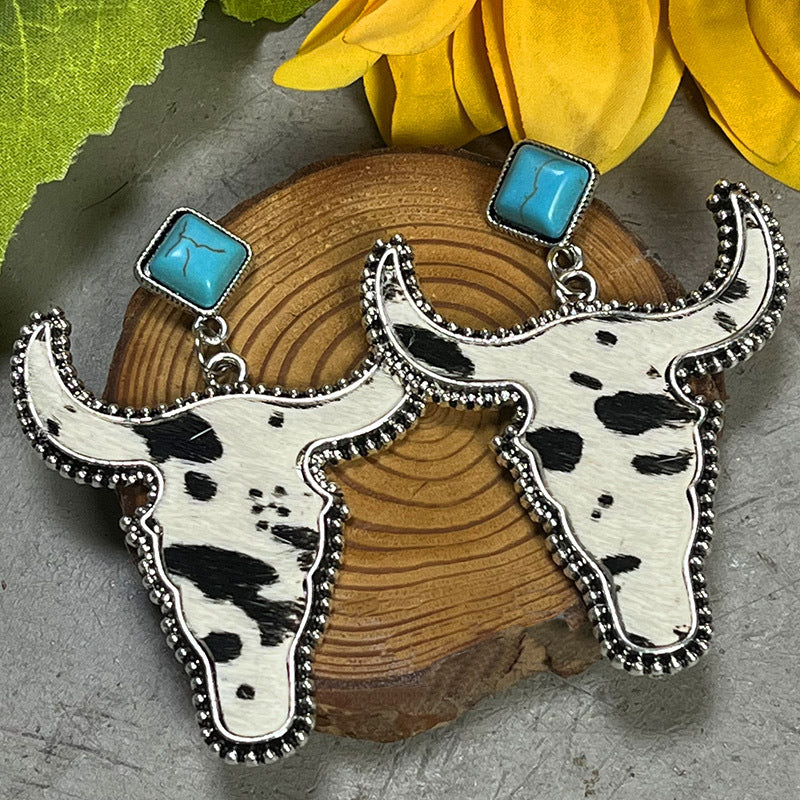
The cow-skull option is visually specific. If it leads, avoid automatically adding a large cross pendant, decorated belt buckle, heavily stitched boots, concho-covered bag, and printed jacket. Each item can be attractive alone, yet the combined outfit may read as a catalog of motifs rather than one coherent idea.
Choose one form of repetition. Echo the earrings through a distant geometric shape, an apparent finish, or a small turquoise-colored area—not all three. A plain boot, clean bag, and unembellished neckline can make the earring motif more legible. A subtle ring on the opposite side of the body can create balance without duplicating the skull.
Motif meaning also matters. A skull may carry personal, regional, symbolic, or fashion associations that vary among wearers and settings. Do not assign a universal meaning or cultural story from the product name. For a gift or formal event, confirm that the motif is welcome and appropriate.
Mistake 5: Calling the Second Earring “Quieter” Without Checking the Design
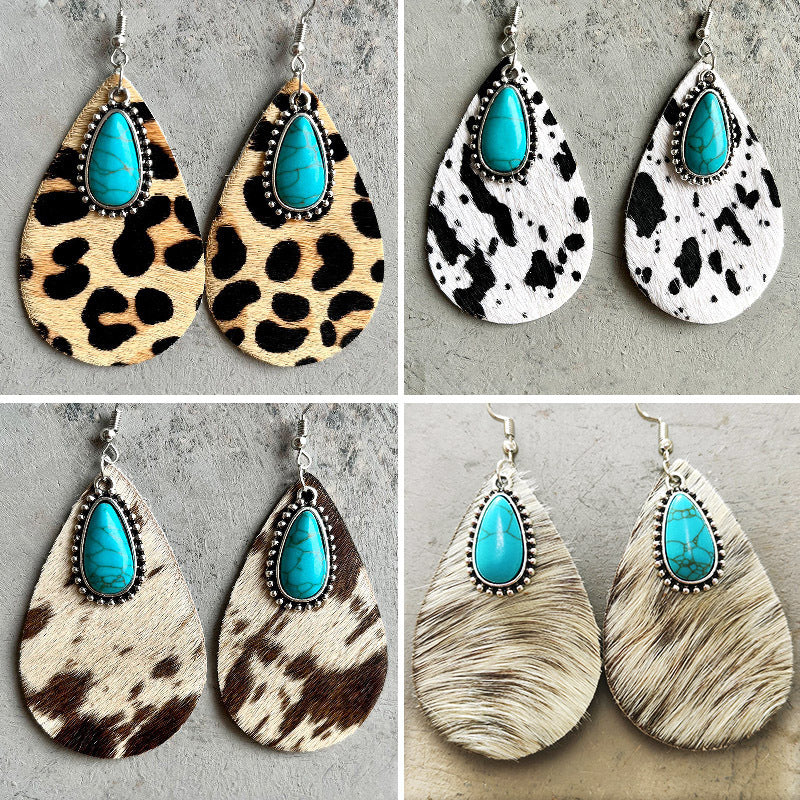
A generic product title such as Western Turquoise Vintage Earrings does not guarantee a minimal silhouette. The current page contains seven visible design options, and the selected photograph can materially change scale, motif, drop, and color distribution. Compare the exact choice rather than the family name.
This listing may provide a useful alternative when the outfit needs a different face-level shape, but “alternative” is not the same as “supporting piece.” Print or trace the verified dimensions at life size and photograph the shape near the ear while wearing the dress. Check hair, jawline, neckline, and shoulder width as one frame.
If the earring contains multiple visible motifs or strong movement, reduce necklace activity and collar detail. If it is truly smaller or simpler after verification, it may support a statement belt, pendant, or boot. Let documented size and a full-outfit test determine the role.
Mistake 6: Ignoring the Face Frame
Earrings are read with hair, glasses, makeup, neckline, hats, and facial movement. Styling them only against the black fabric omits half the composition. Photograph hair up, down, and in the intended event style. Turn the head, smile, and speak. Observe whether the earring remains visible, disappears, catches, or competes with other face-level details.
A high black neckline can create a continuous dark field that makes earrings especially bright. A low neckline adds open skin and may reduce the direct color contrast. A hat introduces another strong upper-body shape. Glasses add geometry and apparent finish. None of these conditions is automatically better; each changes the amount of visual information around the earrings.
Keep safety separate from styling. Confirm the closure and exact materials, do not share earrings, and stop wearing a damaged piece or one associated with irritation. Hair-catching, rough edges, excessive movement, or an insecure closure are reasons to choose another option, regardless of how good the photograph looks.
Mistake 7: Trying to Match Every Turquoise-Colored Area Exactly
Product photography, screen settings, lighting, and option variation can change apparent color. Building the outfit around an exact digital shade match is fragile. Use color families and placement instead. Blue-green jewelry can relate to cool denim, neutral leather-like texture, or a small bag detail without matching hue precisely.
When two turquoise-colored pieces are worn together, compare them in the same physical light after their materials and care are verified. If their colors differ, separate them across the body or let one be much smaller. Do not attempt to alter a finish to force a match.
Black is not a single visual condition either. Matte, faded, glossy, textured, and sheer black surfaces reflect light differently. Photograph the real dress under venue-like light before judging color compatibility.
Mistake 8: Building a Symmetrical Outfit by Habit
Symmetry can work, but a turquoise-colored earring pair already creates bilateral balance near the face. Adding equal bracelets on both wrists, a centered pendant, and identical color repeats at the shoes may make the outfit static. Try controlled asymmetry: earrings plus one opposite-hand ring, or earrings plus a bag carried on one side.
Check the outfit with arms resting rather than posed. Bag position, sleeve length, and hand movement determine whether the asymmetry feels deliberate. If one side becomes too heavy, reduce scale instead of adding another item to the lighter side automatically.
The public statement-versus-everyday turquoise-style jewelry guide offers a wear-grid approach for deciding how much visibility a real wardrobe can support.
Mistake 9: Skipping the Movement and Contact Rehearsal
Wear the complete outfit for twenty minutes at home. Put on and remove the jacket, use the phone, carry the bag, sit, walk, turn the head, and fasten a seat belt. Listen for repeated clicking and feel for pulling or contact. Check whether earring edges approach hair, collar, or shoulder.
Then inspect the dress for catching and the jewelry for movement or looseness. A large motif that works with a sleeveless dress may conflict with a high collar or coat. A bag strap can cross a pendant or bracelet. A hairstyle can change earring clearance. Rehearsal converts a visual proposal into an actual outfit.
For concert use, compare venue rules, crowd density, dancing, weather, and travel needs with the public country concert jewelry guide. Remove any piece that makes movement less secure.
Mistake 10: Adding a Jacket Without Rebalancing
An outfit is not finished if it works only while the jacket is off. A denim or leather-look layer can add collar lines, metal hardware, texture, and another Western signal. Put the layer on, wear it open and closed, carry it, and remove it. Repeat the face-frame and contact photographs at every state.
If the jacket adds strong hardware or decoration, reduce the supporting accessories. If it creates a dark or blue field behind the earrings, reassess contrast. Do not assume the same necklace or belt remains necessary. Treat the jacket state as a new composition rather than an invisible practical addition.
Use the Video as a Shape Library, Not Product Proof
The supplemental video is Turquoise Necklaces by John Hartman. Its page was accessible during drafting, but no transcript was available. This article does not quote the presenter or use the video to verify either Oroxen earring product.
Watch the complete video and note general necklace silhouettes, placement, and visual density that could affect a black dress outfit. Independently verify every material, origin, maker, treatment, value, and care statement before applying it elsewhere. The video concerns necklace categories; it cannot establish facts about these two earring listings.
Build a Six-Frame Outfit Audit
- Black dress alone: record silhouette and existing detail.
- Dress with chosen earrings only: confirm the leader.
- Add one supporting accessory: test hierarchy.
- Add bag and shoes: check distant balance.
- Add outerwear: repeat contrast and contact checks.
- Capture movement: walk, turn, sit, and use the bag.
Use equal camera distance and similar light. Score clarity, comfort, security, dress contact, and repeatability. Do not score the person’s appearance. If frame two already feels complete, the remaining accessories are optional. If frame five becomes crowded, subtract before changing the focal earrings.
Frequently Asked Questions
Can turquoise-colored earrings work with every black dress?
They can be tested with many black dresses, but neckline, sleeve, fabric behavior, hardware, event, and wearer preferences change the result. Use the surface map and movement rehearsal instead of a universal rule.
Do I need a matching turquoise-colored necklace?
No. Bold earrings may work best without a necklace. If a necklace is added, give it a quieter role and verify physical clearance, materials, and care independently.
Which of the two earring products is smaller?
The visible pages did not provide exact dimensions for each design. Do not infer size from cropped photographs or a family title. Ask for height, width, profile, drop, and per-earring weight for the selected option.
Can I wear cow-skull earrings to a formal event?
Event expectations, motif meaning, scale, outfit, and the wearer’s preferences determine suitability. Confirm the setting and build a restrained hierarchy around the motif if it is appropriate.
How should I care for the earrings?
Request option-specific materials and instructions. Until documented, keep pieces dry, isolated, and away from perfume, lotion, chemicals, impact, and improvised cleaners. Stop when a post, hook, connector, or decorative component changes.
Where can a beginner learn more about Western earring and necklace styling?
Read the public cowgirl jewelry style guide for earrings, necklaces, and more, then compare current silhouettes in Western Jewelry.
Final Mistake-Proof Checklist
- Assign one accessory as the visual leader.
- Map the dress neckline, sleeves, texture, hardware, and movement.
- Confirm the exact earring design, measurements, weight, closure, materials, and care.
- Use one form of repetition instead of copying every color and motif.
- Photograph hair, hat, glasses, neckline, outerwear, and earrings as one face frame.
- Rehearse normal movement with bag, phone, jacket, and seat belt.
- Remove any piece that catches, irritates, competes, or weakens the hierarchy.
Return to Oroxen for current product and store information. A black dress does not require a pile of matching turquoise-colored accessories. It offers a clean stage. Give one verified piece a clear role, protect the negative space around it, and make every supporting choice earn its place.