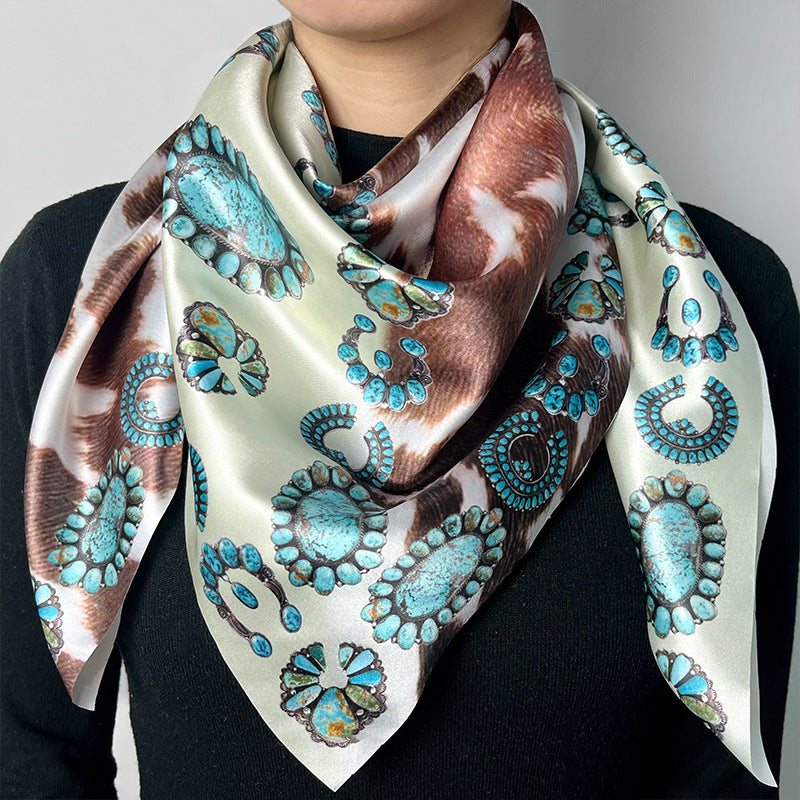
The most important step in caring for women's turquoise jewelry happens before any cloth, water, or cleaner touches the piece: identify what you actually own. A turquoise-colored center may be natural, treated, composite, dyed, imitation, glass, resin, or another material. An antique-silver color may come from many different base materials and finishes. A chain, cord, adhesive, coating, and pendant can each have different limits.
This guide uses the Turquoise Western Teardrop Pendant Necklace and the Western Turquoise Vintage Cross Jewelry for Women as examples. Their titles and visible styling copy do not independently verify natural turquoise, metal identity, treatment, age, maker, origin, construction, handmade status, or cultural affiliation.
Quick Answer: Use the Least Intervention That Solves the Problem
Begin with condition documentation, not cleaning. Under neutral light, photograph the front, back, edges, attachment points, closure, chain or cord, and any existing marks. Identify loose components, cracks, lifting coatings, damaged links, fraying, discoloration, or residue. If the product's materials, finish, treatment, adhesive, or care instructions are unknown, stop before adding water or chemicals.
For routine handling, use clean dry hands, limit unnecessary touching of decorative surfaces, and store the piece separately after wear. A clean, very soft, dry cloth may be a low-intervention option only when it will not catch, abrade, or disturb the construction. The Turquoise Jewelry Guides hub contains related buying and fit methods.
Why “Turquoise Jewelry Care” Is Not One Recipe
A care method suitable for a documented solid metal and natural stone construction may be unsuitable for a plated fashion finish, coated component, dyed material, porous stone, adhesive setting, leather-like cord, textile, or unknown mixed construction. Even two items with the same color can require opposite treatment.
Do not assume that tarnish, fading, residue, patina, oxidation, coating wear, dye transfer, or damage are interchangeable. Each describes a different possibility. Cleaning cannot repair missing finish, a loose setting, stretched cord, broken clasp, or structural wear. The turquoise bracelet fashion-finish care guide applies the same identification-first rule to wrist jewelry.
Create a Care Record Before a Care Kit
| Record | What to capture | Why it matters |
|---|---|---|
| Product identity | Title, selected option, order date, seller answers | Connects advice to the exact item |
| Components | Base, finish, center, chain or cord, clasp, adhesive | Reveals mixed-material limits |
| Condition | Photographs and written notes | Separates pre-existing wear from later change |
| Exposure | Water, sweat, cosmetics, friction, storage, impact | Helps identify likely causes without guessing |
| Care history | Every method, product, date, and result | Prevents repeated incompatible treatment |
Save the live listing and direct seller guidance with the order record. Marketing copy can change, and a general answer about a product family may not apply to every option.
A Low-Risk Starter Kit
A cautious kit is intentionally simple: a clean work surface, bright neutral light, phone camera, clean dry hands, a soft non-shedding cloth, separate smooth storage pouches or compartments, acid-free paper for labels, and a notebook or digital record. None of these items automatically authorizes rubbing or cleaning.
Avoid building a universal kit around polishing compounds, silver dips, acids, ammonia, bleach, alcohol, acetone, toothpaste, baking soda, salt water, vinegar, ultrasonic machines, steam, heat, abrasive brushes, or scratch tools. These can attack unknown finishes, porous or treated components, adhesives, cords, and settings. “Natural” household ingredients are still chemicals and can cause irreversible change.
Browse the Turquoise Jewelry collection to recognize different visible constructions, but do not use collection imagery as material identification. Every exact option needs its own record.
The Dry Observation Routine
- Wash and thoroughly dry your hands, then clear the work surface.
- Place one piece at a time on a soft, stable background.
- Photograph all sides without forcing hinges, links, or settings.
- Use sight—not a sharp probe—to note loose, cracked, lifted, frayed, or discolored areas.
- Check the closure and connections with minimal movement.
- Record the location of any concern in words and photographs.
- Return the piece to separate storage if the next step is uncertain.
This routine does not diagnose material or damage. It tells you when intervention should stop and what evidence to send to the seller or a qualified professional.
Care Example One: Turquoise Western Teardrop Pendant Necklace
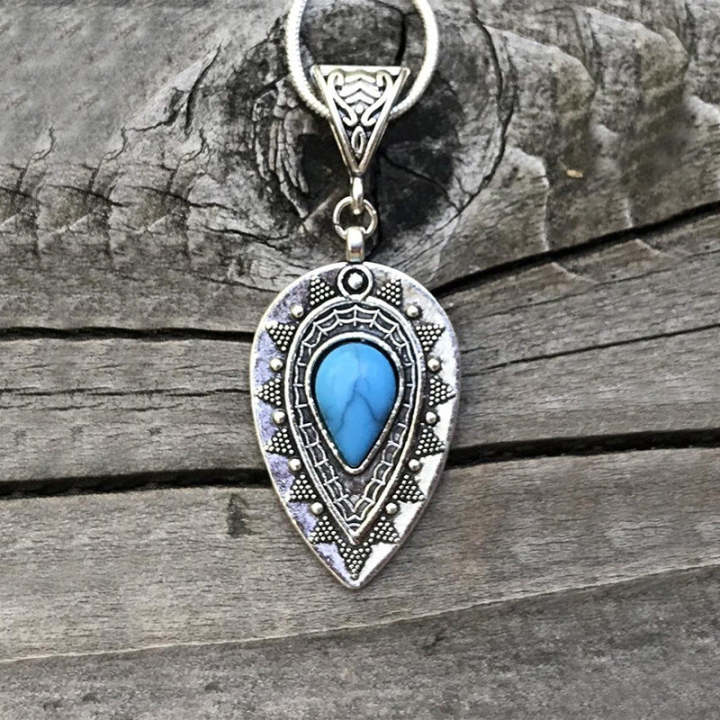
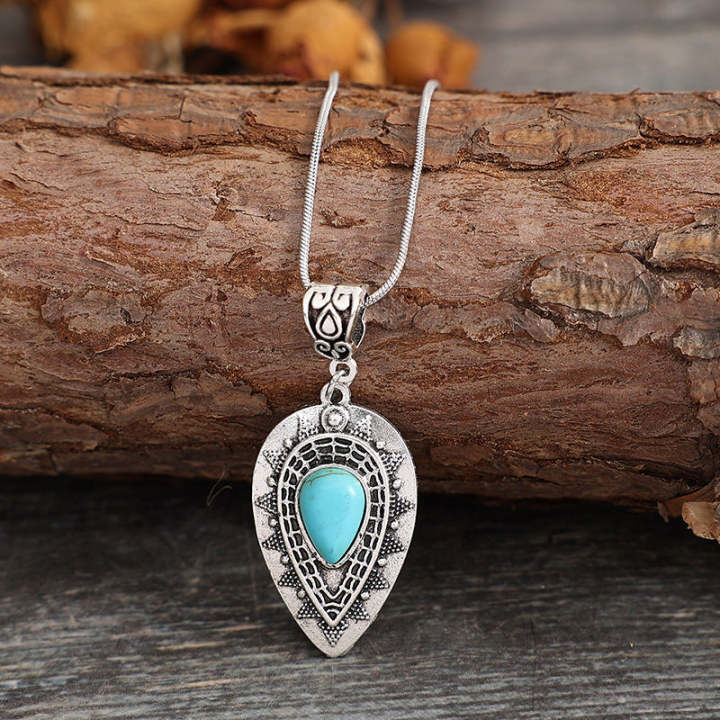
During the latest page review, the Turquoise Western Teardrop Pendant Necklace displayed $39.99 USD and one visible color option. The page described a Western pendant with a turquoise-style center stone, teardrop silhouette, antique-silver color, and vintage-inspired detailing for denim, boots, shirts, dresses, layering, and gifting.
The visible information did not clearly state exact dimensions, chain length, pendant mass, clasp, base metal, finish composition or thickness, center material and treatment, setting method, adhesive use, or full care instructions. “Antique-silver color” is an appearance description, not proof of silver content or a care authorization.
Handle the pendant by the edges or chain when practical, without stressing the connection. Check whether the teardrop center is mechanically set, adhered, or attached by another method before using moisture. Keep perfume, hair products, lotion, sunscreen, and sprays away until compatibility is known; apply personal products first and allow them to dry before dressing, if the seller's care guidance permits normal wear.
Teardrop Necklace Storage Questions
- Can the chain be laid without crossing the pendant surface?
- Does the pendant require a separate compartment to prevent abrasion?
- Is the closure completely fastened before storage to reduce tangling?
- Are the storage pouch, paper, and foam compatible with the documented finish?
- Is the location dry, stable in temperature, and away from direct light and household chemicals?
Do not hang a heavy or unverified pendant for long periods if that loads the chain or connector. Choose a position supported by product-specific guidance.
Care Example Two: Western Turquoise Vintage Cross Jewelry for Women
The Western Turquoise Vintage Cross Jewelry for Women displayed $112.11 USD and visible 90cm and 52cm selections, with 52cm checked during review. The page used Western, turquoise, and vintage styling language for everyday, occasion, and gifting contexts.
The visible page did not clearly explain whether both lengths share identical pendants and components, or provide pendant dimensions, total mass, closure, base material, finish, decorative material, setting, construction, treatment, or care. “Vintage” does not establish age, and “turquoise” does not establish natural material.
Map the selected length to the correct image and included components. Longer jewelry can cross belts, bags, tables, and outerwear, increasing friction and impact. Before cleaning, inspect the entire length, connections, cross element, and every transition between materials. A localized finish change should not be treated as general dirt without evidence.
Friction, Moisture, and Travel Controls
Friction can occur against buttons, zippers, belts, bag straps, other necklaces, jewelry boxes, and clothing texture. Moisture can come from washing, rain, sweat, humidity, sprays, damp storage, and cleaning products. Travel adds pressure, vibration, temperature shifts, and rushed handling.
Reduce exposure by wearing one focal necklace rather than a tangle-prone stack, keeping the item away from wet activities, and storing it in a dedicated compartment. Never seal a damp or recently sprayed item into storage. If a piece becomes wet unexpectedly, follow the seller's exact instructions; do not add heat or aggressive rubbing to accelerate drying.
How to Use the Amitis Art Video Carefully
The YouTube episode “Turquoise Care and Cleaning Guide” by Amitis Art discusses care and cleaning in the context of turquoise as a gemstone. It is useful because it reinforces that care choices connect to material characteristics and long-term preservation.
The video does not identify, test, or document the two Oroxen examples. Its gemstone-specific techniques must not be applied to turquoise-style centers, unknown finishes, mixed constructions, or adhesive settings without compatibility evidence. Use the episode to generate questions, then follow the exact seller instructions or a qualified professional's item-specific assessment.
When a Soft Dry Cloth Is Still Too Much
Stop if the cloth catches a raised edge, lifts a coating, moves a center, leaves fibers, changes color, or transfers visible material. Also stop when the piece has cracks, loose connections, unstable settings, fraying, peeling, or unidentified sticky residue. “Gentle” describes force, not material compatibility.
Do not polish an antique-looking surface simply because it is dark. The appearance may be intentional finish, patina, oxidation, residue, or wear; each possibility requires a different response. Photograph the area and request guidance.
Storage System for a Mixed Jewelry Wardrobe
Give each necklace a labeled compartment or pouch. Store pieces so pendants, clasps, and chains do not press against one another. Keep an inventory photograph outside the storage container so you do not need to handle every item to find one.
Review the collection seasonally without cleaning by default. Look for changing closures, stretched links, fraying, lifting surfaces, movement in settings, or new discoloration. The wardrobe role method in the women's turquoise jewelry capsule guide can also reduce unnecessary stacking and friction.
Professional Help and Repair Boundaries
Seek qualified help when value, sentimental importance, documented natural materials, unstable construction, or irreversible finish change raises the stakes. Explain everything known about the item and every prior treatment. Ask what tests or interventions are proposed and whether they are reversible.
A general jewelry repairer, gemologist, conservator, maker, or seller may have different expertise. Choose the professional whose skills match the exact material and problem. Do not authorize polishing, recoating, stone removal, adhesive work, or replacement based only on a visual guess.
Respond to an Accident Without Creating a Second One
If the necklace is exposed to rain, a spilled drink, perfume, lotion, sunscreen, makeup, or cleaning spray, remove it safely and record the event. Note the substance, approximate amount, contact location, duration, temperature, and every visible change. Do not neutralize one unknown chemical with another, and do not add heat to speed drying.
| Incident | Immediate low-intervention response | Avoid |
|---|---|---|
| Unexpected moisture | Remove from further exposure and seek exact care guidance | Hair dryer, heater, rubbing, sealed damp storage |
| Cosmetic or spray contact | Document the location and identify the product ingredients | Solvent, soap, or polish chosen by guess |
| Drop or impact | Stop wearing and photograph settings, links, and closure | Pressing a loose component back into place |
| Skin reaction | Remove the piece and address the wearer's health | Continuing the test to identify a cause |
Preserve packaging, order information, seller messages, and photographs. If the piece is valuable or the change may be irreversible, keep it stable and consult an appropriately qualified professional before intervention. The first objective after an incident is to prevent additional exposure or mechanical damage, not to restore appearance immediately.
Frequently Asked Care Questions
Can turquoise jewelry be cleaned with water?
There is no universal answer. Water compatibility depends on the exact center, treatment, finish, base, adhesive, cord, setting, and construction. Follow item-specific instructions.
Should discoloration be polished away?
Not until the material and cause are understood. It may be intentional finish, oxidation, residue, coating wear, or damage. Polishing can remove surface material permanently.
How often should fashion jewelry be cleaned?
Clean only when a documented need and compatible method exist. Routine condition checks, careful handling, and separate storage may be more appropriate than scheduled wet cleaning.
Can a teardrop necklace be layered?
Styling copy suggests layering, but friction, tangling, length, mass, finish, and construction determine practical suitability. Test the exact combination briefly and separately document wear.
Where should readers go next?
Use the Southwestern jewelry observation guide to separate visible descriptions from verified facts, then browse the Western Jewelry collection only with an identification and care record ready.
Final Care Rule: Preserve Information Before Appearance
The goal of care is not to make every surface brighter. It is to preserve the piece, its function, and the evidence needed to make safe future decisions. Record the exact option, ask what every component and finish is, limit exposure, store separately, and intervene only with compatible instructions.
Begin at Oroxen when you can keep the live product facts with the item. If care remains uncertain, leave the piece dry and undisturbed while seeking item-specific guidance. Restraint is often the most responsible first action.