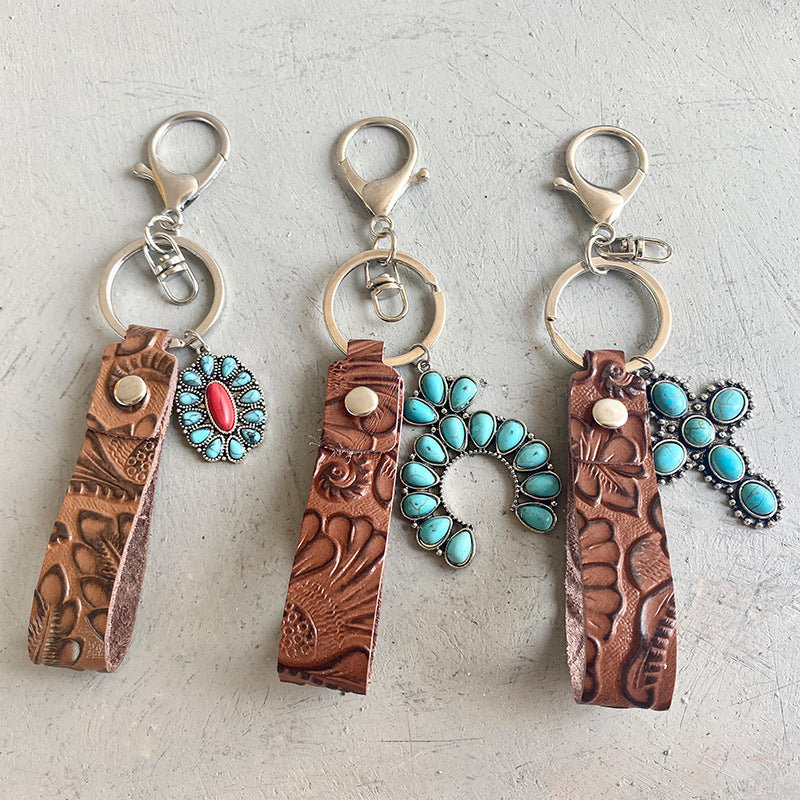
A beginner does not need to recognize every stone, motif, workshop tradition, or historical reference before enjoying a Southwestern-inspired jewelry look. The useful first skill is narrower: separate what you can see from what you can verify. That single habit prevents a turquoise-colored component, an aged-looking finish, a floral pattern, or a product title from becoming an unsupported story.
This practical guide uses the Western Turquoise Vintage Floral Leather Necklace and the Turquoise Statement Cross Earrings as current shopping examples. Their titles communicate merchandising language. They do not independently certify natural turquoise, leather identity, metal identity, crystal content, treatment, age, maker, origin, handmade status, tribal affiliation, or sacred meaning.
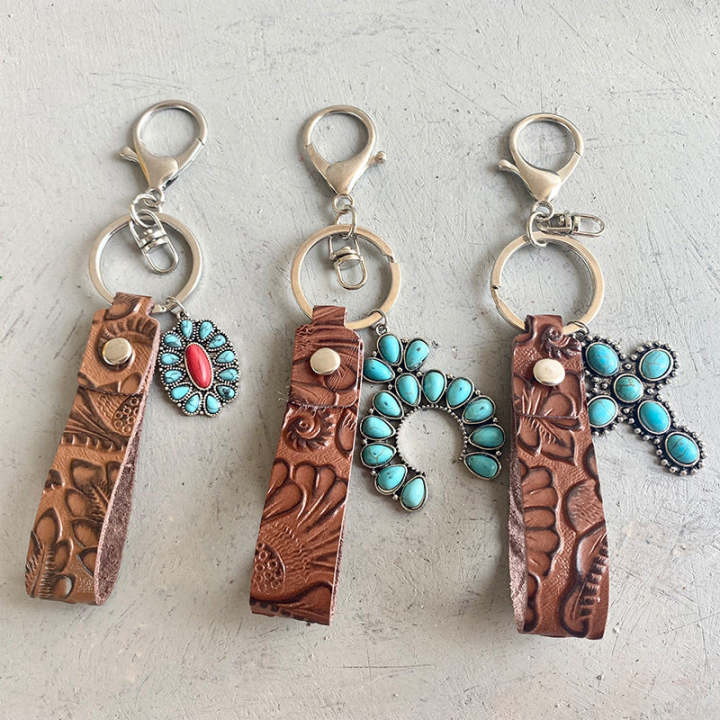
Quick Answer: Use the Observation Ladder
Evaluate a product through four levels. Level one is visible description: outline, apparent color, motif, number of components, and where it sits on the body. Level two is listing data: named option, price, stated length, size, fastening, components, or care. Level three is direct confirmation: answers from the seller for the exact option. Level four is provenance: documentation supporting maker, material, treatment, age, cultural affiliation, and origin claims.
Never climb to a higher level by guessing. A photograph can support “blue-green center detail,” but not “natural turquoise.” A dark strap-like element can be described visually, but the word “leather” in a title should be confirmed when material matters. Keep a short record as you browse. The Turquoise Jewelry Guides hub provides related fit, styling, and comparison methods.
What Does “Southwestern” Mean in a Shopping Context?
Southwestern can function as a broad style label referring to colors, landscapes, silhouettes, motifs, or regional associations. It is not automatically a statement of where a product was made, who designed it, which community it belongs to, or whether a symbol has a particular meaning. Likewise, Western, boho, vintage, floral, and cowgirl can describe merchandising direction without documenting materials or history.
A respectful beginner avoids attaching tribal names, ceremonial purposes, sacred meanings, artist identities, or regional provenance to a product without reliable evidence. It is acceptable to say that a piece has a floral motif, a cross shape, a turquoise-colored accent, or a Western-inspired presentation when those features are visible or stated. Precision is more respectful than imaginative certainty.
A Plain-Language Vocabulary Table
| Term seen online | What it may tell you | What it does not prove |
|---|---|---|
| Turquoise | May indicate color, style, or a claimed material | Natural identity, treatment, grade, mine, or origin |
| Vintage | May describe an aged-looking aesthetic | Manufacturing date, prior ownership, or historical authenticity |
| Leather | May describe a stated strap or visual texture | Animal source, tanning, finish, backing, or durability |
| Statement | Suggests a visually prominent role | Exact size, mass, comfort, or occasion suitability |
| Handmade | Can be meaningful when documented | Specific maker, process, place, or cultural affiliation by itself |
Use this table as a prompt for questions, not as a verdict about any product. Current option-specific facts always matter more than a general category definition.
Explore Cowgirl Jewelry with a Written Task
Open the Cowgirl Jewelry collection with one assignment: find a neckline focal point, a face-level accent, a quiet wrist detail, or a gift candidate with verifiable specifications. Sort candidates by role rather than by how strongly a thumbnail communicates a theme.
For every candidate, record the exact title and selected option. Then write two lines: “I can observe” and “I need to verify.” This prevents the gallery, marketing copy, price, and your own expectations from blending into one unsupported impression. A beginner shortlist of two or three well-mapped products is more useful than twenty saved images with no specification trail.
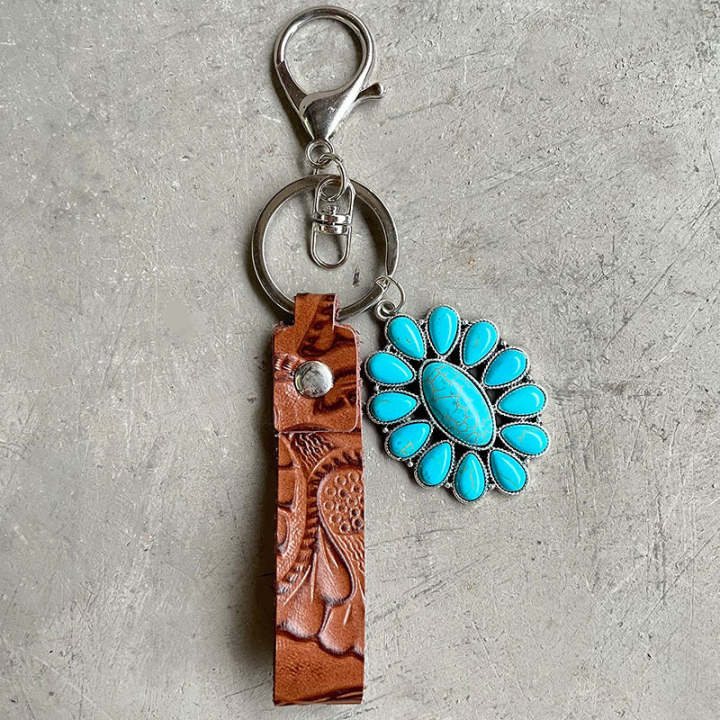
Example One: Map the Floral Necklace
During the latest page review, the Western Turquoise Vintage Floral Leather Necklace displayed $141.40 USD and five visible choices labeled Design 1 through Design 5, with Design 1 selected. The visible description emphasized Western, turquoise, and vintage styling for everyday, Western-inspired, occasion, and gifting contexts.
The page did not clearly provide a design-by-design inventory, exact length, pendant or central-element dimensions, total mass, closure, complete components, finish, construction, material verification for the leather wording, turquoise identity, treatment, or care. Map the selected label to its image before asking questions; do not assume all five designs share the same facts.
Stylistically, give this product one job: neckline focal point. Test its apparent scale against a white shirt, dark knit, simple dress, and open denim layer. Keep large earrings out of the first test. If the necklace overlaps buttons, a collar, or a jacket edge, exact measurements become especially important.
Four Questions to Ask About the Necklace
- Which gallery images correspond to Design 1, and what exactly is included?
- What are the wearable length, central dimensions, total mass, and fastening?
- What are the strap, skin-contact, decorative, and backing components?
- What cleaning, moisture, storage, and handling guidance applies to that option?
If natural material, maker, or origin claims influence the price or decision, request suitable documentation. Do not use heat, scratch, solvent, acetone, cutting, or other destructive home tests on an unidentified product.
Example Two: Map the Cross Earrings
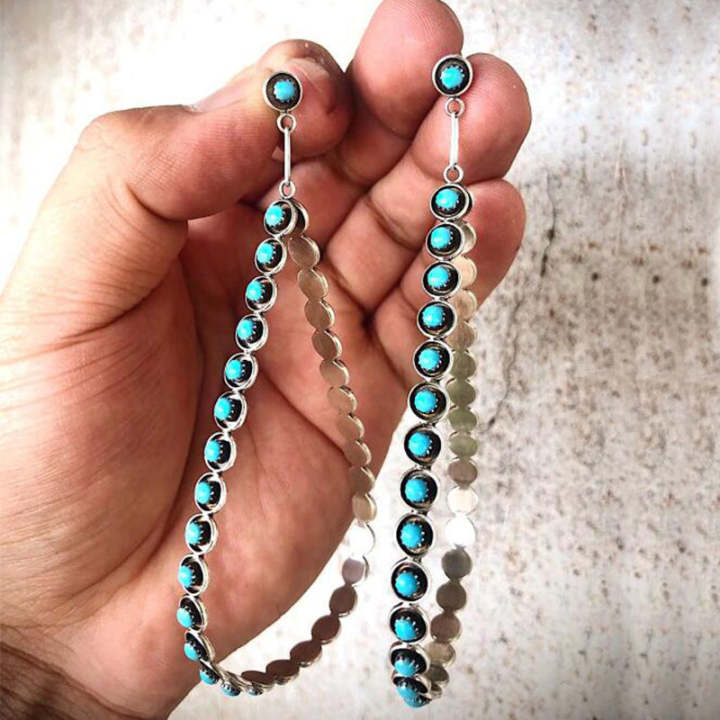
The Turquoise Statement Cross Earrings page displayed $127.26 USD and one visible color swatch during review. Its copy described turquoise, statement, and cross details for everyday, Western-inspired, occasion, and gifting contexts.
The visible page did not clearly state exact height, width, total drop, projection, per-earring mass, attachment, backing, complete skin-contact and decorative components, finish, construction, turquoise identity, treatment, or care. The cross shape can be described, but the wearer decides whether it carries a personal religious, cultural, fashion, or other meaning.
Give the earrings a face-level role. Test them with hair up and down, glasses, a hat, the planned collar, a phone, and outerwear. A statement label does not guarantee comfort for extended wear. Dimensions, mass, movement, attachment, and personal tolerance control that decision.
Three Beginner Outfit Formulas
One Focal Point with Denim
Use a white or cream shirt, straight jeans, simple boots, and the necklace alone. Keep the belt and earrings quiet. Photograph the look from conversation distance so the neckline and waist appear together.
Face-Level Accent with a Dark Dress
Use the earrings as the only high-contrast element near the face. Add a plain jacket if needed and leave the neckline unoccupied. This tests the earring role without asking the cross necklace and cross earrings to compete.
Controlled Pairing for an Occasion
After each piece succeeds independently, pair them only if one becomes clearly subordinate. Hair, neckline, motif repetition, and visible scale determine whether the combination feels intentional. The capsule approach in the women's turquoise jewelry wardrobe guide helps keep product roles distinct.
How to Read the Beginner Video Critically
The YouTube video “A Beginners Guide To Turquoise Jewelry” by LaCkore Couture places turquoise in a broad historical and cross-cultural story. That makes it a useful reminder that turquoise-related subjects extend far beyond a single modern fashion label.
Its general claims should be treated as a starting point for further research, not as product authentication. The video does not identify, date, test, or document the two Oroxen examples. Do not transfer any material, historical, mystical, geographic, Native American, Persian, Asian, Egyptian, or cultural statement to a product without item-specific evidence and authoritative context.
A Five-Column Comparison Sheet
Create one row per exact product option and five columns: visible form, documented specifications, unanswered questions, intended outfit role, and result of the wear test. Keep prices and review dates in the documentation column because online values can change.
The method prevents two common errors. First, it stops a necklace and earrings from being compared as though they perform the same function. Second, it separates missing information from negative information. “Not stated on the visible page” does not mean a material is absent; it means the claim should remain unknown until confirmed.
Beginner Mistakes and Better Replacements
Mistake: Calling Every Blue-Green Component Turquoise
Replacement: say turquoise-colored unless the exact product has suitable material disclosure.
Mistake: Using “Vintage” as a Date
Replacement: describe vintage-inspired styling unless age or provenance is documented.
Mistake: Assigning Tribal or Sacred Meaning
Replacement: describe visible motifs precisely and leave cultural attribution to reliable evidence.
Mistake: Buying a Coordinated Set Before Testing Roles
Replacement: test one neckline focal point and one face-level accent separately. The cowgirl jewelry gift guide also explains how to avoid guessing fit and symbolism for another person.
Mistake: Cleaning Before Identifying Components
Replacement: request product-specific care. Avoid soaking, chemical cleaners, abrasives, heat, ultrasonic methods, and steam without compatibility facts.
Fit, Comfort, and Care Checklist
- Confirm the exact option, its included components, current price, and availability.
- Request numerical dimensions and total or per-piece mass.
- Request closure, attachment, backing, and intended fit information.
- Request complete skin-contact and decorative components plus finish.
- Ask what turquoise, leather, vintage, floral, and statement language means for the exact item.
- Obtain cleaning, moisture, storage, and handling guidance.
- Review current shipping, return, and exchange terms before ordering.
Remove jewelry that causes pain, numbness, broken skin, swelling, or a suspected reaction. A shopping or styling guide cannot diagnose a medical issue or guarantee compatibility.
Audit High-Risk Sentences Before You Repeat Them
Beginners often encounter confident phrases in listings, social posts, marketplace captions, and casual conversation. Before copying one into a gift note or review, underline every word that implies identity, date, place, maker, treatment, culture, or performance. Then ask what evidence supports that exact word.
- Change “This is genuine Southwestern turquoise” to “This product has turquoise-colored details and Southwestern-inspired styling” unless material and origin are documented.
- Change “This is a vintage Native American necklace” to a precise visible description unless age, maker, and affiliation have reliable support.
- Change “The leather strap will soften with wear” to a question about component identity and care unless the seller states the material and behavior.
- Change “These statement earrings are comfortable all day” to a personal wear-test plan using verified dimensions, mass, and fastening.
This is not timid writing. It is accurate writing. A careful description protects the buyer from inflated expectations and protects makers and communities from casual misattribution.
Keep a First-Wear Record
For the first outing, note the exact option, outfit, weather, planned hours, hairstyle, collar, glasses, and outerwear. After twenty minutes and again at the end, record movement, pressure, snagging, rotation, sound, skin response, and the number of times you adjusted the piece. Photographs can document placement, but comfort must come from the wearer.
If the product succeeds, repeat it with one new outfit rather than buying an immediate match. If it fails, identify the specific cause: wrong length, excessive visual scale, fastening conflict, unknown sensitivity, unstable rotation, or incompatible clothing. A specific cause leads to a better next question; “Southwestern jewelry is not for me” does not.
Frequently Asked Questions
Must Southwestern-inspired jewelry contain natural turquoise?
No. Style and material are separate questions. Verify composition for the exact option and use turquoise-colored when identity is not documented.
Can rings, earrings, and a necklace appear together?
Yes, but assign a visual hierarchy and confirm each piece's fit. One focal zone with quieter supporting details is easier for a beginner to evaluate.
How can a gift buyer avoid making assumptions?
Ask about size, piercings, sensitivities, symbolism, preferred scale, and documentation needs. A shared shortlist or return-friendly plan is often more considerate than surprise.
Is a home test a good way to identify turquoise?
Destructive or improvised tests can damage a product and still fail to establish trustworthy provenance. Request disclosure and suitable documentation; consult a qualified independent professional when stakes justify it.
Where should a beginner continue learning?
Compare seasonal outfit roles in the turquoise Southwestern jewelry seasons guide, then browse the Western Jewelry collection with a written product assignment.
Final Rule: Describe First, Verify Second, Attribute Last
A careful beginner does not need to sound like an expert. Observe visible form, record the live listing, ask exact questions, test the product's intended outfit role, and reserve cultural or material attribution for evidence that genuinely supports it.
Begin at Oroxen when you know whether the outfit needs a neckline focal point, face-level accent, wrist detail, or gift candidate. Keep unknowns visible. Honest language makes both the styling decision and the shopping record stronger.