A white shirt and jeans may look seasonless in a wardrobe photo, but jewelry never meets the same conditions all year. Spring introduces rain and shifting layers. Summer adds heat, skin products, and brighter light. Fall brings textured fabrics and repeated outerwear changes. Winter adds gloves, scarves, dry indoor air, and heavy collars. A useful turquoise Southwestern jewelry plan must respond to those transitions without inventing material or care facts.
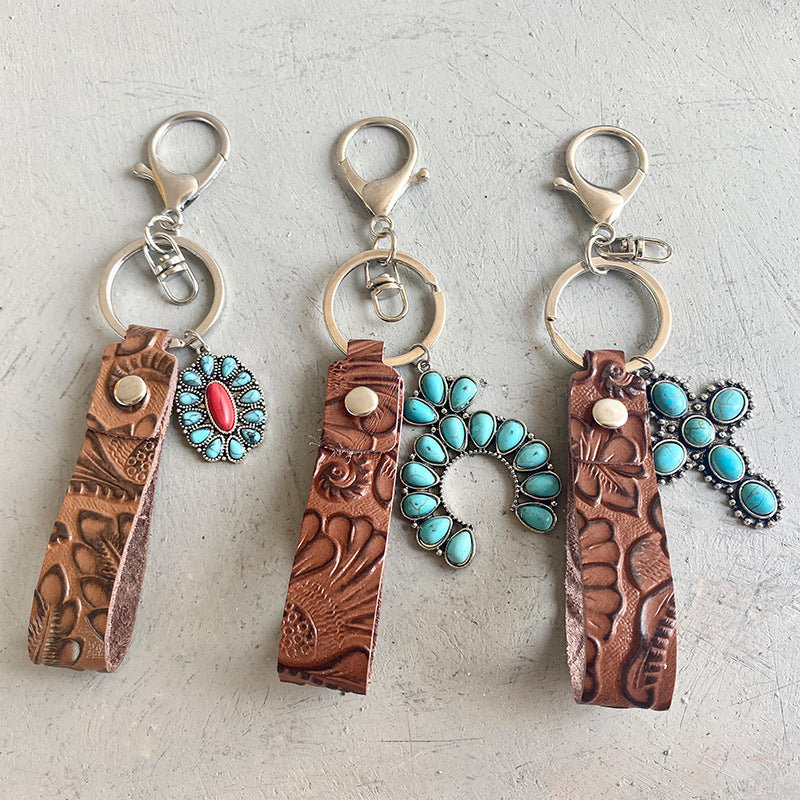
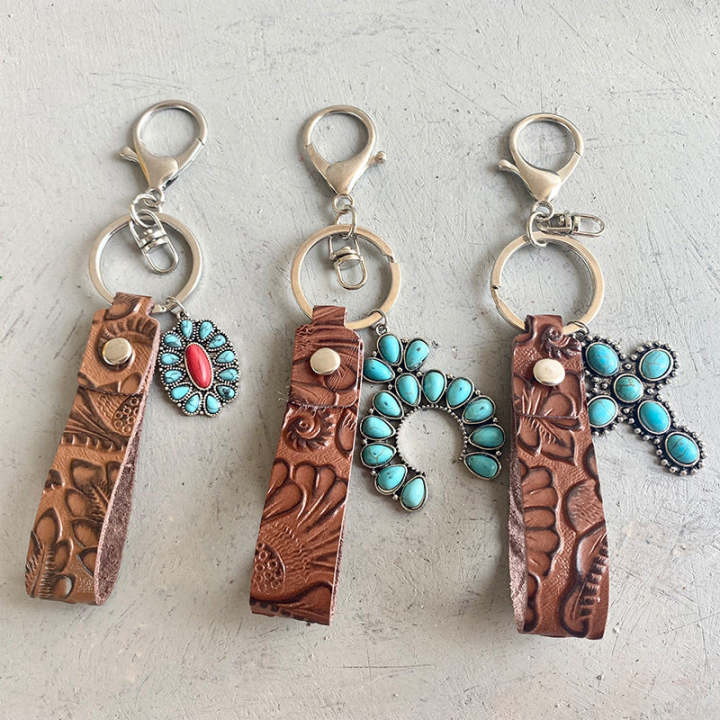
This seasonal guide uses the Western Turquoise Vintage Floral Leather Necklace and the Turquoise Statement Cross Earrings. Their names describe visible design direction. They do not prove natural turquoise, leather type, metal, vintage age, treatment, maker, origin, handmade production, or affiliation with a particular people or tradition.
Quick Answer: Use a Seasonal Friction Map
A Seasonal Friction Map records what touches the jewelry, what environmental exposure increases, and what transition happens most often. Build one row for spring, summer, fall, and winter. Then choose the jewelry only after the contact path is clear.
- Spring: rain layer, damp fabric, umbrella, changing temperature.
- Summer: perspiration, sunscreen, insect repellent, bare skin, travel.
- Fall: knit texture, jacket collars, scarves, bags, dry leaves and dust.
- Winter: heavy coat, gloves, high collar, scarf, indoor-outdoor condensation.
The map is not a care label. It shows which questions must be answered by the selected product's documented specifications and maintenance instructions.
Keep the White Shirt and Jeans Constant During Testing
Seasonal comparison becomes confusing when every garment changes at once. Choose one white shirt and one pair of jeans that genuinely fit the wearer. Photograph the baseline outfit in neutral indoor light. For each season, add only the necessary layer, shoe, bag, and jewelry adjustment.
This controlled method identifies the real cause of a conflict. If an earring disappears in fall, the new scarf or collar is the likely variable. If a necklace begins tapping in winter, the heavy coat may have changed its position. Without a baseline, the wearer may blame the jewelry and buy another piece without solving the transition.
The public guide to styling turquoise jewelry with denim layers provides an additional collar-and-jacket method.
Distinguish Seasonal Color from Seasonal Suitability
Turquoise-colored details can look vivid in summer sun and more muted beside winter layers. That change is visual. Suitability depends on verified construction, fit, exposure limits, and care. A design that photographs beautifully beside a spring trench may still be inappropriate in rain. A necklace that looks warm beside a fall knit may catch on its texture.
Write two separate notes: “looks compatible” and “physically verified.” Never move an item into the second category because the first category feels convincing.
The public statement-versus-everyday turquoise jewelry guide can help decide whether each seasonal version needs a visible lead piece or a quieter supporting role.
Spring Formula: Create a Dry Arrival Plan
Spring styling begins with the destination rather than the departure. A white shirt, straight or relaxed jeans, and a light weather layer can frame either a necklace or earrings. The critical question is what happens when the wearer arrives with a damp umbrella or removes a raincoat.
Choose one dry interior location where the jewelry can be checked and, if required by its care instructions, stored before outdoor exposure. Keep a clean compatible pouch inside a protected bag compartment. Do not wrap unidentified materials in a wet tissue or leave them loose beside keys.
For the floral necklace, test the raincoat collar with the coat fully closed and open. The focal section should not become trapped under a zipper, snap, or drawcord. For the cross earrings, test hood movement and the act of lowering an umbrella. Stop if the earring catches a hood edge or hair pulled by moisture.
Summer Formula: Reduce Product Contact
A simple rolled white sleeve and jeans can make turquoise-colored jewelry highly visible in bright weather. Summer also increases contact with sunscreen, fragrance, hair products, insect repellent, perspiration, and water. Exact tolerances must come from the product's documented components and care.
Apply necessary skin products first and let them settle when this agrees with the relevant instructions. Keep jewelry out of swimming, showering, sports, gardening, or high-impact activity unless the seller explicitly documents suitability. A style photograph is not evidence of water resistance.
Use the earrings when the neckline should remain open and quiet. Use the necklace only after its contact with bare skin, collar edges, and seat belts has been tested. Carry a protected storage option for unexpected heat or activity changes.
Fall Formula: Separate Jewelry from Texture
Fall adds suede-like surfaces, denim jackets, woolen textures, corduroy, scarves, and layered collars. These can support a Southwestern-inspired palette, but they also introduce fibers and friction. Keep one smooth zone around the jewelry.
With the floral necklace, let the white shirt form a calm background between the necklace and a textured outer layer. Check whether decorative edges, links, cords, or focal parts catch the knit. Do not assume a component called leather tolerates repeated abrasion; verify the actual composition and instructions.
With cross earrings, keep scarf wrapping away from the earring path. Put the scarf on and remove it before adding the earrings during the test. If the real routine requires the reverse order, choose a different earring or scarf system rather than relying on careful luck every day.
Winter Formula: Plan the Coat-to-Room Sequence
Winter proportion is created twice: outdoors under protection and indoors after layers come off. Write the sequence explicitly: gloves, bag, scarf, coat, jewelry check, then indoor outfit. Test the reverse sequence before leaving.
A necklace may be completely hidden outdoors and become the indoor focal point. That is not a failure. It can be a deliberate two-state outfit. The challenge is preventing the coat zipper, collar, and scarf from compressing or dragging the jewelry during the transition.
Earrings require a hat and scarf test. Turn the head, look down, lift the scarf, remove the hat, and put on glasses or headphones if used. If the ear zone cannot remain clear, store the earrings safely until indoors.
Product Study One: Five Floral Necklace Designs
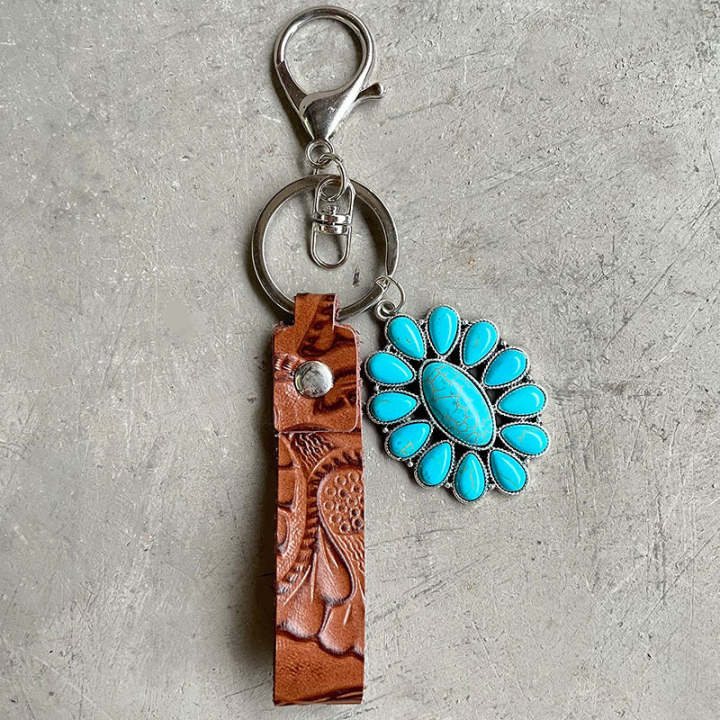
The Western Turquoise Vintage Floral Leather Necklace page displayed $141.40 USD during review. A selector titled Size offered Design 1 through Design 5, with Design 1 visibly selected. These are design labels, not numerical size measurements. The page described Western, turquoise, and vintage styling and advised checking product images and the selected option because screen color may vary.
The visible summary did not clearly map every Design label to a complete written description. It also did not provide total wearable length, adjustment range, focal dimensions, profile, mass, fastening, full component composition, leather classification, surface treatment, assembly, or option-specific care. Those missing facts directly affect every seasonal formula.
Before choosing a design, request an image map and a physical record for that exact selection. Ask which surfaces may contact skin or fabric, how the piece closes, what adjustment is permitted, and which moisture, chemical, temperature, and storage limits apply. Do not transfer answers from one Design number to another.
Give the Necklace Four Seasonal Jobs
- Spring: indoor focal point after the rain layer is removed.
- Summer: single neckline feature with minimal supporting jewelry.
- Fall: smooth bridge between the white shirt and a textured outer layer.
- Winter: protected indoor reveal after coat and scarf removal.
These are styling roles, not permission for exposure. A role is valid only when the documented product facts and the real movement sequence support it.
Product Study Two: Cross Earrings with One Visible Color Choice
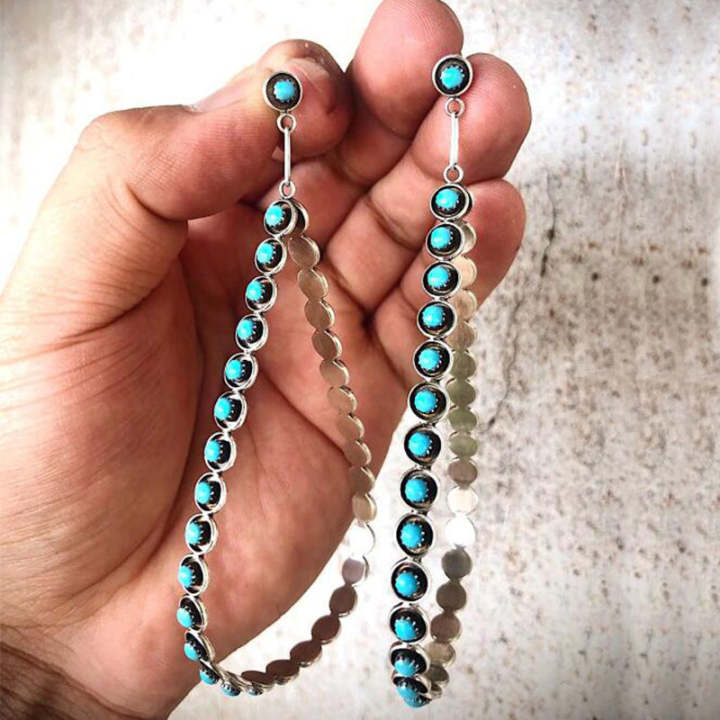
The Turquoise Statement Cross Earrings page displayed $127.26 USD and one visible color selection during review. Its copy presented turquoise, statement, and cross design language and suggested casual, Western-inspired, occasion, and gifting contexts.
The visible page did not clearly state exact height, width, drop, depth, per-earring mass, post or hook construction, backing, full components, finish, assembly, or care. One color choice does not eliminate specification uncertainty. It also does not establish natural turquoise or a particular metal.
The cross is a clear symbol, not merely a color accent. Confirm that its meaning fits the wearer and destination. Keep other literal motifs quiet. Test hair, glasses, hats, hoods, scarves, headphones, and coat collars before assigning the earrings to a season.
Give the Earrings Four Seasonal Jobs
- Spring: face-level accent with a hood-free indoor destination.
- Summer: primary statement while the neckline remains undecorated.
- Fall: visible counterpoint to a quiet shirt and controlled scarf.
- Winter: indoor accessory added after hat and scarf removal.
Use a Twelve-Photograph Seasonal Contact Sheet
Take three images per season: full outfit, conversation distance, and transition moment. The transition image should show the raincoat, sunscreen bag, fall scarf, or winter coat interaction most likely to cause trouble. Use the same camera height and similar neutral lighting where possible.
Place all twelve images on one page. Mark where the jewelry leads, disappears, collides, or becomes redundant. This contact sheet reveals whether one product genuinely works across seasons or whether two products should divide the year.
Browse by Season Only After Defining the Exposure
The Turquoise Jewelry collection can be used as a visual index after the friction map is complete. Search for a jewelry zone and architecture that solves the seasonal problem: a face-level accent away from a collar, a neckline piece for indoor use, or a compact item that stores safely during transitions.
Do not treat a seasonal color palette as a product specification. Open the exact listing, select the correct option, and request missing physical and care information.
Video Reference: Preserve Cultural and Product Boundaries
Turquoise in Rings by Turquoise in America was available during review as a 10-minute, 57-second video with captions unavailable. The visible description discusses turquoise set in handmade American Indian jewelry from the Southwest and shows jewelry in that stated context.
That context must not be transferred to unrelated products. This article does not claim that either Oroxen example is American Indian-made, handmade, naturally turquoise, from the Southwest, or culturally affiliated. Use the video to learn that provenance and maker information matter, then verify each product through its own documentation. No transcript is reproduced.
Build a Seasonal Storage Kit Without Generic Chemicals
A seasonal kit can include a clean compatible pouch, separate compartments, a copy of verified care instructions, and a small condition log. It should not automatically include polishing cloths, dips, sprays, desiccants, or cleaning liquids. Unknown components may react differently.
Photograph the item at the start and end of each active season. Record visible changes and contact the seller or a qualified professional when cleaning or repair requires knowledge the listing does not provide. Do not experiment on a hidden area.
Common Seasonal Styling Errors
- Calling white shirt and jeans seasonless. Layers and exposures still change.
- Choosing by color before mapping friction. Physical contact comes first.
- Wearing earrings before handling a scarf or hood. Test the real sequence.
- Leaving a necklace under a closed coat. Verify compression and zipper clearance.
- Assuming leather wording proves composition or water tolerance. Request exact disclosure.
- Repeating a cross motif in every accessory. Let one symbol lead.
- Transferring provenance from a video. Keep each product's evidence separate.
- Using one generic cleaning routine all year. Follow option-specific instructions.
The public Western jewelry introduction can help separate visible motifs, merchandising language, materials, and provenance.
Frequently Asked Questions
Can the same turquoise-colored necklace be worn in all four seasons?
Possibly, when its verified construction, fit, care, and exposure limits support every seasonal transition. A two-state indoor and outdoor plan may be needed.
Are statement earrings better for summer?
They can be easier to separate from a light neckline, but heat, skin products, hair, activity, weight, fastening, and care still matter.
Should jewelry match the jeans wash?
No exact match is required. Choose a clear visual hierarchy and test the complete outfit in seasonal light.
Does Southwestern style prove Southwestern origin?
No. Style language and provenance are different. Appropriate documentation is required for origin, maker, and cultural attribution.
How should jewelry be handled after rain or snow?
Follow the exact product instructions. If the materials and care are unknown, avoid exposure and request guidance rather than applying a generic drying or cleaning method.
Can necklace and cross earrings be worn together?
Only after scale, weight, fastening, symbolism, movement, and seasonal layers are tested. Start with one leader and add the second piece only if it remains supportive.
Final Four-Season Checklist
- Build the spring, summer, fall, and winter friction map.
- Keep one white shirt and jeans baseline during tests.
- Confirm the selected product's image mapping and physical specifications.
- Separate visual compatibility from physical verification.
- Test rain layers, skin products, textured fabrics, scarves, hats, and coats.
- Create the twelve-photograph seasonal contact sheet.
- Keep video provenance separate from Oroxen product claims.
- Use only documented care and storage methods.
Explore current options in the wider Western Jewelry collection or return to Oroxen for current product information. Seasonal style works when the visible idea, physical evidence, transition routine, and care plan remain aligned from January through December.