Turquoise-colored earrings are bought for the face but judged by the whole day. A design can look excellent in a close-up and still fail because its weight is unknown, the backing is unsuitable, a collar touches it, the selected image is unclear, or the wearer does not want its symbol. The strongest purchase begins with a practical dossier, not a color preference.
This guide compares the Western Turquoise Vintage Earrings and the Turquoise Statement Cross Earrings. Their titles describe turquoise-colored, Western, vintage-inspired, or statement styling. They do not prove natural turquoise, a particular metal, age, treatment, maker, origin, artisan production, or cultural affiliation.
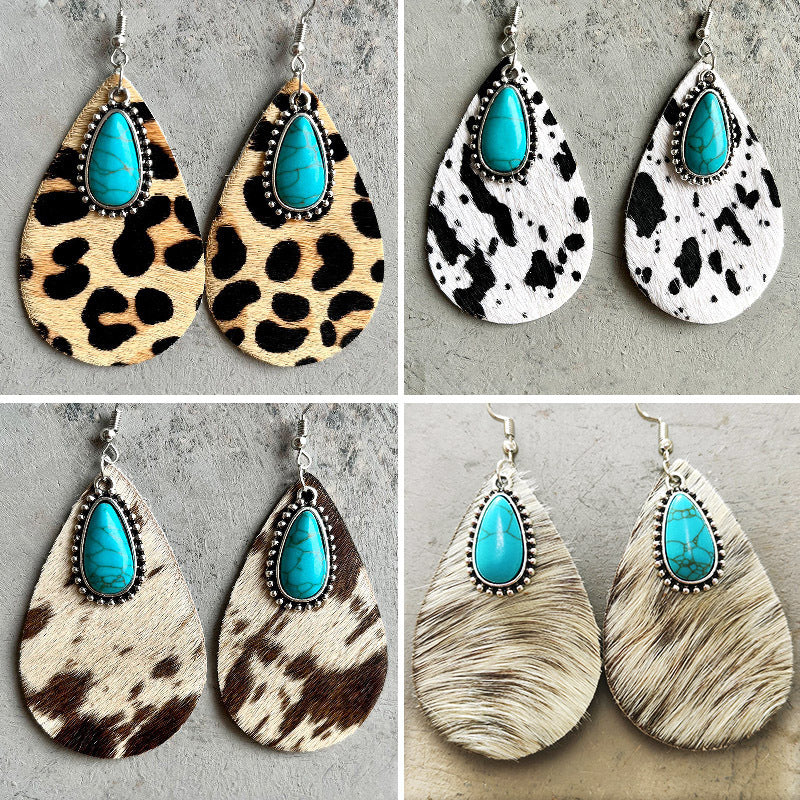
Quick Answer: Resolve Twelve Fields Before Ordering
Record twelve fields for the exact pair: image-to-option mapping, total height, widest point, thickness or profile, weight per earring, post or hook, backing or closure, complete components, surface finish, construction, care, and return conditions. Add the wearer's piercings, sensitivity history, ear anatomy, hair, glasses, hats, headsets, collars, and daily activity.
When a field is missing, write “unresolved.” Do not estimate numerical size from a model image, translate turquoise color into gemstone identity, or translate vintage appearance into age. Ask the seller and save the dated response beside the selected option.
The complete Western turquoise-style buying guide supplies a broader evidence framework. The steps below turn that framework into an earring-specific decision dossier.
Step One: Define the Earring Job
Write one sentence that names the intended job: “a face-level focal point for open-collar denim outfits,” “a cross motif for occasional wear,” “a quiet pair that clears a headset,” or “a gift whose size and fastening the recipient has approved.” A job prevents unrelated options from entering the shortlist.
Then name the wearing window: two hours at dinner, a full workday, travel, outdoor event, photographs, or repeated casual use. Each window changes the importance of weight, movement, snagging, equipment, weather, storage, and return testing.
Finally, define the acceptable evidence level. If material identity matters, require option-specific disclosure or suitable documentation. If the purchase is mainly aesthetic, say so and compare design, fit, care, comfort, price, and return terms without inventing mineral claims.
Step Two: Map the Face-Level Contact Zone
Take front, side, and three-quarter photographs with the intended hairstyle, shirt, glasses, hat, scarf, and headset. Mark the earlobe, jawline, collar top, hair path, glasses arm, hat edge, headphone cup, phone position, and shoulder line. These boundaries form the earring's operating space.
A long earring may clear an open collar but hit a stiff pointed collar. A wide form may remain secure with hair up and disappear or catch with hair down. A post backing may work differently from a hook when a headset or phone repeatedly approaches the ear.
Do not rely on a posed, motionless mirror check. Turn the head, look down, use the phone, remove a jacket, put on glasses, move hair, and simulate the intended equipment. The map should reflect ordinary behavior rather than perfect posture.
Step Three: Make a Life-Size Scale Card
After the seller supplies numerical height and width, draw the earring at full scale on light paper. Mark the piercing point, maximum width, lower edge, and thickness separately. Hold the paper beside the ear without attaching it to skin or piercing.
Photograph the card at portrait, conversational, and full-body distance. A shape that fills a product photograph may appear moderate in an outfit; a form that seems small online may dominate the face once measured. Scale should be judged at the distance where other people will actually see it.
The card cannot simulate weight, swing, texture, edges, fastening, or material response. Its job is only to reject poor proportions before purchase.
Step Four: Compare Fastening and Weight
Ask for the fastening type, backing, post or hook dimensions, moving joints, and weight of one earring. “Lightweight” without a number is subjective. Weight tolerance varies by wearer, piercing position, earlobe, duration, and movement.
| Field | Why it matters | Evidence to request |
|---|---|---|
| Weight per earring | Long-wear comfort and lobe movement | Numerical value and unit |
| Post, hook, or wire | Piercing compatibility and security | Type, dimensions, and component |
| Backing or closure | Retention and ease of use | Exact included mechanism |
| Connections | Swing, noise, catching, and maintenance | Construction photos and description |
| Profile and edges | Hair, collar, phone, and skin contact | Side view and numerical thickness |
Personal sensitivity history is private and cannot be resolved by visual inspection. Obtain complete component disclosures for every part that may contact skin, including posts, hooks, backings, decorative bodies, coatings, and connectors, then make an informed personal or professional decision.
Step Five: Read the Product Page as an Option Map
Browse the Western Earrings collection to discover silhouettes, then open each candidate in its own page. Select one option at a time and save a screenshot containing the option label, image, price, and availability.
Collection photography is not an inclusion list. A styled image may show multiple designs, props, or angles. Ask exactly what one order contains and whether visible pairs, backings, or accessories are included.
Prices, stock, shipping, and return rules change. Date every observation and check again immediately before purchase. For gifts, confirm whether pierced ears, fastening preference, symbolism, weight tolerance, and return timing suit the recipient.
Product Dossier One: Western Turquoise Vintage Earrings
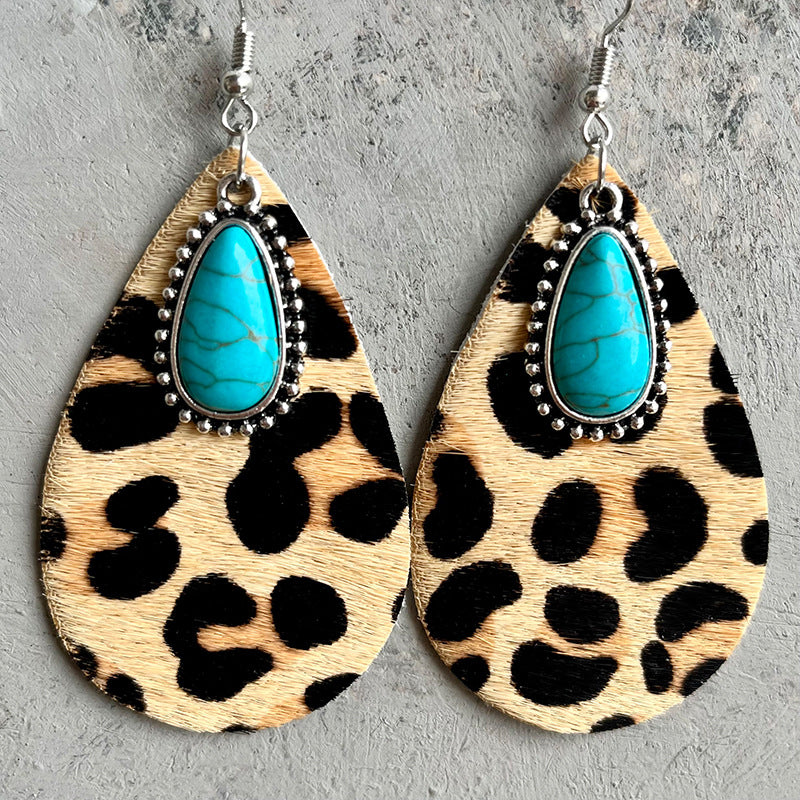
The current page displayed $126.25 USD and seven choices labeled Design 1 through Design 7 during review. Its visible summary emphasizes Western, turquoise, and vintage-inspired styling and asks shoppers to review product images and the selected option because screen color may vary.
The visible summary did not clearly provide image-to-design mapping in text, numerical dimensions, weight, post or hook, backing, complete components, finish, construction, or option-specific care. Those are not minor omissions when seven designs may have different shapes or movement.
Who May Prefer This Product Direction?
It may suit a shopper who wants to compare several Western-inspired silhouettes within one listing and is willing to confirm each design separately. It may be a weak purchase when the shopper assumes all seven designs share the same dimensions, fastening, components, or comfort.
Questions to Send the Seller
- Which exact photograph corresponds to Design 1 through Design 7?
- What does one order include for the selected design?
- What are the height, width, profile, and weight per earring?
- What fastening and backing are included?
- What are all components, finishes, connections, and care instructions?
Product Dossier Two: Turquoise Statement Cross Earrings
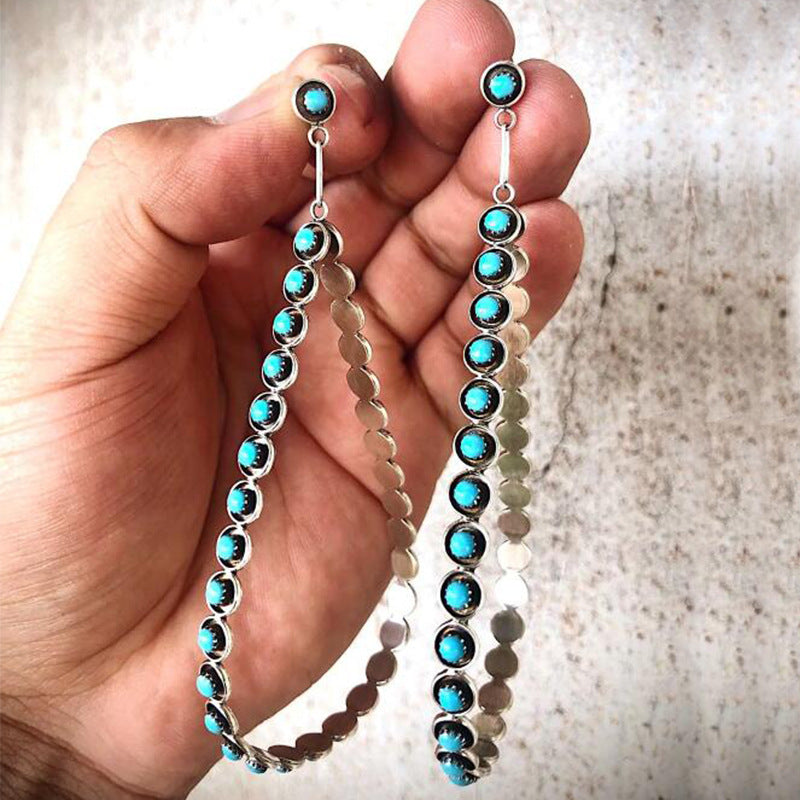
The current page displayed $127.26 USD and one visible color selection during review. Its visible summary describes turquoise, statement, and cross styling, suggests casual, Western-inspired, occasion, and gifting use, and notes possible screen color variation.
The page did not clearly state numerical dimensions, weight per earring, fastening, backing, complete components, finish, construction, or option-specific care in the visible summary. “Statement” communicates intended visual impact, not a standard size or weight.
Who May Prefer This Product Direction?
It may suit a wearer who intentionally wants a cross as the face-level focal point and plans to keep the neckline and other motifs restrained. It may be unsuitable where religious symbolism is not desired, workplace rules restrict jewelry, or a larger verified profile conflicts with hair, collars, or equipment.
Questions to Send the Seller
- What are the full cross height, widest point, thickness, and weight of one earring?
- What post, hook, wire, backing, or closure is included?
- What are the components and finish of the cross, turquoise-colored areas, fastening, and connections?
- How is the decorative body attached and how much does it move?
- What care, storage, moisture, cosmetics, and wear instructions apply?
Step Six: Run an Equal-Field Comparison
Create two columns and compare the products only on fields that both can answer: selected design, scale, weight, fastening, components, finish, construction, care, symbol preference, wardrobe reach, activity clearance, total price, shipping, and return deadline.
Do not let seven visible options make the first listing seem more documented, and do not let the word “statement” make the second seem more specific. Product variety and product evidence are different qualities.
Use three labels: confirmed, unresolved, and conflict. A conflict means a known incompatibility such as collar contact, unwanted symbolism, equipment interference, or unsuitable return timing. An unresolved field stays unresolved until credible information arrives.
Step Seven: Plan the First Three Outfits
Build three outfits from clothes already owned. The first should be quiet: white shirt or plain tee, jeans or simple trousers, no necklace, and minimal belt hardware. The second can introduce a denim jacket or dress. The third should represent the real event or work setting.
Let the earrings lead in all three. A cross earring does not need a cross necklace, and a turquoise-colored earring does not require matching blue-green accessories. Use the cowgirl jewelry guide to earrings and necklaces to assign separate jobs to each zone.
Place the life-size card beside the ear for each outfit and photograph it. Reject any candidate that needs an entirely new wardrobe before it becomes wearable.
Video Buying Lesson: Material Claims Need Product Evidence
The supplemental video is Watch This Before You Buy Turquoise - Know What You're Buying by GomeowCreations. At review, YouTube showed an approximately 30-second video, no closed captions, and a description about different kinds of turquoise and avoiding fake material.
The video does not document these earrings. It cannot identify their turquoise-colored elements, components, treatments, maker, origin, age, or value. Use its topic as a prompt to ask for option-specific disclosure; do not use an unrelated video as a product certificate.
Avoid destructive home tests involving scratching, heat, solvents, chemicals, or force. They can damage jewelry, create safety risks, and conflict with care or return terms. If identity materially affects the purchase, obtain suitable documentation and, where appropriate, qualified independent evaluation.
Red Flags and Return Questions
- Option-image ambiguity: ask for a written map before ordering.
- No numerical scale or weight: do not estimate from a crop.
- No fastening details: confirm posts, hooks, backings, and included parts.
- Material claims inferred from color: require explicit option-specific disclosure.
- Universal comfort claims: comfort depends on the wearer and complete product facts.
- Unclear return condition: ask whether earrings are returnable after packaging is opened or tried on and what hygiene restrictions apply.
- Unclear shipping window: compare arrival estimate with the event and return deadline.
Preserve screenshots and responses. The published women's Western jewelry buying checklist includes broader order and evidence questions.
Delivery-Day Inspection
Open the parcel in a clean, well-lit area over a towel. Record packaging and condition before removing protective elements beyond what current return rules permit. Confirm the ordered design, quantity, pair matching, fastening and backing, dimensions, weight, components, care instructions, and any seller documentation.
Do not wear or alter the earrings until discrepancies are documented. If trying on is allowed and personally appropriate, begin with a short controlled period and check security, pressure, swing, hair, glasses, phone, collar, and equipment. Stop for discomfort or unexpected movement.
Keep personal health or sensitivity concerns private and seek appropriate professional advice when needed. A commercial article cannot determine individual suitability.
Frequently Asked Questions
Does turquoise in the title mean natural turquoise?
No. Color, title, price, or photography cannot establish material identity. Request exact disclosure for the selected design.
How large should turquoise earrings be?
There is no universal size. Use verified measurements and a life-size card with the wearer's face, collar, hair, and equipment.
Are statement earrings always heavy?
No conclusion follows from the word “statement.” Ask for numerical weight per earring and complete construction details.
Can turquoise-colored earrings be gifts?
Yes, when pierced ears, fastening preference, component needs, weight tolerance, symbolism, wardrobe, delivery, and returns fit the recipient.
Should earrings match a necklace?
No. Let one zone lead. Add a necklace only when scale, spacing, symbolism, components, and care support the combination.
What if the seller cannot provide measurements?
Treat fit as unresolved and consider another product with adequate information. Visual preference does not remove physical uncertainty.
Final Buying Dossier
- Define the earring job and wearing window.
- Map hair, collar, glasses, hat, headset, phone, and activity.
- Confirm exact option and what one order includes.
- Obtain height, width, profile, and weight per earring.
- Confirm fastening, backing, connections, components, finish, construction, and care.
- Make a life-size card and photograph three owned outfits.
- Compare candidates on equal fields.
- Review current price, shipping, hygiene restrictions, and return deadline.
- Inspect the delivered pair before wear.
Explore current choices in Western Jewelry or return to Oroxen for live product and store information. The right earrings are the pair whose exact option, evidence, scale, fastening, symbolism, care, and daily operating space all make sense together.