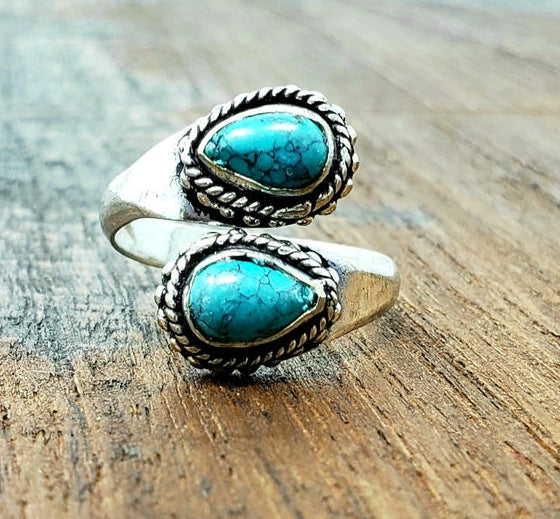
What to Know Before Buying a Western Turquoise Ring
A ring can look decisive in a photograph and still leave the most important buying questions unanswered. A blue-green center may be natural turquoise, treated turquoise, a composite, glass, resin, another mineral, or an unspecified decorative component. A silver-colored setting may be one of many metals or finishes. A product title can describe a western, vintage, geometric, heart, or cross appearance without proving age, origin, maker, material, construction, treatment, size, or durability.
The practical response is not to guess better. It is to build four written records before paying: an identity receipt, a fit receipt, a materials receipt, and an exit receipt. Together they show exactly which ring is being considered, whether it can fit the intended finger, what the seller actually states about the assembled object, and what happens if the delivered piece differs from that record.
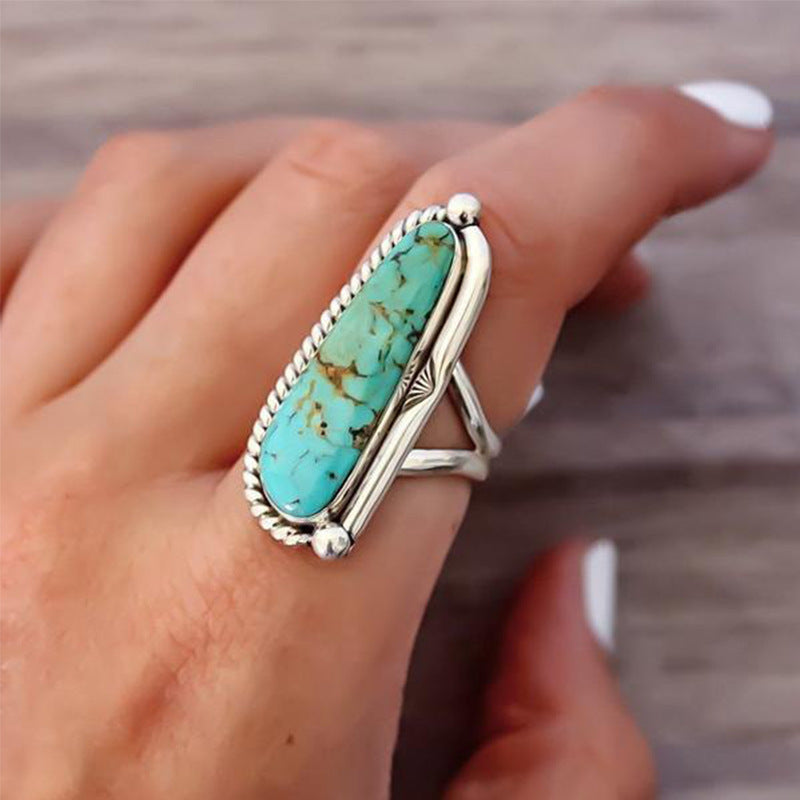
Quick Answer: Buy the Evidence, Not the Assumption
Before buying a western turquoise ring, save the exact product URL, title, selected option, gallery image, displayed price, stated dimensions, ring-size system, all materials, treatments, metal and finish, setting method, care instructions, shipping terms, return conditions, and seller answers. Mark every missing fact as “not stated.” If a missing fact affects fit, safety, care, value, gifting, or return eligibility, obtain a written answer before checkout.
Do not treat turquoise color as proof of the turquoise mineral. Do not treat a cross, heart, matrix-like pattern, price, or western styling as proof of mine origin, cultural affiliation, handwork, vintage age, or precious-metal content. Do not perform a scratch, heat, solvent, acetone, needle, or destructive “home authenticity test” on a product. Those actions can damage jewelry, misidentify an assembled object, and affect return eligibility.
For broader context, the published complete guide to choosing western turquoise jewelry separates visible design language from material evidence. The published guide to western jewelry motifs, styles, and materials explains why a motif cannot establish construction or provenance.
Receipt One: Prove the Exact Ring Identity
An identity receipt is a dated record of the listing you evaluated. Record the seller, product title, URL, review date, selected Color or Design, selected size, quantity, price, currency, and the exact image that represents the option. If a page combines several choices, match each label to its gallery photograph rather than assuming that the first photograph represents every option.
Save screenshots or a PDF of the visible product description and policies when permitted, but keep the live URL as the primary current reference. A listing can change between research, checkout, delivery, and a later care question. A dated record helps the buyer explain which statement was visible at the time; it does not freeze the seller's policy or create facts that were absent.
Write the visible design observations separately from seller claims. “Blue-green center,” “cross-shaped arrangement,” “heart outline,” “silver-colored setting,” and “darkened recesses” are observations. “Natural turquoise,” “sterling silver,” “handmade,” “antique,” “Navajo,” “Zuni,” “Southwestern tribal,” “mine-specific,” and “heirloom quality” require explicit, supportable evidence. If the listing does not provide that evidence, leave those labels out of your record.
A useful identity card
- Product title and direct URL.
- Date, displayed price, currency, and quantity.
- Selected Color, Design, size, and matching gallery image.
- Included components and packaging, if stated.
- Exact wording used for materials, treatment, metal, finish, origin, and construction.
- Questions sent to the seller and the complete written replies.
- Shipping, delivery, cancellation, exchange, return, refund, and final-sale conditions reviewed at checkout.
Receipt Two: Establish Fit Before Styling
A ring is a size-dependent product. “One Size” is not a complete fit measurement. Ask what numeric size it corresponds to, which regional sizing system is used, whether the band is adjustable, the internal diameter or circumference, the band width and thickness, the top height and width, the projection above the finger, the total mass, and the permitted adjustment range. Also ask whether adjustment is intended once, occasionally, or not at all.
Measure the intended finger at more than one time and under ordinary conditions. Temperature, activity, travel, hydration, and the time of day can change finger circumference. A wide band can feel tighter than a narrow band at the same nominal size. A large top can rotate if the band is loose. A projecting edge may meet neighboring fingers, gloves, pockets, bags, desks, tools, or steering controls.
Do not copy a printable ring-sizing guide unless its scale is verified after printing. Do not measure an existing ring from an angled photograph. Do not infer fit from a model's hand, a phrase such as “for women,” or an unspecified adjustable appearance. If the seller cannot provide a usable measurement and the return terms do not safely accommodate a fit check, the uncertainty belongs in the buying decision.
Run a paper fit scenario
Before checkout, write down the intended finger, dominant hand, ordinary activities, neighboring rings, glove use, and the maximum top dimensions that work for the wardrobe. The purpose is not to imitate the ring with paper; it is to identify conflicts. A buyer who handles equipment may need a different profile from someone selecting a removable event accessory. Workplace, food-service, health, sport, and machinery rules may prohibit or limit rings regardless of their style.
Receipt Three: Build a Materials and Construction Map
Ask for every component of the assembled ring, not only the center. A useful answer distinguishes decorative center, backing, setting, band, solder or connector, plating or coating, surface treatment, filler, adhesive, protective layer, and any material that contacts skin. It also states whether the turquoise-related material is natural turquoise, treated turquoise, composite, reconstructed material, another mineral, glass, resin, or a purely color-and-style description.
Treatment is not automatically a defect, and natural origin is not automatically suitable for every wearer. The problem is undisclosed or misunderstood information. Treatment can influence appearance, care, repair, testing, and value. Metal and finish can influence skin contact, wear patterns, polishing limits, and resizing. Adhesive or a closed-back assembly can change whether liquid or heat is appropriate.
Ask how the center is held: prongs, bezel, adhesive, inlay, mechanical capture, or another method. Ask whether the back is open or closed and whether the decorative element is solid, laminated, backed, filled, or coated. Do not infer the answer from a front photograph. Request a clear side view, underside view, band interior, and close-up of every junction.
If skin compatibility matters, request the exact metal composition and coating information. “Hypoallergenic,” “nickel-free,” or “lead-free” should be defined by the seller and supported for the complete skin-contact assembly. A color description is not a composition report. People with known sensitivities should follow qualified medical guidance rather than using an article or visual inspection as a safety determination.
Receipt Four: Plan the Exit Before Checkout
An exit receipt answers what happens when the ring is late, damaged, different from the listing, uncomfortable, the wrong size, or simply unsuitable. Read the current policy linked from the exact store and then review the version presented at checkout. Confirm the return window, when the clock starts, required condition, original packaging, excluded categories, final-sale status, authorization process, return address, shipping responsibility, refund method, inspection deductions, and whether trying on the ring affects eligibility.
The Oroxen product pages reviewed on August 24, 2026 displayed “Free Shipping $59+,” “30-Day Returns,” and “Secure Checkout.” Those short page signals do not replace the complete policy and checkout terms. The two studied rings were each above the displayed free-shipping threshold at the time reviewed, but price, availability, thresholds, locations, methods, exclusions, and policies can change. Verify the final order summary instead of relying on this article.
Ask how damaged-in-transit or materially different items must be documented. Plan to photograph the unopened package label, outer condition, opening sequence, included documents, ring from several angles, and any issue without wearing, cleaning, adjusting, or repairing it. Do not remove a tag, resize a band, polish a surface, test it with chemicals, or discard packaging until the return conditions are understood.
Use the Western Rings Collection as a Research Index
The Western Rings collection is useful as a shortlist, not as proof that every ring shares one material, size, fit, or care method. Compare product titles, current prices, gallery coverage, visible options, and the amount of specification detail. Open each candidate in a separate tab and build the same four receipts. If one page offers a numeric size and another says One Size, that is a research difference, not evidence that either will fit.
Use a comparison table with columns for exact title, option, size system, internal measurement, top dimensions, mass, all materials, treatment, setting, finish, care, delivery, and returns. Do not award a value score to a blank. A blank is an unresolved question. The preferred ring is the one whose verified information matches the wearer's requirements, not necessarily the piece with the most dramatic photograph.
| Decision field | Geometric cross example | Heart-cross example |
|---|---|---|
| Displayed price on Aug. 24, 2026 | $71.71 USD | $88.88 USD |
| Visible size selection | One Size | No size selector visible in the reviewed page state |
| Visible gallery | Six numbered product images | At least eight numbered image positions visible |
| Material and treatment proof | Not stated in the visible information reviewed | Not stated in the visible information reviewed |
| Next action | Request measurements and full construction | Request size, measurements, and full construction |
Product Study One: Turquoise Vintage Geometric Cross Ring
The Turquoise Vintage Geometric Cross Ring page was reviewed on August 24, 2026. It displayed $71.71 USD, one visible Color choice, a checked One Size option, and six numbered gallery images. Current copy described turquoise, vintage, and geometric details and positioned the ring for everyday, western-inspired, occasion, and gifting contexts. The page also told shoppers to review product images and the selected option and noted that screen color can vary.

The visible information reviewed did not establish natural turquoise, treatment, exact center material, metal composition, coating, finish, construction, setting method, adhesive, band dimensions, top dimensions, projection, mass, adjustment range, skin-contact composition, origin, maker, age, or care. “Vintage” in the title does not prove that the object is old. “One Size” does not state the fit measurement.
Questions for this exact product
- What numeric or internal measurement does One Size mean, and which sizing system is used?
- Is the band designed to adjust; if so, what range and how often may it be adjusted?
- What are the top height, top width, projection, band width, band thickness, and mass?
- What is every component, metal, coating, decorative material, treatment, and setting method?
- What care method applies to the complete assembled ring?
- May the ring be tried on and adjusted while remaining eligible for return?
A buyer may enjoy the visible geometric cross arrangement, but motif preference comes after fit and evidence. Keep the cross from becoming an accidental provenance claim. The wearer determines personal symbolism; the listing must establish the physical facts.
Product Study Two: Turquoise Vintage Heart Cross Ring for Women
The Turquoise Vintage Heart Cross Ring for Women page was checked on August 24, 2026. It displayed $88.88 USD, one visible Color choice, and at least eight numbered image positions in the reviewed page state. Current copy described turquoise, vintage, and heart details and suggested casual, western-inspired, occasion, and gifting uses. The page did not display a size selector in the reviewed state.
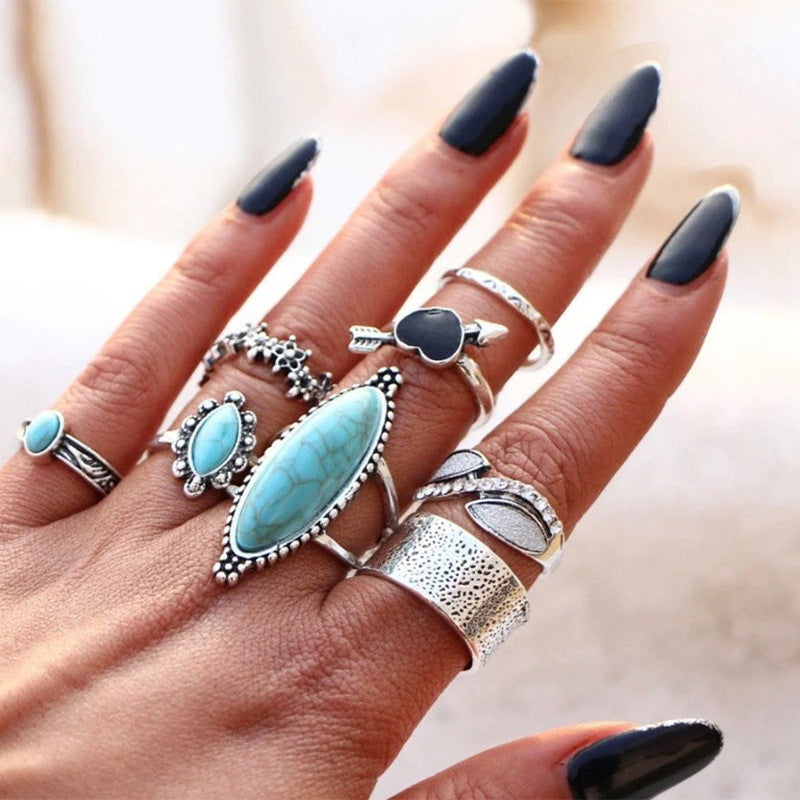
The visible information reviewed did not establish a ring size, size system, internal measurement, adjustability, dimensions, mass, natural turquoise, treatment, exact decorative material, metal composition, coating, finish, construction, setting method, adhesive, skin-contact composition, origin, maker, age, or care. “For Women” is merchandising language and does not supply a measurement or restrict who may choose the design.
Questions for this exact product
- Which ring size will be shipped, and what internal diameter or circumference confirms it?
- Is the band fixed or adjustable, and what is the safe adjustment procedure?
- What are the complete dimensions, projection, band profile, and mass?
- Are the visible heart and cross elements integral, attached, plated, coated, or adhesive-set?
- What are the exact decorative and skin-contact materials and any treatments?
- Which written care and return instructions govern the delivered option?
The extra gallery coverage can help a buyer formulate questions, but photographs alone cannot establish chemistry, treatment, internal structure, sizing accuracy, or long-term wear. Use images to inspect the visible silhouette and locate junctions; use written specifications to decide whether those junctions meet the requirement.
How to Compare the Two Rings Without Pretending
Create two columns and allow “unknown” to remain a valid result. The geometric cross page visibly offered One Size; the heart-cross page did not visibly present a size selector. That does not prove that the first is adjustable or that the second lacks a size. It proves only what the reviewed interface showed. Ask each size question independently.
Compare visual area rather than assigning meaning from the title. One design emphasizes a geometric cross arrangement; the other combines heart and cross language. Test each against the intended wardrobe using verified dimensions when available. A larger top may act as the focal accessory, while a compact design may share attention with earrings or a necklace. Until dimensions arrive, describe those as planning scenarios, not product conclusions.
For a gift, obtain the recipient's ring size and preferences without turning the purchase into a test of identity or belief. Confirm whether motifs are welcome, whether the recipient has metal sensitivities, which hand and finger are intended, and whether returns can remain private and practical. The published country concert jewelry guide can help with event-specific comfort, bag, outerwear, and removal planning.
What the YouTube Buying Warning Contributes
GomeowCreations' “Watch This Before You Buy Turquoise — Know What You're Buying” is a 48-second YouTube video. Its visible description says the creator shows different kinds of turquoise and discusses using the right material in jewelry work and avoiding purchases represented as turquoise when they are not. At the time reviewed, YouTube indicated that subtitles or closed captions were unavailable, and no transcript was available for export.
Use the video as a prompt to ask precise questions, not as a remote diagnosis of either Oroxen ring. The creator does not inspect these two products in the visible page information reviewed. A short demonstration of material examples cannot prove the contents, treatment, maker, origin, authenticity, or value of another ring. Visual resemblance is not a laboratory identification.
Do not repeat a destructive or chemical test seen in any online content on an assembled product. Acids, solvents, hot needles, flame, abrasion, scraping, and forced removal can damage a center, coating, adhesive, metal, or finish and create safety or return problems. When identification matters, ask for seller documentation or consult a qualified independent gemologist who can choose an appropriate, minimally invasive examination.
Red Flags That Require a Pause
- A material, mine, tribal, artist, handmade, antique, or precious-metal claim appears without supporting detail.
- The option label does not clearly match the photograph or delivered-item description.
- The size field says One Size but no numeric measurement or adjustment range is given.
- A ring page has no usable size information and the return policy is unclear.
- Only front-facing images are provided, hiding the band interior, underside, and setting junctions.
- The care method does not account for every component, coating, treatment, or adhesive.
- The seller encourages destructive testing or gives a universal authenticity rule based on color, matrix, price, or weight alone.
- Policy summaries conflict with checkout terms, or the return address, timing, costs, and condition requirements are not clear.
- Scarcity timers, social proof, or a discount pushes checkout before the open questions are answered.
A red flag is a reason to request evidence or leave the purchase, not a finding of fraud. Keep the language precise. An unknown fact is unknown; it is not automatically good or bad. The buyer's leverage is the ability to pause.
Delivery-Day Inspection Protocol
Review the order record before opening the package. Photograph the exterior and label, then open carefully without damaging reusable packaging. Compare the delivered title, option, size mark, count, color arrangement, silhouette, and included documents with the identity receipt. Take front, back, side, band-interior, and junction photographs in neutral light.
Do not force the ring over a knuckle. If the verified size is suitable and policy permits trying it on, use clean, dry hands and a protected area. Stop if the ring catches, pinches, rotates dangerously, presses neighboring fingers, or requires force. Do not bend an apparently adjustable band until the seller's adjustment method and return implications are known.
If the item differs, document the difference and contact the seller through the stated support route. Describe observable facts rather than diagnosing the material. Preserve packaging, tags, emails, photographs, and timelines. Do not clean, polish, glue, resize, scrape, test, or repair the item while a return or damage issue is unresolved.
Frequently Asked Questions
Does “turquoise” in a ring title mean natural turquoise?
No conclusion should be drawn from the title alone. Request the exact decorative material, treatment, backing, filler, coating, and supporting documentation for the selected ring. When the page does not state those facts, describe the center as turquoise-colored or as the seller's exact wording.
Is One Size the same as adjustable?
No. One Size is an option label. Ask for the size system, internal measurement, whether the band is designed to adjust, the safe range, the correct method, and how adjustment affects returns and structural life.
Can a photograph confirm sterling silver?
No. Silver color, dark recesses, a stamp in an unclear image, or vintage styling cannot establish the complete metal and finish. Request composition and coating information for all skin-contact and structural parts.
Should I use a home test to see whether the center is real?
No destructive or chemical test is recommended here. Such testing can harm the center, finish, setting, adhesive, or user and can affect returns. Use seller documentation or a qualified independent gemologist when identification is important.
Which of the two Oroxen rings is better?
The pages provide different visible design and option information, but neither supplies enough complete material and dimensional evidence for a universal winner. The better candidate is the one whose seller-confirmed size, construction, materials, care, symbolism, price, and return conditions match the specific wearer.
Where can I compare additional styles?
Browse the Western Rings collection for ring-specific options and the broader Western Jewelry collection for coordinating categories. Apply the same four-receipt method to every listing rather than transferring facts from one product to another.
Final Four-Receipt Checklist
- Identity: exact URL, date, title, option, gallery match, price, currency, and included quantity recorded.
- Fit: size system, internal measurement, dimensions, projection, mass, adjustment design, and intended finger verified.
- Materials: center, treatment, metal, coating, finish, setting, backing, adhesive, skin-contact parts, and exact care stated.
- Exit: shipping, delivery, cancellation, try-on, adjustment, return, refund, damage, and documentation terms understood.
- The ring has not been assigned unsupported origin, artist, tribal, vintage-age, handmade, precious-metal, or natural-turquoise claims.
- The YouTube video is used as a question prompt, not as evidence about an unexamined product.
- No destructive, chemical, heat, scratch, solvent, or forced adjustment test is planned.
Conclusion: Make Uncertainty Visible Before It Becomes a Cost
A careful western turquoise ring purchase is not a contest to identify a material from a photograph. It is a record-building exercise. Capture the exact ring identity, convert fit language into measurements, map the assembled materials, and understand the exit route. Where the page is silent, write “not stated” and ask. A clear unanswered question is more useful than a confident assumption.
Continue with the Western Jewelry collection, compare ring silhouettes in the Western Rings collection, or return to the Oroxen homepage. Choose only after the evidence, fit, and return path support the person who will actually wear the ring.