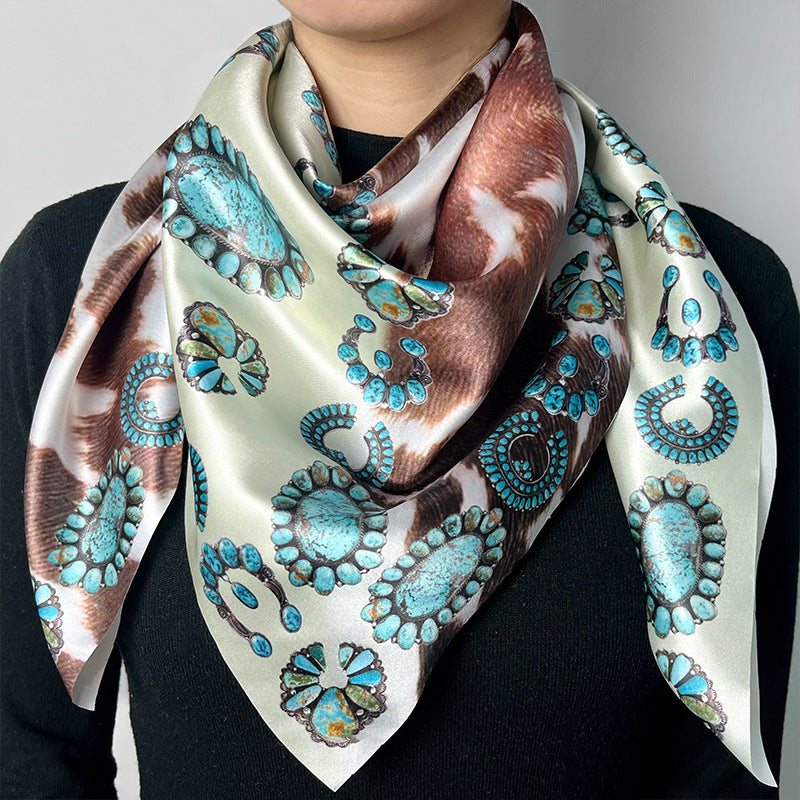
A black dress can stay in the wardrobe all year, but the physical system around it changes. Spring adds rain and shifting layers. Summer introduces heat, sunscreen, exposed skin, and outdoor light. Autumn brings textured jackets and competing earth colors. Winter adds knits, scarves, coat hardware, and dry indoor air. Western turquoise jewelry must be restyled for those conditions rather than copied unchanged from one season to another.
This seasonal guide uses two current Oroxen examples: Western Turquoise Vintage Cross Jewelry for Women and Western Turquoise Vintage Earrings. Their product names describe visible style. They do not independently verify natural turquoise, metal, age, maker, origin, treatment, construction, or cultural affiliation. Confirm specifications and care for the exact option before seasonal exposure.
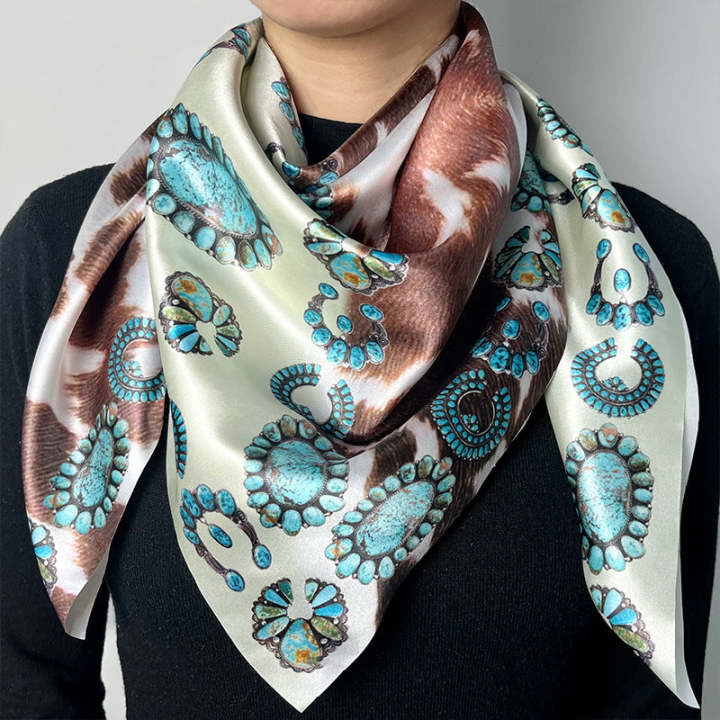
Quick Answer: Keep the Dress, Rebuild the Contact Map
Use one black dress as the constant and redraw everything that can touch the jewelry each season. Mark neckline, hair, scarf, jacket collar, coat zipper, bag strap, gloves, hat, sunscreen area, and exposed wrist. The safest placement is the zone with verified clearance during real movement.
Choose one seasonal leader: necklace or earrings. Let color and motif provide continuity across the year, while chain position, outer layer, shoe, bag, and supporting jewelry adapt. Do not insist that every product must work in all four seasons. A reliable two-season formula is more useful than a theoretical year-round look that catches, overheats, rubs, or conflicts with care instructions.
The public Western jewelry wardrobe guide provides broad checks for denim, dresses, boots, and workwear. The framework below treats weather and layers as additional variables.
Build a Seasonal Risk Matrix
Create one row for each season and five columns: exposure, layers, contact, lighting, and routine. Fill the matrix for the wearer and location rather than relying on a generic climate.
| Season | Typical change | Jewelry question | Black-dress adjustment |
|---|---|---|---|
| Spring | Rain, wind, removable layers | Can the piece stay dry and clear of collars? | Use a stable inner placement or face-level accent |
| Summer | Heat, skin products, bright light | What contact and care limits apply? | Reduce layers and accessory count |
| Autumn | Texture, jackets, earth tones | Does the jewelry remain visible without collision? | Frame one motif with controlled color |
| Winter | Knits, scarves, coats, gloves | Will raised parts catch or be compressed? | Move emphasis to the safest visible zone |
These are planning prompts, not material predictions. Only documented components and care can determine acceptable exposure. When the seller information is incomplete, avoid moisture, cosmetics, chemicals, impact, and friction until guidance is obtained.
Separate Color Season From Wear Season
Blue-green color can coordinate with any season. The practical limitation is usually not palette but contact. Pale spring layers, white summer accessories, rust autumn jackets, and charcoal winter knits can all provide useful contrast. Exact matching is unnecessary and unreliable across screens and lighting.
Use three color roles. A signal is the only blue-green detail. A bridge repeats a smaller related tone in a bag, boot, or scarf. A ground is the black dress and neutral outer layer. Keep the jewelry as signal or bridge, not both at once.
Photograph the real outfit in outdoor shade and the main indoor setting. Seasonal sunlight changes apparent saturation and finish. Do not interpret those visual shifts as evidence of stone identity or metal composition.
Browse Turquoise Jewelry by Seasonal Function
Use the Turquoise Jewelry collection as a current style index. Sort candidates into face-level, neckline, wrist, and hand zones. Then assign each a seasonal function: visible over layers, protected under layers, compatible with exposed skin, or reserved for controlled indoor use.
For every serious candidate, request exact dimensions, weight, closure, fit or adjustment range, components, finish, construction, care, and option mapping. Add a season column only after those facts are known. A photograph of a necklace over a sweater cannot establish that the real piece is safe for that fabric.
Keep the public pre-purchase Western jewelry checklist beside the matrix so missing specifications do not disappear inside styling enthusiasm.
Cross Jewelry: What the Current Page Establishes
The current Western Turquoise Vintage Cross Jewelry for Women page shows 90cm and 52cm beneath a selector labeled “Size.” The visible page does not explain exactly what each value measures, whether the pendant is included, which images correspond to each choice, or whether the values are total or wearable length. Exact focal dimensions, adjustment range, profile, weight, closure, components, finish, construction, and care are not clearly supplied.
A cross can carry personal or religious meaning. Confirm that the wearer wants the symbol and that it is appropriate for the setting. Do not reduce it to a generic seasonal motif or attach unsupported historical claims.
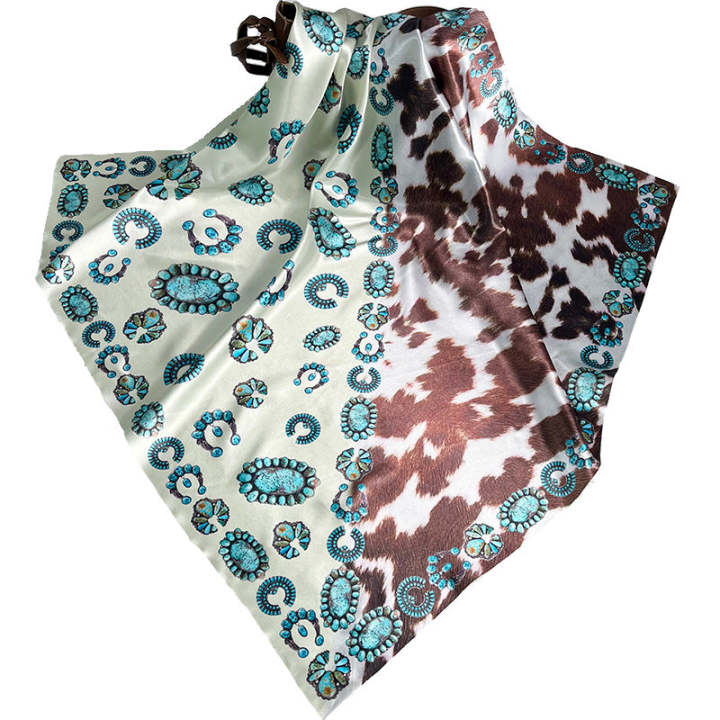
Spring Cross Formula
Wear the black dress with a light trench or water-resistant outer layer selected for weather, keeping the jewelry within a protected inner zone if its care requires dryness. Check the coat when open, closed, and carried. The pendant must not strike a zipper, snap, or umbrella handle.
Summer Cross Formula
Use the dress alone with the necklace as the central signal. Map sunscreen, lotion, perfume, and perspiration zones and follow the exact care instructions. If component guidance is absent, do not assume direct skin contact or product exposure is harmless.
Autumn Cross Formula
Frame the cross with an open denim, canvas-looking, or earth-colored jacket after checking actual fabric and hardware. Keep the belt and boots free of competing large symbols. Test the lower point against jacket edges and bag straps.
Winter Cross Formula
Place a life-size outline over the intended knit and under the coat before wearing the product. Check scarf, zipper, lapel, and seat-belt paths. If the necklace disappears or catches, reserve it for indoor wear without the scarf rather than forcing the layer.
Vintage-Inspired Earrings: What the Current Page Establishes
The current Western Turquoise Vintage Earrings page displays Design 1 through Design 7 under a selector labeled “Size.” Those labels identify designs, not measurements. The visible page does not clearly map every image to each design or state exact height, width, total drop, profile, per-earring weight, closure, backing, components, finish, construction, or care.
Earrings can bypass a crowded chest zone, but they interact with seasonal hair, collars, scarves, hats, earmuffs, headphones, and coat removal. Request the physical facts for the selected design before assigning it to a season.
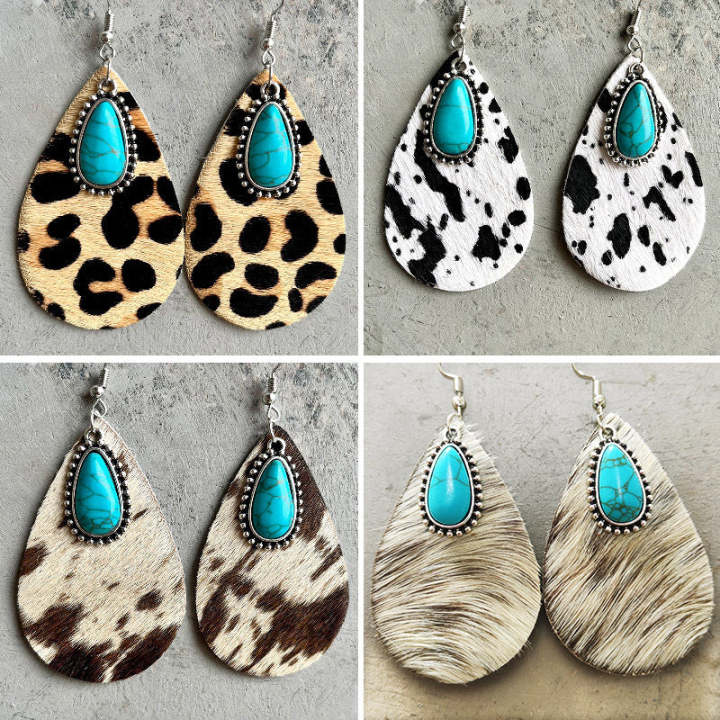
Spring Earring Formula
Use a clean black neckline and a light removable jacket. Secure hair against wind in a way that does not hide or pull the earrings. Rehearse hood and umbrella use if those are part of the day.
Summer Earring Formula
Let the earrings lead with bare or simple shoulders and no necklace. Verify closure, weight, skin-contact components, and care for heat and normal products. Carry them in protective storage if swimming or another incompatible activity is planned.
Autumn Earring Formula
Pair the black dress with a textured jacket and restrained boots. Keep the collar below the earring path and choose one earth tone as bridge. Avoid adding a second large Western motif at the chest.
Winter Earring Formula
Test scarf tying, coat fastening, hat removal, and phone use. A design that looks ideal indoors may catch during the transition from outdoors. Reserve it for a controlled hairstyle or choose another documented profile.
Create a Four-Season Outfit File
Save one page per season with the exact dress, selected jewelry option, outer layer, shoes, bag, hair or headwear, weather context, and care notes. Include front, side, seated, and movement photographs. This turns a styling idea into a repeatable system.
Record failure as carefully as success. “Cross reaches zipper when coat closes” or “Design 3 catches scarf edge” is more useful than “does not work.” The note identifies what must change and prevents the same mistake next year.
Review the file at every seasonal transition because body fit, garments, product condition, workplace needs, and policies can change. Year-round style is maintained, not declared once.
Run the Seasonal Transition Rehearsal
- Dress indoors without the outer layer.
- Add jacket or coat and fasten it normally.
- Add scarf, hat, gloves, or umbrella when relevant.
- Put on the usual bag and use the phone.
- Sit, walk, reach, enter a vehicle, and remove the outer layer.
- Inspect contact, position, security, comfort, and visibility.
Do not swing or stress the jewelry during the rehearsal. Stop when contact appears. Adjust the outfit, not an undocumented component. A safe formula should remain stable through ordinary transitions.
Prepare a Seasonal Change Kit
Keep a small non-abrasive pouch or case in the bag when the day's activities may become incompatible with the jewelry. The kit is not permission to remove a piece carelessly; it gives the wearer a planned destination instead of a pocket, tissue, dashboard, or loose bag compartment. Follow seller instructions for the exact storage materials.
Add a plain card that lists the selected option, care limits, and a reminder of the safest way to fasten or remove it. Do not include cleaning chemicals or polishing cloths unless the documented components and finish specifically support them. A dry soft barrier and separated compartment are usually planning concepts, not universal care instructions.
Use the kit during transitions such as an unexpected rainstorm, exercise, swimming, heavy outerwear, or work that introduces impact and chemicals. When safe removal is not possible, change the activity or outfit rather than improvising with the jewelry. Record why the item was removed; repeated notes may show that another seasonal formula is more realistic.
Video Perspective: Learn Questions, Not Authentication
The supplemental source is Turquoise in Rings by Turquoise in America. A transcript was not available during review, and the title addresses rings rather than either Oroxen product. Use the complete video to generate questions about visual scale, terminology, documentation, and the difference between observation and verification.
Do not transfer any statement about another item's stone, mine, treatment, metal, maker, origin, age, or value to these necklace or earring options. Visual resemblance is not product evidence, and seasonal lighting can make resemblance even less reliable.
Seasonal Styling Mistakes
Repeating the Summer Placement Under Winter Layers
Rebuild the map. A necklace that rests freely on skin may collide with knit, zipper, scarf, and coat.
Treating Weather as a Color Problem Only
Rain, heat, wind, product contact, and friction are physical variables. Follow documented care.
Buying a New Piece for Every Season
Test one product in several verified formulas before expanding. Styling flexibility may come from placement and layers.
Using Every Seasonal Motif at Once
Rust, fringe, boots, hat, cross, turquoise color, and patterned bag can compete. Choose one leader and one bridge.
Calling “Vintage” Proof of Age
Use vintage-inspired for appearance unless actual age and provenance are documented.
Frequently Asked Questions
Can Western turquoise-style jewelry work with a black dress all year?
Yes, when each season has a separate layer, contact, light, activity, and care plan. The same placement need not work every month.
Which is easier in winter: necklace or earrings?
Neither is universally easier. Compare the necklace with scarf and coat paths and the earrings with collars, hats, and phone use using exact measurements.
Should summer jewelry be smaller?
Not automatically. Reduce layers and competitor zones, then choose verified scale, weight, and care appropriate to the routine.
Can I pair the cross necklace with the earrings?
Possibly, but let one lead and confirm that both remain physically separate through movement and seasonal layers.
How do I style Southwestern turquoise jewelry responsibly?
Use supported product language and avoid assigning tribal, regional, artisan, sacred, or historical claims without evidence. The public Southwestern-style black-dress guide provides more context checks.
Does seasonal storage need to change?
Follow item-specific care. Before storing, inspect condition and keep pieces separated when contact could tangle, scratch, or compress them. Do not apply generic stone or metal cleaners to unidentified components.
Final Four-Season Checklist
- Keep the black dress constant and redraw seasonal contact paths.
- Choose necklace or earrings as the seasonal leader.
- Confirm option mapping, measurements, weight, closure, components, finish, and care.
- Test outdoor-to-indoor transitions with real layers and accessories.
- Use color as signal, bridge, or ground rather than exact match.
- Save seasonal photographs, failures, and successful formulas.
- Review the system before each new season.
Explore current choices in Western Jewelry and return to Oroxen for current product and store information. A black dress becomes a true year-round foundation when jewelry placement evolves with climate, layers, movement, and verified care.