Turquoise Western Jewelry for a Rodeo Outfit: What Works and What Does Not
“It works” is often used as a visual compliment, but a rodeo outfit needs a stricter verdict. A jewelry choice works only when four gates are passed: it reads clearly in the complete outfit, it clears the wearer's movements and equipment, its exact product facts support the plan, and it can be removed or returned without improvisation. A beautiful close-up can pass the first impression and fail the other three.
This guide uses three labels: works, does not work, and unresolved. “Works” means the tested combination passed all relevant gates. “Does not work” means a verified conflict exists. “Unresolved” means a necessary dimension, material, option mapping, attachment, care instruction, or policy is missing. Unresolved is not a negative claim about the product; it is a pause in the decision.
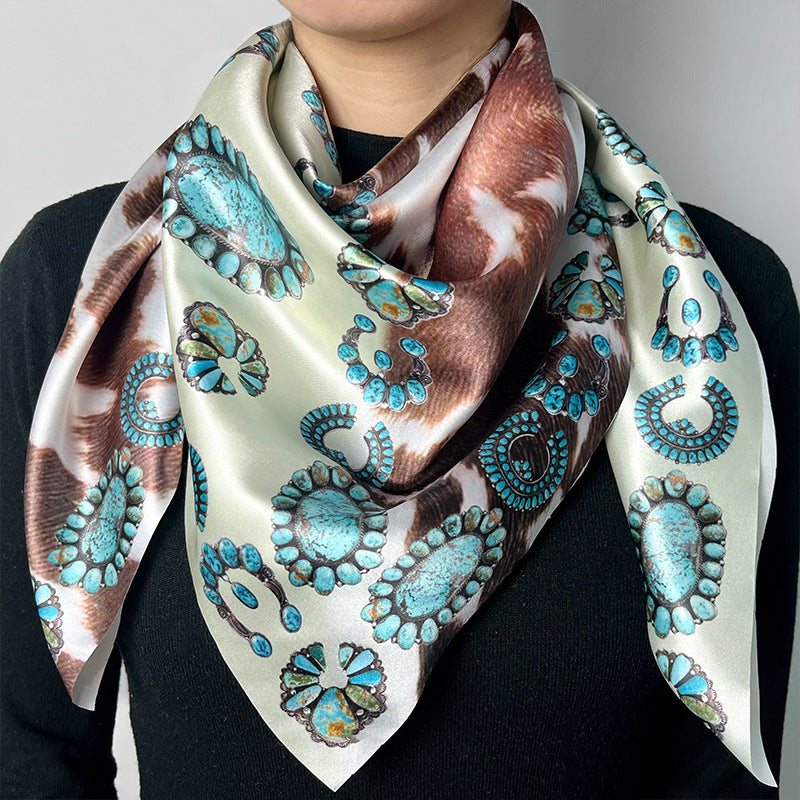
Quick Verdict: One Lead Zone, Verified Clearance, No Borrowed Claims
What usually works is one lead jewelry zone plus one quiet supporting zone. A necklace or long cross-related design can lead the torso while earrings, hat band, buckle, and wrist remain restrained. Alternatively, a selected earring Design can lead the face while the neckline stays open. Both formulas require option-to-image matching, exact measurements, mass, attachment or closure, all materials, care, and a full-outfit movement test.
What does not work is known collision, unsafe interference, painful fit, forced adjustment, or a composition in which every motif demands first attention. What remains unresolved is a product page that gives an option label without explaining its measurement or a gallery without connecting every Design to the delivered item.
The published complete western turquoise jewelry guide explains how to separate style language from material evidence. The published western jewelry motifs and materials guide helps prevent cross, vintage, western, and turquoise-related wording from becoming unsupported origin or composition claims.
The Four-Gate Test
Gate A: Visual hierarchy
View the entire body, not the jewelry crop. Name the first object noticed, the second, and the area where the eye rests. A combination works when the intended anchor remains first under ordinary distance and lighting. It does not work when necklace, earrings, buckle, decorated boots, hat band, embroidery, and bag all produce equal contrast. It is unresolved when the exact option or dimensions are unknown.
Gate B: Physical clearance
Wear the actual hat, hair, glasses, hearing protection, shirt, jacket, belt, bag, and jewelry. Walk, turn, sit, reach, remove the hat, use pockets, and handle the phone. A combination works when nothing catches, compresses, strikes, pulls, blocks required equipment, or becomes difficult to remove. It does not work when a verified collision occurs. It is unresolved before exact projection, mass, attachment, and placement are known.
Gate C: Product evidence
Record the exact URL, date, title, selected option, matching image, included quantity, measurements, all materials, treatments, metal, coating, construction, attachment or closure, care, and seller answers. The plan works when the necessary fields support it. It does not work when a confirmed specification contradicts the intended use. It is unresolved when the page is silent.
Gate D: Exit readiness
Confirm venue rules and prepare an individual compartment for every piece. Review current shipping and return terms before checkout. A plan works when jewelry can be counted, removed in a stable place, stored without contact, and returned or reported according to the applicable terms. It does not work when removal creates a new hazard or the wearer knowingly cannot follow the rules. It is unresolved when policy, packaging, or storage requirements are not known.
What Works: A Torso-Led Cross-Jewelry Formula
Begin with the selected cross-related piece as the torso anchor. Use a plain or low-contrast shirt area behind it. Keep the collar, placket, scarf, vest, and jacket edges outside the verified jewelry footprint. Reduce the buckle to a supporting role and avoid another large cross, skull, floral cluster, or blue-green focal center near the face.
This formula works when the product's `52cm` or `90cm` option has been explained, measured, and matched to the gallery; when the complete jewelry length and hanging point fit the specific wearer; and when the lower edge stays clear of buckle, bag, seat belt, buttons, embroidery, and outerwear. It also requires a closure or attachment that the wearer can operate and a storage route if removal is needed.
It does not work when the long line repeatedly strikes the buckle, crosses the bag strap, disappears into an embroidered yoke, or places an edge where it catches. It remains unresolved when `52cm` and `90cm` are visible but the page does not state exactly what object or measurement those values describe.
What Works: An Earring-Led Face Formula
Select one exact earring Design and let it define the face-level shape. Keep the necklace zone open or use a verified minimal piece. Simplify the hat band and control hair near the attachment. Use one restrained wrist or belt echo if the full-length view needs a second color point.
This formula works when Design 1 through Design 7 have been matched to exact gallery images and the selected pair's dimensions, projection, per-earring mass, attachment, backing, materials, and included quantity are known. It also needs clearance from brim, hat cord, hair, glasses, hearing protection, collar, and outerwear.
It does not work when the backing presses, the earring catches the planned hairstyle, or the hat cannot be removed normally. It remains unresolved when the page places Design labels under a Size heading without giving actual dimensions or when the selected gallery image is uncertain.
What Works: A Two-Point Color Route
A small face accent and a separated torso accent can connect an outfit without building a matching set. Repeat one feature only: blue-green appearance, dark-light contrast, or a simple line direction. Use different motif density so the two points do not compete.
The two-point route works when both pieces have verified scale and the complete outfit still has a single leader. It does not work when the eye jumps between two equal focal objects or when the necklace and earrings physically meet hair, collar, hat, or jacket along the same route. It is unresolved when the selected Design and length option are not documented.
Color should not be used as a material shortcut. Turquoise in a title, a blue-green center, matrix-like markings, or a screen image cannot prove natural turquoise, treatment, origin, or value. A silver-colored surface cannot prove sterling silver. Style the observed color while preserving the exact seller wording.
What Does Not Work: Seven Confirmed Failure Patterns
- Known collision: jewelry contacts a hat, collar, buckle, bag strap, seat belt, tool, rail, tack, or equipment during ordinary movement.
- Pain or impaired movement: a piece pinches, pulls, presses, creates numbness, or prevents normal clothing and equipment use.
- Forced modification: an unknown component must be bent, tied, glued, clipped, polished, or extended to make the outfit possible.
- No leader: multiple high-contrast jewelry and garment motifs compete at face, torso, waist, and wrist.
- Unsafe activity: jewelry is kept on around an activity or workplace rule that requires removal.
- No storage: removed jewelry would be placed loose in a pocket, bag, cup holder, restroom surface, or shared pouch.
- Borrowed evidence: material, origin, cultural, maker, age, or care claims are copied from a video, another product, or a collection page.
These failures are observable or documented conflicts. They are different from missing facts. Do not call an unresolved product defective. Pause, ask, and decide after receiving evidence.
Unresolved Does Not Mean Rejected
A responsible shopping record can contain many unresolved fields: dimension, weight, backing, metal, coating, treatment, care, included count, or option mapping. The next step is a focused question, not an accusation and not a guess.
| Field | Works | Does not work | Unresolved |
|---|---|---|---|
| Option | Label and gallery image match | Delivered option conflicts with confirmed order | Label-to-image mapping missing |
| Fit | Measured and movement-tested | Verified pain or collision | Dimensions or mass missing |
| Material | Complete seller statement supports plan | Confirmed material conflicts with a requirement | Composition or treatment not stated |
| Venue | Current rules permit use | Rule or activity prohibits use | Current rule not checked |
| Storage | Separate protected compartment ready | Removal would create known loss or contact risk | Case or included components not prepared |
Product Study One: Western Turquoise Vintage Cross Jewelry for Women
The Western Turquoise Vintage Cross Jewelry for Women page was reviewed on August 24, 2026. It displayed $112.11 USD, two choices labeled 90cm and 52cm under Size, and thirteen numbered gallery positions in the reviewed page state. The 52cm option was checked at that time. Current copy describes western, turquoise, and vintage details for everyday, western-inspired, occasion, and gifting uses.
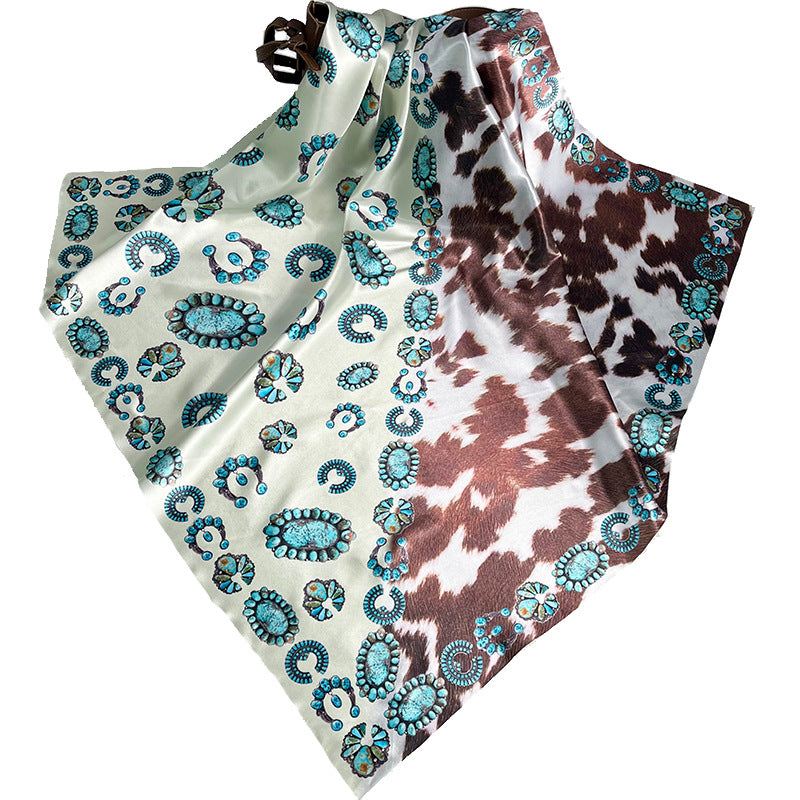
The visible page did not explicitly identify what the 52cm and 90cm values measure, whether the values are total jewelry length, chain length, cord length, or another dimension, or whether the two options differ in design. It also did not establish included components, pendant dimensions, projection, mass, closure, all materials, treatment, metal composition, coating, setting, adhesive, construction, skin-contact parts, exact care, origin, maker, handmade status, or age.
Works only after these questions are answered
- What exactly do 52cm and 90cm measure, and what is the tolerance?
- Which gallery images show each option?
- What components are included with quantity one?
- What are the complete dimensions, hanging point, projection, mass, and closure?
- What are the center, backing, metal, coating, setting, adhesive, and skin-contact materials?
- What care instructions apply to the entire assembled item?
A torso-led plan is unresolved until those answers arrive. The visible cross motif can be used as a personal styling choice, but it does not establish cultural affiliation, maker, origin, or age. “For Women” is merchandising language, not a fit measurement and not a restriction on who may choose the design.
Product Study Two: Western Turquoise Vintage Earrings
The Western Turquoise Vintage Earrings page was checked on August 24, 2026. It displayed $126.25 USD, seven choices labeled Design 1 through Design 7 under Size, and twenty numbered gallery positions. Design 1 was checked in the reviewed state. Current copy describes western, turquoise, and vintage details for casual, western-inspired, occasion, and gifting contexts.
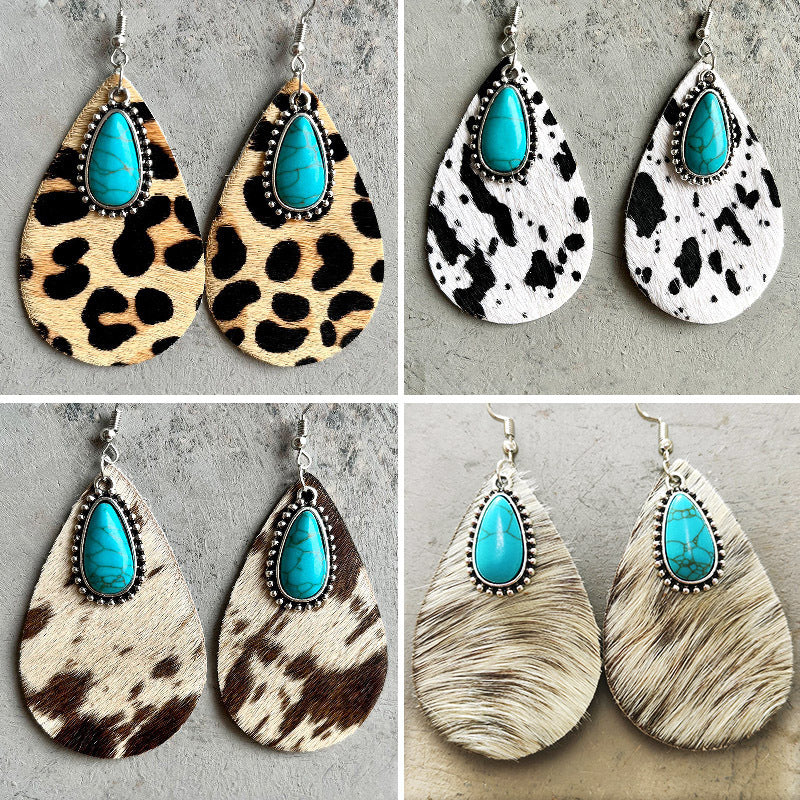
The Size heading does not supply an earring dimension. The visible information reviewed did not state included quantity, design-to-image map, individual height, width, projection, per-earring mass, attachment, backing, decorative material, treatment, metal composition, coating, construction, adhesive, skin-contact material, care, origin, maker, handmade status, or age.
Works only after these questions are answered
- Which exact images correspond to Designs 1 through 7?
- Does quantity one include a pair, and are the matching backs included?
- What are the dimensions, projection, per-earring mass, attachment, and backing for the selected Design?
- What are all decorative, structural, coating, and skin-contact materials?
- What care method applies without damaging another component?
- How may the pair be tried on while preserving return eligibility?
Once verified, the selected Design can be tested with the actual hat, hair, glasses, hearing protection, collar, and jacket. Do not treat the large gallery as proof that every image is included or that every Design shares one attachment and weight.
How the Turquoise Jewelry Collection Helps
The Turquoise Jewelry collection is a navigation tool. Use it to compare visible categories, silhouettes, option counts, gallery coverage, and listing detail. Do not assume that items in one collection share natural turquoise, metal, finish, construction, care, or origin.
Build a shortlist with the same four gates. A necklace might pass visual hierarchy but remain unresolved on length. Earrings might pass the gallery review but remain unresolved on mass and backing. A bracelet might pass appearance yet fail a confirmed glove or sleeve clearance test. The collection supplies candidates; the exact page and try-on supply the decision.
What the Statement-Necklace Video Adds
Fashion World's “20 Styles to Wear Statement Necklaces With Western Outfit” is an approximately twenty-one-second YouTube video. The visible description presents it as a collection of twenty or more statement-necklace ideas for western outfits. YouTube showed no available subtitles or closed captions, and no transcript was available for export when reviewed.
The video can help with Gate A only: visual hierarchy. Pause on a frame and identify neckline, necklace footprint, garment contrast, location of empty space, and number of competing focal zones. It cannot pass the physical-clearance, product-evidence, or exit-readiness gates for an Oroxen product.
Do not infer materials, size, weight, comfort, care, maker, origin, or event safety from the visual montage. Translate a visible idea into a measurable test for the exact selected item. A long necklace over a plain shirt is an idea; whether the 52cm or 90cm option creates that result is an unresolved product question until documented and tried.
A Full Rodeo-Outfit Gate Inspection
- Confirm the event, activity, weather, bag, seating, and prohibited-item rules.
- Record the exact product options and matching gallery images.
- Dress fully in the planned boots, lower garment, shirt, belt, buckle, hat, hair, outerwear, and bag.
- Add one jewelry anchor and identify the quiet supporting zone.
- Photograph full length, upper torso, both sides, and seated views.
- Walk, turn, reach, sit, stand, use pockets, use the phone, and remove the hat.
- Check every contact route and stop at pain, pull, snag, impact, or forced movement.
- Place the item in its dedicated compartment and confirm that removal can be done safely.
- Review current shipping and return terms before checkout or before altering packaging.
The published country concert jewelry guide provides related planning for crowds, bags, outerwear, hearing protection, seating, and temporary removal. Apply only the parts that fit the actual rodeo venue and rules.
Frequently Asked Questions
Does 52cm guarantee where the cross jewelry will land?
No. The page must first explain what 52cm measures. Final placement also depends on wearer, closure, extension, pendant dimensions, garment, and movement. Request the complete specification.
Are Design 1 through Design 7 different sizes?
The reviewed page placed those Design labels under a Size heading, but that does not establish dimensions. Ask for the design-to-image map and measurements for the selected option.
Can the necklace and earrings be worn together?
They can be considered as a two-point composition only after both exact options pass all four gates. If they compete visually or create contact conflicts, use one anchor.
Does “turquoise” prove the jewelry contains turquoise?
No. Request the exact decorative material and treatment. Preserve the seller's wording when evidence is incomplete.
Is unresolved the same as poor quality?
No. Unresolved means a necessary fact is missing from the evidence reviewed. The seller's answer, documentation, or qualified inspection may resolve it.
Where can I compare other options?
Use the Turquoise Jewelry collection for turquoise-related styling candidates and the Western Jewelry collection for a broader comparison. Evaluate every product independently.
Final Works / Does Not / Unresolved Card
- Works: one lead zone, verified option, complete measurements, documented materials, safe movement, current rules, and protected removal.
- Does not work: confirmed collision, pain, prohibited use, forced modification, or several equal focal zones.
- Unresolved: missing option map, included count, dimension, mass, attachment, backing, material, treatment, care, or policy.
- Visible turquoise, vintage, western, and cross language remains separate from unsupported mineral, age, origin, artist, or cultural claims.
- The YouTube video informs visual questions only and proves nothing about the exact Oroxen products.
- Each selected piece has a dedicated compartment and a before-and-after count.
Conclusion: Earn the “Works” Label
A rodeo jewelry combination works after testing, not after a flattering crop. Give one zone the lead, map every option to its image, convert labels into actual measurements, verify the assembled materials, rehearse the full outfit, and prepare a safe exit. When evidence is missing, call the result unresolved and ask a precise question.
Compare current candidates in the Turquoise Jewelry collection, explore more categories in the Western Jewelry collection, or return to the Oroxen homepage. Let the complete evidence—not the keyword—decide what works.