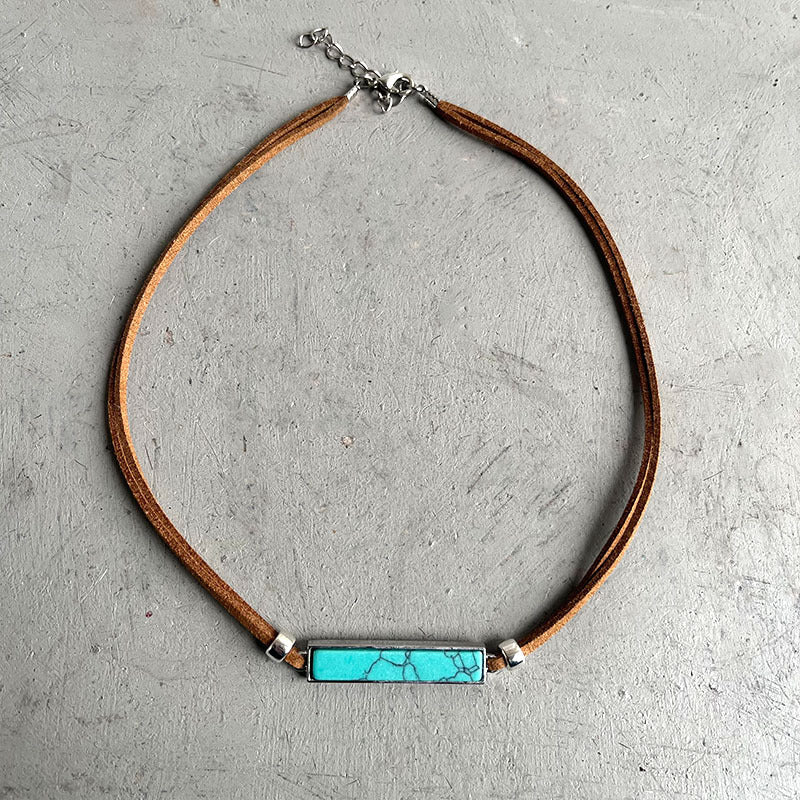
Turquoise Necklaces Through the Seasons: A Country Concert Look Edition
A country concert necklace does not move through the seasons by changing color alone. Summer changes heat, exposed skin, sunscreen, and the likelihood of a light neckline. Autumn adds collars and jacket hardware. Winter adds several layers, scarf contact, and repeated dressing and undressing. Spring can move from sun to rain and from an outdoor parking lot to a crowded indoor space in one event. The same necklace may look clear in every season yet behave differently against each fabric and layer.
This guide uses a seasonal friction ledger. For every outfit, record five contacts: skin, neckline, outer layer, bag or seat belt, and weather-related product. Then record five movements: walking, sitting, turning, using the phone, and removing the outer layer. A necklace earns a place in the concert outfit only when its exact length, pendant position, fastening, materials, care limits, and movement can be evaluated well enough for those contacts.
Quick Answer: Style the Contact Pattern, Not the Calendar
Begin with the actual neckline and outer layer. Decide where the pendant should rest, then verify whether the necklace has the length and adjustability to reach that position. Keep the pendant entirely on skin or entirely on fabric when possible; a pendant that repeatedly crosses a collar edge may flip, catch, or become visually restless. Use the necklace as the main upper-body focal point and let earrings, hat hardware, or a belt remain quieter.
Next, add the season's practical objects: sunscreen, scarf, high collar, rain layer, insulated jacket, bag strap, or hearing protection. Do not assume a product tolerates moisture, cosmetics, sweat, perfume, temperature swings, or repeated abrasion unless the care information says so. If a specification is missing, change the outfit contact rather than inventing durability.
Readers comparing turquoise-colored categories can consult the published complete western turquoise jewelry guide. The country concert jewelry guide adds venue, movement, and category comparisons.
Build a Seasonal Friction Ledger
Skin contact
Warm-weather outfits often expose more skin around the neck and chest. That can give a pendant clean negative space, but it also increases contact with sunscreen, perspiration, fragrance, and skin products. Cold-weather outfits may reduce skin contact while increasing friction against knitwear, brushed fabric, or layered collars. Neither condition is automatically safer. The correct care response depends on documented components and finish.
Record which surface the necklace touches for most of the event. If materials and care are unknown, avoid making claims such as tarnish-resistant, waterproof, sweat-safe, or suitable for sensitive skin. Ask the seller for a complete component and care statement. A style recommendation cannot solve a contact-material question.
Neckline contact
Necklines are moving boundaries. A crew neck rises and falls with posture. A button-front shirt changes shape when a button is opened. A dress neckline may move as the wearer sits. A scarf can push a chain outward. Photograph the necklace while standing and sitting, then turn the torso and raise the arms. The pendant should remain intentional rather than repeatedly landing on an edge.
Use a paper teardrop or cross cut to the confirmed pendant dimensions and a piece of cord cut to the confirmed necklace length. If measurements are not provided, do not scale the product image against a model or hand. Request the information before building the seasonal outfit around a guessed position.
Outer-layer contact
Jacket zippers, snaps, lapels, drawstrings, and textured linings can compete with or touch a pendant. Spring and autumn create the most frequent layer changes, but indoor winter venues can do the same. Rehearse opening, closing, putting on, and removing the exact layer. A necklace that works only while the jacket stays open may need a secure storage plan for travel.
Travel and venue contact
A seat belt, crossbody strap, lanyard, credential, or camera strap can cross the necklace path before the music begins. At the venue, the wearer may lean against a seat, hug friends, carry merchandise, or repeatedly reach into a bag. Include those actions in the ledger. If a pendant is trapped under a strap, move either the strap or necklace; do not rely on the pendant's unknown construction to withstand abrasion.
Collection Browsing: Compare Necklace Roles First
Open the Western Necklaces collection and sort candidates by role before styling by season. A small pendant, a broad statement pendant, a strand of beads, a multi-element necklace, and a layered set occupy different areas. A collection label helps shoppers find the family, but it does not prove that a blue-green element is natural turquoise or that a silver-colored surface is silver.
Create three columns: “rests on skin,” “rests on fabric,” and “requires exact length before decision.” Put every candidate in the third column until the length is documented. Then record pendant height, width, projection, total mass, chain or cord structure, fastening, extension, components, material identity, finish, construction, care, included quantity, and return terms.
A second useful classification is movement. A compact pendant may remain close to the body; a longer or articulated piece may swing. Photographs can suggest movement, but the exact drop, mass, and connection points determine how it behaves. Use the gallery to identify questions, not to answer invisible specifications.
Product Study One: Teardrop Pendant Necklace
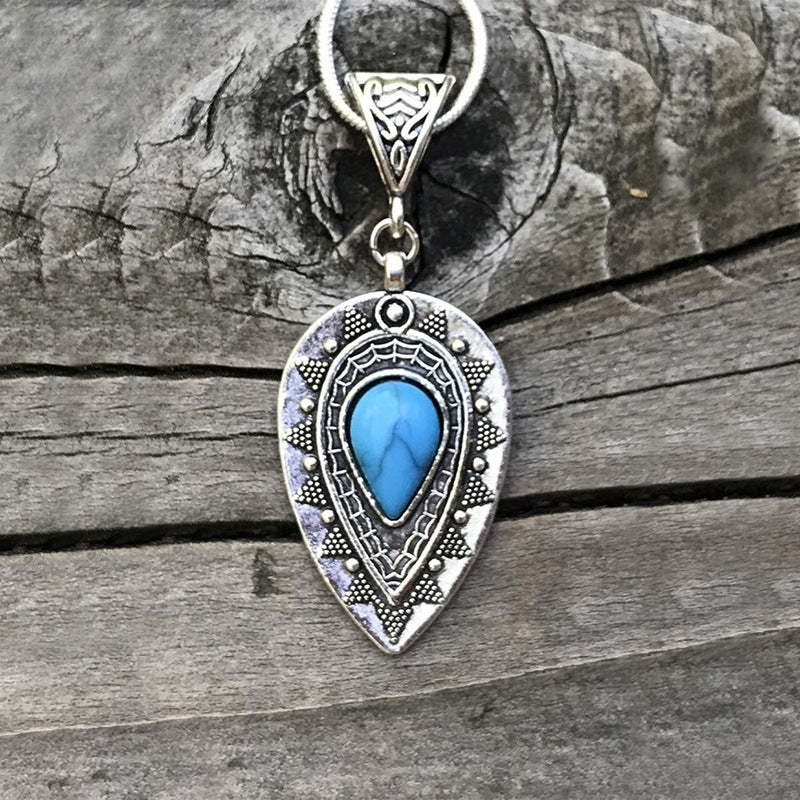
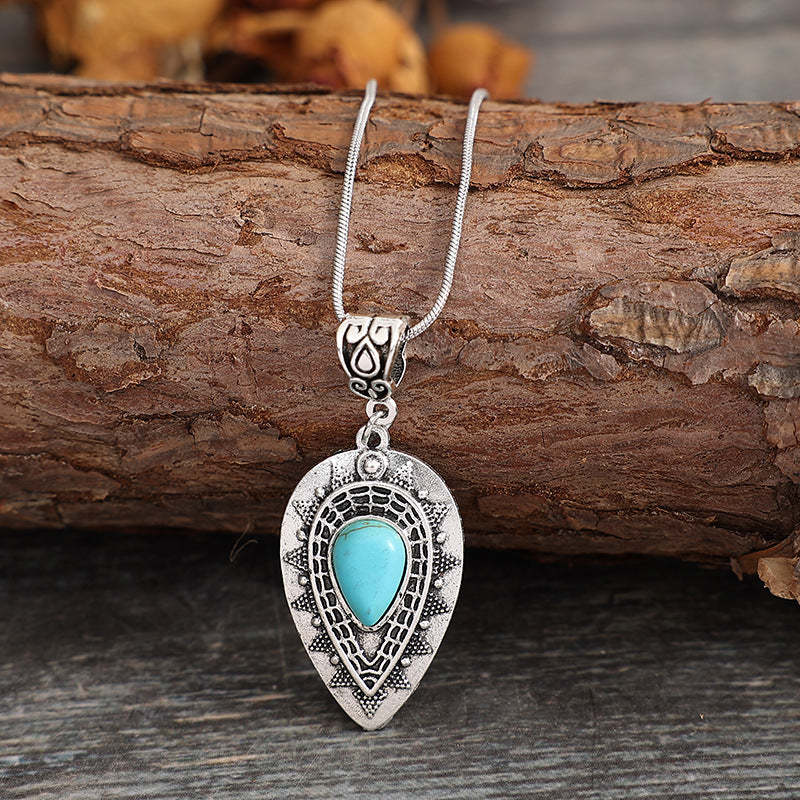
The Turquoise Western Teardrop Pendant Necklace page was reviewed on August 24, 2026. It displayed $39.99 USD, one visible color selection, and an eleven-image gallery. Current copy describes a turquoise-style center stone, teardrop silhouette, vintage-inspired detailing, and antique-silver color. Those phrases describe appearance. They do not establish natural turquoise, historical age, or silver metal.
The visible listing did not provide a complete necklace length, extension range, pendant measurements, total mass, fastening, full components, material identity, finish process, construction, or a sufficiently specific care protocol for seasonal contact decisions. The page suggests wearing it alone or layering it, but layering should wait until the exact length, pendant position, and chain interaction can be checked.
Seasonal styling role
In warm weather, give the teardrop a plain open neckline and keep sunscreen or fragrance away until care guidance is confirmed. In transitional weather, place it inside an open jacket frame while checking zipper and lapel contact. In cold weather, use it over a smooth, stable fabric only after length, mass, and finish care are known; coarse knits and scarves can change both appearance and friction.
Because the pendant already provides a recognizable shape and blue-green focal area, choose quieter earrings and hat decoration. Repeat the antique-silver color at the belt or hand only if the second detail remains subordinate. Do not layer another pendant at the same height merely to make the look feel seasonal.
Product Study Two: Geometric Cross Necklace
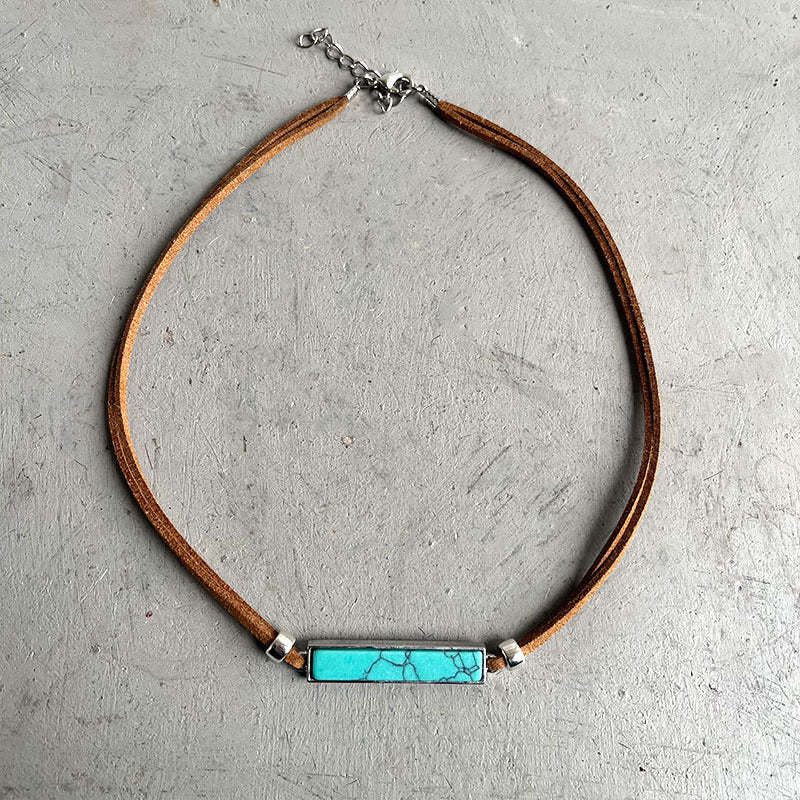
The Western Turquoise Vintage Geometric Cross Necklace page was checked on August 24, 2026. It showed $126.25 USD, three visible design choices labeled Design 1, Design 3, and Design 4, and a fifteen-image gallery. Record the selected Design label and its matching image because shape and visible detail may differ within the same product family.
The page uses western, turquoise, and vintage styling terms, but the visible information did not establish a natural gemstone, documented age, necklace length, extension, pendant dimensions, mass, fastening, full component list, metal, finish, construction, or care. A cross also carries potential religious, personal, or aesthetic meaning. The wearer should decide whether that symbol belongs in the concert outfit.
Seasonal styling role
A geometric cross needs a clear chest frame. In spring, use a plain shirt under a weather layer and retest after closing the jacket. In summer, keep the necklace isolated from another large upper-body symbol. In autumn, place it against a solid shirt or fine-textured layer rather than directly across embroidery. In winter, avoid assuming it will sit correctly over thick knitwear until the exact length and pendant mass are known.
When meaning is welcome, the cross can provide the outfit's single symbolic focus. Avoid repeating large crosses at the ears, buckle, and hat. A small distant color or metal-colored echo is enough. When meaning is uncertain, choose another necklace family rather than treating the symbol as a generic western accessory.
Four Seasonal Concert Formulas
Spring: adaptable open frame
Use a plain tee or shirt, light denim or utility jacket, jeans, and weather-ready boots. Position one pendant inside the open jacket frame. Test the jacket fully closed for travel and rain. Keep a small case available if the necklace must be removed. Do not claim water resistance or exposure tolerance without specific care evidence.
Summer: one cool visual zone
Choose a breathable solid top with a neckline that gives the pendant space. Keep the rest of the upper-body jewelry minimal. Apply personal-care products before dressing and avoid direct jewelry contact until the care instructions are known. Plan for heat and movement without describing any item as sweat-safe.
Autumn: texture under control
Combine a smooth base layer with an open denim, suede-look, or canvas outer layer. Let the necklace sit on the smoother surface. If the jacket and boots already carry visible texture, skip a second large pendant and reduce decorative hat hardware. The published western jewelry styling guide for denim, boots, and workwear provides more ways to coordinate texture without forcing a matched set.
Winter: verify before styling over fabric
Begin with the confirmed necklace length and a stable fine-knit or smooth high-neck layer. Check whether the pendant remains flat while sitting and moving. Add the outer coat only after the necklace passes the scarf, zipper, and lapel tests. If it disappears under the coat, let it be an indoor focal point rather than increasing scale without fit evidence.
What the “Turquoise Necklaces” Video Adds
John Hartman's video “Turquoise Necklaces” introduces multiple necklace categories, including bead necklaces and pendants. The useful seasonal takeaway is that “turquoise necklace” is not one silhouette. A strand distributes color around the neck, while a pendant concentrates attention at a single point. Those structures interact differently with collars, layers, and fabric.
The video discusses the examples shown by its presenter; it does not authenticate the two Oroxen listings in this guide. It cannot prove their stone identity, metal, age, origin, construction, chain length, fastening, treatment, or value. Use it to recognize category differences, then return to the current product page and direct seller documentation for exact facts.
Seasonal Mistakes and Better Alternatives
- Mistake: assigning fixed colors to seasons. Better: plan around fabric, neckline, contact, layer changes, and venue conditions.
- Mistake: guessing necklace length from a model. Better: request the measurement and reproduce it on the intended outfit.
- Mistake: allowing the pendant to straddle a collar edge. Better: move it entirely above or below the boundary.
- Mistake: assuming warm-weather exposure is harmless. Better: verify material and care before contact with moisture or personal-care products.
- Mistake: adding several symbolic objects. Better: let one cross or other recognizable motif lead.
- Mistake: reading turquoise and antique-silver color as materials. Better: use appearance language until documentation supports more.
- Mistake: testing only while standing. Better: sit, turn, layer, use the phone, and handle the bag.
Frequently Asked Questions
Can one turquoise-style necklace work all year?
Possibly, if its verified length, pendant position, materials, care, fastening, and comfort work with the changing contacts. Seasonal versatility is demonstrated by outfit tests, not guaranteed by a product title.
Should a pendant sit on skin or clothing?
Either can work. Choose the surface that keeps the pendant stable and avoids repeated edge crossing. Material and care guidance should govern skin, product, and fabric contact.
Can the two product examples be layered together?
Do not decide until both lengths, pendant dimensions, masses, fastening positions, and movement are known. Their two recognizable silhouettes may also compete. Start with one focal pendant.
Does “antique-silver color” mean silver?
No. It describes color. A silver material claim requires an explicit component statement or other reliable documentation for the exact option.
How should a cross necklace be styled respectfully?
Let the wearer define its meaning and decide whether it belongs in the outfit. Avoid assigning cultural, religious, historical, or artisan claims that the listing does not document.
What should be confirmed before ordering?
Confirm exact design, included quantity, full necklace and extension length, pendant height, width and projection, total mass, fastening, components, material identity, finish, construction, care, availability, delivery, and return conditions.
Final Seasonal Friction Checklist
- The necklace position is based on a confirmed length rather than an image estimate.
- Skin, neckline, outer layer, strap, and weather-related product contacts are recorded.
- Walking, sitting, turning, phone use, and outer-layer removal have been tested.
- Every turquoise, metal, vintage, origin, and care statement stays within documented evidence.
- The necklace owns the main upper-body focal point without competing symbolic objects.
- A storage case and layer-change plan are ready.
Conclusion: Let Conditions Change, Not the Evidence Standard
A turquoise-style necklace can move from spring concerts to winter venues when the wearer restages its contact pattern instead of relying on seasonal color rules. Verify the exact length and construction, choose a clean surface for the pendant, control nearby hardware and symbolism, and rehearse every layer change. The outfit may change with temperature; the evidence standard should not.
Explore additional necklace structures in the Western Jewelry collection or begin from the Oroxen homepage. Use the calendar to anticipate friction, the wardrobe to create space, and current product documentation to decide what can safely be claimed.