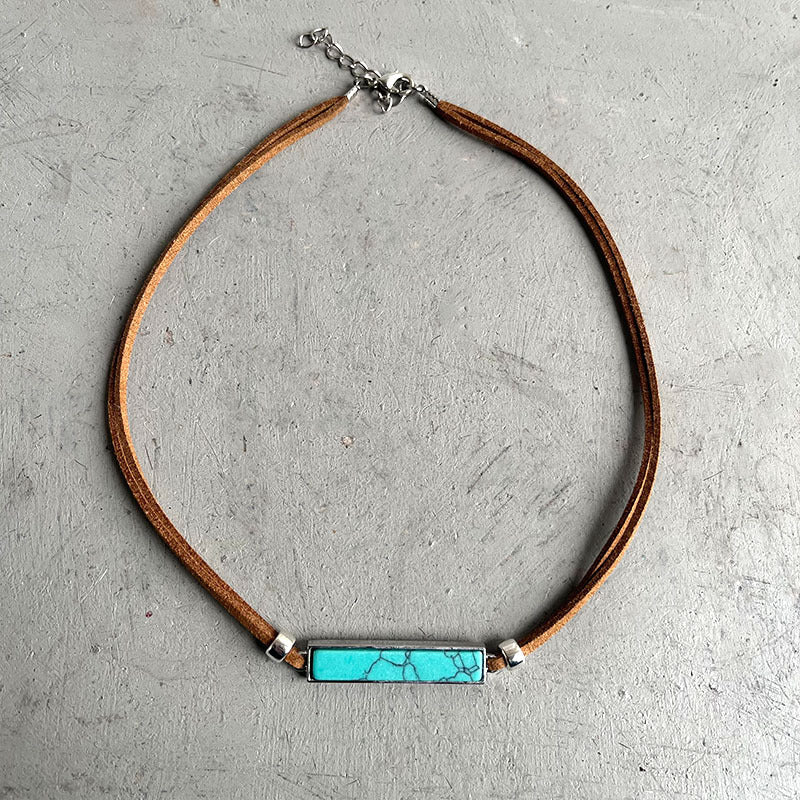
Turquoise Necklaces Gift Guide for Country-Music Fans
A necklace can look perfectly “country” in a product photograph and still be a poor gift for the person you have in mind. The useful question is not whether turquoise-colored jewelry belongs at a country concert. It is whether one specific necklace fits the recipient’s taste, neckline habits, comfort needs, meaning, and event deadline—and whether the facts needed to judge those points are actually available.
This guide uses a gift evidence envelope. Before ordering, place four short records in that envelope: a recipient permission file, an exact-option evidence card, an event deadline track, and an exchange-ready presentation plan. Together they turn an attractive idea into a gift that is personal without becoming a guess. Two current Oroxen necklace pages provide practical examples, while published guides and one independent video help define what still needs verification.
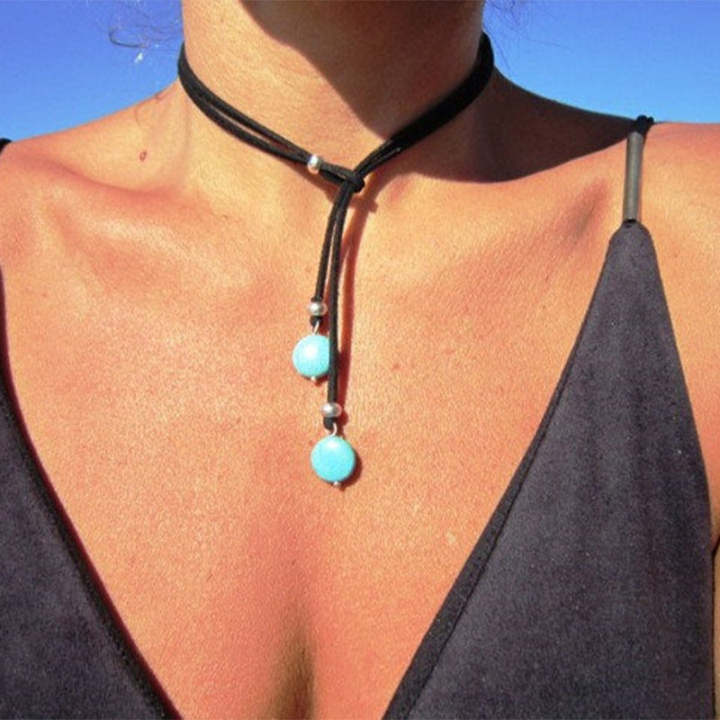
Quick Answer: Build the Gift Around the Recipient, Not the Genre Label
Start with evidence the recipient has already given you: necklaces they repeatedly wear, necklines they choose, motifs they welcome, hardware they can operate, and the country-music settings they actually attend. Decide whether the gift is meant for concerts, everyday denim, a birthday dinner, a festival trip, or a private keepsake moment. Then compare only exact options whose length, pendant dimensions, mass, closure, component materials, care, included contents, shipping time, and return terms can be confirmed before the purchase deadline.
If a cross, gemstone story, regional label, or spiritual claim would carry meaning, do not invent that meaning for the recipient. A product title or blue-green photograph can support a visual description; it cannot by itself prove natural turquoise, a mine, a culture, vintage age, metal identity, treatment, handmade production, or monetary value. A thoughtful gift separates visible style from documented fact.
Envelope Record One: Make a Recipient Permission File
The recipient permission file is a one-page portrait built from observation rather than interrogation. It prevents the common mistake of giving someone a costume version of a music fan. Country music includes many visual worlds: stripped-back songwriter rooms, dance halls, arenas, festivals, rodeos, western formal events, and casual listening at home. A person may love the music while preferring minimal jewelry. Another may collect bold motifs and want the necklace to announce itself from across a venue.
Record repeated behavior
Look at several ordinary outfits, not one special photograph. Does the recipient wear pendants above a crew neck, inside an open collar, or over a solid dress? Do they layer chains or choose one visible center? Are their necklaces short and quiet, or long enough to sit below a jacket opening? Do they remove jewelry during travel, dancing, work, or outdoor activities? Repetition is more reliable than a single themed outfit.
Write only what you can support. “Often wears a compact pendant with open collars” is useful. “Would love a large western necklace” is an assumption until the recipient’s behavior supports it. If you need more information, ask a neutral question—“Do you prefer necklaces above or below the neckline?”—or enlist a trusted person who already knows the answer.
Map the neckline zone
Sketch three garments the recipient actually owns. Mark the upper edge of each neckline, the center opening of a shirt or jacket, and the height at which a pendant would disappear. The necklace needs a verified wearing length and a measured pendant drop before it can be placed on that map. Do not infer those measurements from a model crop or an isolated product image.
Country-concert outfits often add a denim or leather layer after the necklace has been chosen. Include the jacket in the map. A pendant can sit beautifully over a tee yet become trapped under a lapel, hidden by a snap placket, or repeatedly struck by a zipper. If the gift is meant for a specific concert look, test the likely garment stack rather than evaluating a bare neckline.
Create a motif permission line
List motifs the recipient already chooses and motifs you should not assign. Cross imagery may express faith for one person, function as fashion language for another, or be unwelcome. The correct interpretation belongs to the recipient. The same restraint applies to claims about Native American, Southwestern, tribal, ranch, or spiritual identity. Use only meanings documented by the maker or seller and welcomed by the person receiving the gift.
The published guide explaining what western jewelry is and how to read its motifs is a useful companion here. It helps distinguish a visible design cue from a story that the listing has not established.
Note comfort and access needs
Record any known sensitivity, weight preference, closure difficulty, mobility need, or skin-contact concern. “Usually wears jewelry all day” does not prove that every chain, coating, edge, or mass will be comfortable. If the recipient has a known material sensitivity, a complete component disclosure is essential; color labels such as silver-tone or turquoise do not identify composition.
Envelope Record Two: Complete an Exact-Option Evidence Card
The evidence card freezes the exact item you are evaluating. Write the full product title, URL, review date, selected option label, current displayed price, and the gallery image that corresponds to that option. Beneath that, create blank fields for wearing length, adjustment range, pendant height and width, total drop, mass, closure, chain material, pendant material, decorative-material identity and treatment, finish or coating, construction, edge profile, care, and box contents.
A blank is not a defect and should not be filled with a guess. It is a question for the seller. Keep screenshots or dated notes because option names, prices, photographs, availability, and policies can change between planning and checkout. Recheck the live page immediately before purchase.
Example A: a cross-led visual direction
The Turquoise Boho Vintage Cross Necklace page was reviewed on August 24, 2026. It displayed $91.91 USD, one visible Color choice, and eight gallery positions. No Size choice was visible. The title and photographs support a turquoise-colored, boho, vintage-inspired, cross-led visual description.
The visible page did not establish an exact wearing length, adjustment range, pendant dimensions, mass, closure, component materials, turquoise identity or treatment, metal or coating, construction, or care instructions. Those fields therefore remain open on the evidence card. Do not use the single visible Color choice as evidence that fit is universal; color and length answer different questions.
This option may belong on a shortlist when the recipient permission file explicitly welcomes cross imagery and a visually prominent center. It should not advance to checkout merely because the motif seems appropriate for country music. Meaning, physical scale, skin-contact materials, and delivery timing still require their own evidence.
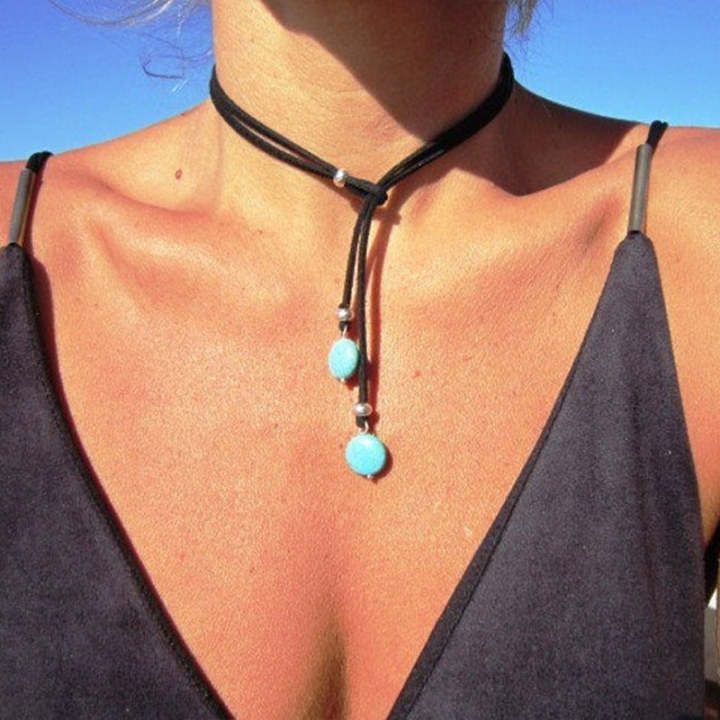
Example B: a geometric alternative
The Turquoise Boho Vintage Geometric Necklace page was reviewed on the same date. It displayed $101.00 USD, two visible Color choices, and thirteen gallery positions. No Size selection was visible. Its current presentation supports discussion of a turquoise-colored, boho, vintage-inspired, geometric direction.
Each Color choice must be treated as its own purchase candidate. Select one choice, confirm that the main image and thumbnails update as expected, and record the exact label. Do not combine the appearance of one option with the cart selection of another. As with the first example, the reviewed page did not provide the fit, mass, closure, component-material, treatment, construction, and care facts required to complete the evidence card.
This can be a more neutral shortlist direction when a cross is not supported by the motif permission line. “Geometric” still describes an appearance, not a guaranteed level of formality or a documented cultural source. Compare the exact silhouette with the recipient’s usual necklines and other jewelry instead of assuming that fewer symbolic cues make it automatically safer.
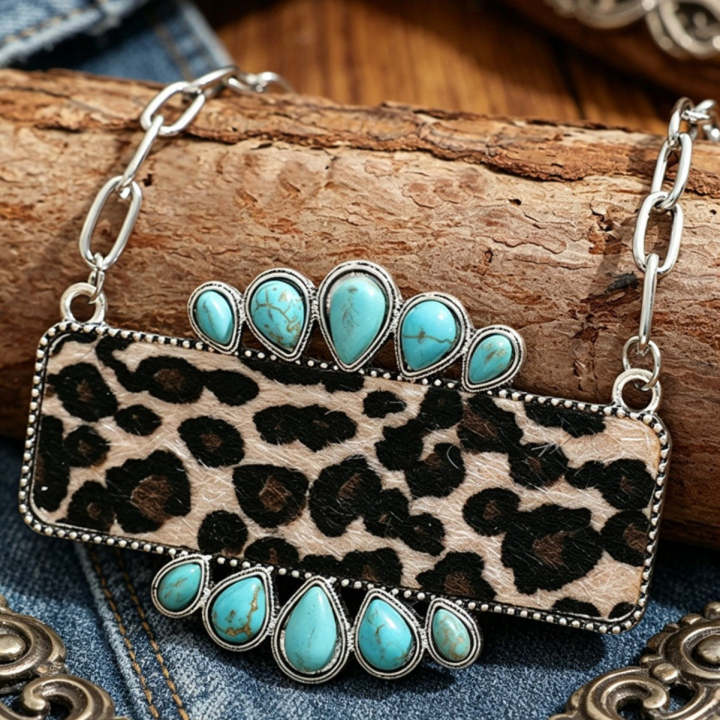
Use a Three-Gate Shortlist Instead of a Beauty Contest
A conventional gift list ranks items by appearance. A better shortlist sends every option through three gates. Gate one is permission: does the recipient’s real behavior support the motif, scale, color, and intended meaning? Gate two is evidence: can you verify fit, materials, handling, and the exact selectable option? Gate three is timing: can the item arrive, be inspected, and be exchanged without compromising the event?
An item that fails a gate is not necessarily bad jewelry. It is simply not ready to be this gift. Keep the decision reversible until every gate is passed. This approach is especially valuable when the recipient cannot be asked directly without spoiling the surprise.
Score permission with observations
Give one point for each supported signal: the recipient wears necklaces in the intended scale; chooses blue-green accents; welcomes the exact motif; uses compatible necklines; and has worn similar visual weight for the intended duration. Do not award points for what a generic country fan is expected to like. A lower score means the gift should become subtler, more adjustable, or easier to exchange.
Score evidence by completed fields
Count the evidence-card blanks. Critical blanks include wearable length, pendant size, mass, closure, every skin-contact material, decorative-material identity, care, and exact option. A product can look compelling while producing a weak evidence score. Request missing facts before ordering rather than writing optimistic answers into the card.
Score timing in calendar days
Work backward from the giving date. Reserve time for payment processing, dispatch, transit, one possible delay, inspection, clarification, and an exchange or backup. A concert date creates a hard boundary. If the verified schedule leaves no recovery window, the necklace can remain a future gift while a locally available or already owned accessory fills the immediate need.
Envelope Record Three: Build the Event Deadline Track
Write the event date at the far right of a simple line. Moving left, add the last safe day for an exchange, the recipient try-on or inspection day, the expected delivery range, the dispatch range, and the order deadline. Read current shipping and return terms on the live site instead of borrowing them from an older note or a different product page.
Decide what “arrived” means. A parcel at the door is not the same as a gift ready to give. You may need time to compare the delivered option with the order record, check that movable parts operate, inspect surfaces under neutral light, confirm included contents, and prepare a receipt that preserves exchange options.
Keep a backup branch. It might be a printed gift note explaining that the recipient will choose the final necklace, a planned visit to select together, or a different small item with verified availability. A backup protects the celebration without pressuring you to accept an undocumented or late selection.
Envelope Record Four: Make Presentation Exchange-Ready
A surprise can still preserve agency. Package the necklace so the recipient can view it without removing tags or protective elements that affect returns. Include a warm message that focuses on the person and occasion, not an unverified gemstone or cultural story. Keep the order confirmation, exact option label, care information, and return deadline accessible.
Try language such as: “I chose this because the color reminded me of the concert outfits you enjoy. If the length, motif, or feel is not right, I would love to choose another with you.” That sentence communicates attention without turning exchange into rejection. It also gives the recipient permission to prioritize comfort and identity over the giver’s first choice.
If the recipient accepts the gift, make a tiny wardrobe card together: two favorite necklines, one everyday combination, one event outfit, and a safe storage place. For broader styling context, the published country-concert jewelry guide shows how necklaces can share space with earrings, bracelets, rings, clothing, and venue realities.
How to Use the Corresponding Video Responsibly
The independent video Buying Turquoise by Turquoise in America presents turquoise buying as a process with different buying routes and decisions. Its useful role in this gift guide is to slow the buyer down and encourage questions about what is being offered. It is not evidence about either Oroxen necklace, and it cannot fill any blank on their product evidence cards.
After watching, translate general education into questions rather than product claims: What exactly is the decorative material? Is it natural, treated, reconstructed, dyed, simulated, or simply turquoise-colored? Who supplies the answer, and where is it recorded for the exact option? What part of the price reflects documented material, construction, design, or service? If a seller does not establish a fact, keep the wording visual and neutral.
The complete western turquoise jewelry guide expands that evidence boundary across necklaces, earrings, bracelets, and rings. Use it to organize questions, not to transfer facts from one product to another.
Five Gift Scenarios and the Best Decision Route
Scenario 1: the arena-concert fan who wears one bold pendant
Prioritize verified scale, contrast, and clearance under the planned jacket. The cross-led example may be visually relevant only if cross imagery already appears in the recipient permission file. Ask for pendant dimensions and mass before comparing it with what the recipient normally tolerates. Keep earrings quiet so the gift can occupy the intended visual role.
Scenario 2: the songwriter-room fan with a minimal wardrobe
Use the geometric example as a visual starting point, then test whether its actual size and finish fit the recipient’s repeated choices. A genre label should not pull the gift toward greater ornament than the person wears. An understated presentation and easy exchange route may be more valuable than additional motifs.
Scenario 3: a long-distance birthday before a festival
The deadline track becomes the leading record. Verify the destination, shipping range, inspection opportunity, and exchange method without transmitting the recipient’s private details unnecessarily. If timing is tight, give the selection experience instead of gambling on an undocumented fit.
Scenario 4: the recipient has known sensitivities
Do not purchase while skin-contact components or coatings remain unknown. A photograph cannot answer a sensitivity question. Request a complete material statement for the selected option and let the recipient decide whether it is adequate. The safest surprise may be a gift card or shared shopping appointment.
Scenario 5: you are unsure about symbolic meaning
Choose no symbol on the recipient’s behalf. A geometric direction can reduce that particular uncertainty, but it still needs evidence for fit and materials. Alternatively, show two carefully documented options and let the recipient choose. Participation can make a jewelry gift more personal, not less.
A Twelve-Minute Final Audit Before Checkout
- Minute 1: read the full title and confirm the live URL.
- Minute 2: select the exact visible Color or other option.
- Minute 3: match that selection to the main image and thumbnails.
- Minute 4: enter verified wearable length and adjustment range.
- Minute 5: enter pendant dimensions, total drop, and mass.
- Minute 6: record closure type and whether the recipient can operate it.
- Minute 7: record every component and skin-contact material.
- Minute 8: separate decorative-material facts from turquoise-colored appearance.
- Minute 9: compare the motif with the recipient permission line.
- Minute 10: verify current shipping, return, and exchange terms.
- Minute 11: check the deadline track and backup branch.
- Minute 12: save a dated copy of the exact option record.
If a critical box remains blank, pause. The purpose of the audit is not to justify a favorite photograph. It is to expose uncertainty while the decision is still reversible.
Where to Browse Without Creating a Random Shortlist
Use the western necklaces collection when the recipient permission file supports a necklace-centered western direction. Use the jewelry gifts for her collection to compare more gift-oriented alternatives. Collection pages are discovery tools; every candidate still needs its own exact-option evidence card.
The Oroxen homepage can help you return to current navigation and store information. Do not assume a collection tile, homepage image, or another article contains the live facts for a selected product. Open and recheck the actual listing before any final decision.
Frequently Asked Questions
Is a turquoise-colored necklace automatically a good country-music gift?
No. Color can suit an outfit while the length, motif, weight, closure, material, or meaning does not suit the recipient. Start with observed preferences and require a complete evidence card.
Can I estimate necklace length from the model or product photograph?
No. Image scale, crop, styling, and body proportions can mislead. Request the wearable length, adjustment range, pendant dimensions, and total drop for the exact option.
Does the word turquoise prove a natural gemstone?
No. Treat turquoise wording as product or color language unless the listing or seller documents material identity, treatment, and any origin claim for the selected item.
Should a country-music fan receive a cross necklace?
Only when the recipient has welcomed that imagery. Music preference does not grant permission to assign religious or symbolic meaning.
What if I cannot get all the missing facts?
Keep the option off the checkout list, choose a better-documented alternative, or make the final selection collaborative. Missing evidence is a reason to preserve flexibility.
How do I make an exchange feel considerate?
Present it as part of the gift from the beginning. Keep documentation and packaging intact, state the deadline, and tell the recipient that comfort and personal meaning matter more than keeping the first selection.
Final Gift-Envelope Checklist
- The recipient permission file reflects repeated behavior, not a country-fan stereotype.
- The exact option, image, price, and review date are recorded.
- Length, adjustment, pendant size, mass, closure, materials, treatment, construction, and care are documented.
- Cross or other motif meaning is welcomed rather than assigned.
- The necklace has been mapped against real necklines and outerwear.
- The event deadline includes inspection, delay, and exchange time.
- The presentation keeps tags, documents, and recipient choice intact.
- Video education has produced questions, not borrowed claims.
A strong turquoise-necklace gift is not the one with the loudest country styling. It is the one whose visual direction is genuinely recognized by the recipient, whose important facts are written down, whose timing is recoverable, and whose presentation leaves room for an honest yes or a comfortable exchange. Build that evidence envelope first; let the final necklace earn its place inside.