A white shirt and jeans look simple, but simplicity makes every turquoise-style jewelry decision easier to see. The wrong necklace drop collides with the placket. Too many motifs turn a useful uniform into a costume. Matching every blue-green detail removes hierarchy. The solution is not less personality; it is clearer placement, verified product facts, and one visual leader.
This mistake-and-repair guide uses the Western Turquoise Vintage Floral Leather Necklace and the Western Turquoise Vintage Geometric Cross Necklace. Product names describe visible Western, turquoise-colored, floral, geometric, cross, leather-looking, and vintage-inspired directions. They do not independently verify natural turquoise, leather, metal, age, treatment, maker, origin, artisan production, or cultural affiliation.
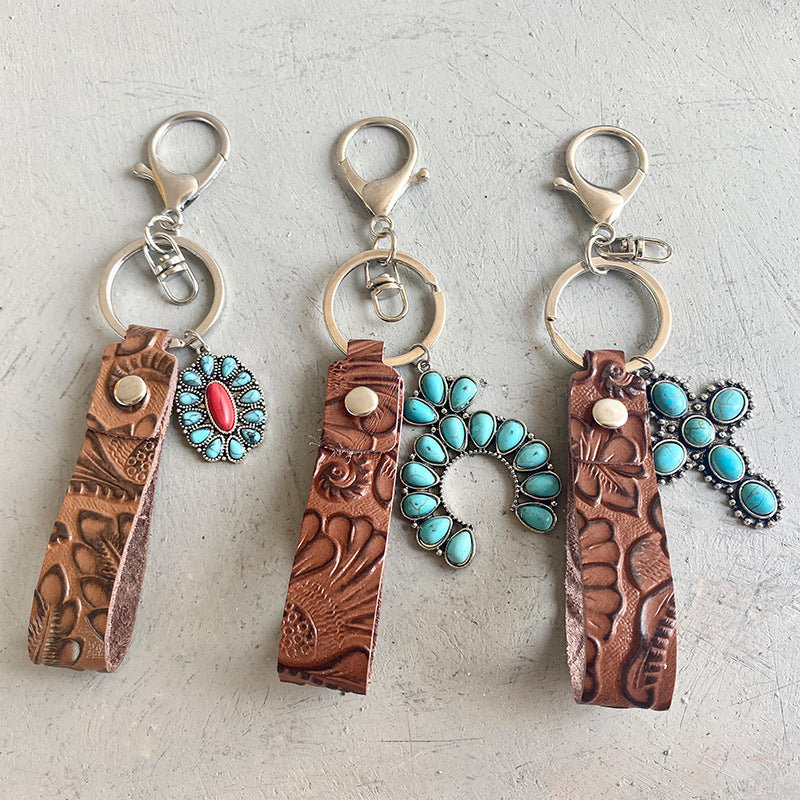
Quick Answer: Fix the Outfit in a Controlled Order
Put on the exact shirt and jeans without accessories. Choose the neckline as the lead zone. Confirm the necklace option, total wearable length, adjustment range, pendant or decorative dimensions, weight, clasp, complete components, construction, and care. Make a full-scale string-and-paper mock-up, add one product, and photograph the result at portrait and full-body distance.
Next, test sitting, walking, bending, outerwear, phone use, bag use, and seat-belt fastening. Only after the necklace remains clear and comfortable should another accessory enter. Change one variable per test so the source of an improvement is visible.
The public Western jewelry outfit guide for denim, dresses, boots, and workwear provides a broader wardrobe framework. This article diagnoses the mistakes specific to the divided white-shirt-and-jeans field.
Mistake One: Treating “White Shirt” as One Neckline
A crisp Oxford, camp shirt, fitted knit, linen blouse, Western yoke shirt, and oversized poplin button-down create different necklace corridors. Collar height, top-button position, placket width, pocket placement, fabric stiffness, and sleeve volume change the available space.
Better alternative: photograph the exact shirt and mark the collar edges, open area, placket, pockets, and belt line. Measure the desired necklace zone on the wearer. Do not buy for a generic mannequin outfit.
Mistake Two: Estimating Necklace Drop from a Cropped Photograph
A product crop can communicate design but cannot guarantee scale on a particular body. Even a labeled chain length does not reveal pendant height, complete drop, adjustment, or how a wide decorative section will sit.
Better alternative: request total wearable length, adjustment range, decorative width, full pendant dimensions, profile, and weight. Re-create the outline with string and paper. The mock-up does not simulate weight or material, but it can expose collision with a collar, button, zipper, pocket, or belt.
Mistake Three: Letting Color Prove Material
Turquoise color, a product title, Western styling, or matrix-like visual detail does not establish natural turquoise. “Leather” in a title should also be confirmed with option-specific component disclosure before the article or shopper treats it as a material fact.
Better alternative: separate appearance from evidence. Use turquoise-colored, leather-looking, silver-colored, and vintage-inspired language when that is all the record supports. Ask what every component, finish, setting, cord, strap, chain, clasp, and decorative element actually is.
Mistake Four: Matching the Jewelry to the Jeans Too Literally
Trying to match a blue-green accent to a denim wash often creates unnecessary shopping and still fails because screens, lighting, finishes, and physical fabric vary. It can also distribute the same color across necklace, earrings, ring, belt, bag, and boots until nothing leads.
Better alternative: let the white shirt provide negative space and the necklace supply the main colored interruption. Judge the complete outfit in daylight, indoor light, portrait photos, and full-body photos. A little color separation can improve clarity.
Mistake Five: Combining Every Western Signal
A necklace, turquoise-colored earrings, cross ring, engraved cuff, large buckle, boots, hat, fringe, and embroidered shirt may compete rather than cooperate. More symbols do not automatically make the outfit more authentic or personal.
Better alternative: set three dials—motif, texture, and color. Raise one dial fully and keep the other two lower. Browse the Turquoise Jewelry collection by zone, then choose one necklace as leader before considering support.
Product Example One: Floral Leather-Looking Necklace
The current Western Turquoise Vintage Floral Leather Necklace page displayed $141.40 USD and five options labeled Design 1 through Design 5 during review. Its visible summary emphasizes Western, turquoise, and vintage-inspired styling and asks shoppers to review the selected option because screen color can vary.
The visible summary did not clearly state exact image-to-design mapping in text, total length, adjustment range, decorative dimensions, profile, weight, clasp, complete components, leather identity, finish, construction, or care. These fields must be confirmed separately for the selected design.
Best repair formula: use a smooth white shirt with an opening that clears the verified decorative area, dark uncomplicated jeans, and no other strong necklace or belt motif. Run a strap-and-placket contact test. If a leather component matters to the decision, obtain explicit confirmation rather than relying on the title.
Mistake Six: Ignoring Symbol Consent
A floral form, cross, religious symbol, animal motif, or other recognizable element may carry personal meaning. It should not be added merely because a “Western look” is expected, especially for a gift or a workplace outfit.
Better alternative: name the symbol in the buying note and confirm that the wearer wants it in the intended setting. Avoid unsupported sacred, tribal, Native American, Indigenous, regional, mine-specific, or artisan claims.
Product Example Two: Geometric Cross Necklace
The current Western Turquoise Vintage Geometric Cross Necklace page displayed $126.25 USD and choices labeled Design 1, Design 3, and Design 4 during review. The visible summary emphasizes Western, turquoise, and vintage-inspired styling and warns that screen color can vary.
The visible summary did not clearly provide text mapping for each design, total wearable length, adjustment, cross dimensions, weight, clasp, complete components, finish, construction, or option-specific care. The missing Design 2 label should not be interpreted without clarification.
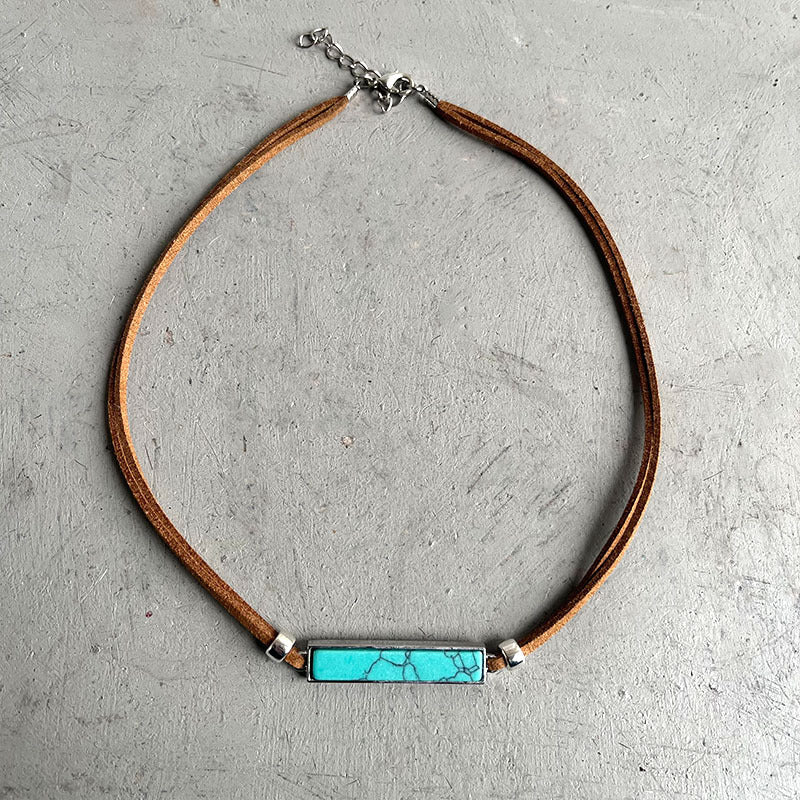
Best repair formula: select the design intentionally, place its confirmed drop in a clear open-collar or smooth-shirt corridor, omit a second cross or turquoise-colored necklace, and keep earrings restrained. Test bag, jacket, seat belt, and movement before approving it for daily wear.
Mistake Seven: Comparing the Two Necklaces on Different Standards
A shopper may choose the floral option for texture and the cross option for symbolism without comparing size, weight, clasp, care, and contact. That is not a fair product comparison.
Better alternative: use one table with identical fields: exact design, contents, length, adjustment, decorative size, profile, weight, clasp, components, finish, construction, care, symbolism, wardrobe reach, shipping, and return deadline. Mark fields confirmed, unresolved, or conflict.
Mistake Eight: Ignoring the Shirt-to-Bag Route
A necklace can sit correctly in a still mirror and collide with a crossbody strap, tote handle, lapel, zipper, lanyard, badge, or seat belt. Repeated hard contact can affect comfort and surfaces.
Better alternative: draw the route of every strap and layer on the outfit photograph. Put on and remove the complete outfit repeatedly. Reject any formula that requires constant necklace repositioning.
Mistake Nine: Treating an External Video as Product Evidence
The supplemental video is Turquoise in Rings by Turquoise in America. At review, YouTube showed an approximately 30-second video with no closed captions. Its visible description discusses turquoise set in handmade American Indian jewelry from the Southwest.
The source discusses rings, not these Oroxen necklaces, and does not document their materials, makers, origins, cultural affiliations, or construction. Its examples cannot be transferred to unrelated products. Use the video as contextual viewing only and verify its broad claims with authoritative sources before reuse.
Better alternative: cite the source accurately, state its limits, and keep every product claim anchored to option-specific evidence. Never imply a cultural or artisan provenance based on visual similarity.
Mistake Ten: Skipping the Repeat Test
A necklace may work for one photograph yet fail after lunch, a commute, or outerwear. Immediate excitement can hide problems with contact, symbolism, care, or adjustment.
Better alternative: after delivery and only within current return conditions, run three controlled wears. Keep the shirt, jeans, and necklace unchanged. Score security, contact, comfort, visual hierarchy, care burden, and desire to repeat. Change one variable only after a successful baseline.
A Seven-Minute Pre-Exit Audit
- Confirm the correct necklace and option.
- Check the clasp and connections without force.
- Place the necklace in its intended collar corridor.
- Turn, sit, bend, and use the phone.
- Add the jacket, bag, badge, and seat-belt path.
- View portrait and full-body hierarchy.
- Remove any accessory that competes or contacts.
The audit should reduce decisions, not encourage last-minute additions. The public guide to statement versus everyday turquoise styling helps choose the intended intensity before the audit begins.
Mistake Eleven: Approving Only the Front View
A necklace lives in three dimensions. From the front, the decorative area may appear centered; from the side, it may project into a lapel or curl away from the shirt; from the back, the clasp or adjustment may sit incorrectly. The necklace can also migrate after several minutes of walking even when the first photograph looks balanced.
Better alternative: build a four-view review. Take front, left profile, right profile, and back photographs before movement. Walk for five minutes, sit, stand, reach, and repeat the four views. Mark any rotation, collar contact, off-center movement, or clasp travel. Do not fix migration by tightening, bending, pinning, or altering an undocumented product.
Add a conversational-distance video that shows ordinary movement without posing. Review it silently first so attention stays on the visual hierarchy. Then review for sound only if moving parts may contact the shirt or each other. Stop the test when contact risks damage, discomfort, or entanglement.
Mistake Twelve: Forgetting the Outfit's Transition Moments
Most styling photographs capture the middle of an outfit, not the transitions that cause problems. The wearer still has to pull the shirt on, button the collar, add a jacket, lift a bag, enter a car, remove outerwear, use a restroom, change shoes, and store the necklace at the end of the day.
Better alternative: rehearse the complete sequence with a verified full-scale mock-up before purchase and with the actual necklace only within current care and return rules. Write each transition as a verb: dress, fasten, layer, carry, sit, travel, remove, and store. A necklace passes only when its position remains practical through the verbs required by the intended occasion.
If the piece is removed during the day, assign a safe parking place in advance. A clean compatible pouch or separate protected compartment is better than a loose pocket, sink edge, desk surface, or bag bottom. Follow option-specific storage guidance once components and construction are known.
The public cowgirl jewelry guide for earrings and necklaces can help keep face and neckline zones separate while planning these transitions. Use the zone logic without assuming that every Western-inspired outfit needs multiple accessories.
Make a One-Page Outfit Control Record
Create a dated sheet with the shirt, jeans, shoes, layer, bag, necklace option, verified length, decorative dimensions, and planned occasion. Add three boxes labeled visual role, contact risks, and unresolved product facts. This record makes later changes deliberate.
After each wear, note only observable results: necklace reached top button, strap crossed pendant, clasp migrated, color led clearly, motif competed with belt, or outfit was repeated willingly. Avoid turning one wearer's experience into universal fit or durability claims.
Keep successful records and failed records. A failed combination can prevent a future purchase that recreates the same collar or strap conflict. After three months, count which formulas were actually repeated. Wardrobe value is demonstrated by voluntary use, not by the number of accessories that can be added to a photograph.
Frequently Asked Questions
Should a turquoise-style necklace sit over or inside a white shirt?
Either can work when verified length and decorative dimensions fit the exact collar, placket, fabric, body, and movement. Test both with a full-scale mock-up.
Can two turquoise-colored necklaces be layered?
Only after each is documented and their lengths, weights, clasps, components, care, and contact paths are compatible. One leader is easier for a first formula.
Do the jeans need to be blue?
No. Black, gray, white, or other denim can work. Judge contrast and hierarchy with the exact garment rather than following a universal match rule.
Is a vintage necklace necessarily old?
No. Vintage may describe appearance. Use vintage-inspired unless age and provenance are documented.
How should a cross necklace be styled?
Choose it intentionally, let it be the primary motif, and keep surrounding jewelry quieter unless a controlled comparison supports more.
What if exact product measurements are unavailable?
Treat placement as unresolved and ask the seller. Do not estimate from photographs. Consider another product when the missing information blocks a safe, practical decision.
Final Mistake-Proof Checklist
- Map the exact shirt, jeans, collar, placket, pockets, and belt line.
- Choose one necklace and one leading motif.
- Confirm option mapping, length, adjustment, decorative size, weight, clasp, components, construction, and care.
- Use turquoise-colored, leather-looking, and vintage-inspired when stronger facts are absent.
- Make a full-scale mock-up and test all straps and layers.
- Compare products on equal fields.
- Keep cultural and origin claims evidence-based.
- Repeat the successful outfit before adding another accessory.
Explore current options in Western Jewelry or return to Oroxen for current product and store information. The best white-shirt-and-jeans result does not advertise every possible Western cue. It gives one documented necklace the correct space, scale, meaning, and daily operating room.