A first jewelry purchase becomes easier when the buyer stops asking whether a piece is “good” and starts asking what evidence supports a specific wearing decision. A product title can suggest a Western, turquoise-colored, vintage-inspired, or cross-motif style. It cannot, by itself, prove material, age, origin, size, comfort, or long-term care needs.
This practical guide uses an evidence ladder to compare two current Oroxen examples: Western Turquoise Vintage Cross Jewelry for Women and Turquoise Statement Cross Earrings. The goal is not to declare a universal winner. It is to show how a first-time Western jewelry buyer can move from visible style to verified facts, then from facts to a comfortable wardrobe role.
The Five-Level Evidence Ladder
- Visible: shape, relative scale, apparent color, motif, and photographed option.
- Listed: selector labels, price at the time viewed, availability, and seller descriptions.
- Confirmed: dimensions, weight, closure, materials, construction, and care supplied for the selected option.
- Tested: comfort, movement, clothing contact, and ease of use observed by the wearer.
- Qualified: identification, valuation, repair, or other conclusions provided by an appropriate independent professional when the stakes justify it.
Do not skip from level one to level five. A photograph is not an authentication report, and a style word is not a laboratory result. At the same time, not every fashion purchase requires a gemological investigation. Match the level of evidence to the claim, price, purpose, and buyer’s priorities.
For broader terminology, read What Is Western Jewelry? Motifs, Styles, Materials & How to Choose.
Decision 1: Neck Zone or Face Zone?
The first example appears to be a necklace-style item with 90 cm and 52 cm selectors. It occupies the chest and neckline zone. The statement earrings occupy the face zone. Choosing between them should begin with the wearer’s real wardrobe rather than a general preference for necklaces or earrings.
Photograph five common tops or dresses. Note neckline height, collars, prints, scarves, hair length, glasses, headphones, and hats. If the chest area is usually clear, a necklace may have several assignments. If necklines change constantly but the face zone remains visible, earrings may be more adaptable. If both areas are busy, the best first purchase may be a quieter category.
Decision 2: What Does the Measurement Actually Describe?
The Western Turquoise Vintage Cross Jewelry for Women page currently shows 90 cm and 52 cm under a selector labeled Size. Do not assume that each number is total wearable length, chain length, doubled length, or a measurement of every component. Ask the seller what the number measures and whether it changes design, quantity, or arrangement.
Request total wearable length, shortest and longest configuration if adjustable, focal height and width, closure, weight, materials, and care. Use soft string cut to the confirmed wearable length against the intended neckline. Check where the focal area falls when standing, sitting, adding a jacket, and carrying a bag.
A long necklace can create a strong vertical line but may meet belts, buttons, desks, or bag straps. A shorter option can frame the neckline yet interact with collars and hair. The useful length is the one verified against the wearer’s body and clothing.
Decision 3: What Makes Statement Earrings Wearable?
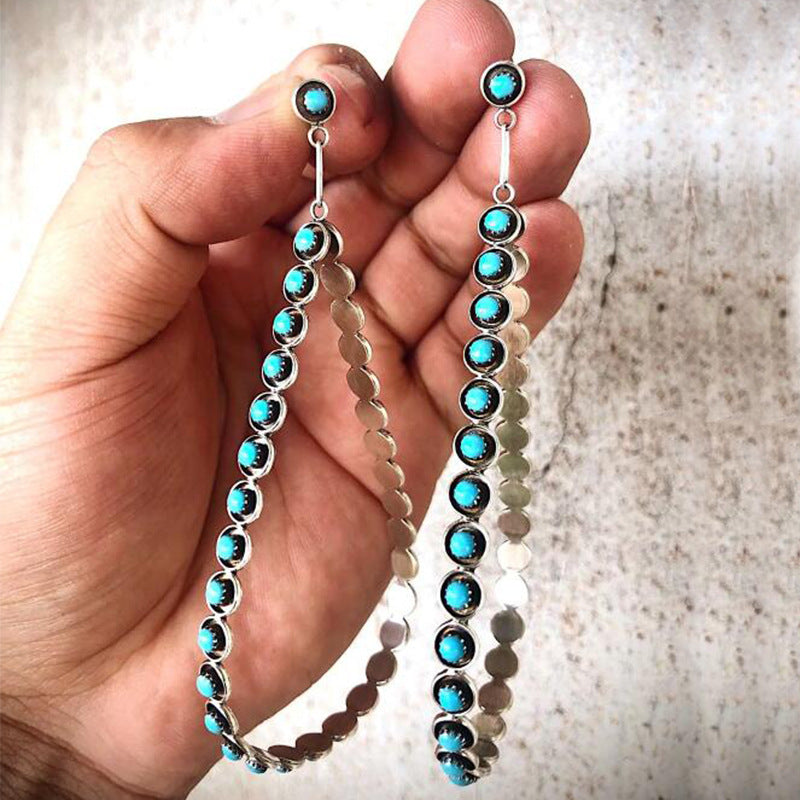
The Turquoise Statement Cross Earrings page currently shows a Color selector, while the visible page reviewed for this draft did not provide exact dimensions, single-earring weight, post or hook type, backing, materials, or care instructions. Those facts matter more than the word “statement.”
Request front height and width, projection, weight per earring, closure, post or hook material, decorative materials, and option-specific care. Confirm what is included and whether the selected image matches the chosen color. For pierced ears, obtain information relevant to sensitivity from the seller or manufacturer rather than relying on finish color.
Test a similarly sized known earring, if available, with the wearer’s hair, glasses, hat, phone, and common collars. Do not hang a substitute object from the ear. The purpose is to understand scale and interactions safely, not imitate unknown weight.
Decision 4: Is “Turquoise” a Color, a Material Claim, or Both?
A title containing “turquoise” can refer to color, style, or a described material. The correct interpretation depends on explicit option-specific disclosure. Do not use the product image, price, motif, or seller category as authentication evidence.
Ask what each colored component is made from and whether it is natural, stabilized, treated, dyed, coated, composite, reconstructed, imitation, or another material where those distinctions apply. Seek clear written answers. If identification, collectible value, or origin affects the purchase significantly, consider suitable independent expertise.
A buyer may still enjoy a turquoise-colored fashion piece without a gemstone claim. Clear language protects satisfaction: describe what is visible, state what is documented, and leave uncertain facts unresolved.
Decision 5: Does the Cross Motif Fit the Wearer?
A cross can carry personal, religious, cultural, fashion, or decorative meaning. Do not assume the wearer’s interpretation. For a self-purchase, decide whether the motif should lead or remain one part of a broader Western look. For a gift, ask about motif preference directly or use a shared-choice approach.
Scale changes the message. A face-level cross may be immediately visible in conversation; a chest-level design may appear and disappear with layers. Compare the wearer’s comfort with that visibility in everyday, work, social, and formal contexts.
Decision 6: Which Existing Outfits Prove Versatility?
Select six outfits already owned: two casual, two work or routine, one dressier, and one weather-layered. Assign necklace, earrings, both, or neither to each. The goal is not to force the products into all six; it is to locate genuine wardrobe space.
| Outfit question | Necklace evidence | Earring evidence |
|---|---|---|
| Is the neckline clear? | Confirmed length fits the open area | May support rather than lead |
| Are collar and hair active? | Chest zone may remain available | Dimensions must clear contact |
| Is the garment patterned? | May compete with a large focal arrangement | Face zone can provide separation |
| Will a jacket or scarf be used? | Test trapping and friction | Test collar, scarf, and hat interaction |
Count only combinations the wearer would realistically repeat. Capsule logic is more valuable than imaginary occasion planning.
Decision 7: How Much Western Styling Is Enough?
Use one leading Western signal and one supporting echo. If the cross necklace leads, allow denim or boots to support without adding a large buckle, several cross accessories, and a turquoise-colored ring stack. If the earrings lead, keep the neckline clean and let a belt or shoe repeat only finish, texture, or geometry.
Full-body distance matters. Identify the first three places the eye travels. When five strong elements compete, remove one before buying another. The public Cowgirl Jewelry Style Guide offers additional placement examples.
Decision 8: Can the Piece Survive the Wearer’s Day?
Map ordinary contact. For a necklace: hair, neckline, coat, seat belt, desk, bag strap, children, pets, and workplace equipment. For earrings: hair, glasses, phone, headphones, hats, scarf, collar, and sleeping or changing clothes. Remove jewelry for unsafe activities and follow workplace rules.
Ease of fastening matters for repeat use. Ask whether the closure can be operated comfortably and whether the earring backs are secure. A beautiful item that requires constant adjustment may not serve a first-purchase wardrobe.
Decision 9: What Care Does the Exact Construction Require?
Do not apply generic turquoise care to an item whose components are not confirmed. Avoid soaking, steam, ultrasonic machines, chemical dips, household cleaners, abrasives, and polishing products until documented materials and instructions support them.
Keep jewelry away from swimming, strenuous activity, and direct exposure to personal-care products unless verified guidance permits it. After wear, inspect closures, hooks or posts, chain links, decorative connections, and surfaces. Store pieces separately in a dry, protected area. Stop wear if irritation, looseness, or surface change appears.
Decision 10: How Should the Identification Video Be Used?
The supplementary video is How to Identify Real Turquoise | Real Vs Fake Turquoise by Jewels of the Trade. Its page was accessible while this draft was prepared, but no transcript was available for review. This article does not quote the video or use it to identify either Oroxen product.
Watch it completely and list every test, visual sign, or claim it presents. Then ask whether that method is reliable, nondestructive, appropriate for mounted jewelry, and supported by qualified references. Do not scratch, heat, chemically test, disassemble, or otherwise risk a purchased item. Online demonstrations cannot replace suitable professional assessment.
A First-Purchase Comparison Worksheet
Score neither product until every field has a value or “unknown” label:
- Exact selected option and included contents
- Wearable dimensions and focal dimensions
- Total or per-piece weight
- Closure, post, hook, backing, or adjustment
- Component materials and relevant treatments
- Care and storage instructions
- Three realistic outfits and one real occasion
- Comfort and contact risks
- Current price, availability, shipping, and returns
Unknown facts are not automatic rejection; their importance depends on the buyer. But the buyer should know which decisions rest on evidence and which remain uncertain.
Common First-Time Buyer Errors
- Assuming the title proves gemstone identity or vintage age.
- Confusing 90 cm or 52 cm with a known wearable length without confirmation.
- Choosing statement earrings without dimensions and weight.
- Buying a complete matching theme before testing one focal piece.
- Using future outfits to justify an item that does not fit the current wardrobe.
- Following a video test that could damage mounted jewelry.
- Ignoring closure, sensitivity, care, delivery, and return questions.
Separate Self-Purchase, Gift, and Collecting Decisions
The same product can require three different decision standards. A self-purchase begins with the wearer’s real outfits, comfort, fastening ability, and tolerance for care. The buyer can measure necklines, test comparable earring scale, and decide how visible the cross motif should be. Missing information can be ranked according to personal priorities.
A gift adds uncertainty. Confirm whether the recipient wears pierced earrings, accepts the motif, prefers face-level or chest-level jewelry, has sensitivities, and is comfortable with the documented size or weight. Avoid guessing from age, gender, clothing size, or photographs. When these facts cannot be obtained discreetly, present a shared-choice experience, store credit, or return-friendly shortlist instead of choosing an intimate fit detail on the recipient’s behalf.
A collecting decision may demand substantially stronger material, treatment, provenance, condition, and valuation evidence. Retail styling images and generic educational videos are not enough. Decide before purchase whether the item is being evaluated as fashion, sentimental jewelry, or a collectible; do not upgrade its status afterward because the color or story is appealing.
For all three paths, save the selected option, seller answers, current checkout total, delivery estimate, and return or exchange rules on the purchase date. The storefront currently advertises 30-day returns, but eligibility, exclusions, deadlines, destination, and product condition requirements should be checked for the exact order. A headline policy is not the entire return agreement.
Frequently Asked Questions
Should a first-time buyer start with earrings or a necklace?
Choose the visual zone that remains available across real outfits. Confirm dimensions, weight, closures, materials, and activity interactions before deciding.
Does a higher price prove real turquoise?
No. Price alone cannot identify a material, treatment, origin, age, or quality. Rely on appropriate disclosure and evidence.
Can necklace and earrings be worn together?
Yes, when one leads and the other supports, and both remain comfortable. Begin with separate tests before combining them.
Is this jewelry only for Western-themed events?
No. A turquoise-colored or cross-motif piece may work with denim, solid dresses, workwear, or occasion outfits when scale and dress code fit. The wearer’s preferences matter more than a theme label.
Where should a buyer continue researching?
Read the public complete Western turquoise jewelry buying guide, browse Turquoise Jewelry, compare the broader Western Jewelry collection, visit the Turquoise Jewelry Guides hub, or return to the Oroxen home page.
Final Evidence-Based Choice
A practical first purchase should answer three questions: what is the exact item, where will it be worn, and which facts support that plan? The evidence ladder keeps appearance, listing language, seller confirmation, real-wear testing, and qualified assessment in their proper places.
Choose the necklace when verified length and construction fit several necklines and layers. Choose the earrings when documented size, weight, closure, and face-level placement fit the wearer’s routine. Choose neither when essential facts or comfort remain unresolved. A careful “not yet” is better than an assumption dressed as certainty.