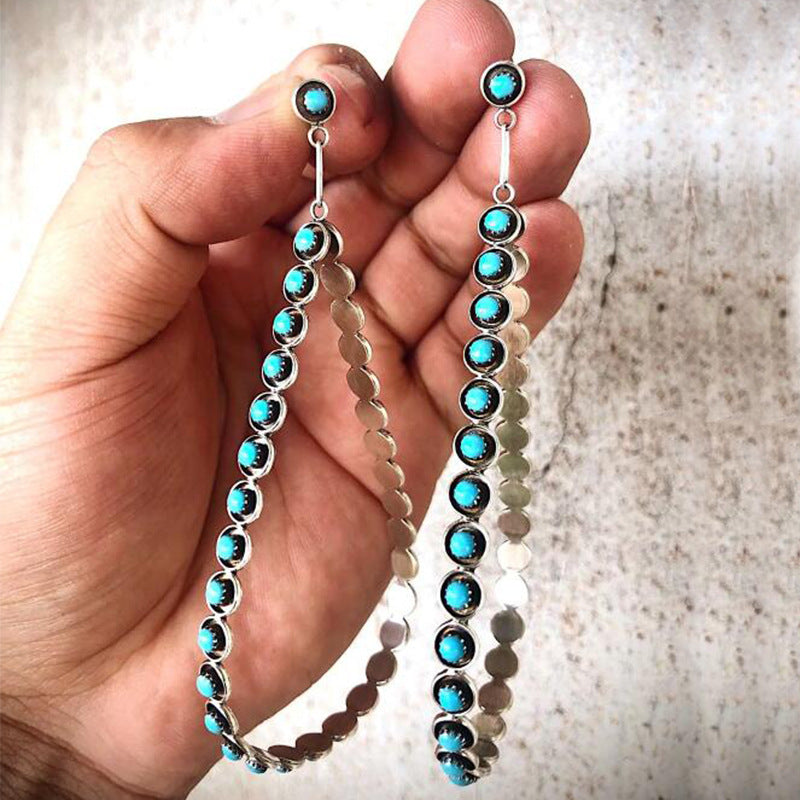
A white shirt and jeans can look quiet in a wardrobe list and visually busy on the body. Collar points, buttons, placket, chest pockets, topstitching, denim wash, belt loops, rivets, and rolled cuffs create a grid of small details. Delicate turquoise-jewelry styling works when the earrings occupy one clear space inside that grid rather than becoming another competing object.
This guide uses “delicate” as an outfit effect created through spacing and restraint. It does not claim that the two examples are physically small: the Turquoise Statement Cross Earrings and Turquoise Western Statement Earrings are both presented as statement designs. Their turquoise-style names do not independently verify natural turquoise, metal, age, maker, origin, treatment, or construction.
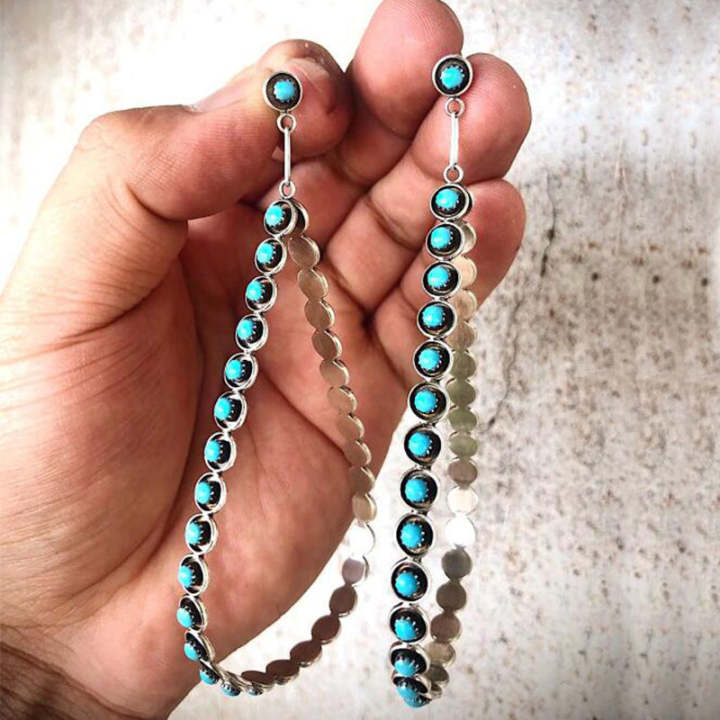
Quick Answer: Edit the Button Grid Before Adding Jewelry
Photograph the white shirt and jeans without accessories. Count every high-contrast point: buttons, snaps, rivets, stitching, zipper, buckle, eyewear, and shoe hardware. Choose the earrings as the only blue-green face-level accent, then remove or quiet two competing points near the chest and waist.
Leave the neckline empty during the first test. Tuck, half-tuck, or wear the shirt open only when the chosen state remains stable through sitting and movement. Roll sleeves to one repeatable height, choose one belt or no belt, and use a bag whose strap does not cut through the face-to-waist line.
Delicate balance is achieved by subtraction, not by pretending a visible earring is tiny. A broad design can look intentional and airy when every surrounding line has a clear role.
For a wider denim framework, use the public turquoise-style jewelry and denim-jacket guide. The method below focuses on the shirt-and-jeans grid.
Map the White Shirt in Four States
Use the exact shirt, not a generic white top. Photograph it buttoned high, opened at the collar, worn as an overshirt, and layered under a jacket. Each state changes the amount of skin, fabric, and hardware around the earrings.
| Shirt state | Visual effect | Earring opportunity | Physical test |
|---|---|---|---|
| Buttoned high | Strong central placket | Face-level color with empty neck | Collar clearance during turning |
| Open collar | V-shaped route toward face | Earrings framed by skin and fabric | Collar points and hair contact |
| Open overshirt | Two long vertical edges | Quiet inner top supports the earrings | Shoulder and bag movement |
| Under jacket | Multiple lapel and collar lines | Compact face window | Outer-layer removal and compression |
Save the one or two states actually worn. A styling guide does not become better because it invents versions the wearer will never use.
Map the Jeans by Wash, Rise, and Hardware
Record apparent wash, contrast stitching, rise, pocket placement, rivets, distressing, hem, and belt-loop use. These are visual observations, not fiber or dye claims. Dark jeans may create stronger brightness contrast with a white shirt; pale jeans may create a softer continuous field.
The belt line matters because hands and earrings share photographs when the wearer gestures. A large turquoise-colored buckle, decorated belt, or heavy hardware can become a second focal point. Use a quiet belt during the first successful earring formula.
Test the outfit seated. The shirt may bunch, the waist may rise, and hands may rest closer to the chest. The full composition should remain balanced outside a standing mirror pose.
Browse Turquoise Jewelry by Face-Frame Mechanism
Use the Turquoise Jewelry collection as a current shape index. Sort earrings by compact color point, vertical drop, broad outline, repeated cluster, symbolic motif, and visible movement. Choose one mechanism rather than stacking several.
Create a fact card for each candidate: exact option, height, width, total drop, profile, per-earring weight, closure, backing, components, finish, construction, care, and image mapping. A product image can show visible design but not reliably establish scale on the wearer.
The public pre-purchase Western jewelry guide contains broader verification questions that apply regardless of gendered merchandising labels.
Product One: Turquoise Statement Cross Earrings
The current page shows one visible color choice. Its title and description use turquoise, statement, and cross wording and suggest casual, Western-inspired, occasion, and gift use. The visible page does not clearly state exact height, width, total drop, profile, per-earring weight, closure, backing, component materials, finish, construction, or care.
The cross creates a strong vertical-and-horizontal outline and may carry personal or religious meaning. Confirm that the wearer wants the motif and that it suits the setting. Do not use it as generic Western decoration when its meaning matters.
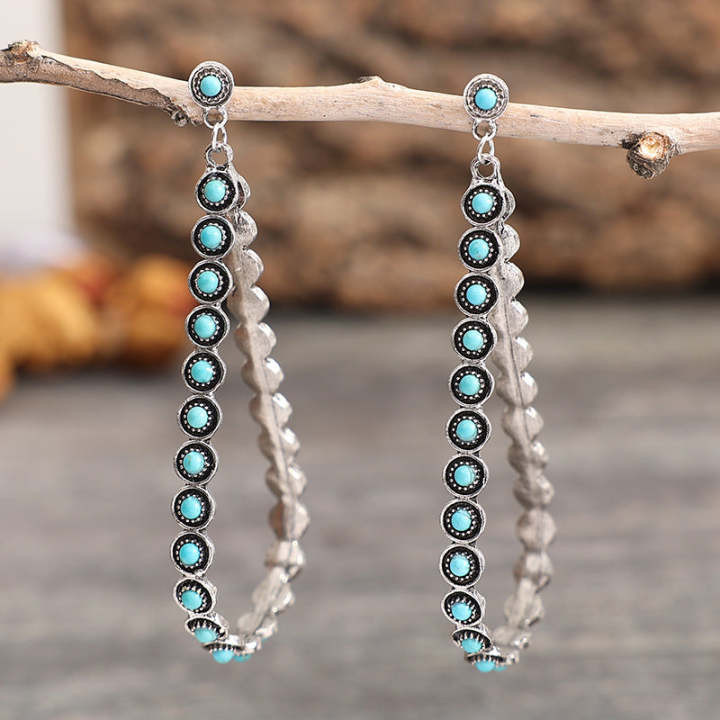
White-Shirt Formula: Cross as the Only Motif
Open the collar to a stable point and leave the neck unadorned. Use clean jeans with limited distressing, a plain belt or no belt, and shoes without another large cross. Tuck the shirt in one consistent way so the placket remains a deliberate line.
Make a life-size paper outline from verified dimensions and place it beside the collar, hair, glasses, and hat if used. Rehearse turning, phone use, jacket removal, and bag handling. If the earrings repeatedly touch the collar, adjust the shirt state or choose another profile rather than accepting the contact.
Delicate-Control Test
Photograph portrait, half-body, and full-body views. The cross should remain recognizable while the complete outfit still contains open white, denim, and skin areas. Remove a belt, necklace, or patterned bag if several motifs compete.
Product Two: Turquoise Western Statement Earrings
The current page describes a bold Western silhouette, turquoise-style center stones, vintage-inspired detailing, and pairings with denim, boots, dresses, and occasion looks. It shows one visible color option. Exact dimensions, total drop, profile, per-earring weight, closure, backing, components, finish, construction, and specific care are not clearly provided in the visible information.
The sculptural composition may create detail without one isolated symbol. That can work with a white shirt when the placket, pockets, and accessories remain quiet. Obtain a side view and physical measurements before planning; decorative density in a front photograph does not reveal weight or movement.
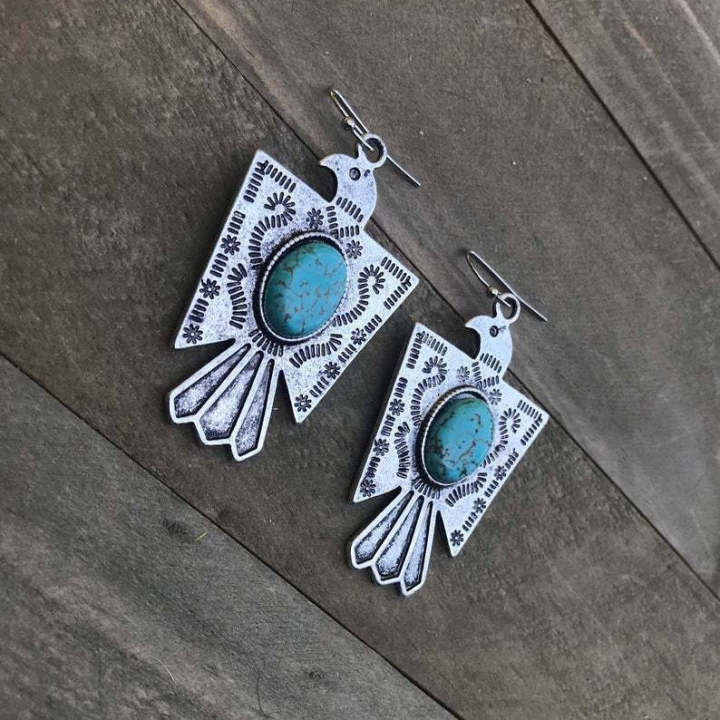
White-Shirt Formula: Sculptural Face Frame
Button the shirt slightly higher than in the cross formula and use the collar as a compact frame. Choose straight or simple jeans, quiet footwear, and a bag below the waist. Keep hair clear of the earring window during the first test.
Do not repeat the entire color in a bracelet and ring immediately. If the outfit needs a bridge, use a small visual echo in the opposite hand or shoe after the earrings clearly lead.
Delicate-Control Test
Count the visible shapes from face to feet. Reduce any remote accessory that has similar size, shine, or motif density. The result should read as one designed face zone above a calm shirt-and-jeans structure.
Use a Five-Line Outfit Diagram
- Face line: earrings, hair, eyewear, and hat.
- Collar line: shirt opening and any jacket edge.
- Center line: placket, tuck, and belt buckle.
- Hand line: rings, bracelets, pockets, and bag.
- Ground line: jeans hem and shoes.
Give only one line the full turquoise-colored emphasis. Another line may repeat a small bridge, while the remaining three stay supportive. Photograph the diagram in movement because the hand and bag lines travel upward.
Three White-Shirt and Jeans Variations
Work-Ready
Use a crisp but comfortable shirt state, dark or even-looking jeans where appropriate, a structured layer, and one earring leader. Confirm workplace dress and equipment needs. Avoid any profile that conflicts with headsets, collars, or safety requirements.
Weekend Relaxed
Wear the shirt open over a plain top with lighter or more casual jeans. Keep the earrings visible and let footwear supply the broader Western direction without duplicating the same motif.
Dinner or Social
Use a defined tuck, cleaner shoe, small bag, and precise collar. Let the earrings provide the color event. Test seated photographs and table-level hand gestures before adding a ring.
Build a Ten-Outfit Shirt Rotation Card
Choose two white shirts with genuinely different structures—perhaps one crisp collared option and one softer overshirt—plus two pairs of jeans and one optional jacket. Photograph ten combinations using only owned clothes. Keep the earrings constant for the first five, then switch to the second product direction.
For every photograph, record collar state, tuck, sleeve roll, jeans hardware, belt, shoe, bag, hair, and earring window. Use the card to identify repeated success rather than creating ten unrelated costumes. A valid formula should survive at least one ordinary work or errand day, one seated meal, and one outer-layer transition.
Include a clean-shirt check. White fabric can make makeup, hair products, denim transfer, or ordinary soil more visible; this is a garment-maintenance issue rather than a jewelry-material claim. Follow the shirt's actual care instructions and keep the earrings away from laundering, stain treatments, and cleaning products.
Retire any formula that only works when the collar is constantly repositioned or the hair is held unnaturally. Keep the three combinations that need the fewest corrections. Save those as ready outfits with the exact shirt, jeans, and earring option so future decisions become faster.
Can Beaded Turquoise Jewelry Join the Look?
A beaded turquoise jewelry necklace or bracelet can introduce repeated small color points, but it may turn a delicate face-frame formula into a full set. Add only one beaded support after the earrings pass on their own.
Verify bead composition, stringing or attachment, closure, dimensions, weight, and care for the exact product. Do not assume every blue-green bead is natural turquoise or that visual similarity makes components compatible.
Separate face and wrist zones during movement. When hands rise near the collar, a colorful bracelet can merge with the earrings and placket in photographs.
Video Perspective: General Styling, Not Product Proof
The supplemental source is Wear It With Style: Turquoise Jewelry by JTV. Its short auto-generated transcript was available during review. The video offers general ideas involving casual denim-like clothing, collared shirts, earth-toned garments, layering, and larger statement looks.
Use those ideas to compare collar framing and denim contrast. The video is retailer-produced and does not document either Oroxen earring. It cannot authenticate stone, components, maker, origin, treatment, age, dimensions, closure, or care.
Common Styling Mistakes
- Calling a statement product physically delicate. Describe the outfit effect unless dimensions support the claim.
- Adding turquoise color at face, neck, wrist, and waist. Select one leader and one optional bridge.
- Ignoring shirt pockets and buttons. Count them as design elements.
- Matching every denim detail. Coordinate through hierarchy, not exact color.
- Testing only the shirt front. Add sitting, outerwear, bags, phone, and movement.
- Assuming the cross is neutral. Confirm its meaning and context.
Frequently Asked Questions
Can statement earrings create a delicate look?
Yes. Clear spacing, an empty neckline, quiet hardware, and one leading color zone can create visual delicacy around a visible earring.
Should the white shirt be tucked in?
Choose the stable state that supports the earring hierarchy and the wearer's routine. Full, half, open, or untucked versions need separate movement tests.
Which jeans wash works best?
No wash is universally best. Compare the real wash, stitching, hardware, shirt, and earrings in intended light. Darker appearance can increase contrast; lighter appearance may soften it.
Can bracelets turquoise jewelry be added?
Possibly. Use one verified bracelet as a small bridge after the face zone succeeds. Check fit, sleeve contact, bag use, and hand movement.
Do I need boots?
No. Boots can support a Western direction, but sneakers, loafers, flats, or other appropriate shoes can work when the full outfit remains coherent and functional.
Where can I compare more denim formulas?
The public Western jewelry with denim, dresses, boots, and workwear guide provides a broader outfit matrix.
Final White-Shirt and Jeans Checklist
- Map the shirt in four states and select the real one.
- Record jeans wash, stitching, hardware, belt, and pocket use.
- Confirm earring dimensions, profile, weight, closure, components, finish, and care.
- Give only one of five outfit lines full turquoise-colored emphasis.
- Keep the neckline empty during the first successful test.
- Photograph portrait, half-body, full-body, seated, and moving views.
- Use “delicate” for the balanced result, not an unsupported physical claim.
Explore more current designs in Western Jewelry and return to Oroxen for current product and store information. A white shirt and jeans become a precise turquoise-style framework when the button grid, denim details, and face window are edited as one composition.