A focal point is not simply the largest item in an outfit. It is the place the eye reaches first and understands most clearly. A tiny cluster of turquoise-style studs can lead when the clothing is quiet and hair creates a frame. A long cross necklace can disappear when it lands on jacket hardware, a shirt graphic, or a bag strap. Attention depends on relationships.
This guide uses the F.I.R.S.T. focal-point formula: Frame, Isolation, Repetition, Scale, and Test. It works without prescribing how women “should” dress; personal expression, body proportions, sensory comfort, cultural context, and event needs remain individual. The current Oroxen examples are a coordinated stud assortment and a cross-themed product with two selectable lengths. Product titles and visible color are not proof of material identity, origin, age, or craftsmanship.
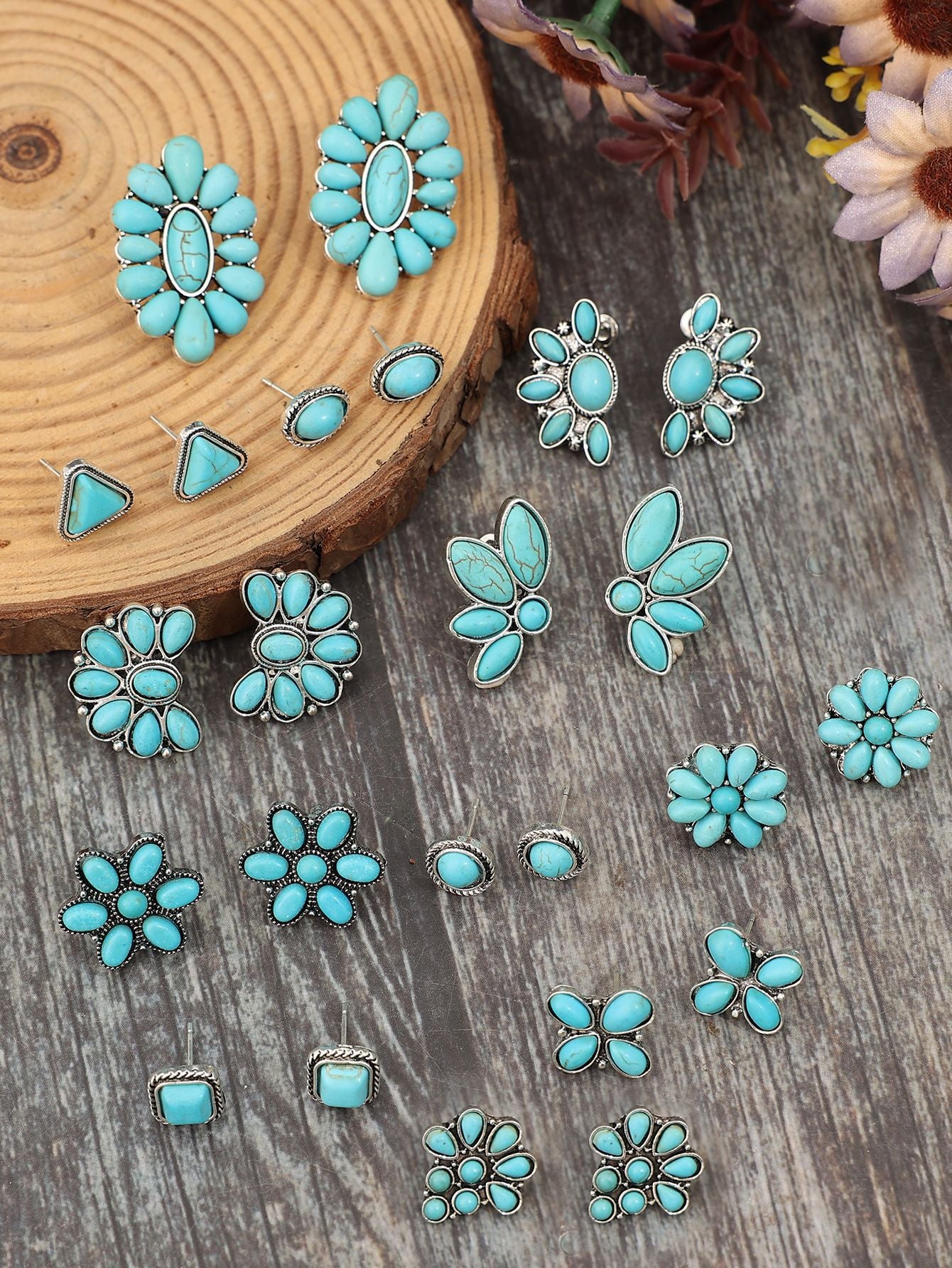
Quick Answer: Give the Jewelry an Attention Advantage
To make women’s turquoise-colored jewelry the focal point, give it at least two attention advantages: stronger contrast, clearer empty space, a recognizable silhouette, deliberate repetition, movement, or central placement. Then reduce one competing signal from the denim jacket, shirt, hair, hat, belt, or bag.
Do not attempt to “make it pop” by adding more turquoise-colored pieces everywhere. Repetition can strengthen a focal point only when one element remains the lead. A small echo at the wrist can support earrings; another equally large motif beside them can divide attention.
The Turquoise Jewelry Guides offer topic-level exploration. For a complete motif, material-language, and selection framework, read What Is Western Jewelry?.
F — Frame the Intended Focal Zone
A denim jacket creates several possible frames. The collar frames the lower face. Open lapels frame the shirt field. Rolled sleeves frame the wrist. A buttoned jacket creates a solid central denim surface. Decide whether the focal zone is ear, neck, wrist, or hand before adding supporting pieces.
Ear frame
Hair, glasses, hat brim, collar height, and neckline determine how much space surrounds earrings. Pull hair behind one ear or compare an updo and loose style. Small studs may gain importance through a clean frame rather than increased size.
Neck frame
Open the jacket to the real wearing position and identify the clear area between lapels, shirt neckline, buttons, pockets, and bag straps. A pendant should occupy that space deliberately, not sit half on a seam.
Wrist and hand frame
Sleeve length and roll structure decide whether a bracelet or ring is visible at rest. An unstable cuff makes the jewelry appear accidental and can create friction.
Photograph each candidate frame with no jewelry. The quietest usable zone often provides the strongest foundation.
I — Isolate One Leading Signal
Write down what should lead: turquoise-style color, cross motif, floral shape, geometric rhythm, movement, or scale. If the answer contains five items, the hierarchy is not finished.
Isolation does not require an empty outfit. It requires separation. A patterned skirt can coexist with focal earrings because the signals are distant. A large graphic directly beneath a pendant may compete because both occupy the same small region. Jacket hardware can act like repeated jewelry, especially when bright or oversized.
Use a subtraction photograph. Remove the hat, necklace, belt, or pins one at a time and compare full-length images. Keep the version where the intended jewelry becomes clear without making the person feel underdressed.
R — Repeat One Quality at Lower Intensity
A supporting echo can repeat color, shape, finish, or mood. Do not repeat all four automatically.
- Stud earrings lead; one small turquoise-colored ring echoes color.
- Cross necklace leads; geometric studs echo structure rather than the cross motif.
- Floral studs lead; a smooth bracelet echoes finish while leaving the motif unique.
- Turquoise-style center leads; boots or bag echo Western direction without duplicating the color.
Place the echo far enough away that it is read second. Then use the squint test from several feet: the focal point should remain visible when small details blur.
S — Set Scale Against the Whole Body
Product photography is designed to reveal detail, not to establish outfit scale on every person. A piece can look substantial on screen and subtle at full length, or look simple in isolation and become dominant near a plain neckline.
For earrings, request length, width, weight, and attachment. For a necklace, request total and wearable length, extension, pendant dimensions, weight, and measurement method. Reproduce documented landing zones with ribbon or cord. Take front, side, seated, and full-length photographs.
Scale also includes duration. A piece that feels fine for ten minutes may not suit an eight-hour day. Styling authority disappears when the wearer must constantly adjust or remove the focal point.
T — Test Motion, Lighting, and Destination
- Walk, sit, turn the head, raise both arms, and put on the event bag.
- Add the hat, glasses, scarf, outer coat, or headphones that will actually be used.
- Photograph in window light and the expected evening or indoor light.
- Check whether the focal point remains first after the jacket opens, closes, or shifts.
- Confirm dress expectations, safety, weather, and return needs for the destination.
Record the first failure specifically: “pendant hits second button,” “stud disappears under hair,” or “bag strap crosses the motif.” Change the smallest relevant variable and repeat.
Use the Turquoise Jewelry Collection as an Attention Map
Browse the Turquoise Jewelry collection by focal zone rather than by favorite photograph. Make an ear, neck, wrist, and hand shortlist. Then mark the leading signal of each product and the empty space it would require.
A second column should contain evidence, not adjectives: exact selected option, documented dimensions, weight, materials, construction, attachment or closure, care, stock, shipping, and return terms. If a product lacks a fact needed for focal placement or comfort, ask before ordering.
Example One: Turquoise Western Stud Earring Set
The current Turquoise Western Stud Earring Set page describes a coordinated turquoise-style assortment that mixes floral, geometric, and classic shapes. It suggests denim, boots, dresses, everyday cowgirl looks, and gifting. The page does not visibly state the exact included quantity, individual dimensions, weight, materials, post construction, or care, so those details should be confirmed.
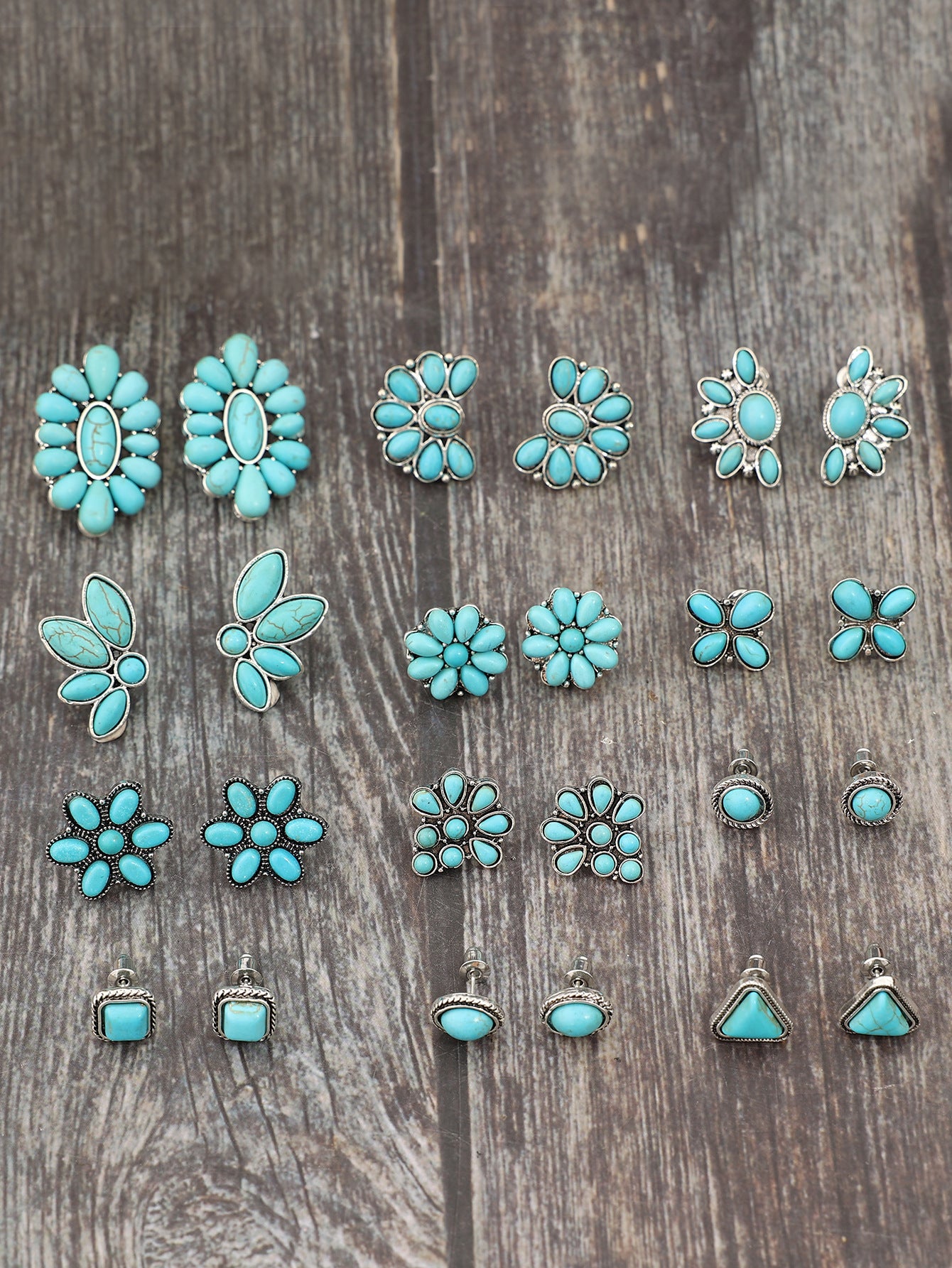
Focal route A: curated ear cluster
If the wearer has multiple suitable piercings, select one strongest stud and arrange smaller shapes around it. The largest visible area, highest contrast, or most recognizable motif can lead. Do not assume every included piece has the same weight or size; verify individual specifications and follow safe piercing practices.
Focal route B: single stud with empty space
Wear one selected pair or design against a simple hairstyle and open collar. Small scale can feel intentional when the denim jacket and neckline are quiet. Use a close-up only after confirming that the full outfit still directs attention to the face.
Supporting choices
Keep the necklace minimal or absent, use a simple cuff or ring as a distant echo, and avoid adding several unrelated motifs near the collar. Confirm set contents, pair organization, dimensions, materials, attachment, and care before purchase.
Example Two: Western Turquoise Vintage Cross Jewelry for Women
The Western Turquoise Vintage Cross Jewelry for Women page currently presents two size selectors, 90cm and 52cm, with 52cm selected by default during review. Those labels establish available choices, but a buyer should confirm what the centimeters measure, whether they are total or wearable length, and whether the same cross design and other specifications apply to both.
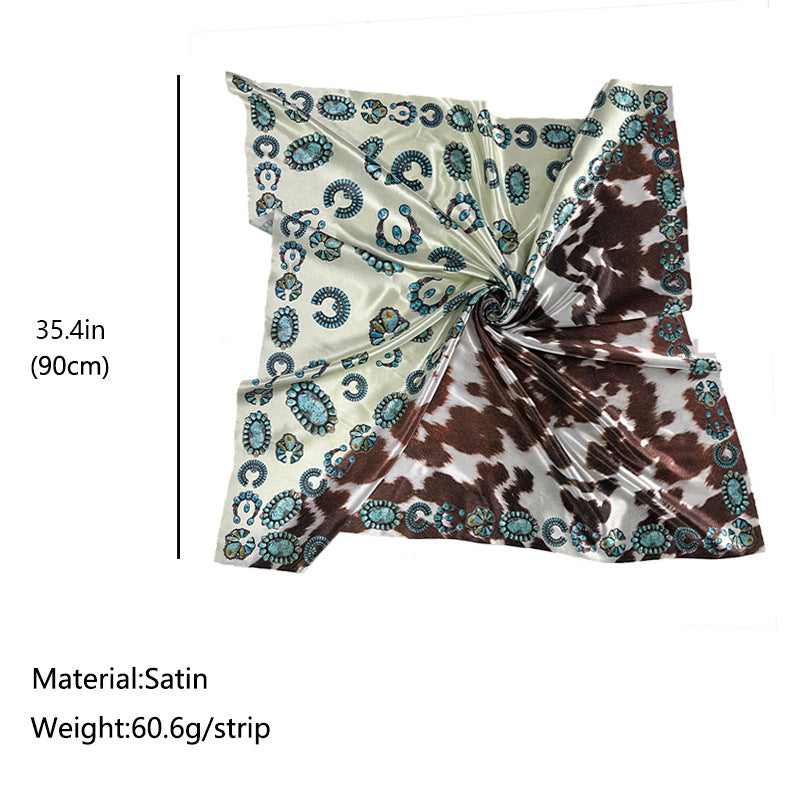
Focal route A: central 52cm candidate
If the 52cm label represents a relevant necklace measurement, reproduce that length with ribbon and the actual jacket. Check where the cross lands relative to shirt neckline, lapels, buttons, pockets, and bag strap. Do not treat the label as a guaranteed landing point without understanding the measurement method and pendant contribution.
Focal route B: long 90cm candidate
A longer route may place the motif below the lapel corridor and create a strong vertical line. It may also collide with pockets, belt, desk, or seat belt. Test sitting and walking, and confirm whether the 90cm choice changes only length or other product characteristics.
Supporting choices
Use small earrings, a plain shirt field, and controlled jacket hardware. Ask for chain or cord construction, pendant dimensions, weight, closure, materials, finish, care, and option-specific return information.
Five Denim-Jacket Focal Architectures
Face first
Stud assortment leads; hair and collar frame the ear; neckline remains quiet; wrist repeats one color.
Center first
Cross jewelry leads inside an open jacket; earrings remain small; belt and bag hardware are restrained.
Vertical line
Longer necklace route leads over a solid shirt; jacket edges reinforce direction; boots provide a distant echo.
Minimal color point
One small turquoise-style stud is the only colored jewelry against black denim and a neutral base. Contrast, not size, creates the focus.
Event statement
Cross motif or curated ear cluster leads; the rest of the outfit uses polished surfaces and controlled motifs. Motion and event duration decide whether the architecture is practical.
How to Translate the Matching Video
The paired video is “Wear It With Style: Turquoise Jewelry” by JTV. As a retailer-produced video, it can provide visual styling relationships but may include sales context. Watch it fully before citing a specific idea.
Pause on a full outfit and identify frame, isolation, repetition, scale, and test questions. Recreate the relationship with your own jacket rather than copying the exact product combination. Do not transfer claims about materials, stones, treatment, origin, value, or construction to Oroxen products, and do not copy the transcript.
Focal-Point Failures and Repairs
- Jewelry is too small: first increase contrast and empty space before increasing size.
- Everything matches: keep one leading turquoise-style point and reduce repetitions.
- Pendant disappears: change landing zone, shirt value, or jacket opening.
- Studs vanish under hair: change the frame or choose a stronger visible shape.
- Hat competes with earrings: compare brim, hair, and ear cluster from the side.
- Bag strap crosses necklace: change bag route or focal zone.
- Product facts are missing: pause and request option-specific documentation.
For color and evidence decisions, use the published Western Turquoise Jewelry Guide. For event movement, continue with the Country Concert Jewelry Guide.
Run a Thumbnail Attention Test
Take five full-length photographs with only one change between them: jacket opening, hair position, necklace length, stud selection, or supporting accessory. Reduce the images to small thumbnails and view them in random order. At thumbnail size, fine product detail disappears while contrast, spacing, and silhouette remain. Write the first location your eye reaches before enlarging each image.
If the intended jewelry leads in at least four images, the focal architecture is stable. If the belt, hat, shirt graphic, bag hardware, or jacket buttons repeatedly win, change the nearest competing variable. Then inspect the full-size winning image for comfort, option accuracy, and product detail. This prevents an attractive close-up from overruling the entire outfit and produces a repeatable record for future styling.
Frequently Asked Questions
Does the focal point have to be large?
No. Contrast, empty space, placement, repetition, and movement can make a small piece lead.
Can earrings and a necklace both be focal points?
They can form a coordinated focal area, but one should usually lead. Test whether the eye has a clear first and second reading.
Which cross-jewelry size should I choose?
First confirm what 52cm and 90cm measure. Reproduce the relevant length with ribbon, test both landing zones with the actual jacket, and compare movement and comfort.
Does a stud set include a certain number of pieces?
Do not assume. Confirm the exact included quantity, pairs, shapes, dimensions, materials, attachments, and care from the current listing or seller.
Does “women’s turquoise jewelry” prove natural turquoise?
No. It is a product-category phrase. Seek explicit, option-specific material documentation.
How can I maintain the focus with a hat?
Use side and front photographs. Control hair and collar detail, and decide whether the hat frames the earrings or becomes the lead.
Where should I browse next?
Compare current options in Turquoise Jewelry, expand to Western Jewelry, or return to the Oroxen home page.
Final F.I.R.S.T. Audit
Frame: the selected zone has a deliberate garment or hair boundary. Isolation: one signal leads. Repetition: one quieter echo supports it. Scale: documented dimensions work at full-body distance and for the required duration. Test: movement, lighting, layers, destination, and product evidence all pass.
A focal point is built, not merely purchased. Give the jewelry an attention advantage, remove the nearest competitor, and verify the exact option. The result can be subtle or dramatic while remaining personal, comfortable, and honest about what the product page does—and does not—establish.