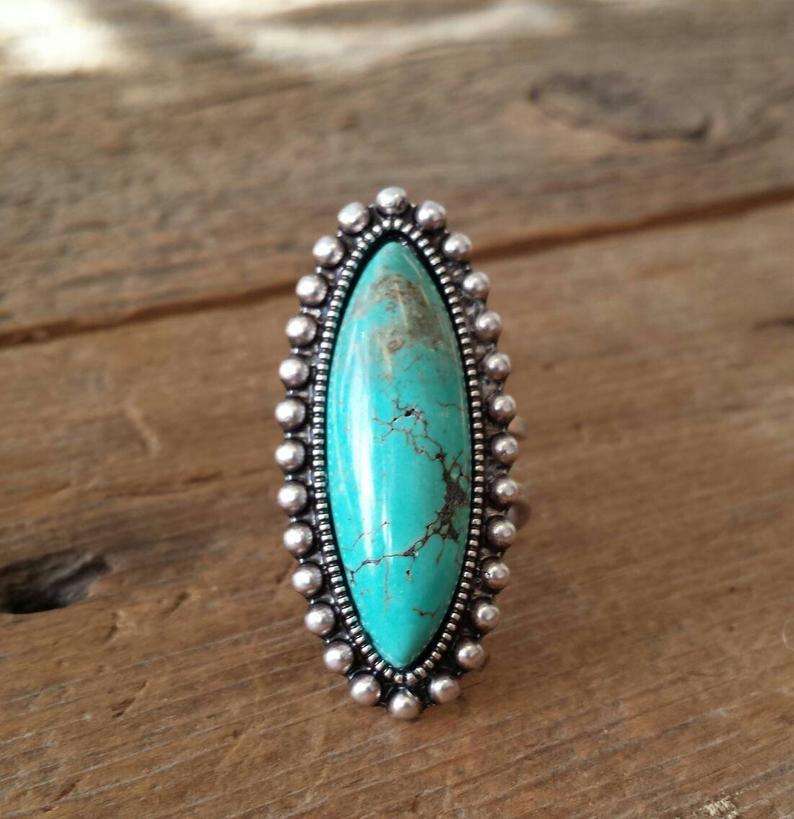
How to Make Turquoise Rings the Focal Point of a Rodeo Outfit
A ring does not become the focal point merely because its product title says “statement.” It becomes focal when the outfit gives the hand a visible route, removes stronger competition from the face and torso, and lets the selected ring appear during ordinary movements. At a rodeo, that route must also work around a hat, jacket, buckle, bag, phone, seating, rails, and any activity that changes how the hand is used.
This guide uses a hand spotlight triangle. The first corner is the hand: exact ring scale, placement, and movement. The second is the torso: neckline, necklace, jacket, and shirt must provide quiet support. The third is the waist: buckle, belt, and bag hardware must remain below the ring in visual priority. A successful focal plan controls all three corners while preserving product evidence and physical clearance.
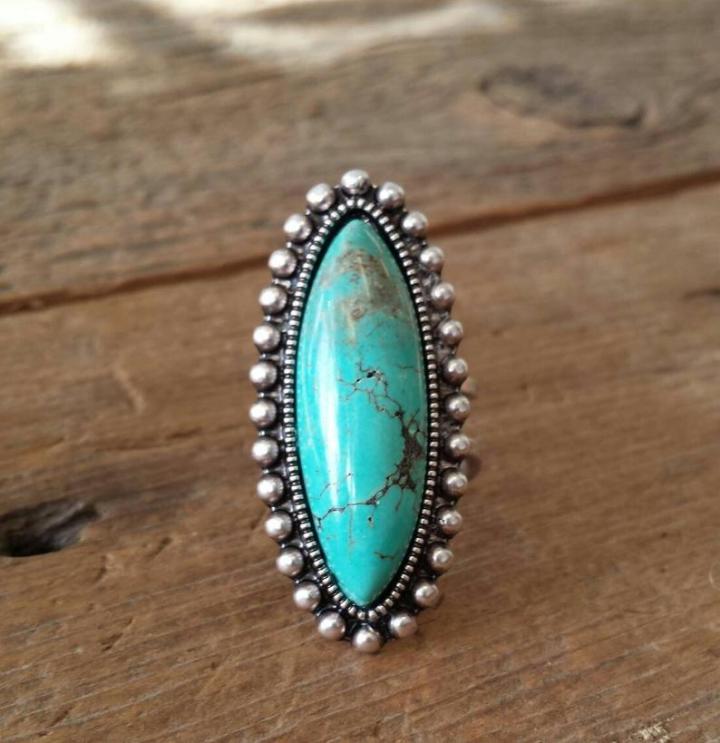
Quick Answer: Create a Quiet Torso and a Visible Hand Route
Choose one verified ring for one finger. Keep neighboring fingers empty or use a documented narrow supporting band. Place the ring against a plain sleeve, solid denim, or an uncluttered cuff. Reduce face-level jewelry, leave the necklace zone quiet, and choose a buckle with lower contrast than the hand. Then rehearse the actions in which the ring should appear: holding a hat, carrying a small bag, resting the hand, using a phone, or taking a seated photograph.
The ring is focal only if it remains first at full-outfit and conversation distance without requiring an artificial close-up. A ring crop proves visible detail but says nothing about hierarchy. Ask another viewer to name the first, second, and third objects noticed in an unprompted full-body image. If the buckle or necklace is consistently first, the hand spotlight is not yet built.
Product evidence sets the boundary. Record the selected option, inside dimensions or adjustable range, band width, top length and width, projection, mass, edges, underside, all component materials, decorative-material identity and treatment, finish, construction, care, and current return terms. Turquoise wording and a blue-green appearance do not independently prove natural turquoise, origin, treatment, or value.
Corner One: Design the Hand Zone
Choose the finger by function
List what each hand will do at the event. One hand may hold a phone, bag handle, drink, camera, ticket, rail, or another person's hand. The other may remove the hat, operate pockets, and adjust outerwear. A high-profile or broad ring should not be placed on a finger whose required tasks produce repeated collision. Styling never overrides venue, workplace, animal-handling, equipment, or activity rules.
Draw a hand map. Mark the intended finger, adjacent fingers, watch, bracelet, phone case, bag handle, and every hard surface likely to touch the ring. Add the ring's verified footprint and projection. If dimensions are missing, the map cannot be completed. Request them rather than estimating from a photograph.
Use one ring as the leader
A statement hand often needs fewer rings, not more. Begin with the focal ring alone. If the composition feels visually disconnected, add one narrow support on a non-adjacent finger or opposite hand. The support can repeat a line, dark-light contrast, or surface value without repeating the same cross, floral, or blue-green center.
Control the sleeve background
A plain cuff creates a frame around the hand. Heavy embroidery, fringe, studs, contrast stitching, and stacked bracelets create nearby competition. Roll a sleeve only after checking that the edge stays outside the ring's movement route. A jacket zipper or snap can become a reflective focal point at exactly the same height as the ring.
Corner Two: Lower the Torso Volume
Leave the neckline open or use a very quiet, verified necklace. Reduce large blue-green centers, repeated cross motifs, and highly reflective pendants. Choose a shirt or dress with a calm field rather than a graphic placed at hand-rest height. The torso should guide the eye toward the hand instead of creating a second headline.
Use a jacket strategically. A dark sleeve and open front can form two lines that point down toward the hand. A decorated yoke, large lapel hardware, or fringe may redirect attention upward. Photograph the outfit with arms relaxed, one hand visible at the side, and one hand in a natural seated position. The focal ring should appear without being lifted toward the camera.
The published complete western turquoise jewelry guide explains how to distinguish a style observation from a material assertion. Use it when editing the torso zone so color and motif language remain evidence-based.
Corner Three: Keep Waist Hardware in a Supporting Role
Rodeo styling often gives the belt buckle automatic dominance. If the ring must lead, reduce buckle area, contrast, shine, or motif density. A plain belt and smaller buckle can preserve western structure without taking first place. If the buckle is fixed and visually strong, let the ring become the second focal point instead of pretending the hierarchy is reversed.
Bag hardware also matters. Metallic clasps, chain straps, conchos, studs, zippers, and rings can sit close to the hand. Test the bag on both shoulders and in both hands. The best visual side may be the worst contact side. If a bag handle strikes the ring, change the route or product choice; do not accept repeated impact for the sake of a photograph.
Use the Western Rings Collection as a Footprint Library
Browse the Western Rings collection by visible footprint: compact top, elongated top, broad cross-related form, clustered centers, openwork, or quieter band. A collection page can help compare silhouettes. It cannot establish that all products use the same mineral, metal, size system, finish, construction, origin, or care.
Open candidates side by side and use the same evidence fields. Record exact title, URL, review date, displayed price, selected Color or Size, matching images, inside dimension, band width, top dimensions, projection, mass, adjustability limits, all materials, setting or attachment, care, and current shipping and returns. If one page has better photography and another has better specifications, do not confuse the two advantages.
After the focal ring is chosen, use the Western Jewelry collection only for restrained support. Compare earrings, bracelets, and necklaces by the amount of competition they introduce near the hand spotlight triangle.
Current Example One: Turquoise Vintage Statement Cross Ring
On August 24, 2026, the Turquoise Vintage Statement Cross Ring page displayed $74.74 USD. It showed one visible Color choice, an Adjustable Size option, and nine numbered gallery positions. The page used turquoise, vintage, statement, and cross language and suggested everyday, western-inspired, occasion, and gifting contexts.
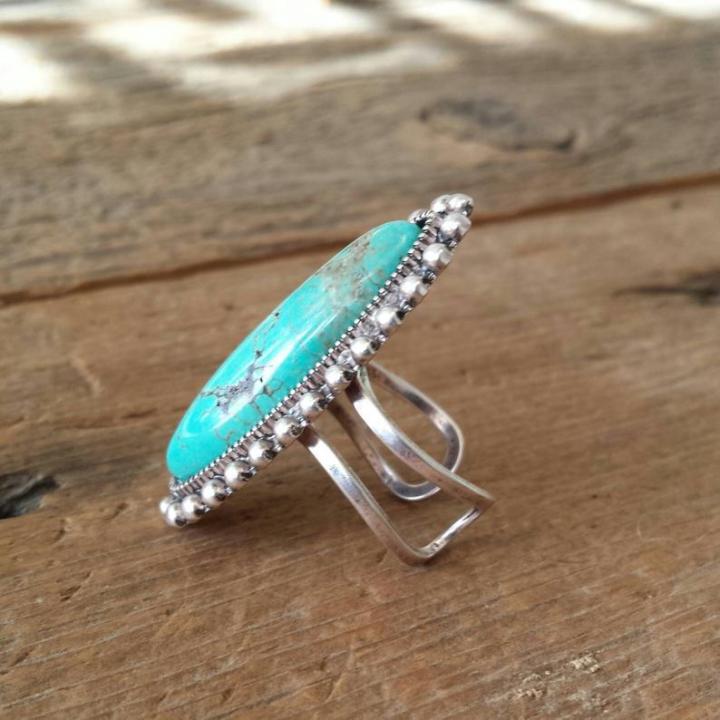
The broad cross-related design can be tested as the hand's only large motif. Use an empty adjacent finger, a quiet sleeve, no large cross necklace, and a restrained buckle. Photograph the hand at rest, holding the hat, and seated on the thigh. If the shape becomes invisible except in a close-up, improve the sleeve contrast or hand route before adding more jewelry.
Adjustable is not a complete fit specification. Ask for the delivered inside dimension, approved adjustment range, correct method, whether tools are permitted, and whether repeated adjustment is allowed. Also request band width, maximum top length and width, projection, total mass, edge and underside details, all component materials, decorative-material identity and treatment, metal or alloy, coating, construction, and care.
The visible page did not establish those fields during review. Until they are documented, do not bend the ring, promise a universal fit, infer mineral identity, or classify it as suitable for every rodeo activity. Styling potential remains separate from verified use.
Current Example Two: Turquoise Boho Vintage Ring
On the same date, the Turquoise Boho Vintage Ring page displayed $77.77 USD, one visible Color choice, and twelve numbered gallery positions. No Size choice was visible in the reviewed product controls. The page used turquoise, boho, and vintage language and suggested casual, western-inspired, occasion, and gifting contexts.
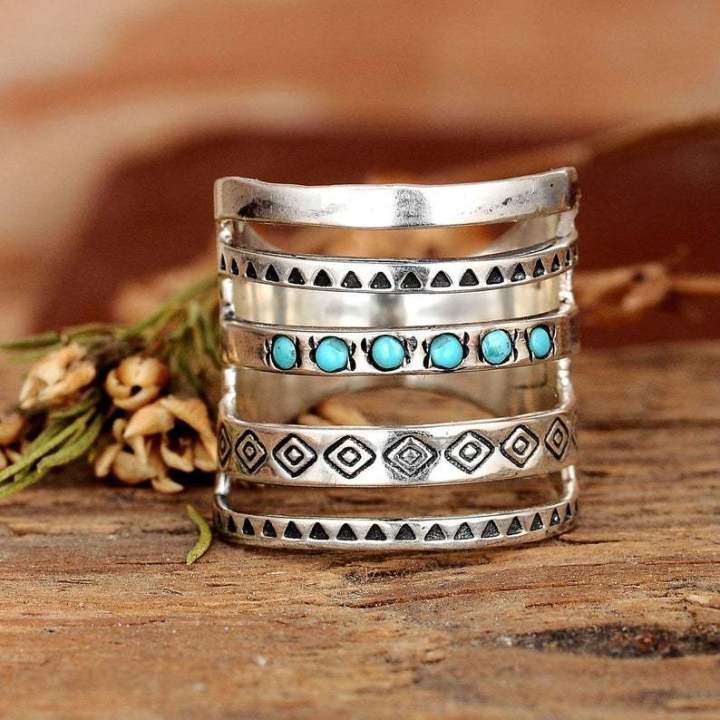
The absence of a visible Size selector makes fit the first unresolved question. Ask whether the ring is fixed or adjustable, the delivered inside dimension, available size range, and any approved adjustment method. Request the same footprint, mass, material, construction, and care fields used for the first example. A model image cannot supply them.
For the focal plan, use the ring as a color-and-shape anchor with a solid shirt, simple cuff, and minimal waist hardware. If the visual top is more rounded or concentrated than the cross ring, it may create a compact point rather than a directional shape. Test the delivered item at full-outfit distance. Do not assume “boho” means a particular material, cultural origin, maker, or method.
Two Focal Formulas
Formula A: directional cross-led hand
Place the cross-related ring on the hand that will be visible during a natural pose but has the fewest hard-object contacts. Use a plain dark or light sleeve that clearly separates the ring. Keep earrings small, leave the necklace zone quiet, and choose a low-contrast buckle. Repeat one geometric line at the opposite wrist only if the composition needs balance.
Formula B: compact color point
Use the boho vintage ring as a concentrated blue-green point. Let a clean denim cuff or smooth neutral sleeve frame it. Move the bag to the opposite side and avoid stacking adjacent rings. A small face-level color echo can connect the outfit, but its area and contrast must remain lower than the hand.
Both formulas require the same movement proof. A different shape does not receive a lower standard.
Make the Ring Visible Through Natural Actions
Plan three ordinary visibility moments instead of posing continuously: holding the hat at arrival, resting the hand while seated, and using the phone or ticket at a stable point. These actions reveal the ring without turning the entire event into a photo session. Rehearse them with the actual bag, jacket, phone case, and seating.
Avoid using rails, animals, tools, gates, machinery, or prohibited areas as styling props. Follow venue and activity rules. Remove jewelry when required, and use a dedicated closed compartment. The hand spotlight disappears when the ring is unsafe or constantly guarded.
What the Statement-Necklace Video Teaches About Rings
The corresponding Fashion World video, “20 Styles to Wear Statement Necklaces With Western Outfit”, runs about 46 seconds after the advertisement and was watched in full on August 24, 2026. Closed captions were unavailable on the reviewed page. It is a rapid visual montage of statement necklaces against western-inspired clothing.
The transferable lesson is focal-zone control. In the montage, a necklace receives attention because it occupies a clear torso field. To make a ring lead, reverse that arrangement: quiet the torso field and create clarity around the hand. The video does not show the exact Oroxen rings and proves nothing about their dimensions, fit, turquoise identity, metal, adjustability, comfort, care, origin, or rodeo safety.
Focal-Point Failure Patterns
- Close-up dependence: the ring disappears in every full-outfit view.
- Three leaders: ring, necklace, and buckle have equal scale or contrast.
- Motif duplication: large cross-related forms repeat at hand, chest, and waist.
- Unknown fit: Adjustable or absent Size information is treated as universal fit.
- Contact blindness: bag handles, phone cases, snaps, rails, or equipment strike the ring.
- Forced alteration: an unknown construction is bent, glued, tied, or polished to fit the outfit.
- No exit route: the ring would be removed into a loose pocket or open bag.
The published western jewelry motifs and materials guide helps keep statement, cross, boho, vintage, western, and turquoise-related language separate from unsupported age, origin, cultural, maker, and composition claims.
Full Rodeo Hand Rehearsal
- Confirm venue, activity, prohibited-item, bag, seating, and weather rules.
- Record the exact ring option and all fit, footprint, material, construction, and care facts.
- Dress fully in planned hat, hair, shirt, jacket, belt, buckle, bag, boots, and jewelry.
- Photograph full length, conversation distance, both hand sides, seated, and phone-use views.
- Walk, reach, sit, stand, use pockets, remove the hat, handle the bag, and operate the phone.
- Stop at pain, pressure, numbness, snagging, impact, or restricted movement.
- Practice removal into the dedicated compartment and recount immediately.
The published country concert jewelry guide offers related bag, crowd, outerwear, hearing-protection, and storage questions. Adapt only the parts relevant to the actual rodeo.
Frequently Asked Questions
Which finger makes a statement ring most visible?
The best finger is the one that supports fit, required tasks, clearance, and natural visibility for the wearer. There is no universal answer. Map the hand before choosing.
Can I wear two turquoise-colored rings?
Yes, but make one the leader and one a restrained support. Verify both rings' dimensions and contact routes; avoid adjacent collision.
Does Adjustable mean it fits everyone?
No. Request delivered size, approved range, adjustment method, and construction limits. Do not repeatedly bend the ring without guidance.
What if no Size option is shown?
Treat fit as unresolved. Ask whether the ring is fixed or adjustable and request exact inside dimensions and available sizes before purchase.
Should the buckle match the ring?
Exact matching is unnecessary. If the hand should lead, lower the buckle's contrast, area, and motif density. A supporting echo is enough.
Where can I compare more ring shapes?
Browse the Western Rings collection for visible footprints and the Western Jewelry collection for quiet supporting categories.
Final Hand Spotlight Card
- One verified ring leads one finger; neighboring pieces stay secondary.
- The sleeve frames the hand without hardware or motif competition.
- Neckline, necklace, jacket, buckle, belt, and bag remain below the hand in visual priority.
- Inside dimensions, adjustable range, footprint, projection, mass, materials, construction, and care are documented.
- Natural hand actions create visibility without unsafe posing.
- The ring passes the complete rodeo movement and storage rehearsal.
- The YouTube montage supplies focal-zone questions only and proves no ring facts.
Conclusion: Put the Spotlight Where the Hand Actually Moves
A focal ring needs an edited outfit and a credible movement route. Build the hand zone first, quiet the torso, lower the waist hardware, and test the ring in natural actions. When fit, material, adjustment, or care information is missing, resolve it before turning the product into the outfit's headline.
Compare current candidates in Western Rings, select restrained support from Western Jewelry, or return to the Oroxen homepage. Let the exact ring—not the marketing label—earn the focal point.