A good denim-jacket outfit rarely begins with “add everything Western.” It begins with one decision: what should the eye notice first? Boho turquoise jewelry can supply color, movement, motif, and texture, but the jacket already brings seams, pockets, stitching, and hardware. If every feature asks for equal attention, the outfit feels assembled rather than composed.
This tutorial uses a five-layer recipe: base, bridge, lead, echo, and function. You can apply it to pieces already in your closet, then use two current Oroxen examples—cow-skull earrings and a turquoise-colored bracelet—to see how the roles change. “Boho” is treated as a flexible styling label, not a claim about an item’s cultural origin, maker, age, or materials. Likewise, a product title containing “turquoise” or “crystal” does not independently verify composition. Use the live product page and direct seller answers for facts that affect fit, care, or value.
The Five-Layer Outfit Recipe
The recipe is a sequence, not a shopping list. Stop whenever the look feels complete.
- Base: choose the shirt, trousers or skirt, and shoes that satisfy the day’s weather, movement, and dress level.
- Bridge: add the denim jacket and decide whether it is open, partly closed, buttoned, belted, or carried.
- Lead: select one jewelry piece to be the main visual event.
- Echo: repeat one quality of the lead—color, shape, movement, or finish—in a quieter location.
- Function: test hair, bags, sleeves, seat belts, desk contact, dancing, and extra layers.
This order prevents accessories from trying to solve a problem created by the clothes. If the neckline is crowded, change the base or bridge before adding jewelry. If the outfit has no focus, strengthen the lead rather than adding three equal accents. The Turquoise Jewelry Guides can support further topic research, while the Cowgirl Jewelry Style Guide provides a broader category-by-category framework.
Layer 1: Build a Base That Can Carry Detail
Start without the jacket or jewelry. Put on the complete base and take a full-length photo. Look for three things: visual noise, color value, and exposed space.
Visual noise
A large shirt graphic, strong print, fringe, prominent belt buckle, and decorated boots can all be valid choices. They simply consume attention. Circle the strongest area mentally. If it is already near the face, earrings may work better as a small echo. If the shirt and belt dominate the center, an earring-led plan can move attention upward.
Color value
Value means relative lightness or darkness. A turquoise-colored detail can become more readable when the neighboring shirt or hair provides a different value. Exact hue matching is unnecessary. Photograph the base in the lighting where it will be worn, because indoor yellow light, cloudy daylight, and a phone flash can produce different impressions.
Exposed space
Note the wrist, ear area, neckline, and belt line that remain visible after normal movement. Long hair may hide an earring. A full sleeve may cover a bracelet. A scarf may occupy the neckline. Available space should determine accessory placement rather than forcing a favorite piece into a hidden position.
Layer 2: Make the Denim Jacket a Bridge, Not a Wall
The jacket connects the base to the jewelry. Its wash, collar, stitching, and hardware create a visual middle layer. Test three configurations even if you think you know your favorite.
- Open: reveals the shirt and creates vertical sides. Useful when the base needs to separate multiple details.
- Partly closed: forms a smaller central field and can make an earring-led look feel more intentional.
- Fully closed: turns denim into the main surface and increases the importance of buttons, pockets, sleeve length, and collar shape.
Roll one sleeve and leave the other down for a quick comparison. A bracelet needs enough exposure to be intentional, but not so much that the cuff constantly strikes it. Move both wrists as though typing, driving, carrying a cup, and opening a bag. Function often chooses the better sleeve treatment.
Browse the Turquoise Jewelry collection by accessory position—ear, neck, wrist, or hand—rather than by adding favorites randomly. Each live listing should be checked for the selected option, current photographs, documented measurements, care information, shipping, and returns.
Layer 3: Choose the Lead by Distance
The lead should work from the distance at which most people see the full outfit. A close product image may reveal tiny details that disappear at six feet. Put on one candidate, place your phone several feet away, and use the rear camera if possible. Ask one question: what do I notice first?
If the answer is the jacket’s pocket buttons, the jewelry may be an echo rather than the lead. If the answer is the colored earring movement near the face, you have an earring-led outfit. If the answer is a bracelet only when your hand moves, it can be a kinetic lead—quiet while still, noticeable during gestures.
Do not confuse size with leadership. Contrast, placement, motion, and recognizable outline can make a modest piece lead. Conversely, a large accessory can disappear against a busy print. The test belongs to the complete outfit.
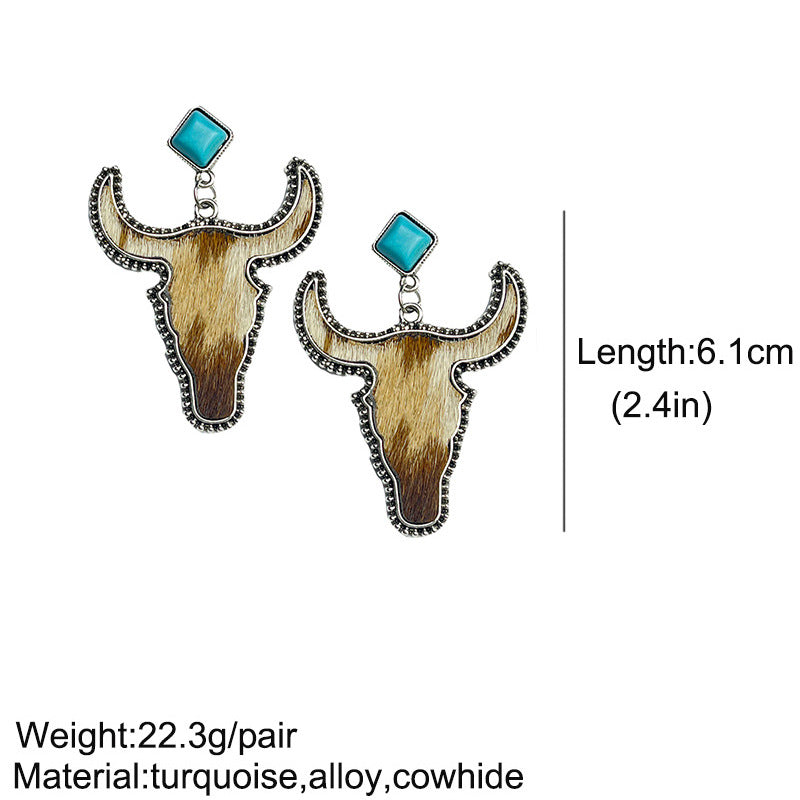
Earring-Led Example: Cow-Skull Motif Above the Jacket Collar
The Western Turquoise Boho Vintage Cow Skull Earrings offer a motif-led example. The current page shows multiple photographs and a selector with Design 1 through Design 4. Because those options can differ, match the chosen radio or button to the gallery view you evaluated before placing an order. The listing currently describes the design with Western, turquoise, and boho style language, but it does not supply enough visible specification text to justify assumptions about exact materials, dimensions, weight, or skin compatibility.
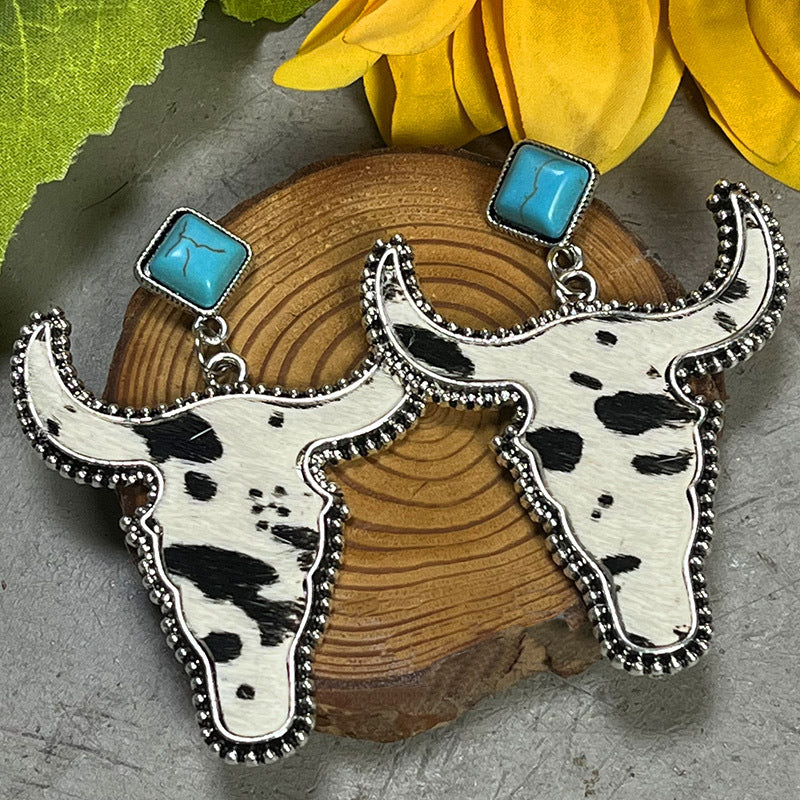
Formula A: face focus
Use a plain black, white, cream, or other chosen solid top, a medium-wash open jacket, and simple hair placement that leaves at least one earring visible. Keep the neckline calm and let the earrings provide motif and movement. The supporting echo might be a small turquoise-colored ring or a restrained wrist detail rather than another large image near the face.
Formula B: collar frame
Button the jacket partially over a smooth underlayer. The collar becomes a frame for the lower face. If the earrings remain distinct, avoid adding a scarf, large brooch, and statement necklace simultaneously. Add one element at a time and keep the version with the clearest order.
Hair and hardware test
Turn your head, put on sunglasses, add the hat you will actually wear, and test the earring near the collar. Check for contact and comfort rather than assuming a photographed look will behave the same in motion. If weight or dimensions matter and the listing does not document them, ask the seller directly.
Layer 4: Add an Echo Without Building a Matching Set
An echo repeats one quality of the lead at lower intensity. It does not need to be identical. With motif earrings, a bracelet can echo color while changing shape and location. With a bracelet lead, smaller earrings can echo finish or motion. The distance between ear and wrist helps two expressive pieces coexist because they are not fighting in one small zone.
Use the one-trait rule. Write down the trait being repeated: “turquoise-colored accent,” “aged-looking silver color,” “small repeated shapes,” or “movement.” If the second piece repeats color, motif, scale, texture, and sparkle all at once, it may become a rival rather than an echo.
Then use the pause rule. Put on the lead and base, wait a minute, and take a photo. Add the echo and take another. If the second image has clearer rhythm, keep it. If the eye jumps between two equal headlines, reduce the echo or move it farther from the lead.
Bracelet Example: Color and Motion at the Cuff
The Turquoise Boho Vintage Crystal Bracelet can demonstrate a wrist-level echo or lead. Its current page shows a color selector with two choices and an extended product gallery. The title and description use turquoise, boho, vintage, and crystal as merchandising terms. Confirm the selected color and request any missing measurement, material, closure, construction, or care detail that affects your decision.
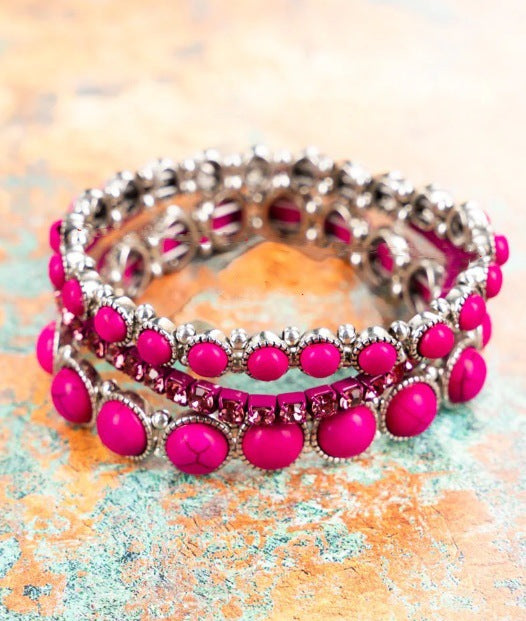
As the echo
Wear the cow-skull earrings as the lead, roll the jacket sleeve once, and let the bracelet repeat color at the opposite end of the silhouette. Keep rings quieter so the wrist does not become a second dense cluster. If the sleeve slides down repeatedly, either secure the roll comfortably or allow the bracelet to appear only during movement rather than forcing constant visibility.
As the lead
Choose small or visually quiet earrings, a solid shirt, and a clean denim jacket. Push or roll both sleeves evenly and let the wrist supply color and texture. A bracelet lead works well when the day involves natural hand movement, but test desk contact, typing, carrying, and jacket-cuff friction. Comfort is part of the composition.
As one piece in a stack
Build a stack from inside outward and move the wrist after each addition. Separate pieces that can scrape, tangle, or hide one another. Product photographs do not establish how an item will interact with jewelry you already own. If construction or surface treatment is important to safe stacking, obtain documented information first.
Layer 5: Run the Function Circuit
A complete outfit should pass a short circuit before it leaves the house.
- Put on the shoulder or crossbody bag and walk across the room.
- Raise both arms and turn your head fully in each direction.
- Sit at a table, type for one minute, and rest both wrists.
- Add the coat, scarf, or hat required by the weather.
- Take a front, side, seated, and full-length photo.
Record only the failure, not a vague judgment. “Left earring touches collar,” “bracelet disappears beneath cuff,” “shirt graphic competes with motif,” and “bag strap crosses both focal points” are repairable observations. “The outfit is wrong” is not specific enough to fix.
For event-specific movement planning, use What Jewelry to Wear to a Country Concert. Its venue and comfort checks are useful whenever a denim outfit must handle crowds, dancing, weather, or security procedures.
Four Ready-to-Test Outfit Cards
Card 1: relaxed errands
Base: plain tee, straight jeans, comfortable shoes. Bridge: open mid-wash jacket. Lead: cow-skull earrings. Echo: one small wrist color. Function: test sunglasses, tote straps, and hair movement. Remove the bracelet if the tote hardware repeatedly contacts it.
Card 2: outdoor music event
Base: breathable top and practical footwear. Bridge: jacket worn or tied as conditions change. Lead: choose either earrings or bracelet based on collar contact and bag route. Echo: a smaller accent away from the bag strap. Function: simulate dancing, sitting, and jacket removal; leave irreplaceable pieces at home.
Card 3: casual dinner
Base: monochrome top and dark trousers or skirt. Bridge: dark denim with a deliberate sleeve roll. Lead: bracelet if the table and cuff allow it. Echo: quieter earrings. Function: sit at the actual table height you expect and confirm that wrist jewelry does not become an annoyance.
Card 4: travel day
Base: comfortable layers with secure pockets. Bridge: jacket that can be removed without disturbing jewelry. Lead: one easy-to-track piece. Echo: optional. Function: test seat belts, headphones, neck pillows, and bag straps. Carry a small pouch for removal and follow item-specific storage guidance.
How to Use the Matching Video Responsibly
The video “Wear It With Style: Turquoise Jewelry” by JTV is associated with this article because it visually discusses turquoise-jewelry styling. Watch the full video before citing any particular lesson. It is retailer-produced, so separate useful styling demonstration from sales language, and do not assume that items shown there share specifications with Oroxen products.
Pause on a complete outfit rather than a product close-up. Note the base color, denim placement, jewelry lead, empty space, and distance between accents. Rebuild the relationship with your own clothing instead of copying an exact look. Any statement about materials, construction, treatment, origin, value, or care must be verified independently and against the exact item under consideration.
Common Build Errors and Single-Variable Repairs
- Everything is a statement: select one lead and demote the rest to echoes.
- The jewelry disappears: change the neighboring shirt value or expose more space before adding pieces.
- The look feels like a costume: remove one literal motif and keep texture or color as the quieter Western cue.
- The bracelet fights the cuff: alter sleeve position or change the wrist piece rather than constantly adjusting it.
- The earring collides with hair and collar: change hair placement, jacket configuration, or earring role.
- Colors are excessively matched: repeat one accent once and protect a neutral area.
- The outfit works only in close-up: take a full-length photo and rebuild hierarchy for normal viewing distance.
Make only one repair between photographs. This creates a useful record of cause and effect. For more context on style labels and motifs, read What Is Western Jewelry?. For color and product-language evaluation, use the Western Turquoise Jewelry Guide.
Frequently Asked Questions
What makes jewelry “boho”?
In retail and styling contexts, boho is often used for an expressive, layered, relaxed, textural, or eclectic look. It is not a material certification, age statement, cultural attribution, or proof of how an item was made.
Do cow-skull earrings require boots and a hat?
No. A recognizable motif can be the only literal Western cue. A plain base and denim jacket may give it more visual authority than several competing themed pieces.
Can a bracelet and statement earrings be worn together?
Yes. Separate their roles. Let one lead and have the other echo a single quality. Test the full silhouette and real movement rather than judging two close-up product views.
How should a beginner choose between the product options?
Match the exact selector choice to its gallery view, document what the listing confirms, list anything still unknown, and test the visible design against the intended outfit. Ask the seller for any necessary missing information.
Does the product title prove that a piece contains turquoise or crystal?
No. Treat the title as product and style language unless the exact page supplies a clear material statement. Seek explicit documentation if composition matters to your decision.
What should be checked before checkout?
Review the exact design or color selection, associated images, documented dimensions and materials, construction, closure, care guidance, current price, stock, shipping estimate, and return terms. Save screenshots or notes when a detail matters.
Where can I compare more pieces?
Start with Turquoise Jewelry, expand to the Western Jewelry collection, or return to the Oroxen home page for current navigation.
Finish with a Photograph You Can Rebuild
Save one front photo and a five-line note: base, bridge, lead, echo, function. Record the jacket position, sleeve treatment, hair placement, and bag route. That small record turns a successful outfit into a repeatable formula instead of a lucky accident.
The best result is not the outfit with the largest number of Western or boho signals. It is the one whose pieces have jobs. The base supports the day, the denim connects the palette, the lead directs attention, the echo creates rhythm, and the function test protects comfort. Once those roles are clear, turquoise-colored jewelry and a denim jacket can look personal, relaxed, and deliberate without relying on unsupported product claims.