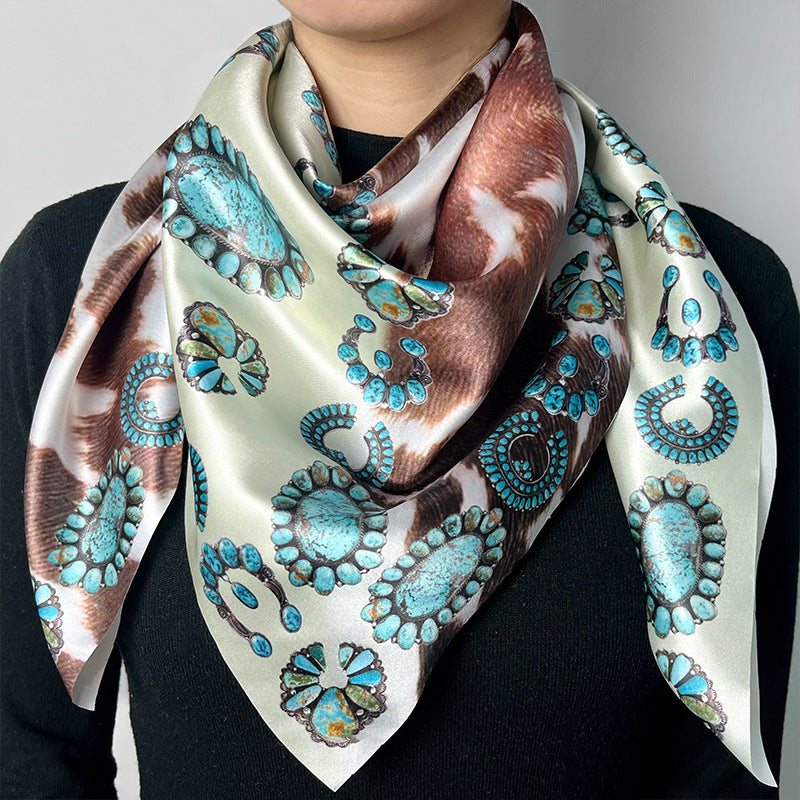
A successful country-concert outfit is easier to build when the jewelry has a job. Instead of collecting every item that looks Western, start with one focal zone, identify the clothes and venue actions around it, and add only the details that improve the complete silhouette. Turquoise-colored jewelry can provide contrast, rhythm, or a central statement, but it should never require the wearer to ignore fit, grip, fabric contact, or missing product facts.
This guide uses the Western Turquoise Vintage Cross Jewelry for Women and the Western Turquoise Vintage Geometric Cross Necklace as styling examples. Their titles and photographs support discussion of visible color, cross motifs, geometry, and necklace-scale decisions. They do not independently certify natural turquoise, metal identity, age, maker, origin, handmade status, construction, or cultural affiliation.
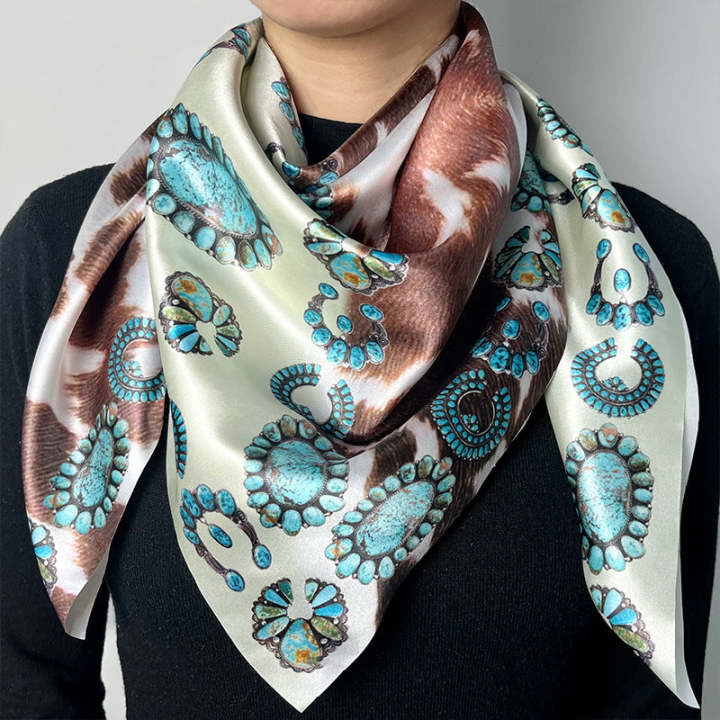
Quick Answer: Build from Focal Zone to Full Outfit
Choose the jewelry's position before choosing the rest of the accessories. For a neckline focal point, select the shirt or dress opening, record the necklace's wearable length, and decide whether the piece should sit on skin or fabric. Keep the nearest earrings, collar details, and belt hardware quieter until the complete look passes a three-distance test.
Then verify the exact product. Record its current option label, included components, measurements, mass, fastening, materials, finish, construction, care, and return conditions. If a necessary detail is absent, call it unknown. Browse the Turquoise Jewelry collection to create a shortlist, and use the Western Jewelry collection to compare a necklace-led outfit with earring-, ring-, or bracelet-led alternatives.
Step 1: Write an Outfit Brief Before Shopping
A one-sentence brief prevents theme drift. Try: “I want one blue-green neckline focal point over a plain dark top, with comfortable boots and a small secure bag,” or “I want a compact cross detail inside an open denim collar, with the rest of the jewelry kept quiet.” The brief should name the focal zone, base garment, dominant color, practical bag, and comfort priority.
Avoid using “for women” as a rulebook. Product naming can help shoppers find a listing, but scale, motif, color, and comfort should be chosen by the wearer. Do not assume that every woman prefers delicate jewelry or that every country-concert look needs boots, a hat, fringe, or a cross. Personal preference, venue conditions, accessibility needs, weather, and verified fit matter more than a gender stereotype.
Step 2: Decide What Turquoise Color Will Do
Turquoise-colored details can perform three different visual functions. As a focal point, one necklace carries the color while the outfit remains restrained. As a rhythm, a smaller second accent repeats the color at the ears, wrist, or hand. As a field, a larger garment or bag already carries blue-green, so the jewelry may need more separation or a different emphasis.
Pick only one function at first. Exact color matching is unnecessary and may be impossible because product photography, screen settings, daylight, indoor light, and venue lighting can change appearance. Compare the jewelry with the actual garment under more than one light source. If the tones differ, use distance and neutral fabric to make the difference look intentional rather than forcing a match.
Step 3: Choose the Neckline Before the Necklace
A neckline creates the frame. A crew neck offers a continuous fabric field; an open collar creates a V-shaped channel; a scoop neck exposes skin and changes contrast; a high neck can support a longer piece over fabric. The correct relationship depends on the exact wearable length, the central dimensions, and where the necklace settles during movement.
Test three postures: standing, seated, and leaning forward slightly. Check whether the central element disappears under a collar, collides with buttons, strikes a zipper, or moves into a bag strap. Photograph the full torso rather than inspecting only the pendant. The goal is a stable visual relationship, not a perfect still-life position that fails once the wearer walks.
Step 4: Establish a Visual Hierarchy
Divide accessories into primary, secondary, and quiet support. If the necklace is primary, earrings can echo a shape or finish at a smaller scale, the nearest wrist can remain open, and a belt buckle can provide lower-body balance without copying the motif. If a hat or embroidered jacket is already primary, the necklace may need to become secondary.
Use a squint test from several feet away. The eye should find one dominant area first, then discover supporting details. If the hat, earrings, necklace, buckle, bag, bracelets, and rings all arrive at the same visual volume, remove one item at a time. A coherent country-concert look usually becomes stronger when the hierarchy is clearer.
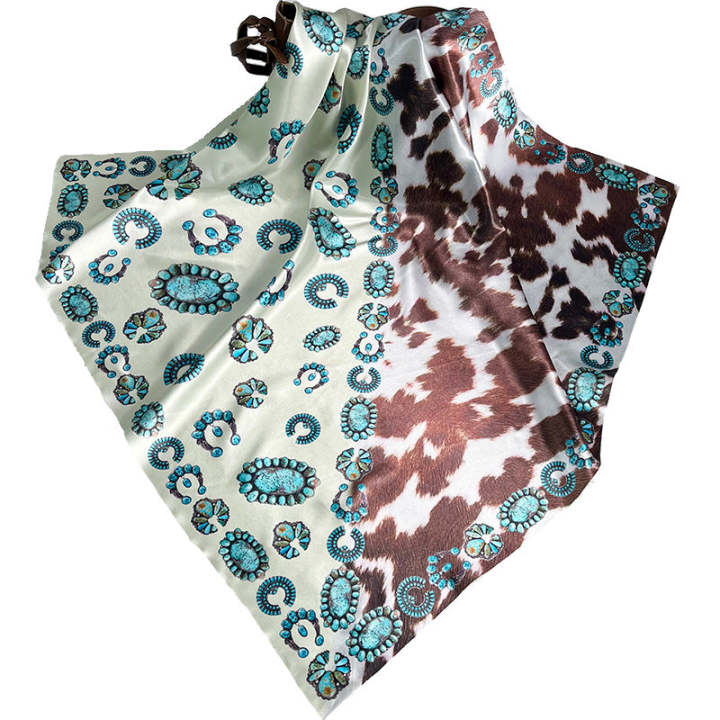
Product Study One: Western Turquoise Vintage Cross Jewelry for Women
During the latest review, this product page displayed $112.11 USD. Two choices labeled 90cm and 52cm were visible, with 52cm checked. The gallery showed multiple views and the page described Western, turquoise, vintage, everyday, occasion, and gifting contexts.
The visible listing did not clearly identify the complete inventory included with each length, the exact wearable path, central dimensions, total mass, fastening, full skin-contact and decorative components, finish, construction, turquoise disclosure, or care protocol. A centimeter label strongly suggests a length choice, but the shopper should still ask what exactly is being measured and whether the selected option changes anything besides length.
For a concert look, compare 52cm and 90cm against the planned neckline using verified measurements rather than a guess. A longer path may interact with buttons, belt hardware, a cross-body strap, or a seated posture. A shorter path may compete with a collar, hat cord, hair, or ear accessories. Confirm how the piece closes, whether adjustment is intended, and which gallery image belongs to each selection.
Formula A: The Open-Denim-Collar Look
Use a plain denim or chambray shirt with the collar opened only as far as the wearer finds comfortable. Place the selected cross-centered jewelry inside the collar or over the shirt, based on its verified wearable length and care instructions. Keep the nearest earrings compact and use one lower-body hardware detail for balance.
Rehearse buttoning, unbuttoning, putting on a jacket, and moving a bag strap. If the central element repeatedly hits a button or disappears under the collar, change the neckline or length rather than adding more jewelry to compensate. The article on choosing turquoise jewelry for a men's country-concert look uses the same wearer-led principle: select by role, preference, verified fit, and real movement rather than by a gender label.
Formula B: A Dark Column with One Blue-Green Accent
Start with a black, charcoal, deep brown, or dark denim base. Use the necklace area as the main color interruption and keep the bag and boots within a quiet tonal family. One small turquoise-colored repeat can work at the hand or ears, but separate it vertically from the necklace.
This formula is useful when the product's visible detail needs contrast. It also makes over-accessorizing easy to detect: if several pieces compete against the dark base, remove the one that does not contribute to shape, rhythm, or function. Check photographs in direct light and softer light, because strong contrast can appear flatter or more intense on a screen.
Formula C: Warm Neutrals and Texture
Cream, tan, rust, brown, or muted olive can create a warm field for a blue-green accent. Choose one texture—such as denim, smooth woven fabric, or a restrained leather-like surface—as the dominant texture. Fringe, lace, embroidery, tooled patterns, and prominent hardware should be added selectively because each creates another visual and physical interaction.
Run the necklace over the exact fabric only when compatible with the product's care guidance. Look for catching at open weaves, embroidery, and fringe. A surface that looks effective in a photograph can abrade an unknown finish or create snag risk during movement.
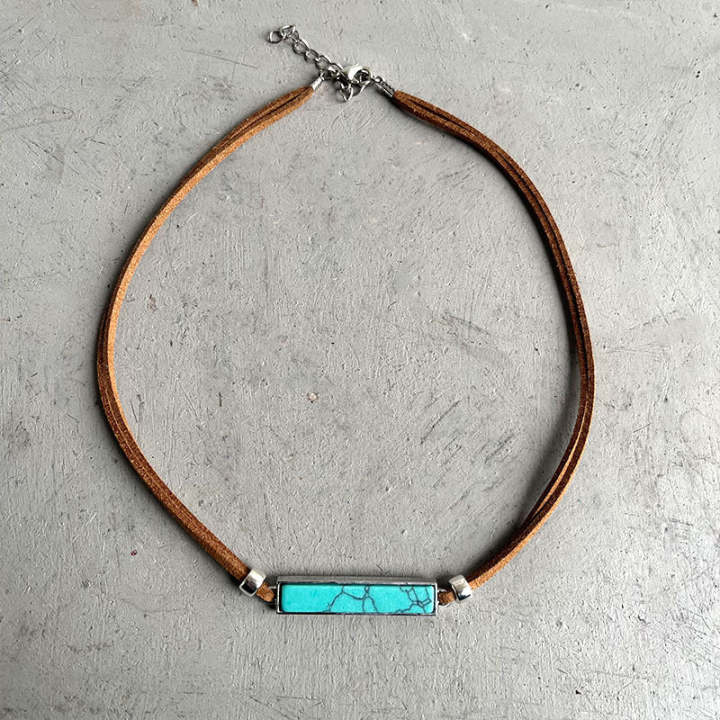
Product Study Two: Western Turquoise Vintage Geometric Cross Necklace
The second product page displayed $126.25 USD during review. Three visible choices were labeled Design 1, Design 3, and Design 4, with Design 1 checked. The page presented Western, turquoise, vintage, geometric, and cross styling for casual, Western-inspired, occasion, and gift use.
The visible listing did not clearly provide a design-by-design inventory, wearable length, central width and height, total mass, fastening, full components, finish, construction, turquoise identity, treatment, or care. Design labels create an option-mapping task: a shopper should confirm which thumbnails, measurements, included parts, price, and cart text correspond to the exact selection.
Use this listing only after mapping the chosen design. A geometric focal element can look controlled against a simple neckline, but its real proportion depends on numerical measurements and the wearer. Do not assume that Design 1 facts apply to Design 3 or Design 4. Save the selected label and seller answers with the order.
How to Compare the Two Product Directions
| Decision | Length-labeled listing | Design-labeled necklace |
|---|---|---|
| First question | What exactly do 52cm and 90cm measure? | Which images and facts belong to each design? |
| Outfit variable | Neckline and vertical path | Motif scale and option geometry |
| Movement check | Buttons, belt, bag, seated position | Collar, hair, strap, central stability |
| Evidence needed | Inventory, length path, mass, fastening, components | Option map, dimensions, mass, fastening, components |
| Stop condition | Unclear included item or unusable length | Ambiguous design or incompatible scale |
Do not compare price until both candidates describe the same decision fields. A lower price does not correct a missing fit fact, and a higher price does not authenticate a material. Compare option clarity, documented specifications, seller accountability, return conditions, and the role each item can fill in the wardrobe.
Use the Justine Leconte Video as a Neckline Lesson
The YouTube video “How to style (statement) necklaces | ‘Parisian chic’” by Justine Leconte officiel reviews different necklace types and discusses the relationship between a necklace and the rest of an outfit, including neckline decisions. Its strongest contribution to this country-concert plan is the method: consider the necklace's scale and position as part of the full garment composition.
The creator's examples are not Western-concert requirements, and the video does not inspect, measure, test, authenticate, price, or endorse either Oroxen listing. It cannot prove turquoise identity, metal, finish, construction, origin, fit, or care. Use it to ask better styling questions, then return to option-specific product evidence and the wearer's own rehearsal.
Plan the Ears, Wrists, and Hands After the Neckline
If the necklace is visually large, earrings can be quieter or omitted. If a hat, glasses, ear protection, or long hair already creates face-level activity, test that complete combination. At the wrist, leave space for the venue wristband and avoid crowding the hand that opens the bag or handles the phone.
For bracelet spacing and real-event movement, read 7 Ways to Wear Turquoise Bracelets for a Country Concert Look. If a ring becomes the secondary accent, apply the hand-clearance tests in Turquoise Western Ring Styling Mistakes to Avoid. Each body zone should contribute a distinct role rather than repeating the same volume.
Run a Venue-Action Rehearsal
- Put on the complete outfit, including jacket, hat, bag, and planned accessibility equipment.
- Present a phone ticket, open the bag, use the payment method, and handle a jacket pocket.
- Walk, sit, stand, turn, and lean forward while another person observes the necklace path.
- Move hair, put on approved hearing protection, and check contact with earrings or the necklace.
- Leave space for a venue wristband and confirm that no jewelry blocks its visibility.
- Practice removing the jewelry directly into a small dedicated case with a positive closure.
Stop for pain, pressure, skin reaction, impaired grip, repeated impact, insecure fastening, or catching. A rehearsal cannot guarantee safety, but it can expose predictable conflicts before the wearer enters a crowded environment.
Common Mistakes and Better Alternatives
Mistake: Matching Every Western Motif
Crosses, hats, boots, horseshoes, skulls, fringe, florals, and oversized buckles do not all need to appear in one look. Choose one or two visual ideas and let the rest support them.
Mistake: Assuming “Vintage” Means Old
Use vintage-inspired unless age and provenance are documented. A product title is not an appraisal.
Mistake: Treating Turquoise Color as Material Proof
Request written material disclosure when identity affects value, care, sensitivity, or meaning. Do not infer natural stone from color or pattern.
Mistake: Ignoring Personal Meaning
A cross motif may carry religious, cultural, family, fashion, or no special meaning depending on the wearer. Do not assign a story or belief. Confirm that the intended wearer welcomes the symbol, especially for a gift.
Mistake: Buying Before Reading Return Conditions
Review the current option-specific return, shipping, and hygiene restrictions before fitting or removing packaging. The broader evidence framework in What to Know Before Buying Turquoise Cowboy Jewelry helps separate a Western mood from a documented product.
Care Without Guessing
Unknown components and finishes make generic cleaning advice risky. Water, detergent, alcohol, perfume, sunscreen, cosmetics, polishing compounds, ultrasonic equipment, steam, dips, and abrasives can affect different materials, coatings, adhesives, cords, or joints in different ways.
Request product-specific instructions. When compatible, apply personal-care products first and let them dry before putting on jewelry. After the event, inspect the fastening and decorative elements under good light, follow the documented cleaning method, and store each piece separately. The women's turquoise jewelry care guide offers an uncertainty-first record, but seller instructions for the exact item take priority.
Frequently Asked Questions
Does a country-concert look require a turquoise necklace?
No. A necklace is one possible focal zone. Earrings, a bracelet, a ring, clothing, or a hat can lead the outfit instead. Choose the option that works with the wearer, venue, wardrobe, and verified fit.
Should earrings match the necklace exactly?
No. Exact matching can create unnecessary visual density. Earrings can repeat one color or shape at a quieter scale, or they can be omitted when the necklace, hair, hat, or glasses already provide enough face-level detail.
Which length is best for an open collar?
There is no universal length. Confirm what the stated measurement means, then compare it with the wearer's body, collar opening, central element, and movement. Test the actual relationship before the event.
Can photographs confirm natural turquoise?
No. Photographs can show visible color and pattern, but they cannot independently establish identity, treatment, composition, origin, or value. Request suitable documentation when those facts matter.
What should be carried for jewelry storage?
Use a small dedicated case with a secure closure and a consistent compartment in the bag. Do not place a loose item in a pocket with keys, coins, or abrasive objects, and avoid removing it over a sink or crowded floor.
Final Outfit Audit
- The outfit brief names one focal zone, a base garment, and a comfort priority.
- The exact product option is mapped to the correct gallery and current price.
- Included components, measurements, mass, fastening, materials, finish, construction, care, and returns are recorded or marked unknown.
- The necklace and neckline work while standing, seated, walking, and leaning.
- The bag, jacket, hair, hat, phone, ear protection, and venue wristband do not create unresolved conflict.
- The wearer understands and welcomes the selected motif.
- A secure removal and storage plan is ready.
- No photograph, price, title, or video is being used as authentication.
Conclusion: Style the Real Event, Not Just the Photograph
Build the country-concert look in a stable order: define the focal zone, choose the garment frame, map the exact jewelry option, establish color and accessory hierarchy, rehearse venue actions, and remove anything that creates competition or physical conflict. That sequence turns turquoise-colored jewelry from a theme keyword into a deliberate wardrobe choice.
Compare the two Oroxen listings with the same evidence fields and do not transfer specifications between options. Explore additional designs and practical guides from the Oroxen homepage, but keep the wearer in charge of fit, symbolism, comfort, and visual volume. A confident look is not the one with the most accessories; it is the one that still works when the music starts, the lights change, and the wearer moves through the entire night.