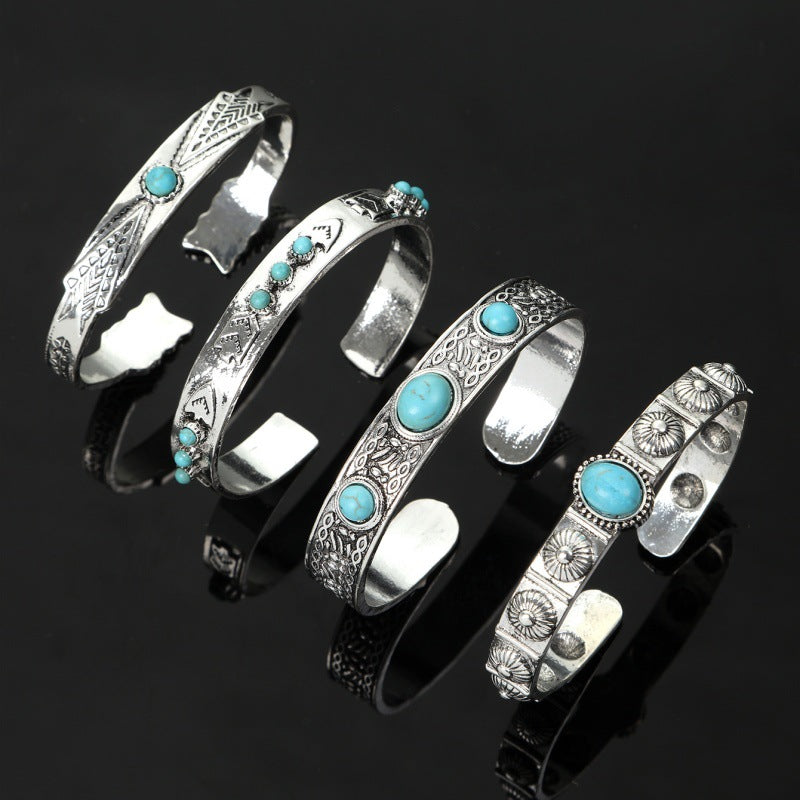
One country-concert bracelet can change character seven times without buying seven outfits. The difference comes from sleeve height, denim wash, wrist placement, belt contrast, outerwear, footwear, and the number of visible pieces. Treating those variables as controls makes styling more repeatable—and keeps the wearer from mistaking a close-up stack for a practical evening look.
The examples below use the Turquoise Western Cuff Bracelet Set and the Turquoise Boho Vintage Bracelet for Women. Their names and imagery describe visible style. They do not alone verify natural turquoise, metal identity, treatment, age, maker, origin, construction, handmade status, or cultural affiliation.
Quick Answer: Keep One Wrist Deliberate
Choose one decorated wrist and one working wrist. The working side handles the entry band, watch, phone, bag, accessibility device, or nothing at all. On the decorated side, begin with one bracelet and add only when the outfit and movement test justify it. This creates clear visual hierarchy and reduces collisions.
Every method below requires the same evidence check: confirm the exact option, measurements, opening or closure, mass, components, finish, construction, intended adjustability, and care. Check current venue rules, weather, seating, and bag policies directly. Use the Turquoise Jewelry Guides hub when a product or outfit question needs a deeper comparison.
Before the Seven Looks: Establish a Neutral Baseline
Put on a plain shirt, straight jeans, the concert footwear, and no jewelry. Take a full-body photograph with arms relaxed. Add the actual belt, jacket, hat, bag, watch, and simulated venue wristband one at a time. This baseline reveals which item already has the highest contrast.
| Variable | Quiet setting | Strong setting |
|---|---|---|
| Sleeve | Long and unrolled | Rolled above the forearm |
| Denim | Dark, even wash | Light or distressed wash |
| Belt | Plain buckle | Decorated buckle |
| Wrist | Single piece | Composed multi-piece stack |
| Face/neck | No statement jewelry | Visible earring, necklace, or hat detail |
Select only one or two strong settings at a time. The complete functional approach is covered in the country-concert turquoise bracelet guide.
Product Facts to Verify Before Styling
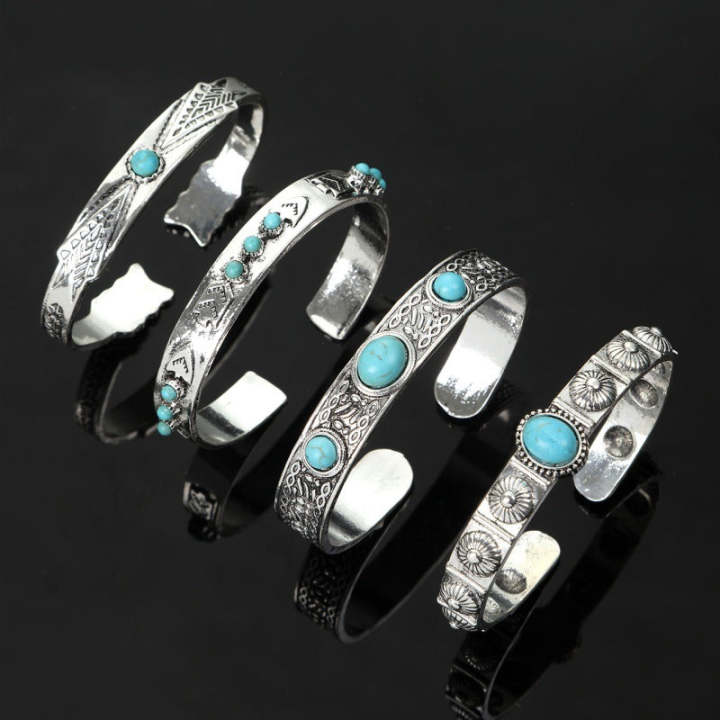
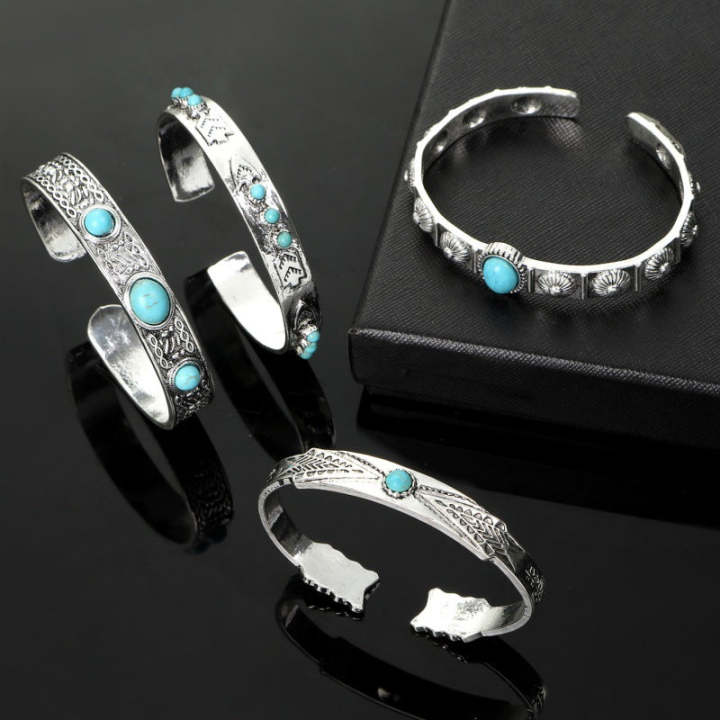
During the latest review, the Turquoise Western Cuff Bracelet Set displayed $34.99 USD and a checked “4Set” option. Its visible description identified four open cuffs with turquoise-colored accents and varied vintage-inspired motifs, intended for individual or stacked wear.
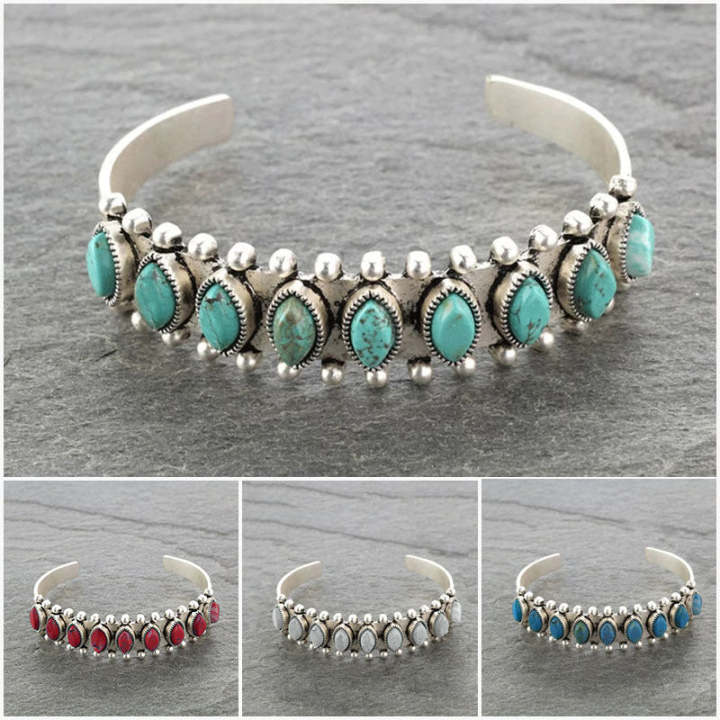
The Turquoise Boho Vintage Bracelet for Women displayed $90.90 USD and seven visible selections labeled Bracelet 1 through Bracelet 7, with Bracelet 1 checked. Its page described turquoise, boho, and vintage styling for casual, Western-inspired, occasion, and gifting contexts.
Neither visible page clearly supplied all exact dimensions, mass, complete skin-contact and decorative components, finish, construction, fit range, or care. The second page also requires careful mapping between each numbered option and the correct gallery image. Current prices and availability can change.
Use a Collection Scorecard Before Selecting a Look
Open the Western Bracelets collection and give each candidate a score from zero to two in five categories: visual role, sleeve compatibility, working-wrist plan, documented specifications, and option clarity. Zero means the requirement is absent or unknown, one means partly workable, and two means clearly suitable for the intended concert.
A product with a dramatic thumbnail but no mapped option or fit information should not outrank a quieter product with a clear role. Keep “unknown” separate from “bad.” Missing dimensions do not prove a bracelet will not fit; they mean the purchase requires another question. Likewise, a high styling score does not repair weak material or care disclosure.
- Visual role: Can you state whether the piece leads, supports, or stays subtle?
- Sleeve compatibility: Does the planned cuff or jacket leave enough room?
- Working-wrist plan: Is the other wrist available for entry and devices?
- Documented specifications: Are fit, mass, components, finish, and care stated?
- Option clarity: Can the selected label be matched to the correct images and inclusions?
Shortlist no more than three options. Apply the seven styling methods only after the scorecard identifies a viable exact product. This order keeps the creative exercise connected to a purchase that can actually be evaluated.
Way 1: One Cuff with a Rolled White Shirt
Start with a white button-front shirt, mid-wash jeans, and practical boots. Roll the decorated-side sleeve to leave a visible band of skin between fabric and bracelet. Keep the opposite sleeve at the same height for clothing balance, but leave that wrist free.
Wear one cuff only. The clean shirt gives the blue-green detail contrast while the jeans repeat the cool color family. Use a simple belt and skip a large necklace. This is the clearest first test because every collision with the cuff, buttons, bag, or phone becomes noticeable.
Way 2: Two Cuffs with a Dark T-Shirt
Use a charcoal or black tee, dark jeans, and a brown or neutral belt. Place two cuffs on the decorated wrist with a deliberate gap. They should look like a planned pair rather than pieces that drifted together.
Take one wrist photograph and one full-body photograph. If the cuffs appear small in the full silhouette, that may be correct; the outfit does not need to advertise every detail from across the venue. Add face-level jewelry only after deciding that the wrist remains the lead.
Way 3: Full Set with Sleeveless Denim
A sleeveless denim shirt or quiet tank with a denim layer gives the complete four-piece arrangement visual room. Keep the belt and earrings modest, and avoid another dense wrist stack. The complete set should function as one focal zone.
This is the most demanding version. Test each cuff individually before combining them. Do not assume that “open cuff” means repeated bending is allowed or that every piece fits the same way. Ask for the intended fitting method, then check rotation, pinching, sound, and contact between components during movement.
Way 4: One Numbered Bracelet with a Denim Dress
Select one of the seven numbered options only after mapping its label to the correct image and current offer. Pair it with a simple denim dress or denim skirt and quiet top. Roll or shorten the sleeve enough to prevent fabric from covering the jewelry accidentally.
Use the bracelet as a standalone object rather than assuming that every numbered option belongs in one stack. Confirm which product is included, its fit, closure or opening, components, and care. A high listed price or elaborate image does not supply missing specifications.
Way 5: Opposite-Wrist Balance with a Watch
If a watch or fitness tracker is essential, place the decorative bracelet on the other wrist. This avoids metal-on-metal contact and gives both items room. Follow the device manufacturer's safety and clearance guidance, especially when the device supports health monitoring or emergency functions.
Balance does not require symmetry. A dark watch and a turquoise-colored cuff can have different roles. Keep the rest of the accessories quiet and test how both wrists interact with armrests, bag straps, jacket sleeves, and phone use.
Way 6: Subtle Wrist, Strong Boots
Let decorated or high-contrast boots lead the outfit. Wear one narrow-looking bracelet or the quietest verified option with dark denim and a plain shirt. The wrist provides a color echo rather than a second focal point.
This method is useful when the concert involves standing or walking because footwear has both visual and functional importance. Do not add pieces merely to make the bracelet more visible in a close-up. The full silhouette decides whether the supporting role is successful.
Way 7: Work-to-Concert Changeover
Begin the day with a quiet shirt, jeans or trousers, and no bracelet if workplace or activity rules require it. Store the verified product in a clean, closable pouch separated from liquids, keys, cosmetics, coins, and heavy hardware. After changing into the concert layer, add one bracelet and reassess the complete look.
A removable accessory can create the transition without carrying a second outfit. The storage surface must be compatible with verified product components and care guidance. If the bracelet becomes uncomfortable at the venue, use the same pouch and record why it came off.
What the JTV Video Contributes
JTV's YouTube video “Wear It With Style: Turquoise Jewelry” frames turquoise jewelry as capable of making a bold statement or adding a subtler accent. That visual distinction maps directly to the seven methods: Ways 1, 5, 6, and 7 can stay restrained; Ways 2, 3, and 4 can carry more visible emphasis.
The video offers general gemstone and styling context. It does not identify, authenticate, fit, price, or document the two Oroxen bracelet products. Do not transfer its gemstone language to turquoise-colored components whose identity is not verified. Use bold-versus-subtle as a design decision, then rely on the exact listing and seller answers for product facts.
Run the Seven-Movement Test
- Walk with the approved bag for three minutes.
- Sit in a chair with armrests.
- Use the phone for a message, photo, and payment simulation.
- Open and close the jacket or shirt layer.
- Raise both arms without striking nearby objects.
- Clap gently and perform ordinary dance movements.
- Rest both wrists on a table and notice pressure or noise.
Remove any arrangement that pinches, rotates uncontrollably, snags, interferes with a device, or requires constant attention. Stop wearing jewelry that causes pain, numbness, swelling, broken skin, or a suspected reaction.
Five Mistakes That Flatten All Seven Looks
Changing Every Variable at Once
If shirt, boots, belt, hat, bracelet count, and earrings all change, you cannot learn which decision improved the outfit. Change one or two variables per photograph.
Forcing an Open Cuff
Confirm intended adjustment. Repeated bending can deform or damage an unidentified construction.
Letting the Sleeve Fall Randomly
Choose a secure roll, deliberate full-length sleeve, or different bracelet. Styling should not require continuous correction.
Calling the Accent Natural Turquoise
Use turquoise-colored unless the exact item has suitable material disclosure and documentation.
Building Only for Social-Media Close-Ups
A useful concert outfit must survive distance, movement, weather, and hours of wear. The white-shirt-and-jeans bracelet checklist supplies an additional full-outfit review method.
Frequently Asked Questions
Which of the seven methods is best for a beginner?
Start with Way 1 or Way 6 because a single piece makes fit, comfort, and visual hierarchy easier to evaluate. Progress only when the first arrangement works.
Can cowboy turquoise jewelry be worn by any gender?
Yes. Let the individual choose scale, symbolism, placement, and visibility. Gendered product labels do not replace personal preference or specifications.
Should all four cuffs be worn together?
The page presents individual and stacked possibilities, but the useful number depends on verified fit, construction, movement, sleeve, device use, and personal comfort.
How should two product options be compared?
Compare exact included components, dimensions, mass, fit method, materials, finish, care, and the intended outfit role. Mark absent information unknown rather than filling gaps from images.
Where should the reader go next?
Use the men's country-concert turquoise jewelry guide for face-level options, then browse the Western Jewelry collection only if the outfit still has an open role.
Review the Winning Method the Next Morning
Record the chosen way, exact bracelet option, number of pieces, sleeve height, denim wash, belt, footwear, venue type, weather, and total wear time. Then note every adjustment, collision, removal, compliment, and moment when the jewelry disappeared under clothing. Compliments can be pleasant, but comfort and function decide whether the method deserves to be repeated.
For the next concert, change one variable only. Move the bracelet to the other wrist, remove one cuff, quiet the buckle, or secure the sleeve differently. This produces a real personal styling system instead of a new untested stack for every event.
Final Choice: Repeat the Method That Survives the Show
Seven looks do not require seven purchases. One verified bracelet arrangement can move from subtle to bold through sleeve, denim, belt, footwear, wrist placement, and accessory hierarchy. Photograph the total outfit, rehearse the venue movements, and keep the method that stays comfortable and coherent.
Begin at Oroxen after defining the wrist's job. Confirm the exact option and current facts, preserve an easy removal plan, and let the bracelet support the concert rather than becoming the evening's maintenance project.