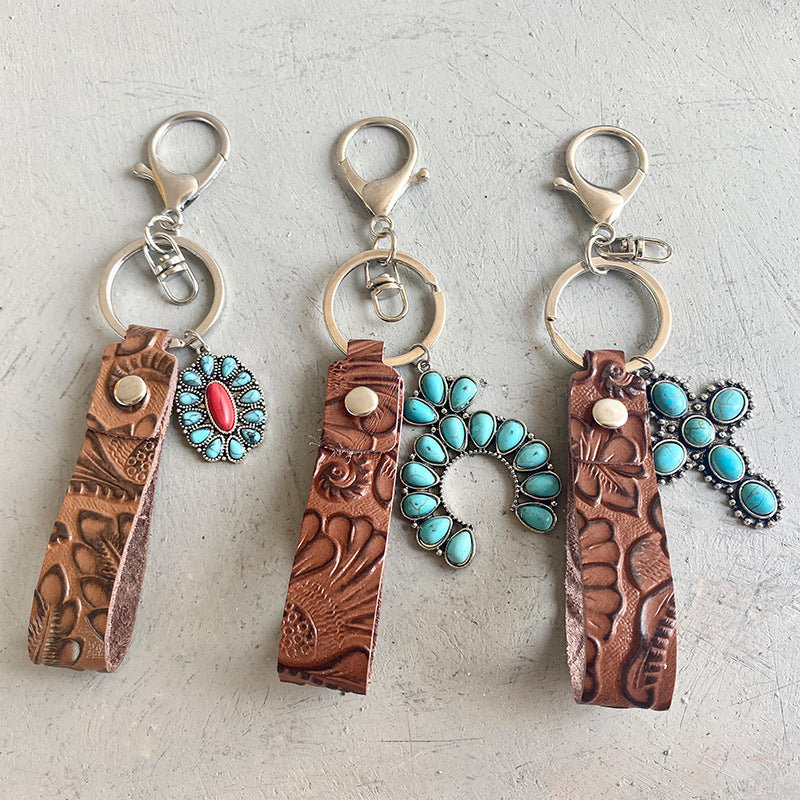
From Casual to Dressy: Styling Turquoise Jewelry for a Rodeo Outfit
Making a rodeo outfit dressier does not require adding more turquoise-colored jewelry. The stronger approach is to change the outfit's visual discipline: refine the background behind the jewelry, control the number of competing motifs, create a clearer line from face to torso, and confirm that every selected piece still works around a hat, jacket, buckle, bag, seating, and movement. “Dressy” comes from editing as much as from addition.
This guide uses a three-rung rodeo promotion ladder: casual, polished casual, and dressy. The jewelry can remain the same while garment contrast, neckline, hair, texture, and supporting accessories change. Each promotion must pass two gates. The visual gate asks whether hierarchy became clearer. The evidence gate asks whether the exact option, dimensions, materials, attachment, care, and movement route are known. A polished photograph cannot replace either gate.
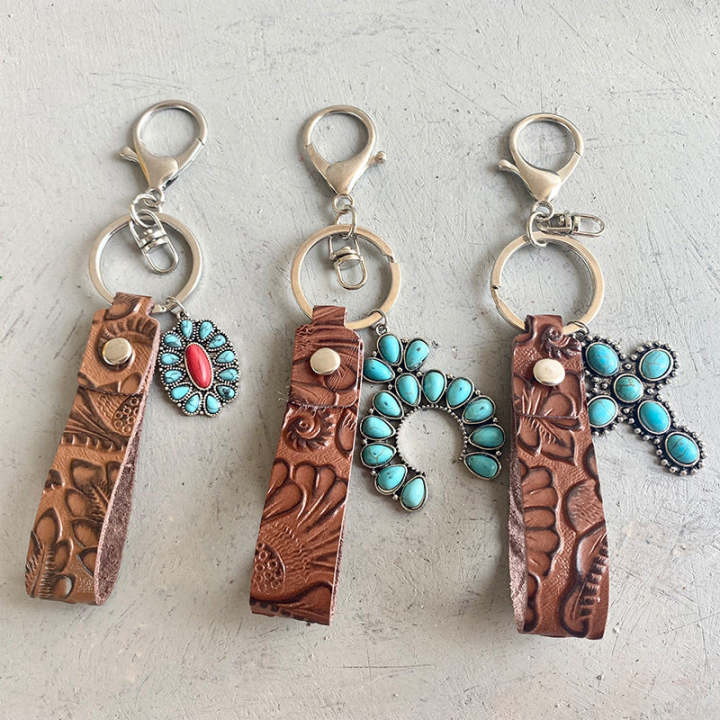
Quick Answer: Upgrade the Frame Before the Jewelry Count
For a casual rodeo look, place one verified necklace over denim or a plain knit and keep hair, earrings, buckle, and bag quiet. For polished casual, improve the necklace background with a deliberate neckline, cleaner jacket line, controlled hair, and one small supporting color point. For a dressier result, increase contrast and spacing rather than piling on motifs: use a smoother garment field, a planned necklace drop, a restrained belt, and polished—but not necessarily matching—supporting details.
The necklace should have one job on every rung. It may be the torso anchor, a bridge between face and belt, or a secondary line beneath a strong hat. Do not ask it to lead the torso while a large buckle, ornate hat band, embroidered yoke, decorated boots, and statement earrings all lead elsewhere. The upgrade fails when the eye has no resting place.
Preserve the difference between appearance and composition. Turquoise in a title and a blue-green detail can support styling observations, but they do not independently prove natural turquoise, treatment, origin, age, maker, or value. The published complete western turquoise jewelry guide offers a deeper evidence method.
The Four Upgrade Levers
Lever one: background
The garment behind a necklace determines how quickly its line can be read. Faded denim, a graphic tee, embroidery, lace, fringe, and patterned fabric add information. A solid shirt, smooth dress, or quiet jacket panel removes information. Moving from casual to dressy often means replacing a busy background with a simpler one, not replacing the necklace.
Lever two: line
Trace the necklace from attachment to lowest point. Compare that line with collar edges, placket, lapels, scarf, jacket opening, belt, and bag strap. Parallel or intentionally separated lines can look controlled. Tangled crossings can look accidental and may create physical contact. Exact necklace length, pendant dimensions, and complete hanging point are required before the line can be planned.
Lever three: contrast
Contrast may come from light versus dark, warm versus cool, matte versus reflective, or broad field versus small detail. A dressier outfit usually limits contrast to a few purposeful locations. If blue-green accents appear at face, neck, wrist, waist, bag, and boots, the color loses authority. Give it one primary zone and, if needed, one smaller repeat.
Lever four: motion
Leather cords, long pendants, chains, fringe, hair, scarves, and earrings move. Dressy styling still has to survive walking, sitting, reaching, hat removal, phone use, and jacket changes. Record the necklace's swing and contact envelope. A controlled full-length photograph does not establish safety during a crowded or active event.
Rung One: Casual Rodeo Styling
Start with the most forgiving structure: one necklace, denim or a simple cotton shirt, boots, and a practical bag. Roll or open the collar only if doing so keeps the necklace clear. Use small earrings or none, and let the buckle remain a supporting object. Hair can be natural, but test whether it catches the necklace attachment or hides the intended focal point.
Casual does not mean unplanned. Confirm venue conditions, weather, transportation, bag route, and the selected necklace's complete specifications. Rehearse the outfit while sitting, reaching, and using pockets. Prepare an individual compartment in case the piece must be removed. The necklace should be easy to count and store without placing it loose in a bag or pocket.
Rung Two: Polished Casual Styling
Keep the same clothing family but refine spacing. Choose a shirt with a cleaner neckline, align the necklace with the placket or open collar, and reduce visible bag hardware near the pendant path. Tuck or shape the shirt deliberately so the torso has one continuous field. If the necklace contains several motifs, choose earrings with a simpler outline and move any strong ring to the opposite hand.
Add one bridge rather than a matching set. A small blue-green earring, a quiet cuff, or a stitch color can connect the necklace to another zone. The bridge must remain visibly smaller than the anchor. Photograph at conversation distance; if the bridge becomes the second anchor, remove it or lower its contrast.
Rung Three: Dressier Rodeo Styling
Dressier rodeo style can use a solid dress, structured vest, smoother dark shirt, or cleaner jacket with minimal hardware. Increase the empty space around the necklace. Control hair so the attachment and upper line remain visible. Choose a belt and buckle whose width and reflective area support rather than duplicate the necklace. Clean footwear and intentional garment fit often contribute more polish than another piece of jewelry.
The dressy rung needs the strictest movement test because smooth fabrics, fitted collars, structured lapels, and small bags can change the contact route. Confirm that the necklace does not strike a buckle, enter a bag strap path, disappear under a lapel, or catch during hat and jacket removal. If it does, adjust the garment or choose a different verified necklace option; do not improvise by tying, bending, clipping, or extending an unknown construction.
Use the Turquoise Jewelry Collection as a Role Library
The Turquoise Jewelry collection can be browsed by role rather than by matching color. Look for torso anchors, quiet face accents, wrist bridges, and small hand punctuation. The collection helps compare visible silhouettes, but it does not prove that every product contains the same material, uses the same size system, or shares the same care instructions.
Open each candidate page and record title, URL, date, displayed price, selected option, corresponding images, included quantity, total length, extension range, maximum pendant dimensions, mass, closure, all materials, decorative-material identity and treatment, coating or finish, construction, care, and current shipping and return terms. Missing facts go into an unresolved column.
The broader Western Jewelry collection is useful when the necklace is already selected and the outfit needs one supporting category. Compare earrings, bracelets, and rings by spacing and hierarchy before comparing motif names.
Current Example One: Western Turquoise Vintage Floral Leather Necklace
On August 24, 2026, the Western Turquoise Vintage Floral Leather Necklace page displayed $141.40 USD. It presented Design 1 through Design 5 under a Size heading, with Design 1 selected during review. The gallery numbering extended through twenty positions. The visible copy used western, turquoise, vintage, floral, and leather language and suggested everyday, western-inspired, occasion, and gifting contexts.
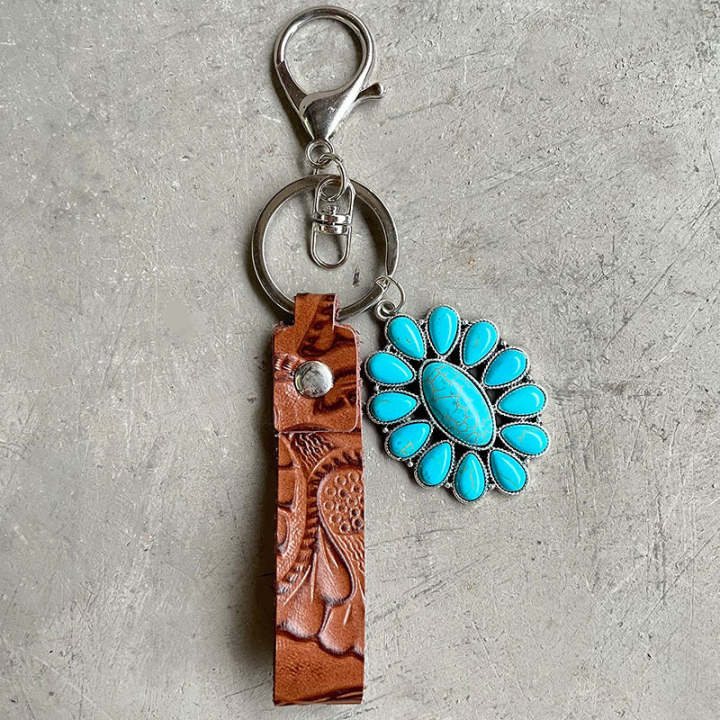
The five Design choices create five separate styling decisions. Match the chosen Design to exact gallery images before deciding whether its shape is casual, polished casual, or dressy in the planned outfit. A Design label listed under Size does not establish physical measurements. Ask for the option map, complete necklace length, extension, lowest hanging point, pendant or decorative-area dimensions, total mass, closure, and included quantity.
For a casual look, place one selected Design over a quiet denim field and keep the belt and earrings simple. For polished casual, expose the complete line and repeat one floral or blue-green detail at lower contrast. For a dressier result, use a smooth dark or cream background, controlled hair, and a minimal buckle. The leather wording in the title should not be treated as complete material documentation; request the exact type, finish, treatments, all other components, attachment method, and care.
The visible page reviewed did not establish all of those specifications. It also did not fully map each Design to every delivered component. Until the seller documents them, fit, material, care, and movement conclusions remain unresolved rather than negative.
Current Example Two: Western Turquoise Vintage Geometric Cross Necklace
On the same review date, the Western Turquoise Vintage Geometric Cross Necklace page displayed $126.25 USD. It showed Design 1, Design 3, and Design 4 under Size, with Design 1 selected. Gallery numbering extended through fifteen positions. The visible copy used western, turquoise, vintage, geometric, and cross language.
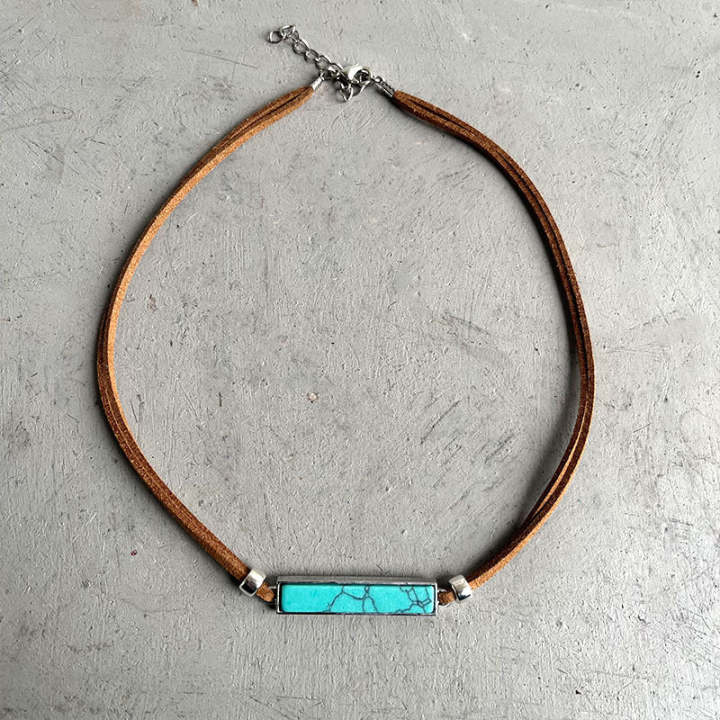
The cross-related geometry can become a stronger visual signal than the floral option, so count similar motifs elsewhere. In a casual outfit, let the necklace lead over a plain tee or denim shirt and avoid a second large cross at belt or earrings. For polished casual, align the necklace with a clean neckline and use one geometric echo at smaller scale. For dressy styling, increase empty background space and reduce reflective hardware.
Design 1, 3, and 4 must be matched to exact images and delivered contents. Request total length, extension, decorative-area dimensions, mass, closure, all materials, decorative-material identity and treatment, metal or alloy, coating, construction, and care. A screen image cannot establish any of those facts. Cross wording also does not prove age, maker, origin, cultural context, or symbolic meaning.
One Necklace, Three Rungs: A Practical Rehearsal
- Select one exact Design and save its page, image, price, and review date.
- Verify complete dimensions, mass, closure, materials, construction, and care.
- Build the casual outfit and photograph full length, torso, side, and seated views.
- Promote it to polished casual by changing background, line, or one supporting detail—never all at once.
- Promote it to dressy by increasing empty space, controlling hair and hardware, and refining garment fit.
- At every rung, walk, sit, reach, use the phone, handle the bag, and remove the hat and jacket.
- Count all jewelry before departure and after temporary storage.
This sequence isolates the change that created polish. If a new earring, bracelet, buckle, scarf, and jacket are added simultaneously, it becomes impossible to tell which addition improved or weakened the hierarchy.
What the “Turquoise Necklaces” Video Contributes
The corresponding video, “Turquoise Necklaces” by John Hartman, runs 6 minutes 27 seconds and was watched in full on August 24, 2026. Closed captions were unavailable on the reviewed page. The retailer-produced presentation surveys multiple necklace categories; the page description specifically identifies bead necklaces and pendant necklaces among the examples.
The useful styling lesson is category before ornament. A beaded line distributes visual weight around the neck, while a pendant-led form concentrates attention lower on the torso. That difference affects neckline, background, and promotion through the three rungs. The video does not identify the exact Oroxen products or prove their dimensions, turquoise identity, leather type, metal, origin, maker, value, care, or fit. Use it to generate silhouette questions, not to import product claims.
Common Upgrade Mistakes and Better Corrections
- Adding jewelry to become dressy: improve background, spacing, garment line, and hardware control first.
- Treating all Designs as one product: map the exact option to image, dimensions, contents, and care.
- Repeating every motif: use one anchor and one smaller bridge.
- Estimating necklace length from a model: request the complete measurement and test it on the wearer.
- Letting bag straps cross the necklace: rehearse the exact bag and change the route if contact occurs.
- Calling visual color a mineral identity: preserve seller wording and request documentation.
- Skipping the exit plan: prepare a dedicated closed compartment before the event.
The published western jewelry motifs and materials guide helps prevent floral, geometric, cross, leather, vintage, and western language from becoming unsupported claims about composition, age, origin, or culture.
Rodeo Movement and Storage Check
Confirm current venue rules, seating, weather, transport, bag size, and planned activities. Dress fully, including hat, hair, outerwear, belt, buckle, bag, and every piece of jewelry. Walk, turn, sit, stand, reach, use the phone, operate pockets, remove the hat, and change outerwear. Stop at pain, pulling, snagging, impact, or forced movement.
If the necklace must come off, move to a stable place, remove it according to verified closure instructions, place it directly into its own compartment, close the compartment, and recount. Never leave it loose in a pocket, shared pouch, cup holder, restroom surface, or open bag. Review current return terms before wearing, adjusting, or altering packaging.
The published country concert jewelry guide offers related questions for crowds, bags, outerwear, hearing protection, seating, and temporary removal. Adapt them to the actual rodeo venue.
Frequently Asked Questions
Can the same necklace work for casual and dressy rodeo outfits?
Yes, when the exact Design passes both evidence and movement gates. Change background, line, contrast, and supporting details around it; do not assume a product label guarantees every role.
Do Design numbers represent different lengths?
Not necessarily. The reviewed pages placed Design labels under Size, but that does not establish dimensions. Ask for the option-to-image map and measurements.
Should a dressy outfit include matching earrings?
Exact matching is optional. A quiet earring that repeats one color or line can support the necklace. If both pieces demand first attention, simplify one zone.
Does “leather necklace” establish genuine leather?
No. Request the exact material type, finish, treatment, construction, and care. Preserve the product title without expanding it into an unsupported composition claim.
Which option is more formal: floral or geometric cross?
Formality comes from the complete outfit and verified scale, not motif name alone. Test each exact Design against the same garment, lighting, hair, hardware, and movement plan.
Where can I compare more pieces?
Browse the Turquoise Jewelry collection for blue-green styling candidates and the Western Jewelry collection for broader supporting categories.
Final Casual-to-Dressy Promotion Card
- The exact Design is mapped to images and delivered contents.
- Length, extension, decorative dimensions, mass, closure, materials, construction, and care are verified.
- Casual styling uses one anchor over a practical quiet field.
- Polished casual improves line and spacing with one smaller bridge.
- Dressy styling increases empty space and controls hair, hardware, buckle, and bag.
- Every rung passes the complete movement and storage rehearsal.
- The YouTube video informs necklace-category questions only and proves no Oroxen product fact.
Conclusion: Promote the Outfit with Editing
Moving from casual to dressy is a controlled sequence. Begin with one documented necklace, refine the background, clarify its line, limit contrast, and test motion. Add only what gives the outfit a new job. When an option, dimension, material, or care fact is missing, resolve the question before promoting the look.
Compare current candidates in Turquoise Jewelry, explore supporting categories in Western Jewelry, or return to the Oroxen homepage. Let the real product and real rodeo route define the final rung.