A denim jacket does not lock an outfit into one level of formality. The same jacket can sit over a washed T-shirt for errands, a crisp shirt for dinner, or a fluid monochrome layer for a creative evening event. Turquoise-colored bracelets can move with that change—but adding more bracelets does not automatically make the result dressier.
This guide builds a five-rung styling ladder from relaxed to polished. Each rung changes the garment finish, sleeve exposure, bracelet density, supporting accessories, and movement expectations. Two current Oroxen products demonstrate different editing possibilities: a four-piece open-cuff set and a page with seven selectable bracelet designs. Product names such as “turquoise,” “boho,” and “vintage” are treated as retail style language unless the exact page supplies explicit material or age documentation.
Quick Answer: Dressiness Comes from Finish and Intention
To move a denim-jacket and bracelet outfit toward dressy, improve the finish of the surrounding pieces before increasing jewelry quantity. Exchange a worn graphic tee for a smooth solid top, choose darker or cleaner denim, create a deliberate sleeve line, simplify competing hardware, and use a shoe or bag with a more refined surface. Then decide whether one bracelet or a controlled stack best supports the result.
For a casual direction, allow softer layers, faded denim, practical shoes, and looser sleeve treatment. The bracelet may appear only during movement. For a polished direction, expose the wrist intentionally, give the bracelet clean visual space, and test the outfit while seated and carrying the event bag.
Use the Turquoise Jewelry Guides as the subject hub. For wider outfit formulas across jewelry categories, see the published How to Style Western Jewelry with Denim, Dresses, Boots & Workwear.
The Five Controls on the Styling Ladder
1. Denim finish
Fading, distressing, patching, embroidery, raw edges, dark washes, black denim, and clean seams produce different visual levels. None is inherently superior. The question is whether the jacket finish supports the destination and gives the bracelet enough separation.
2. Underlayer finish
A casual tee, ribbed knit, crisp shirt, satin-like blouse, fine-gauge sweater, or monochrome dress changes the outfit more than an extra bracelet may. Place fabric quality and condition ahead of accessory quantity.
3. Sleeve architecture
An irregular push-up reads relaxed. A single broad roll can feel intentional. A narrow symmetrical roll can expose the wrist cleanly. A full sleeve keeps the bracelet as an occasional movement detail. Choose the line, then test comfort and friction.
4. Wrist density
One piece creates a point. Two create a relationship. Three or four create a cluster. Density can be casual, dressy, maximal, or minimal depending on scale and surroundings. Listen for contact and examine overlapping edges.
5. Supporting finish
Shoes, bag, belt, earrings, hair, and makeup or grooming affect formality. One polished supporting element may raise the entire look more effectively than a fully matched jewelry set.
Rung 1: Weekend Utility
Clothing: faded denim jacket, plain tee, jeans or casual trousers, practical shoes. Wrist: one bracelet. Sleeve: relaxed single roll or natural push-up. Supporting jewelry: small earrings or simple ring.
The bracelet is a moving accent rather than the center of a controlled composition. Test a tote or crossbody bag, sunglasses, jacket pockets, and ordinary errands. If the bracelet catches on a cuff or bag, lower the density rather than arranging it repeatedly.
What keeps this look coherent is restraint in the theme. Denim plus one turquoise-colored accent may already communicate enough Western direction. Boots, a hat, a buckle, a scarf, and several motifs are optional.
Rung 2: Casual Social
Clothing: medium-wash jacket over a clean knit or solid top, dark jeans or a simple skirt. Wrist: one or two bracelets. Sleeve: deliberate broad roll. Supporting finish: cleaner footwear and a structured casual bag.
At this level, expose the bracelet consistently enough that it looks chosen rather than accidental. If using two cuffs, vary visual width or motif but ensure the edges do not create uncomfortable contact. Keep the opposite wrist simple, especially when a watch already adds another hard surface.
Take a full-length photograph and a hand-at-rest photograph. The wrist should support the outfit from normal distance; the close-up is only a secondary check.
Rung 3: Smart Casual
Clothing: dark or clean medium denim, crisp shirt or smooth fine-gauge knit, tailored trousers or a clean skirt. Wrist: one clearly selected bracelet or an edited two-piece stack. Sleeve: symmetrical and stable. Supporting finish: refined shoe and controlled bag hardware.
The bracelet can become the main color point. Keep a graphic neckline, large buckle, multiple pins, and statement earrings from forming equal competitors. Matching every metal color is unnecessary; a dominant finish with one quieter repeat can look intentional.
Run the desk and seated test. Smart-casual settings often involve tables, laptops, or handshakes. A beautiful stack that strikes a desk, interferes with typing, or requires frequent repositioning is not polished in use.
Rung 4: Dinner or Creative Evening
Clothing: dark denim jacket over a smooth monochrome layer or dress. Wrist: one sculptural piece or a carefully spaced stack. Sleeve: narrow roll or bracelet placed beyond the jacket cuff with clear separation. Supporting finish: intentional earrings, refined boots or shoes, and a compact bag.
Evening light can change perceived color and shine. Photograph the outfit under warm indoor light, not only by a window. Decide whether the bracelet or earrings lead. If both are strong, create distance and protect the neckline as a quiet zone.
A dressier look also needs a return path for extra layers. Add the coat, scarf, or wrap and test whether the bracelet remains comfortable. An outfit that works only before outerwear is added is incomplete.
Rung 5: Deliberate Statement
Clothing: a clean denim silhouette used as an intentional contrast against polished garments. Wrist: a full but edited set, or one unmistakable bracelet as the lead. Sleeve: engineered to preserve the wrist composition. Supporting finish: minimal nearby competition and a purposeful distant echo.
Statement does not require maximum quantity. Four cuffs can create a dense focal band, but a single broad or distinctive design can be equally strong. Choose the route that survives motion and serves the event. If a stack generates noise, scraping, pinching, or constant rearrangement, it is not elevated merely because it is larger.
At full-length distance, the eye should find the bracelet by design rather than by accident. At close distance, the product should match the selected option and documented specifications.
Build the Shortlist from Western Bracelets
Use the Western Bracelets collection to create three columns: single daily accent, editable stack, and special-event lead. Sort by construction and piece count before color. An open cuff, closed bangle, flexible link, and multi-piece set have different entry and movement requirements.
For each candidate, record the exact option, inner dimensions, opening or closure, band width, weight, materials, surface treatment, care, stock, shipping, and returns. A collection image can inspire a rung; only the exact product page and seller clarification can fill the evidence record.
Product Ladder: Turquoise Western Cuff Bracelet Set
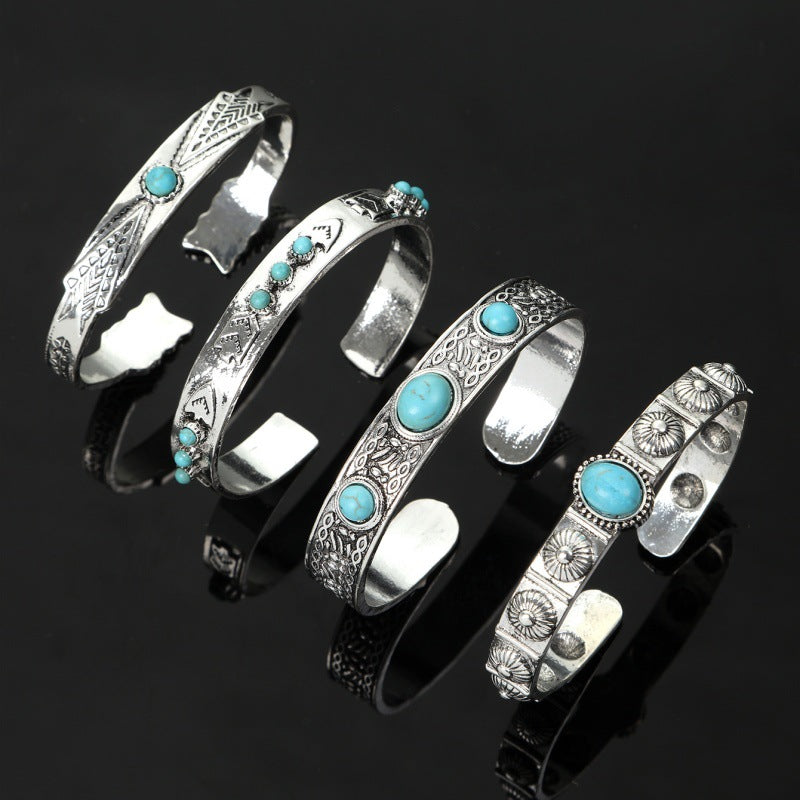
The current Turquoise Western Cuff Bracelet Set page explicitly describes four separate open cuff bracelets with turquoise-colored accents and varied vintage-inspired motifs. It says they can be worn stacked or individually, and the selector currently reads “4Set.” This makes the set naturally useful for a styling ladder.
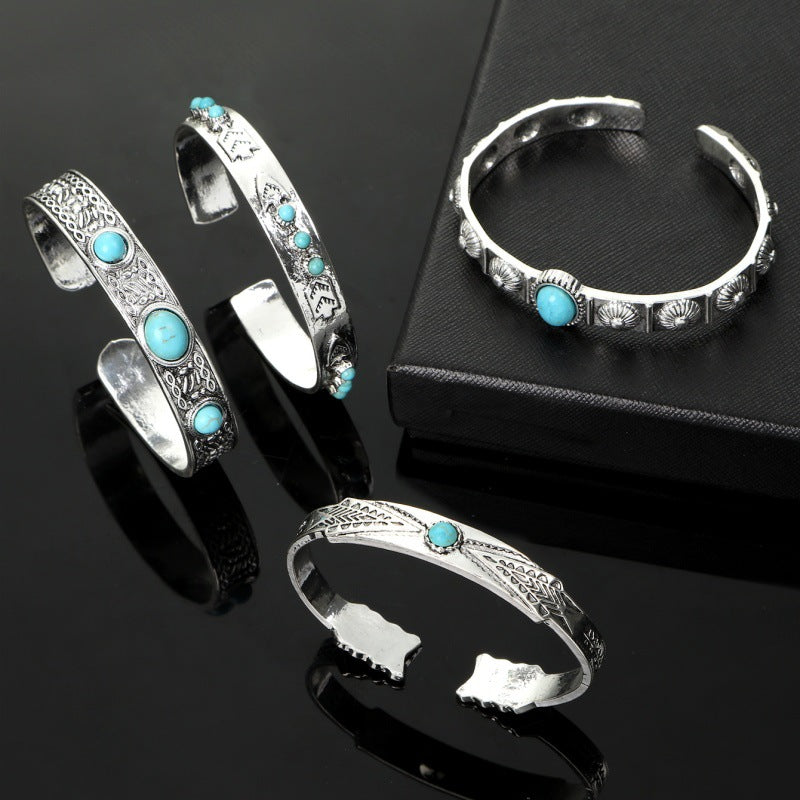
Casual edit
Choose one cuff and allow the sleeve to move naturally. Use a plain tee and faded jacket. The chosen piece becomes a color echo rather than a formal centerpiece.
Middle edit
Select two cuffs with distinct visual roles. Position them in the order that minimizes edge conflict, then repeat typing, bag, and sleeve tests. A stable broad roll exposes the pair.
Dressy edit
Use either all four as one controlled wrist band or choose the strongest single cuff against dark denim and a refined underlayer. Do not assume the full set is automatically superior. Ask for each cuff’s dimensions, weight, materials, permitted adjustment, and stack-care guidance.
Product Ladder: Turquoise Boho Vintage Bracelet for Women
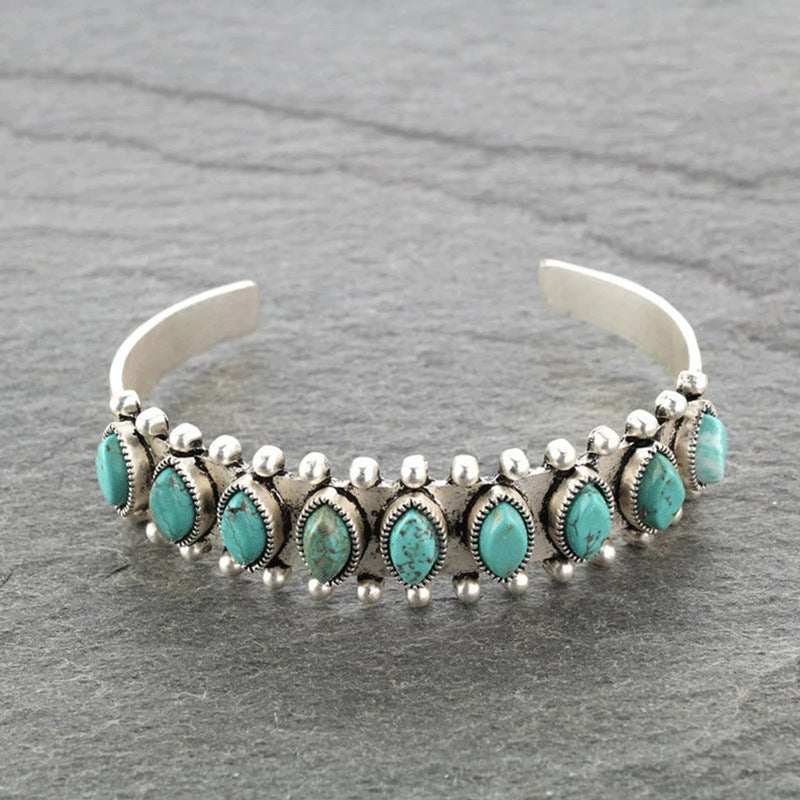
The Turquoise Boho Vintage Bracelet for Women page currently offers seven options labeled Bracelet 1 through Bracelet 7. Treat them as seven candidates sharing a page. Verify which gallery images and specifications belong to the selected option.
Casual edit
Select a design whose visible scale works with the natural jacket cuff. Keep other wrist items minimal and let the bracelet appear during movement.
Middle edit
Create clearer exposure with a deliberate sleeve roll and combine the selected bracelet with a smooth solid top. Use earrings as a small color or finish echo.
Dressy edit
Give the bracelet an uncluttered wrist field and improve the finish of shoes, bag, and underlayer. Request exact dimensions, weight, construction, entry method, materials, closure or opening, and care. Do not merge facts from different numbered options.
Video Use: Translate Proportion, Not Product Claims
The paired video is “Turquoise Necklaces” by John Hartman. It discusses necklaces rather than bracelets, so its useful contribution is limited to broader visual questions such as proportion, color placement, and presentation. Watch the full video before citing a specific point.
Do not transfer a necklace’s material, history, construction, or styling conclusion to a bracelet. Use the video to ask how a colored focal point changes at different scales, then test that relationship at the wrist. Verify every product-specific fact independently and never reproduce the transcript.
Common Casual-to-Dressy Mistakes
- Adding quantity instead of finish: refine clothing and sleeve architecture first.
- Hiding the wrist unintentionally: decide whether the bracelet is visible at rest or only in motion.
- Using an unstable roll: build a sleeve line that survives sitting and movement.
- Stacking without contact testing: add one piece at a time and listen for impact.
- Matching every turquoise-colored detail: repeat the accent selectively and keep a neutral zone.
- Calling a product dressy because it costs more: use styling relationship and verified facts, not price as proof.
- Ignoring the destination: dinner, desk work, concerts, and travel create different wrist demands.
For fit terminology and evidence standards, see What Is Western Jewelry?. For event movement, use the published Country Concert Jewelry Guide.
Create a Five-Photo Ladder Record
Photograph one version for each rung from the same distance, camera height, and lighting. Name the files R1 through R5 and add a short note containing jacket wash, underlayer, sleeve roll, bracelet count, shoes, bag, destination, and comfort result. Equal photography conditions prevent a close-up or brighter room from making one version appear unfairly stronger.
Review the five images as thumbnails. The changing visual hierarchy becomes easier to see when detail is reduced. Circle the first point noticed in each image and note whether that point matches the intended lead. Then review the wrist close-ups for spacing and contact, but do not let attractive product detail replace the full-outfit verdict.
Keep the winning casual and dressy records with the corresponding product notes. The next time the jacket is worn, you can rebuild a tested rung rather than improvising from memory. The archive also reveals whether an additional bracelet would solve a real styling gap or merely duplicate a role already covered.
Frequently Asked Questions
Can a faded denim jacket look dressy?
Yes, when the rest of the outfit has deliberate finish, proportion, and condition. A faded jacket can create intentional contrast against a smooth monochrome layer and refined accessories.
Are more bracelets automatically dressier?
No. Density creates impact, not guaranteed formality. A single bracelet with clean wrist space can look more polished than an unmanaged stack.
Should both sleeves be rolled?
Either symmetrical or asymmetrical styling can work. The decision should look deliberate, expose the intended wrist, and remain stable through movement.
Can a bracelet be worn beside a watch?
Yes, if documented construction, surfaces, fit, and movement do not create damaging or uncomfortable contact. Test carefully and consider opposite wrists.
Does “turquoise bracelet” prove material identity?
No. It can be color or merchandising language. Seek an explicit option-specific material statement when identity matters.
What facts should be confirmed?
Exact option, piece count, inner dimensions, opening or closure, band width, weight, materials, finish, permitted adjustment, care, current price, stock, shipping, and returns.
Where should I browse next?
Compare current pieces in Western Bracelets, explore the Western Jewelry collection, or return to the Oroxen home page.
Final Ladder Check
Name the rung, destination, jacket finish, underlayer, sleeve architecture, wrist density, and supporting finish. Then verify that the selected bracelet fits, remains comfortable, survives motion, and has an evidence record tied to the exact option.
Moving from casual to dressy is an editing process. Improve finish, clarify exposure, control density, and protect function. The bracelet becomes polished because its role is intentional—not because the outfit contains the largest possible stack.