A jewelry capsule is not a box filled with nearly identical Western motifs. It is a small, deliberate system in which each piece performs several outfit jobs without creating unnecessary duplication. For a first-time buyer, the best test is multiplication: can two jewelry choices produce meaningfully different looks with five garments, two pairs of shoes, and one bag?
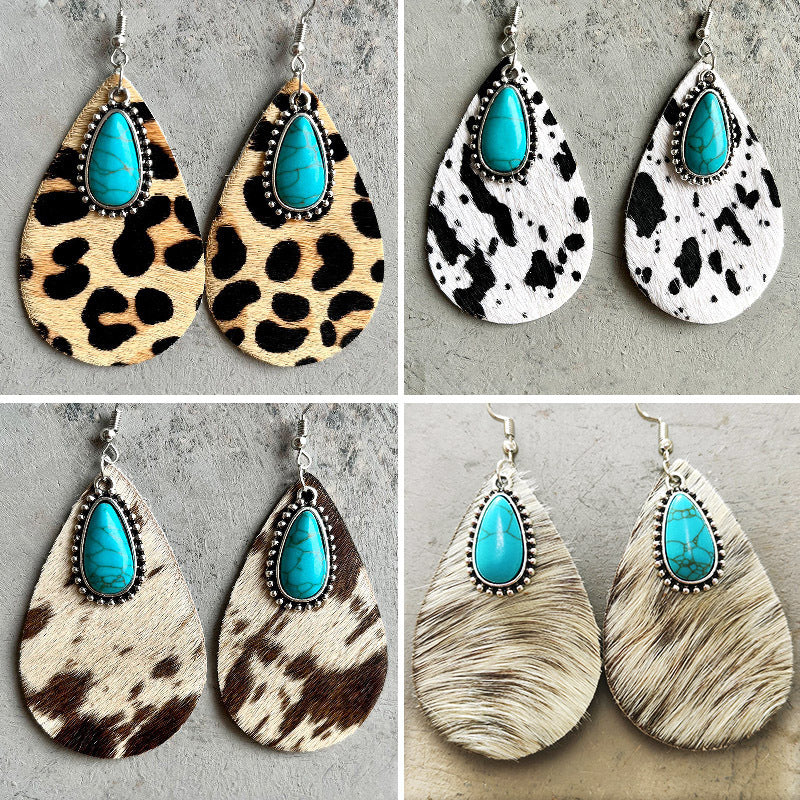
This guide builds that system around two current Oroxen examples: Western Turquoise Vintage Earrings and the Western Turquoise Vintage Floral Leather Necklace. The product titles describe a visual direction; they do not prove gemstone identity, age, metal content, leather type, cultural origin, or construction. A capsule only works when the exact option, measurements, comfort, and care needs are verified.
The Seven-Piece Wardrobe Base
Choose clothes already worn regularly: one white or cream top, one dark top, one denim shirt or jacket, one simple dress or jumpsuit, one pair of jeans or neutral trousers, one pair of everyday shoes, and one dressier pair. Add one practical bag. These items form the test environment; no jewelry choice should require an imaginary replacement wardrobe.
Photograph the garments together and mark their strongest signals. A distressed denim layer may already supply texture. A printed dress may supply pattern. Boots with decorated shafts may supply a Western reference. The jewelry should fill an empty role rather than repeat every signal. Browse the Turquoise Jewelry collection for current silhouettes, but keep the base wardrobe visible while comparing.
Capsule Rule 1: Assign Different Visual Zones
The earrings occupy the face zone; the necklace occupies the chest zone. That separation creates three immediate states: earrings alone, necklace alone, and both together with one acting as support. It is more flexible than buying two statement necklaces that compete for the same neckline.
Write a job description for each piece. The earrings might be “face-level color and shape when necklines are busy.” The necklace might be “vertical focal point for solid tops and open layers.” If both descriptions sound identical, reconsider the pair. Capsule value comes from complementary functions, not simply a shared turquoise-colored appearance.
Capsule Rule 2: Verify the Seven Earring Designs
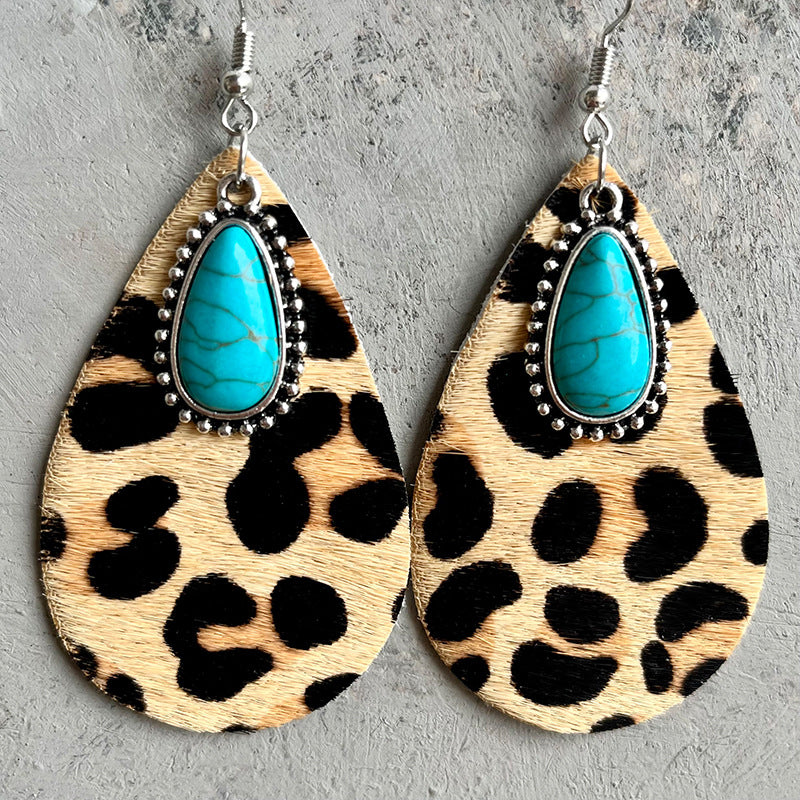
The Western Turquoise Vintage Earrings page currently shows Design 1 through Design 7. Those generic option labels require careful image matching. Save the intended design number and confirm that the selected photograph, price, and included pair correspond to it. Ask for height, width, projection, single-earring weight, closure or hook type, materials, and care directions for the exact design.
Different silhouettes may perform different capsule jobs, but do not infer size or comfort from a thumbnail. A long-looking earring can be lightweight; a compact-looking one can still project or pull. Test the documented dimensions against hair, glasses, hats, collars, headphones, and phone use.
The first capsule photo should show the selected earrings with the simplest dark top and no necklace. This establishes their actual visual strength. If they disappear, change hair or neckline before adding more jewelry. If they dominate, reserve them for quiet garments.
Capsule Rule 3: Verify the Five Necklace Designs
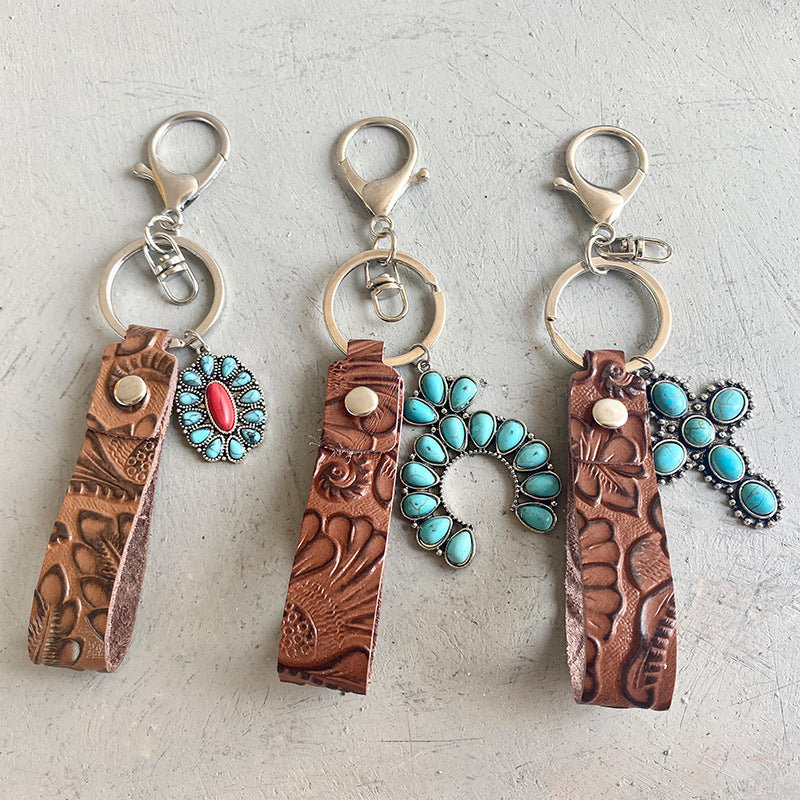
The floral leather necklace page currently shows Design 1 through Design 5. The visible page reviewed for this guide did not supply overall wearable length, focal dimensions, weight, closure, adjustment, component materials, leather classification, or option-specific care. Request those details before assigning the piece to several outfits.
Map the confirmed wearable length with soft string against the cream top, dark top, dress, and open denim layer. Note whether the largest element falls above the neckline, inside the jacket opening, on a button line, or near a belt. A necklace that works over one top may collide with another collar or closure.
Check the back and closure as carefully as the front. A capsule piece will be put on often, so fastening ease, hair contact, weight distribution, and storage matter. Repeated convenience is part of versatility.
A Twelve-Outfit Capsule Matrix
Build twelve combinations before buying additional jewelry. Use three jewelry states across four garment formulas:
| Garment formula | Earrings only | Necklace only | Both, edited |
|---|---|---|---|
| Cream top + jeans | Hair placement supplies contrast | Clean neckline frames the focal piece | Choose the quieter earring option |
| Dark top + denim layer | Face zone leads above the collar | Open jacket creates a vertical frame | Keep belt and bag hardware restrained |
| Simple dress | Add face-level interest | Use necklace as the main structure | Reserve for an occasion version |
| Denim shirt + neutral trousers | Works when buttons already occupy the chest | Test against seams and button line | Open the top buttons only if comfortable and appropriate |
Photograph each state at equal distance. Delete combinations that require unnatural posing, repeated adjustment, or uncomfortable contact. A capsule is successful when several outfits survive ordinary movement, not when twelve boxes can technically be filled.
Formula 1: Errand Day
Use the cream top, jeans, everyday shoes, practical bag, and earrings alone. Keep the neckline open for movement and the hands free of extra accessories. Test the earrings while putting on sunglasses, using a phone, carrying the bag, and adding the denim layer if weather changes.
The earrings should remain comfortable during normal head turns and should not repeatedly meet hair, collar, or bag strap. Remove them when an activity or safety condition makes wear unsuitable. This formula measures function, not maximum decoration.
Formula 2: Work-to-Evening Transition
Start with the dark top, neutral trousers, denim jacket, and necklace. For the earlier setting, keep the earrings minimal or absent and allow the jacket to frame the necklace. For evening, change shoes and add the verified earring option only if it supports rather than challenges the necklace.
Practice taking the jacket off. The necklace should not catch at the collar, shoulder seam, or bag. If it moves into an awkward position, place it in a protective pouch during the transition or use earrings alone. A capsule should make transitions easier, not create a styling emergency.
Formula 3: Simple Dress, Two Moods
With the dress, create a quiet version using earrings alone and a focal version using the necklace alone. Compare the dress neckline, print, fabric texture, and sleeve. If the garment already has a prominent neckline or pattern, face-level jewelry may produce clearer separation.
For a dressier look, focus on garment fit, shoe structure, bag shape, and clean placement instead of adding every Western accessory. One deliberate turquoise-colored signal can be stronger than a literal matching set.
Formula 4: Full Denim Without Visual Overload
A denim shirt with jeans creates a broad textured field. Break it with a solid belt or neutral shoes, then decide which jewelry zone needs attention. Earrings keep the chest cleaner around buttons; the necklace can interrupt the denim field if its confirmed length clears the hardware.
Do not automatically add hat, decorated boots, large buckle, stacked bracelets, and rings. Introduce one supporting item, take a full-body photograph, and stop when the eye has a clear path. The public guide to styling Western jewelry with denim and workwear offers more garment contexts.
The Cost-per-Wear Test Without Pretending Future Use Is Guaranteed
List twelve proposed outfits and mark only those you would realistically wear. Multiply expected wears per month by six months, but label the result an estimate. Divide the current checkout price by estimated uses for a planning number—not a promise of value, durability, or future preference.
Then apply a friction deduction. Remove expected wears for combinations that require difficult fastening, uncomfortable weight, incompatible collars, special storage, or care you are unlikely to perform. A lower-priced item used twice can be less useful than a carefully selected piece worn repeatedly, but actual value remains personal.
The “No New Clothes” Trial
Before purchasing, spend one week styling the capsule base without the candidate jewelry. Use a similarly sized object or soft paper template only to represent visual placement—never as a wearable substitute that could cause injury. Record which outfits genuinely need face-level or chest-level interest.
If only one outfit needs the necklace, it may be an occasion choice rather than a capsule anchor. If four or more outfits have a clear chest-level space and verified length works, the case is stronger. The same logic applies to earrings. This trial reduces wishful wardrobe planning.
How to Use the Turquoise Necklaces Video
The supplementary video is Turquoise Necklaces by John Hartman. The page was accessible during drafting, but no transcript was available for review. This article therefore does not quote the video or apply material, origin, value, or care statements from it to either Oroxen example.
Watch the entire video and use it to create questions about necklace construction, terminology, scale, or wearing context. Verify every relevant claim against qualified sources and option-specific seller documentation. A general video cannot authenticate or describe the exact components of these listings.
Capsule Care Station
Store earrings and necklace separately so posts, hooks, chains, decorative surfaces, and possible leather or cord elements do not abrade or tangle. Keep backs with their pair. Photograph the arrangement so missing pieces are easier to notice. Inspect closures and connections before each wear.
Do not use soaking, steam, ultrasonic cleaning, chemical dips, abrasives, or polishing products until every material and construction method is confirmed and the instructions allow it. Keep jewelry away from swimming, strenuous activity, and direct personal-care product exposure unless verified guidance says otherwise. Stop wear if irritation, looseness, surface change, or damage appears.
What Not to Buy Next
Do not add a third item simply because it shares turquoise color. Review the twelve-outfit matrix and locate the actual gap. It might be a quiet everyday stud, a shorter necklace, a bracelet for sleeveless outfits, or no gap at all. Wait until several real wears reveal the need.
When a gap is clear, compare categories through Western Jewelry, Western Earrings, or Western Necklaces. Choose a complementary job, not a duplicate silhouette.
Run a Six-Wear Capsule Audit
After the first six wears, review evidence instead of relying on the excitement of purchase day. For each outing, note the garment formula, jewelry state, hours worn, adjustments required, contact with hair or clothing, care performed afterward, and whether a photograph showed the intended hierarchy. Keep the entry to two lines so the habit remains practical.
At wear six, count how often the earrings and necklace were chosen separately and together. A piece used less often is not automatically a mistake; it may have a specialized occasion role. The question is whether that role was understood before purchase. If discomfort, difficult fastening, or garment conflict repeatedly reduced use, record the exact cause and seek an appropriate alteration, different option, or return path where available. Do not modify unknown construction without qualified guidance.
Finally, rebuild the twelve-outfit matrix using only combinations that survived real wear. This second version becomes the capsule’s operating map. Photograph it or store it with outfit notes, then consult it before buying another turquoise-colored item. The audit turns a collection from an idea into a tested system.
Frequently Asked Questions
How many jewelry pieces belong in a beginner capsule?
There is no universal number. Two pieces in different visual zones are enough to test a system. Add another only when repeated wear reveals a specific gap.
Should earrings and necklace match exactly?
No. They can connect through one quality—color family, scale, finish, or shape—while remaining distinct. Exact matching is optional.
Can “vintage” in the title prove age?
No. Treat it as style language unless documented evidence establishes age or provenance.
Which earring design is most versatile?
The answer depends on exact dimensions, weight, closure, hair, glasses, collars, activity, and wardrobe. Verify Design 1 through Design 7 individually.
Where should a beginner learn more?
Read the public Western jewelry motifs and materials guide, the Cowgirl Jewelry Style Guide, explore the collections above, or return to the Oroxen home page.
Final Capsule Scorecard
Give each candidate one point for every realistic outfit, comfortable transition, documented fit fact, manageable care requirement, and distinct role it supports. Subtract a point for unresolved sizing, repeated contact, difficult fastening, duplicated purpose, or an outfit that exists only for the purchase. The number is not a universal rating; it forces specific reasoning.
A strong cowboy turquoise jewelry capsule is small, verified, and used. Let the earrings own the face zone, let the necklace earn the chest zone, and make every outfit prove its place. When two pieces create several comfortable combinations from clothes already owned, the capsule is doing its job.