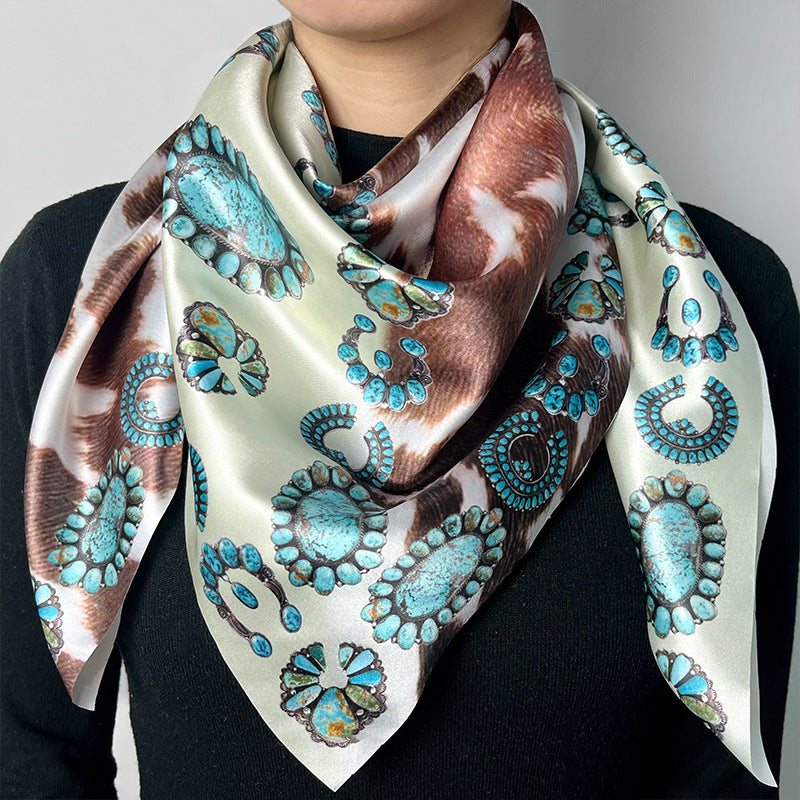
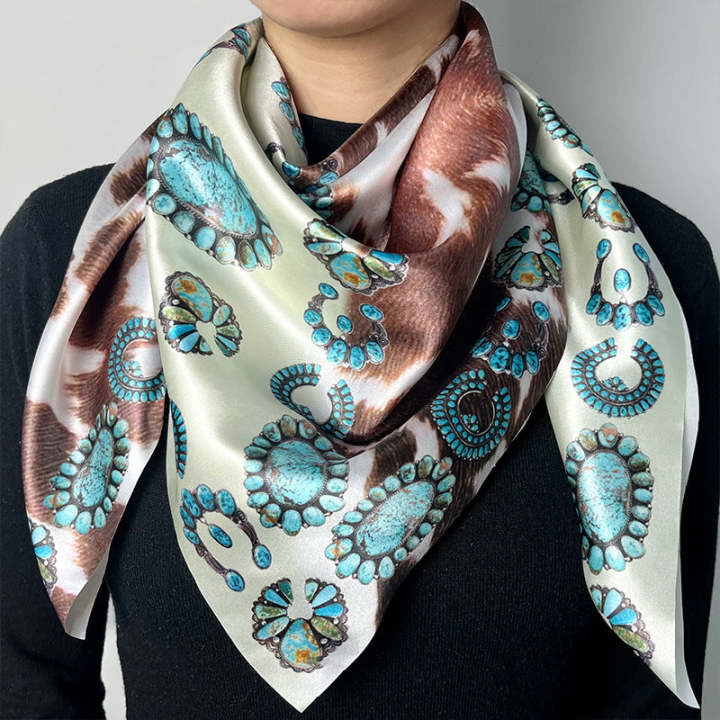
Costume Turquoise Jewelry Through the Seasons: A Rodeo Outfit Edition
A rodeo outfit changes long before the calendar officially changes seasons. A cool morning can become a bright afternoon; an outdoor arena can lead to a heated restaurant; a summer event can still require a jacket after sunset. Jewelry therefore needs more than a “spring” or “winter” color story. It needs a plan for temperature, garment layers, contact surfaces, light, movement, and the evidence available for the exact piece.
This guide uses a season turn card. Each time the outfit moves into a new environment—car to parking lot, sunlight to shade, standing to seating, outdoors to indoors—check four fields: climate, layers, contact, and contrast. The card makes costume turquoise jewelry a controlled part of the outfit rather than an accessory that must be managed all day.
Quick Answer: Plan the Transitions, Not Just the Season
Choose one turquoise-colored focal area, document the exact option, and map every garment that may be added or removed. In spring, protect the jewelry from uncertain moisture and shifting collars. In summer, manage heat, perspiration, sunscreen, dust, and strong sunlight. In autumn, keep heavier textures and layered hardware from overwhelming or striking the piece. In winter, test coats, scarves, gloves, static, and indoor–outdoor changes.
Run the outfit through a transition rehearsal before the event: put on and remove every layer, sit, walk, turn the head, use a bag, handle a phone, and pass through the likely security or entry routine. If the jewelry catches, disappears, collides, or requires unverified care, revise the combination. Venue, animal-handling, workplace, weather, and equipment rules always outrank styling.
Do not treat “costume turquoise jewelry” as a complete material description. The phrase can guide a style search, but it does not independently identify stone, imitation, treatment, metal, coating, adhesive, age, origin, maker, or care. The selected product page or seller must supply those facts.
Make a Six-Line Season Turn Card
Use one card for the full outfit and a smaller card for every jewelry option. The first line names the transition: morning to afternoon, outdoors to indoors, standing to sitting, or dry conditions to possible rain. The remaining lines record climate, layers, contact, contrast, evidence, and response.
- Climate: temperature range, sun, wind, precipitation, humidity, dust, and any venue-specific exposure.
- Layers: shirt, dress, vest, jacket, coat, scarf, hat, gloves, belt, and bag that may enter or leave the outfit.
- Contact: every collar, zipper, snap, brim, seat, rail, strap, hair section, or hard surface that can touch the jewelry.
- Contrast: the color, texture, reflectivity, and visual density surrounding the piece in each layer state.
- Evidence: exact option, measurements, mass, closure, components, finish, care, shipping, and return information.
- Response: keep, reposition, simplify, remove temporarily, store safely, or choose another item.
The public guide to Western jewelry motifs, styles, materials, and selection helps separate a visible Western direction from a verified construction claim. Use that distinction before deciding what the piece can tolerate across seasons.
Evidence Comes Before Seasonal Care
A seasonal article can easily become a list of universal cleaning promises. Avoid that. A polishing cloth, water, soap, chemical cleaner, coating treatment, or ultrasonic method that suits one construction may harm another. Until every component and care instruction is documented, use only conservative handling: avoid unknown cleaners, prevent impact and abrasion, separate pieces in storage, and follow the exact seller or maker guidance when available.
Build a product evidence row with the title, URL, review date, selected label, price, corresponding image, included quantity, dimensions, mass, attachment, closure, base components, decorative-material identity and treatment, finish or coating, assembly, care, and current policies. Keep unknown fields blank. A gallery count is not an included-piece count, and a Size label is not automatically a complete fit specification.
The published complete Western turquoise jewelry guide provides a broader evidence workflow. It can organize questions but cannot transfer facts from one product to another.
Spring Rodeo Outfit: Variable Layers and Uncertain Moisture
Spring’s primary design problem is change. The outfit may begin with a jacket, lose it at midday, and add it again after sunset. The jewelry should have a clear role in all three states. Photograph the planned combination with the jacket closed, open, and removed. Check whether the focal piece stays visible or suddenly competes with shirt snaps, embroidery, or a buckle.
Climate line
Record the actual forecast near the event rather than relying on a seasonal stereotype. Include wind, rain probability, temperature range, and whether seating is covered. Do not assume turquoise-colored decoration or an unknown finish can tolerate rain. If material and care guidance are incomplete, keep the piece protected from moisture and make a dry-storage plan.
Layer and contact lines
Light jackets often have zippers, snaps, lapels, drawstrings, and textured seams near necklaces and earrings. Turn the head while wearing the hat and jacket together. Open and close the jacket without holding the jewelry away by hand. A piece that catches in rehearsal is not ready for the event.
Contrast line
Spring wardrobes can combine faded denim, pale cotton, floral prints, and fresh blue-green accents. Give the jewelry one uncluttered background. If the shirt has a dense print, reduce motif size or move the focal area to the ears. If the jacket supplies a calm field, test whether removing it leaves too much pattern behind.
Summer Rodeo Outfit: Heat, Sun, Dust, and Open Necklines
Summer exposes more skin and can make jewelry more visible, but it also increases contact with perspiration, sunscreen, cosmetics, dust, and heat. Product-specific material and care information determines what is appropriate. A styling photograph cannot establish resistance to any of those exposures.
Climate line
Record shade, direct-sun time, expected heat, humidity, and access to secure storage. Bright light increases contrast and can make reflective edges visually louder. Evaluate the outfit outdoors at roughly the event time. A turquoise-colored piece that looks moderate indoors may become the first object noticed in direct sun.
Layer and contact lines
Open collars and sleeveless garments can create a strong quiet corridor, but hats, hair, sunglasses, lanyards, bags, and venue wristbands still add contact. Test earrings with the hat brim and hair lifted by wind. Test necklaces with the bag strap and phone movements. Do not wear jewelry during water, sport, animal-handling, or equipment activities when rules or undocumented construction make the combination unsuitable.
Response line
Prepare a rigid or padded storage solution appropriate to the documented piece rather than dropping it into a loose pocket. The response may simply be “remove before peak heat and store.” Seasonal styling succeeds when it includes a safe exit plan.
Autumn Rodeo Outfit: Rich Texture Without Visual Overload
Autumn adds suede-like surfaces, denim, leather-looking layers, knitwear, deeper colors, and heavier belts. These textures can provide a strong background for turquoise color, but they also introduce friction, lint, seams, fringe, and hardware. The outfit can become visually dense before jewelry is added.
Contrast line
Use one high-contrast relationship. Blue-green against rust, brown, black, cream, or dark denim can be enough. Repeating the same center in earrings, necklace, belt, buckle, hatband, and boots usually removes hierarchy. Let one zone carry the turquoise-color signal and coordinate other zones through line or restrained metal color.
Layer and contact lines
Map every jacket seam, vest edge, scarf end, and fringe route. A necklace endpoint should not land on a textured yoke or zipper pull. Earrings need space from raised collars and hat movement. The greater the clothing texture, the more important verified projection, edge profile, attachment, and mass become.
Response line
Use a one-change photograph sequence. Remove the scarf, change the necklace, simplify the earrings, or reduce buckle contrast—one edit at a time. This identifies which object was causing competition rather than producing a different outfit with no clear lesson.
Winter Rodeo Outfit: Bulk, Static, Gloves, and Indoor–Outdoor Change
Winter makes the layer map decisive. A piece may be hidden under a coat outdoors and become prominent indoors. Decide whether the jewelry needs to function in both states. It may be safer and clearer to let the hat or coat lead outside and reveal the jewelry only after outerwear is removed.
Layer line
Put on the base garment, necklace, scarf, coat, hat, and gloves in the real order. Then remove them in reverse. Watch where clasps, earring attachments, pendants, and decorative projections meet fabric. A successful indoor photograph does not prove that the coat transition is manageable.
Contact line
High collars and scarves can press against earrings or lift a pendant. Gloves change dexterity and may make small closures difficult. Static can move hair and fabric toward jewelry. If the exact closure cannot be operated safely with the intended routine, select a simpler option or put the piece on only after reaching the indoor destination.
Climate and response lines
Do not make universal claims about condensation, cold, finish stability, or rapid temperature change without material and care evidence. Keep the response conservative: avoid unverified exposure, use separate storage, and allow the documented care instructions to decide whether the piece belongs in the outdoor phase.
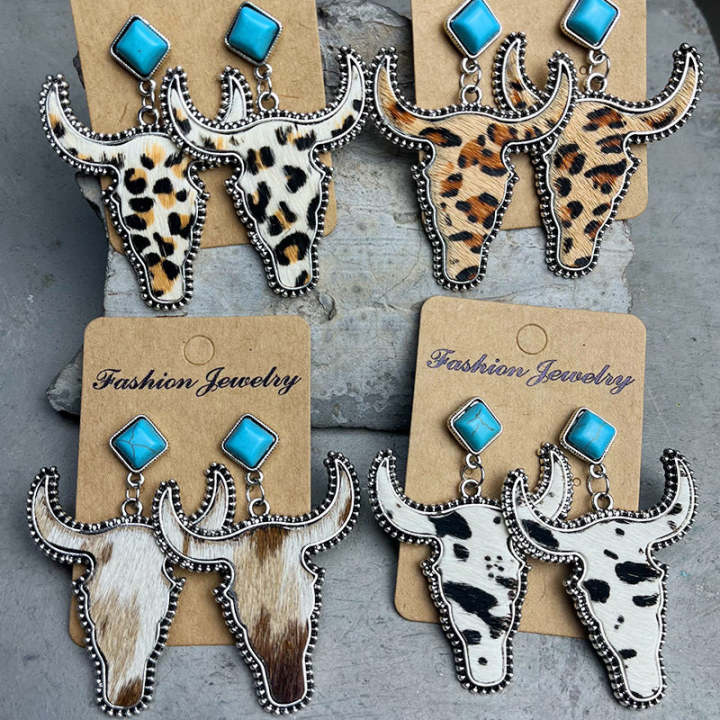
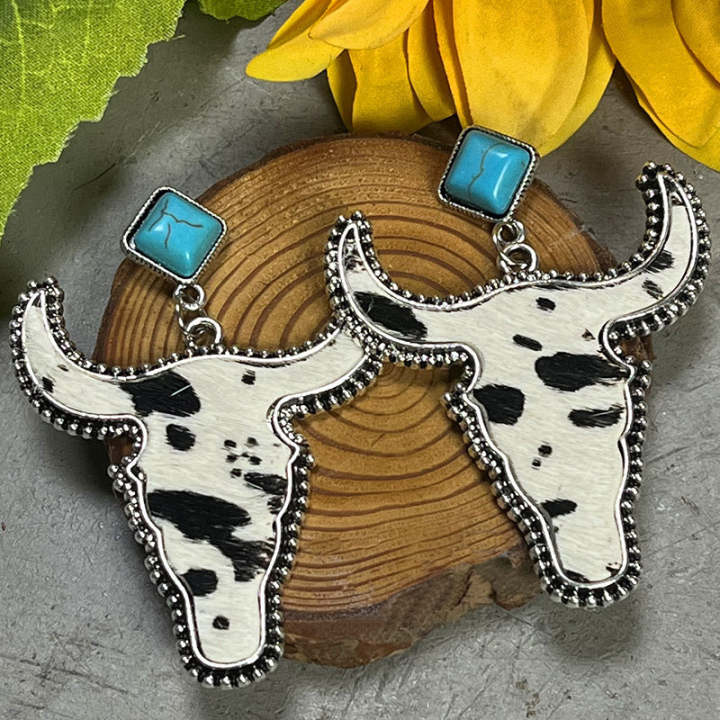
Product Reference One: Western Turquoise Boho Vintage Cow Skull Earrings
The Western Turquoise Boho Vintage Cow Skull Earrings page was reviewed on August 24, 2026. It displayed $141.40 USD, four visible Size choices labeled Design 1, Design 2, Design 3, and Design 4, with Design 1 selected. Product images were numbered through sixteen.
The live copy describes a Western, turquoise, boho design and suggests casual, Western-inspired, occasion, and gifting use. The title and images support cow-skull, Western, turquoise-colored, boho, and vintage-inspired visual language. They do not establish natural turquoise, metal identity, vintage age, maker, origin, handmade production, cultural affiliation, or a costume-jewelry classification.
The reviewed page did not visibly provide exact dimensions for each Design, individual mass, attachment and backing, component materials, decorative-material identity or treatment, finish, construction, item-specific care, or a clear statement of which image corresponds to every selection. Treat each Design as a separate candidate. Select it, confirm the gallery state, and request the missing facts.
Seasonally, a verified smaller design could support winter layers or an autumn statement neckline, while a larger design might need more summer or spring clearance. That is only a planning possibility until measurements and mass are known. Cow-skull meaning should also be treated as the wearer’s styling choice, not assigned as ranch experience, cultural identity, or personal history.
Product Reference Two: Western Turquoise Vintage Cross Jewelry for Women
The Western Turquoise Vintage Cross Jewelry for Women page was reviewed on the same date. It displayed $112.11 USD and two Size choices labeled 90cm and 52cm, with 52cm selected. The product gallery used numbered positions through thirteen.
The current title and copy support Western, turquoise-colored, vintage-inspired, and cross-led visual descriptions. The centimeter labels appear in the Size selector, but the page as reviewed did not explain the measurement path, whether the value is total component length or wearable length, the pendant dimensions, mass, closure, materials, decorative-material identity, treatment, finish, construction, or item-specific care. Record the label exactly and request its definition before plotting the piece against a neckline.
Cross imagery requires recipient or wearer permission. Do not assign religious significance, fashion-only meaning, regional identity, or cultural origin. A 90cm-labeled option and a 52cm-labeled option may interact very differently with coats, shirts, buckles, and seating; confirm the actual drop and endpoint rather than treating the number alone as a complete seasonal fit answer.
How to Use the Corresponding Video Without Transferring Its Claims
The independent video Turquoise in Rings by Turquoise in America focuses on turquoise set in rings. Its description identifies examples of fine handmade American Indian jewelry from the Southwest. That context must remain attached to the documented pieces shown by the creator; it cannot be transferred to the two Oroxen examples or to costume turquoise jewelry as a category.
Use the video as a contrast exercise. When a creator or maker supplies a specific object, construction context, and attribution, keep those facts with that object. When an Oroxen page supplies only style language and visible options, keep the wording at that level. Do not use a ring video to prove earring or necklace materials, origin, workmanship, value, treatment, durability, or seasonal care.
The published cowgirl earrings and necklaces style guide can help position the two product types within a broader outfit. It provides styling context, not product-specific authentication.
A Rodeo-Day Transition Rehearsal
Transition 1: home to vehicle
Check seat belts, headrests, coat collars, bag straps, and the storage plan. Put the jewelry on only when the full travel route is compatible. Keep a dated option record and any needed care information with the packing plan.
Transition 2: parking area to entry
Add wind, sun, precipitation, dust, walking, tickets, phone use, and security procedures. Follow the actual venue instructions. An accessory that slows entry or conflicts with rules should be removed before arrival, not managed at the gate.
Transition 3: standing to seating
Sit with the jacket, belt, buckle, bag, and jewelry in place. Confirm that the necklace does not meet the buckle, earrings do not meet the collar, and wrist pieces do not strike rails or armrests. Recheck after outerwear is removed.
Transition 4: arena to photographs or dinner
Indoor light and fewer layers can change contrast. Use one planned edit—remove a scarf, open a jacket, or change the earring pair—rather than adding several pieces. Store removed items separately so hard surfaces do not scrape one another.
Transition 5: return trip
Fatigue changes dexterity and attention. The removal and storage routine should be simple enough to perform at the end of the day. Inspect the piece under neutral light later and follow documented care rather than improvising a seasonal cleaning method.
Common Seasonal Mistakes and Better Repairs
Mistake: assigning one piece to a season by color alone
Repair: evaluate climate, layers, contact, contrast, evidence, and response. Turquoise color can appear year-round; construction and outfit transitions determine whether a specific piece is practical.
Mistake: treating “costume” as a full material disclosure
Repair: request every component, finish, adhesive, treatment, and care fact. The label does not prove low value, high durability, imitation turquoise, a particular metal, or safe exposure to cleaners and moisture.
Mistake: wearing the full matching theme
Repair: choose one turquoise-color lead and one supporting Western line. Reduce repeated cow-skull, cross, blue-green center, buckle, hatband, and boot signals until the viewer can identify a clear first and second focal area.
Mistake: ignoring option changes
Repair: select Design or Size first, verify the corresponding image, and save a dated record. Do not combine the appearance of one option with the cart label of another.
Mistake: copying care advice from unrelated fine jewelry
Repair: keep video education and product instructions separate. A documented ring in another collection cannot establish how an Oroxen earring or necklace should be cleaned, stored, or exposed to seasonal conditions.
Frequently Asked Questions
Can costume turquoise jewelry be worn in every season?
Turquoise-colored styling can work year-round, but the exact piece must pass the season turn card. Verify its construction and care, then test temperature, moisture, layers, contact, movement, and storage for the real event.
Which season is best for larger cow-skull earrings?
No season can be chosen from the motif alone. A larger verified option needs dimensions, mass, attachment, backing, hat clearance, collar clearance, and an activity test. Summer may reduce collars; winter may increase them, but the actual outfit decides.
Does 52cm or 90cm tell me where the cross jewelry will land?
Not completely. Confirm what the selector measures, the wearable path, adjustment, pendant dimensions, and total endpoint. Body proportions and garment necklines also affect placement.
Does “vintage” mean the jewelry is old?
No. Treat vintage wording as style language unless the seller documents age and provenance for the exact piece.
Does turquoise wording prove a natural stone?
No. Ask for material identity, treatment, and any origin documentation. A blue-green appearance or product title does not authenticate natural turquoise.
How should I plan for a country-music event after the rodeo?
Add venue rules, crowd density, dancing, temperature, sound equipment, bags, and travel storage. The published country-concert jewelry guide provides a focused event checklist.
Where to Compare Current Options
Browse the Turquoise Jewelry collection for blue-green visual directions and the Western Jewelry collection for a broader set of motifs and silhouettes. Collection pages are discovery tools, not evidence cards. Open the exact product, select the option, and recheck live details before deciding.
Final Seasonal Decision
A four-season rodeo wardrobe does not require four separate jewelry identities. It requires one reliable transition method. Record the climate, map every layer, identify contact routes, control contrast, verify the product, and plan the response when conditions change. That method keeps the outfit coherent from a cool parking lot to a bright arena and from outdoor seating to an indoor evening.
Return to the Oroxen homepage for current store navigation, then use the live listing as the final source for price, availability, options, materials, measurements, care, shipping, and returns. Style can travel through the seasons; unsupported claims should not travel from one product to another.