A turquoise-colored earring can look perfectly clean in the morning and noticeably dull after one humid concert, a layer of hairspray, or a crowded trip inside a makeup bag. The problem is rarely a lack of aggressive cleaning. More often, fashion jewelry changes because moisture, cosmetics, skin products, friction, and careless storage reach several surfaces at once. A method that is harmless to one component may cloud another, loosen an adhesive, darken an unknown finish, or change the look of a porous decorative element.
This costume turquoise jewelry care guide uses a conservative rule: when the exact material, finish, treatment, or construction is unknown, do less. Begin with inspection, dry handling, and separation. Use the live product page as the final source for current care directions and materials. If a listing does not identify natural turquoise, sterling silver, or another specific material, color and appearance alone are not proof. The goal is not to make an unverified material claim or promise restoration. It is to reduce avoidable wear while keeping a turquoise-colored fashion piece ready for its next outfit.
Quick Answer: The Lowest-Risk Care Routine
For an everyday turquoise-colored fashion piece, the safest starting routine is simple. Put the jewelry on after perfume, lotion, sunscreen, hair products, and makeup have dried. Remove it before showering, swimming, sleeping, exercising, cleaning, or applying more products. After wear, hold it by a sturdy area, inspect it under good light, and wipe only the accessible surfaces with a clean, soft, dry, lint-free cloth. Let any trapped moisture evaporate in open air away from direct heat. Store the piece separately so chains, hooks, raised motifs, and decorative surfaces cannot rub against harder objects.
Do not automatically reach for toothpaste, baking soda, vinegar, alcohol, household spray, metal polish, an ultrasonic machine, or a steam cleaner. Each can be unsuitable for an unknown finish, coating, adhesive, leather component, or decorative insert. Even plain water is not a universal answer. If the product page provides specific instructions, follow those instead of this general routine. If the piece has meaningful value, visible damage, loose components, or an unknown construction that needs deeper cleaning, stop and consult a qualified jewelry professional.
Readers who are still deciding how turquoise color fits their wardrobe can use Oroxen’s Western Turquoise Jewelry Guide before building a care routine. Continue through the Turquoise Jewelry Guides hub as more focused articles are added. For live products, silhouettes, and options, browse the Turquoise Jewelry collection.
First Identify What You Actually Know
“Costume turquoise jewelry” is a shopping phrase, not a laboratory description. It may refer to fashion jewelry that uses turquoise color, a turquoise-style pattern, a simulated stone, dyed material, a composite, a coating, or another decorative treatment. A photograph cannot reliably establish which of those is present. Likewise, a silver-colored surface does not establish sterling silver, and “vintage” in a style name does not establish age. Care should be based on documented construction, not assumptions created by color.
Before cleaning, open the product page and record what it actually says. Look for a stated base material, plating or finish, stone description, leather or textile elements, adhesive-set components, chain type, earring post or hook, size options, and any manufacturer care directions. Check the selected variant because two options under one product name may differ in shape or construction. Save a screenshot or note if you want a reference for later; product information and availability can change.
Then inspect the physical piece without pulling or bending it. Use indirect daylight or a bright desk lamp. Look for green residue, flaking, exposed base color, a loose setting, lifting decoration, a bent hook, stretched link, cracked element, sticky surface, or unusual odor. A cloth is appropriate for ordinary dust and skin oils, but it cannot repair structural damage. If the item catches fabric, a component moves unexpectedly, or a surface is already lifting, place it aside rather than testing a stronger cleaner.
A practical decision table
| What you observe | Lowest-risk next step | What to avoid |
|---|---|---|
| Light dust or fingerprints on a stable surface | Use a clean, dry, lint-free cloth with minimal pressure | Liquid cleaners and vigorous rubbing |
| Unknown finish or unknown turquoise-colored component | Stay dry and check the product instructions | Assuming a gemstone or metal-cleaning method applies |
| Loose, cracked, peeling, or adhesive-set detail | Stop wearing and seek qualified repair advice | Soaking, brushing, ultrasonic cleaning, or home glue |
| Moisture after wear | Blot gently and air-dry away from heat before storage | Hair dryers, radiators, direct sun, and sealed damp bags |
| Persistent discoloration or residue | Document it and ask the seller or a professional what the construction permits | Escalating through random household remedies |
Build a Small Care Kit That Encourages Restraint
A useful care kit does not need a shelf of chemicals. Start with two freshly washed, fragrance-free microfiber or soft cotton cloths; a clean tray lined with a pale towel; several small soft pouches; acid-free tissue for cushioning; and a compartmented box that closes securely. The light work surface makes a dropped component easier to see, while the tray keeps earrings and small pieces from rolling away. Keep the cloths reserved for jewelry so they do not carry polishing compound, makeup remover, or household cleaner from another task.
Before touching the jewelry, wash and fully dry your hands. Work with one piece at a time. Photograph the front and back if you are concerned about an area. Support the piece rather than suspending it from a chain or hook, then make one slow pass with the dry cloth. Turn the cloth to a clean section instead of repeatedly moving collected residue across the surface. Do not force fabric into narrow gaps, under raised decoration, or around a fragile connector. A cotton swab can shed fibers and apply surprising leverage in a tight setting, so it should not be treated as automatically safe.
The stopping point matters more than the tool. If gentle dry wiping does not change the area, accept that the issue may be tarnish, plating wear, adhesive residue, material aging, or a finish that requires product-specific guidance. Stronger pressure is not a diagnosis. Place the item in a separate pouch, record the concern, and contact the seller or a repair professional with clear photos.
Prevent Cosmetics and Moisture from Reaching the Surface
Prevention begins before the jewelry leaves its pouch. Finish skincare, perfume, deodorant, hair spray, styling cream, and makeup first. Allow them to dry, wash any product from your fingers, and add jewelry last. When getting undressed, reverse the order: remove the jewelry before pulling a sweater, jacket, or dress over it. This reduces both chemical exposure and the chance that a hook, pendant, or raised motif snags fabric.
Water exposure is not limited to swimming. Steam from a shower, sweat under a cuff, rain held inside a leather cord, damp hair against earrings, and a wet bathroom counter can all keep moisture against an unknown finish. Kitchen work adds detergent, acidic food, salt, and impact. Exercise adds repeated movement and perspiration. Sleeping adds pressure, tangling, and friction. Removing fashion jewelry for these activities is usually easier than trying to reverse the resulting wear.
If a piece becomes damp, do not scrub. Blot accessible moisture with a clean dry cloth, place the jewelry on a stable towel in a ventilated indoor area, and allow it to dry naturally. Avoid direct sun, heating vents, hair dryers, or radiators. Do not seal the piece in a pouch until it is completely dry. If moisture reached a closed cavity or a mixed-material area that cannot be checked, ask for product-specific guidance.
Care Example One: Cow Skull Earrings with Multiple Designs
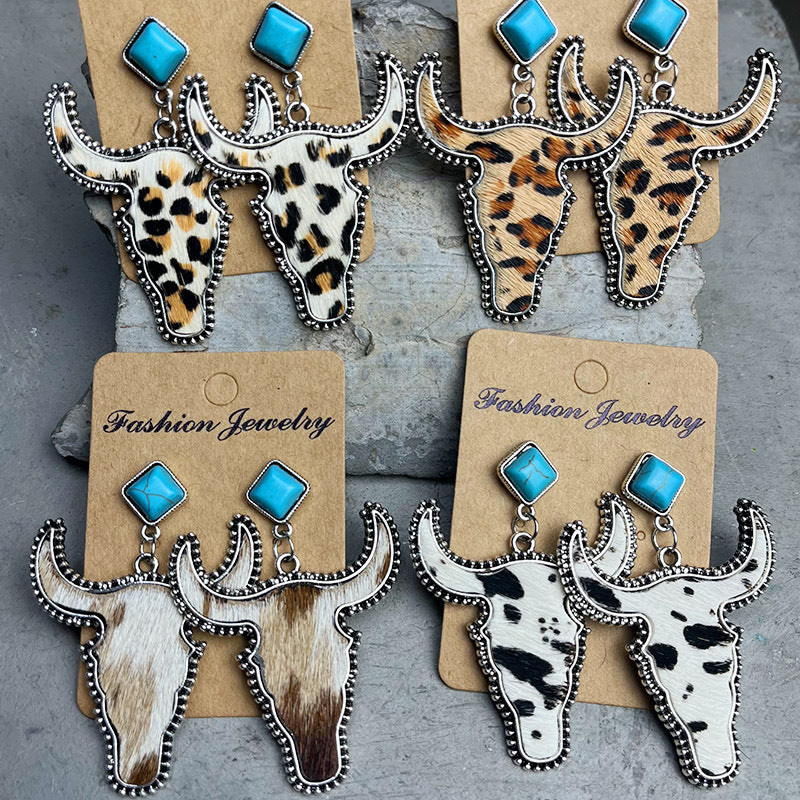
The live page for the Western Turquoise Boho Vintage Cow Skull Earrings currently presents four design choices and multiple product images. That makes variant confirmation the first care step. Check the selected design, compare the front and back photographs, and note how the decorative shape connects to the ear fitting. Do not assume every design has identical edges, joints, weight distribution, or surface treatment.
For routine handling, pick up an earring by a stable structural area instead of pulling the decorative section from the hook or post. Put the pair on over a lined tray so a dropped back or connector does not disappear. After wear, inspect the area that touched the ear, the top connection, projecting points, and any recesses that can trap cosmetic residue. Use the soft dry cloth only where it moves freely. If a decorative point catches the cloth, stop rather than tugging through it.
Earrings benefit from separate storage because their hooks and projecting silhouettes can scratch another piece or become bent inside a shared pouch. Close or secure the ear fitting if its design permits, place each earring in its own small compartment, and avoid putting a heavy bracelet or pendant on top. Before the next wear, compare the two earrings under the same light. A difference in alignment, movement, or surface appearance can reveal a problem earlier than noticing it while getting ready.
The product name uses western, turquoise, boho, vintage, and cow-skull style language. Those terms describe the product presentation; they do not by themselves identify a stone, metal, cultural origin, or age. The page advises customers to review the images and selected option and notes that screen color may vary. That is the right evidence boundary for care: use the current listing and the actual item, not a care method chosen only from the title.
Care Example Two: A Cross Jewelry Piece with Length Options
The Western Turquoise Vintage Cross Jewelry for Women page currently shows 52 cm and 90 cm choices. Length changes how a necklace-like piece moves, where it contacts clothing, and how easily it can tangle. A longer option may travel across buttons, belt hardware, a bag strap, or a jacket edge; a shorter option may sit closer to skin, fragrance, makeup, and neckline products. Confirm the chosen length before planning storage or travel.
After wearing, lay the piece on a pale towel in its natural line. Check the clasp or opening, chain connections, decorative cross area, and points where different elements meet. Lift sections with both hands rather than dragging the entire length across a tabletop. Wipe in short supported sections with a dry cloth. Avoid pulling the chain taut to reach a small area, because tension transfers force to the weakest connector.
For storage, fasten the clasp if possible and lay the piece flat or hang it from an appropriate jewelry organizer that supports the design without stretching it. If it must be placed in a pouch, arrange the chain in loose curves and cushion the decorative element separately. Do not wind the chain tightly around the pendant or fold it into sharp bends. During travel, use a rigid compartment rather than a soft bag where shoes, chargers, or cosmetics can press against it.
The live listing currently tells shoppers to review the product images and selected option and does not provide enough visible material detail to justify a metal polish, gemstone soak, or ultrasonic treatment. Treat that absence as a reason to remain conservative. If the item needs more than dry surface care, request construction-specific guidance before proceeding.
How to Use the Related YouTube Video Responsibly
The corresponding video, “Episode 9: Turquoise Care and Cleaning Guide” by Amitis Art, is a brief introduction centered on turquoise as a gemstone. It is useful as a reminder that turquoise-related care is material-sensitive, but it should not be treated as proof that a turquoise-colored fashion item contains natural turquoise. It also does not replace the instructions for a particular coating, adhesive, chain, leather element, or simulated decorative component.
When using any jewelry-care video, separate three questions. What exact material is the presenter cleaning? What liquid, tool, pressure, temperature, and exposure time are used? Does your product documentation confirm that the same method is permitted for every component of your piece? If any answer is missing, do not generalize the demonstration. Take the conservative principle—identify first, clean second—without copying a material-specific technique onto an unknown fashion finish.
Storage, Rotation, and Travel Habits That Reduce Wear
Good storage controls contact. Give each piece its own pouch or compartment; separate earrings from necklaces and bracelets; keep raised motifs away from smooth surfaces; and prevent chains from crossing. Close clasps when appropriate, but do not place constant tension on them. Use soft cushioning around rigid decorative pieces, and keep jewelry away from direct sunlight, heating equipment, damp bathrooms, sinks, and open cosmetic containers.
A small paper inventory makes rotation easier. Record the item name, variant, date purchased, current condition, and the last time it was inspected. A quick dated photograph can show whether a dark area is new or simply part of the design. Rotation also prevents one favorite piece from receiving all the sweat, friction, and travel exposure. If a piece will not be worn for months, inspect it before storage, confirm it is dry, and check it periodically rather than sealing it away indefinitely.
For travel, pack jewelry after cosmetics have been sealed. Use a rigid organizer with individual compartments, not a loose pocket. Keep long chains in separate channels or thread them through a clean paper straw only if that method does not strain the clasp or decorative section. Place earrings where their posts or hooks cannot bend. Carry valuable or delicate pieces with you instead of placing them under heavy luggage. On arrival, unpack the jewelry so heat or moisture is not trapped inside the case.
If you are building a care-friendly wardrobe rather than managing one piece, start with the Turquoise Jewelry collection and compare construction, size options, and how each design contacts skin or clothing. The broader Western Jewelry collection can help you compare earrings, necklaces, bracelets, rings, and mixed designs before choosing a storage system.
Common Care Mistakes and Better Alternatives
Mistake: treating brighter as cleaner
A change in color may be part of the finish, patina-style design, screen-to-product difference, or normal wear. Rubbing until every dark area disappears can remove intended surface character or an unknown coating. Better alternative: compare the area with product images, use gentle light, and stop if the cloth begins to pick up color or the surface changes unevenly.
Mistake: testing a remedy from social media on the whole piece
Household mixtures are often shown on a single known metal or stone, while fashion jewelry may combine several unknown materials. Better alternative: request written care guidance for the exact item. If a seller or professional approves a method, test only as directed in an inconspicuous place and observe the full drying period before expanding the treatment.
Mistake: storing jewelry immediately after wear
Warm jewelry can carry perspiration and product residue into a closed pouch. Better alternative: wipe gently, let the piece reach room temperature in a ventilated area, confirm that it is dry, and then store it separately.
Mistake: using care as a substitute for repair
Cleaning will not safely correct a cracked decorative element, failing adhesive, bent hook, weakened link, or peeling finish. Better alternative: stop wearing the piece, photograph the problem, keep any detached component, and ask for qualified repair or replacement guidance.
Frequently Asked Questions
Can I clean costume turquoise jewelry with water?
Not automatically. Water may be unsuitable for an unknown finish, adhesive, porous decorative component, leather element, or mixed construction. Start with a dry cloth and use water only when the product instructions for the exact piece permit it.
Can I use toothpaste, baking soda, vinegar, or alcohol?
These are not universal jewelry cleaners. Abrasive particles, acids, solvents, and additives can alter coatings, adhesives, base materials, and decorative surfaces. Do not use them unless a responsible care source confirms the method for every component of the specific item.
How often should I wipe fashion jewelry?
A short dry wipe after wear is generally lower risk than waiting for heavy buildup, especially after a warm day or contact with skincare products. Inspection matters more than a rigid schedule. If the surface is unstable or the cloth catches, stop.
What if a piece turns my skin green?
Stop wearing it and wash the skin with ordinary soap and water. Surface reactions can have several causes, including moisture and contact with a base material, but appearance alone cannot identify the cause. If irritation persists, seek medical advice. Ask the seller for material information before wearing the piece again.
Should turquoise-colored jewelry be stored in an airtight bag?
Only when the piece is completely dry and the product’s materials are compatible with that storage approach. A sealed bag can trap moisture. A soft individual pouch inside a dry compartment is often easier to inspect and keeps pieces from rubbing together.
When should I seek professional help?
Get advice when the item is valuable, structurally damaged, heavily soiled, materially unknown, or affected by peeling, cracking, loose settings, stretched links, or persistent residue. A professional should know the construction before choosing a treatment.
A Simple Routine to Remember
Think in five verbs: verify, prevent, inspect, wipe, separate. Verify the product information and selected variant. Prevent contact with moisture and cosmetics. Inspect under good light before cleaning. Wipe only stable accessible surfaces with a soft dry cloth. Separate the piece from harder or projecting jewelry during storage and travel.
That routine is intentionally modest. It cannot reverse plating loss or repair a damaged connection, but it can reduce the repeated exposure and friction that make fashion finishes age faster. Most importantly, it avoids turning an uncertain material description into an unsafe cleaning experiment.
To compare current pieces, visit Oroxen’s Turquoise Jewelry collection or explore the complete Western Jewelry catalog. For definitions and buying checks, read What Is Western Jewelry?. You can also return to the Oroxen home page to browse the latest navigation and store information. Always treat the live product page as the final source for current options, price, availability, shipping, returns, and product-specific care.