Common Questions About Turquoise Jewelry Pendants for Country-Music Fans
A pendant can look simple on a product page and become complicated the moment it joins a real outfit. The wearer needs to know where it lands, what it touches, whether the chain is included, how the closure works, and what the turquoise-colored center actually is. A country-music fan may also want the piece to work with denim, boots, concert layers, or Western-inspired clothing without turning every outfit into a costume.
This question-led guide builds a neckline soundcheck board. Like a stage soundcheck, it tests one signal at a time: identity, position, motion, contact, and evidence. The board helps readers compare a geometric cross listing and a teardrop pendant listing while keeping visible design separate from undocumented material, origin, age, maker, cultural affiliation, or meaning.
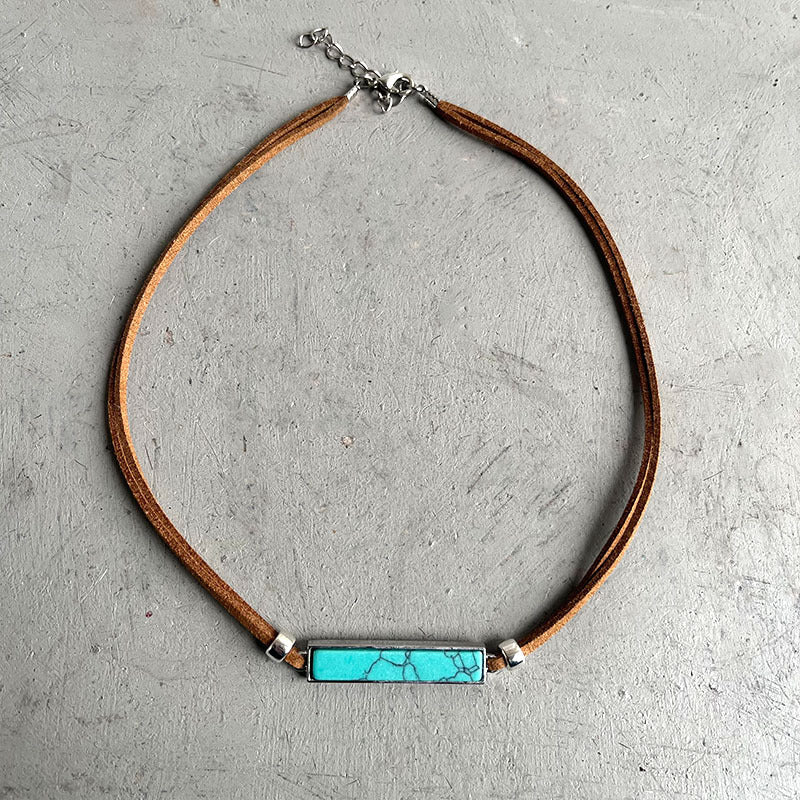
Quick Answer: Ask About the Whole Wearable System
Do not evaluate only the decorative front. A pendant necklace is a system of pendant, connectors, chain or cord, clasp, extension, and every part that touches skin or clothing. Confirm exactly what ships, selected design, total wearable length, adjustable range, pendant dimensions, mass, projection, connector dimensions, closure, materials, finish, decorative-component identity, care, availability, delivery, and current return terms.
Then test the system against the intended neckline, layers, movement, accessibility, and wearer preference. A pendant that visually suits a denim shirt may land under its collar. One that balances an open neckline may conflict with a venue lanyard or crossbody strap. Product photography can suggest shape and color, but it does not answer fit and motion questions.
Begin with the Turquoise Jewelry Guides hub for category orientation. Use the common questions below to turn inspiration into a documented shortlist.
Question 1: What Is the Difference Between a Pendant and a Necklace?
A pendant is the decorative element intended to hang from a chain, cord, or other support. A necklace is the whole wearable item. Product language does not always keep the distinction precise, so ask what is included. Does the purchase contain the pictured chain, the pendant, both, or additional parts? Can the pendant be removed without damaging or altering the necklace? What are the connector's internal dimensions?
This distinction matters for styling and returns. A buyer may imagine moving a pendant onto another chain, but the connector may be too small, fixed, or undocumented. Do not recommend swapping components until compatibility, construction, safe handling, and return conditions are known.
Record the listing title exactly. Marketing words such as Western, turquoise, vintage, geometric, cross, teardrop, statement, or boho describe navigation and appearance at the level supported by the page. They do not establish composition or history.
Question 2: Does Turquoise Color Mean Natural Turquoise?
No. Color and material identity are different facts. A page may show a blue-green center or use turquoise in its title. Unless reliable item-specific documentation identifies the material, use phrases such as turquoise-colored, turquoise-style, or blue-green decorative component. Price, photographs, a product name, or a related video cannot authenticate it.
Ask the seller for the material name, whether any treatment or composite construction is relevant, and what documentation supports the answer. If authenticity, value, origin, or treatment matters, use an appropriately qualified independent professional. Avoid destructive or improvised tests.
The published Western turquoise jewelry buying guide provides a longer claim-verification path.
Question 3: How Long Should a Pendant Necklace Be?
There is no universal ideal. The useful length is the one that positions the exact pendant in the intended open space while allowing comfortable movement. Measure from the clasp path around the neck to the expected pendant center. Record the shortest and longest wearable settings, not only a nominal chain length.
Use a soft measuring aid appropriate for the wearer, or compare with an existing necklace whose fit is known. Do not tighten anything around the neck or substitute a rigid object. Consider posture, body shape, mobility, sensory needs, hairstyle, facial hair, glasses cords, medical equipment, hearing devices, lanyards, bag straps, and layers.
Create three landing zones on the soundcheck board: above the neckline edge, inside an open neckline, and over fabric. Some garments allow only one. A pointed collar can hide a pendant; a crew neck may provide a clear fabric background; a V-neck can create competing angles. The wearer decides which relationship feels right.
Question 4: How Should Country-Music Fans Style a Pendant?
Start with one element the wearer already uses—denim jacket, plain shirt, boots, hat, belt hardware, dress, or dark tee. Give the pendant one job: lead, connect, or quietly reference a Western-inspired detail. If it leads, reduce other necklace layers and large upper-body accessories. If it connects, repeat only one color or line elsewhere. If it stays quiet, choose a documented scale that does not compete with the clothing.
Country-music interest does not automatically imply consent to a cross, a large focal pendant, or any cultural or religious interpretation. Ask the wearer. A cross-shaped design can be evaluated as a visible form, but its personal meaning comes from the wearer and context, not an invented product story.
For outfit distribution beyond the neckline, see the published guide to styling Western jewelry with denim, dresses, boots, and workwear.
When a denim jacket is the listener's repeat outer layer, compare the pendant's intended landing zone with the published turquoise jewelry and denim-jacket outfit guide. Button the jacket, leave it open, and sit as well as stand. The exercise identifies whether the pendant remains visible, falls beneath a placket, or meets the collar before another accessory is added.
Question 5: How Can the Western Necklaces Collection Help?
Use the Western Necklaces collection as a shape index. Sort visible options into compact, elongated, geometric, figurative, clustered, and layered silhouettes. This narrows the aesthetic question before price or promotional copy drives the decision.
For each shortlist item, make two columns. “Known now” contains title, current price, selected option, visible outline, color language, and documented measurements. “Need before purchase” contains contents, chain length, pendant dimensions, mass, connectors, closure, components, care, stock, delivery, and returns. A shortlist advances only when every required question has a reliable answer.
Browse the broader Western Jewelry collection to test whether another body placement solves the same outfit problem with fewer conflicts. If the neckline already carries a scarf, lanyard, high collar, or equipment, a ring or bracelet may be easier—provided its own fit and components are documented.
Question 6: What Is Documented for the Geometric Cross Necklace?
The live Western Turquoise Vintage Geometric Cross Necklace page displayed $126.25 USD during review. Under Size, it listed Design 1, Design 3, and Design 4, with Design 1 selected. The visible copy used Western, turquoise, and vintage design language and suggested casual, Western-inspired, occasion, and gifting use.
The inspected text did not state which exact pieces are included, total wearable length, adjustment range, pendant dimensions, mass, connector details, closure, materials, finish, turquoise-colored component identity, skin-contact parts, item-specific care, maker, age, origin, or cultural affiliation. The three designs need separate image and specification records. Do not assume they share shape, scale, chain, closure, or components.
Before styling, save the selected design label and its matching image. Ask how the pendant and chain are connected, whether the chain is included, and where the pendant lands at each available setting. When a cross is visible, the wearer should decide whether the form suits their preference and the planned setting.
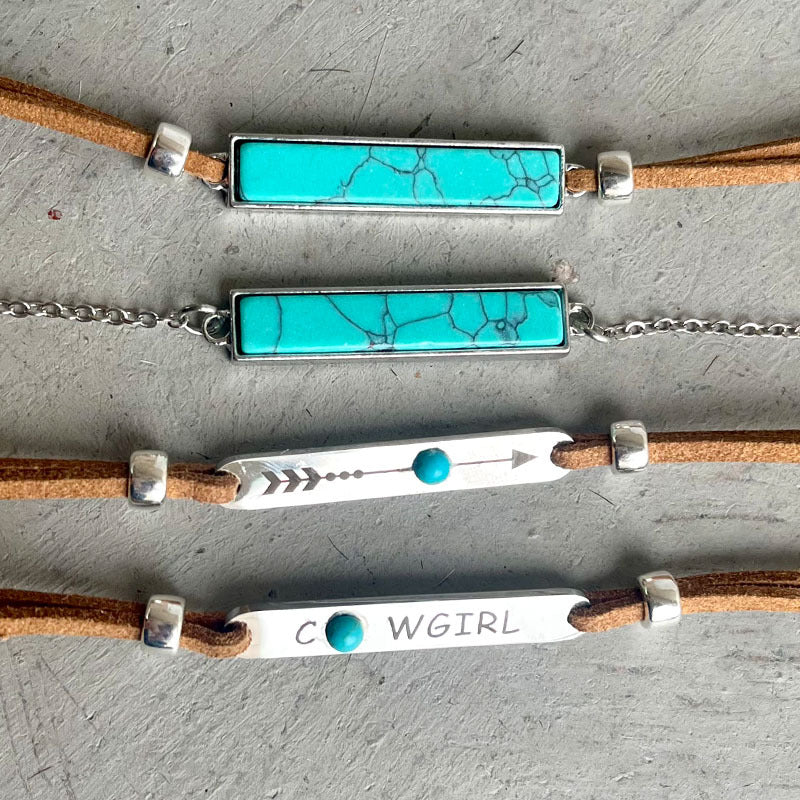
Question 7: What Is Documented for the Teardrop Pendant?
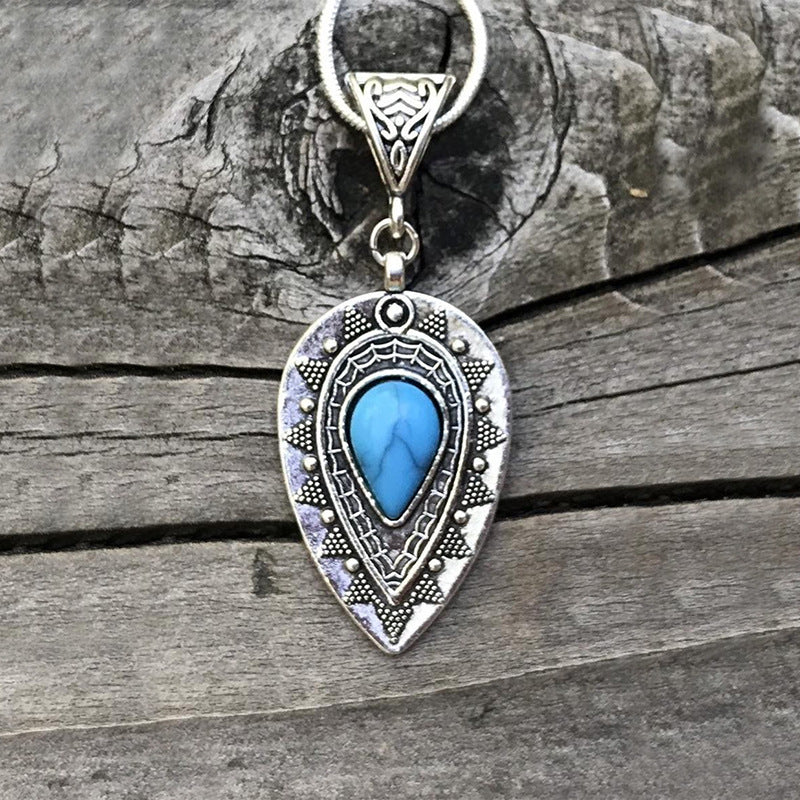
The live Turquoise Western Teardrop Pendant Necklace page displayed $39.99 USD during review and showed one visible Color choice. It described a Western-inspired pendant necklace for everyday outfits, layering, and gifting. The page used teardrop silhouette, turquoise-style center stone, antique-silver color, and vintage-inspired detailing language.
The inspected visible text did not provide total wearable length, adjustable range, pendant dimensions, mass, connector details, closure, underlying materials, finish system, precise center-component identity, skin-contact parts, or complete item-specific care instructions. An antique-silver color is an appearance description, not proof of silver content, age, or antique status.
The teardrop's visible vertical direction may align with an open neckline or provide contrast to a horizontal collar. That is a styling observation, not a dimension claim. Ask where the pendant lands on the intended chain setting and whether the complete pictured wearable system is included.
Question 8: Which of the Two Product Paths Is Better?
| Comparison point | Geometric cross listing | Teardrop listing |
|---|---|---|
| Price observed during review | $126.25 USD | $39.99 USD |
| Displayed choices | Design 1, 3, and 4 | One visible color choice |
| Visible form language | Geometric cross, Western, vintage | Teardrop, turquoise-style center, antique-silver color |
| Fit and component details | Need confirmation | Need confirmation |
Neither is universally better. Price does not prove material, authenticity, comfort, construction, or durability. The geometric cross path offers several displayed design labels but requires an exact option map. The teardrop path has more specific appearance language but still needs measurements and component evidence. The better choice is the wearer's preferred form with verified fit, contents, care, and purchase terms.
Question 9: Can a Pendant Be Layered for a Concert?
Layering is possible when lengths, connectors, mass, motion, closures, and contact are compatible. It is not automatically better. Two necklaces can tangle, strike one another, trap a collar, interfere with a lanyard, or concentrate weight. Test only known, safely fitting items in a calm setting before an event.
For a live-music environment, reduce loose elements when crowds, dancing, heat, or repeated movement make them distracting. Create a secure removal plan. The published country concert jewelry guide offers a movement-focused checklist. Venue rules and accessibility needs remain authoritative.
Question 10: What Can the Related Video Establish?
The corresponding video is “Top 10 things to know about Turquoise” by GEMDELUX. Only the verified title, channel, URL, and broad turquoise-topic relationship are used. The video was not watched in full, so no statement, demonstration, terminology, identification method, treatment description, history, valuation, care advice, or buying recommendation from it is cited.
The video cannot authenticate either product or verify its chain, pendant, components, origin, or age. Use current item pages, written seller evidence, the wearer's own fit information, and appropriate professional assessment when a material claim affects the decision.
Question 11: How Should an Undocumented Pendant Be Cared For?
Ask for instructions tied to the exact selected option and its components. Until then, avoid universal claims about water, cosmetics, sweat, chemicals, polishing cloths, ultrasonic devices, steam, heat, sunlight, oil, adhesives, or cleaning solutions. A method safe for one construction may be unsuitable for another.
Handle the item carefully, preserve packaging and purchase records, and follow current return-condition requirements. Keep it away from uncontrolled impact and from situations where a small component could be lost. For long-term storage or valuable material claims, seek advice appropriate to the documented item.
Question 12: How Can a Pendant Be Given as a Gift?
Confirm that the recipient wants a necklace, the visible form, the body placement, and the styling language. Request their preferred wearable length, closure needs, sensitivities, accessibility requirements, and care limits. A country-music interest does not create permission for a particular motif or component.
Include the exact product and option record, receipt, return deadline, and a no-pressure exchange offer. Do not improve the presentation by inventing natural-turquoise authenticity, an artisan, a geographic origin, spiritual properties, or a cultural story. Honest documentation is the stronger gift.
Fast Soundcheck: Twelve Green Lights
- The exact listing and option match the saved image.
- The chain or cord and pendant contents are stated.
- Total wearable length and adjustment range are numeric.
- Pendant dimensions, projection, and mass are known.
- Connector and closure details are compatible with the wearer.
- Materials and skin-contact parts are documented.
- Decorative-component identity is supported, not inferred.
- The pendant lands in a clear neckline zone.
- Hair, collar, straps, and equipment do not conflict.
- Movement and removal have been planned safely.
- Care instructions match the exact product.
- Delivery and return terms work for the intended date.
Additional Frequently Asked Questions
Can a product image prove the chain length?
No. Perspective, cropping, body proportions, and styling can change apparent scale. Obtain numeric measurements.
Does “vintage” mean the necklace is old?
Not necessarily. On the reviewed pages, vintage and vintage-inspired appear as design language. Age requires item-specific evidence.
Can the pendant be moved to another chain?
Only if the connector, construction, dimensions, materials, and safe handling permit it. Ask before altering a new item or risking return eligibility.
Should a pendant match bracelets or rings?
No universal rule requires it. Give each item a role and repeat only the color, line, or finish needed for visual continuity.
What should a beginner do first?
Measure one known necklace, photograph it with the intended neckline, and write the successful landing position. Use that record when requesting product dimensions.
Where should readers continue?
Visit Oroxen, compare the linked collections and published guides, and fill the soundcheck board before selecting an option.
Conclusion: Let Every Question Produce a Record
Turquoise jewelry pendants become easier to compare when every question has a place: identity, contents, position, motion, contact, evidence, care, and purchase timing. The geometric cross and teardrop listings offer distinct visual directions, but neither product page eliminates the need for exact chain, pendant, component, and fit information.
A country-music-inspired outfit can be expressive without being overfilled or overclaimed. Choose one neckline role, document what ships, respect the wearer's preference and context, and use turquoise-style language until reliable evidence supports more. A clear soundcheck makes the pendant part of the experience instead of an unresolved distraction.