Chunky Turquoise Jewelry and a Country Concert Look: A Proportion and Balance Guide
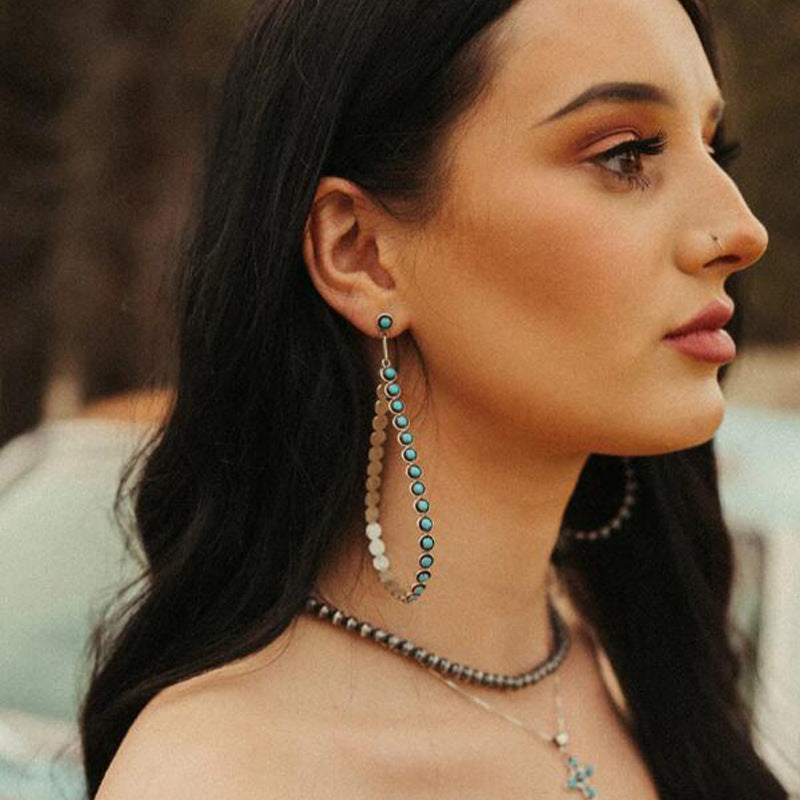
Chunky jewelry changes more than the size of an accessory. It changes the amount of visible space an outfit needs around that accessory, the way nearby fabric and hardware are perceived, and the range of motion the wearer must test before leaving home. At a country concert, those changes matter because hats, collars, hearing protection, bag straps, event wristbands, wind, dancing, and long hours can turn a good mirror look into a distracting physical experience.
The practical solution is a silhouette-to-space ratio. First estimate how much visual area the piece occupies. Then create at least that much calm space around it before adding another high-contrast detail. This is not a mathematical measurement and it does not require a certain body shape. It is a repeatable viewing test: can the eye identify the jewelry's outline without fighting a collar, pattern, hair, hat decoration, or second statement object?
Quick Answer: Match Visual Mass with Negative Space
Choose one chunky focal piece and clear the area immediately around it. Large or visually dense earrings usually need a quieter neckline, controlled hair placement, and less decorative hat hardware. A substantial necklace usually needs a simple chest area and earrings that do not compete for the same upper-body frame. A bold ring or cuff needs enough room at the sleeve and hand to avoid repeated collision.
Next, repeat only one visual quality somewhere distant: blue-green color, an aged-looking color, a geometric line, or a small metal-colored accent. The second object should help the outfit feel connected without copying the full silhouette. Finally, test the complete outfit from close range, normal conversation distance, and a full-body phone photo. If the jewelry is clear at all three distances and comfortable in motion, the proportion is working.
For a category-level starting point, consult the published guide to choosing western turquoise jewelry. For venue decisions across multiple jewelry categories, use the country concert jewelry planning guide.
The Three-Window Proportion Method
Window one: head and hat
The first window includes earrings, hair, eyewear, hat brim, hat band, earplugs, and hearing protection. All of these objects share a small area. A chunky earring may need visible skin or hair separation to keep its outline readable. A decorated hat band may already be the strongest feature, in which case the earring should become quieter or the band should be simplified.
Do not decide proportion from a product crop. Put on the actual hat and eyewear. Turn the head, tuck and release the hair, and simulate adjusting ear protection. Look for visual tangles as well as physical contact. If the earring and hat decoration merge into one undefined shape, increase the space between them rather than automatically choosing a larger earring.
Window two: neck and upper torso
This window includes collar points, lapels, shirt pattern, snaps, necklaces, jacket hardware, and the top of a belt or bag strap. Chunky earrings influence it even though they sit above it. An open or plain neckline extends the negative space around the ear; a tall decorated collar reduces that space. If both earrings and necklace are visually dense, the viewer may not know which shape is intended to lead.
Use one of two solutions: keep the necklace absent or compact when earrings lead, or let the necklace lead while the earrings become simple. A shirt can still be western-inspired without carrying every visible cue. Solid denim, black, cream, faded olive, brown, or a restrained small-scale pattern usually provides a clearer stage than multiple large motifs.
Window three: hands and waist
Rings, bracelets, watches, belt buckles, bags, phones, and event wristbands occupy the third window. This is an effective place for a distant echo because it is separated from statement earrings. The echo should be visible only after the lead is understood. A narrow bracelet, small ring, quiet watch, or restrained belt detail can repeat a color or line without creating a second headline.
Concert logistics add unplanned objects to this area. Assume there will be a wristband, phone, ticket scan, bag opening, and possibly merchandise. Leave visual and physical capacity for them. A proportion plan that works only before the wristband is added is incomplete.
“Chunky” Is a Visual Role, Not a Material Fact
A piece may appear chunky because of width, repetition, contrast, silhouette, movement, or dense ornament. None of those traits proves weight, material, stone identity, metal identity, construction, or durability. A large-looking resin or hollow component may weigh less than a smaller solid component; a photograph cannot settle the question. Request measurements and mass instead of using appearance as a substitute.
The same rule applies to “turquoise.” Browse the Turquoise Jewelry collection for blue-green styling options, but do not assume that every listing contains natural turquoise. Collection labels and product titles are useful navigation. Material claims require exact written evidence for the selected item.
Create a short specification card for each candidate: current URL, review date, selected option, included quantity, length and width, total and per-item mass, attachment, components, stated materials, finish, construction, care, delivery estimate, and return conditions. Write “not stated” in every blank. The card makes comparisons honest and shows which questions must be answered before purchase.
Product Study One: Turquoise Statement Cross Earrings
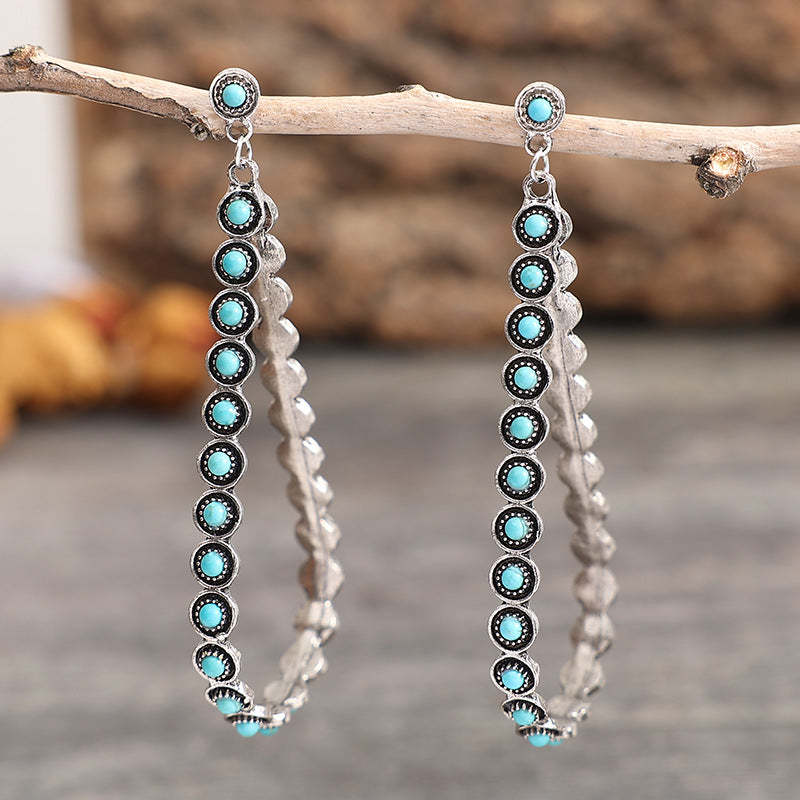
The Turquoise Statement Cross Earrings page was reviewed on August 24, 2026. It showed a current price of $127.26 USD, one visible color selection, and an eleven-image product gallery. These are time-specific observations; shoppers should verify price, availability, and the selected image again before checkout.
The visible description uses turquoise, statement, and cross styling language and recommends reviewing the image because screen color can differ. It did not, in the information reviewed, identify natural turquoise, the metal or other components, dimensions, total or per-earring mass, attachment or backing, surface finish, construction, included quantity, or care method. The cross is a visible symbol, but its meaning should be determined by the wearer rather than assigned by the product title.
Give the cross outline a clean frame
A cross is a recognizable outline. If it is meant to lead, avoid placing another large cross at the necklace or buckle. Pair the earrings with a solid tee, restrained pearl-snap shirt, or open jacket over a simple base. Let the neckline remain quiet enough that the lower portion of the earring does not visually merge with snaps, embroidery, or a high-contrast scarf.
Before planning prolonged wear, request the exact height, widest dimension, projection, mass, post or hook design, backing, components, finish, and included count. Test whether the bottom edge contacts the collar when the wearer turns or looks down. If any of those details are unknown, do not call the earrings lightweight, hypoallergenic, secure, nickel-free, water-resistant, or suitable for all-day wear.
Product Study Two: Turquoise Western Statement Earrings
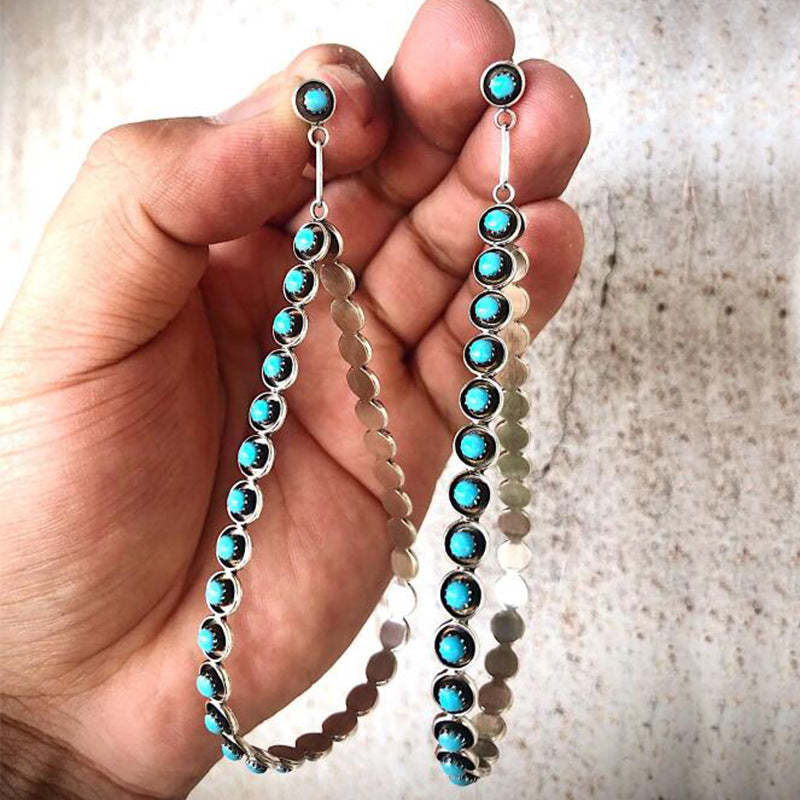
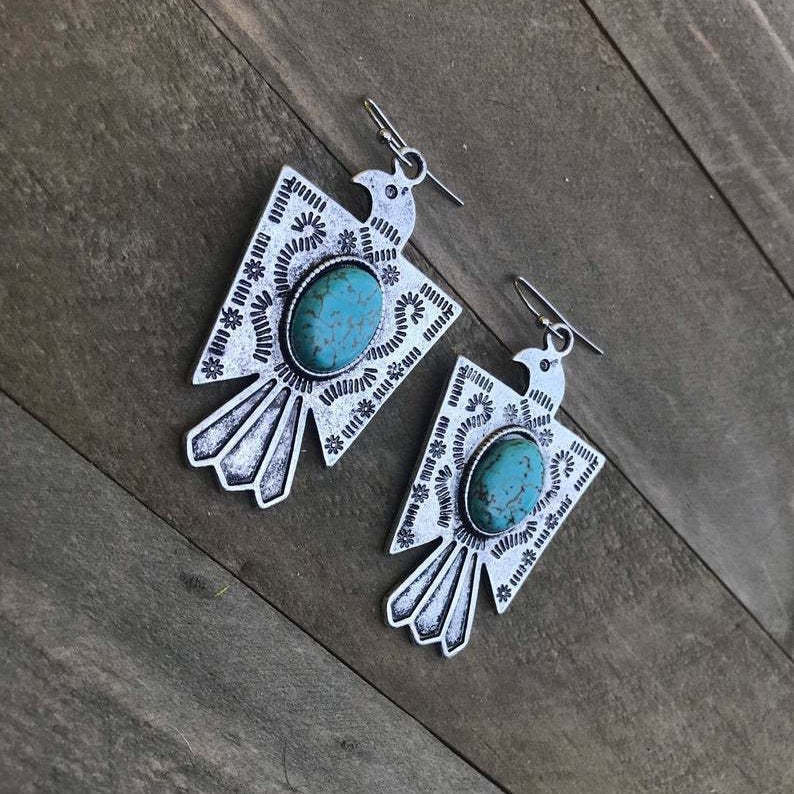
The Turquoise Western Statement Earrings page was checked on August 24, 2026. It displayed $29.99 USD, one visible color choice, and a six-image gallery. Its copy specifically describes turquoise-style center stones, a sculptural western silhouette, and vintage-inspired detailing. “Turquoise-style” is an appearance statement, not confirmation of a natural gemstone; “vintage-inspired” is not proof of historical age.
The visible page did not state dimensions, drop, mass, backing, complete components, material identity, finish process, construction, included quantity, or care. The product photographs can help compare outline and visible color, but they cannot answer those physical questions. Keep the styling recommendation conditional on the exact facts the seller supplies.
Use shape contrast instead of accessory quantity
A sculptural earring can become the only curved or articulated shape near the face. Pair it with straighter collar lines and a quiet neckline. If the gallery suggests movement, test the actual drop and mass rather than assuming motion will be comfortable. Keep hair either clearly behind the earring or intentionally around it; half-hidden statement jewelry can look busier because only fragments of the silhouette are visible.
For a casual formula, use a plain tee, medium-wash denim jacket, dark jeans, and simple boots. For a dressier evening formula, use a clean dark shirt or jacket, a small ring, and fewer decorative surfaces. The published guide to western jewelry with denim, dresses, boots, and workwear offers additional relationships for building the surrounding outfit.
A Five-Step Balance Drill Before the Event
- Photograph the base outfit without jewelry. Identify the strongest existing color, pattern, hardware, and motif.
- Add only the candidate earrings. Check whether their full outline can be seen at conversation distance.
- Add the real concert equipment. Include hat, eyewear, hearing protection, bag, phone, jacket, and expected wristband space.
- Move through the event sequence. Walk, turn, sit, raise the arms, use the phone, open the bag, put on the jacket, and remove it.
- Remove one competing detail. Compare photos. If the jewelry becomes clearer and the outfit feels calmer, keep the removal.
Repeat the drill in front, profile, and three-quarter views. Statement earrings often look balanced from the front but collide with hair or collars in profile. Record discomfort separately from visual preference. A wearer may love the shape and still need a shorter or lighter verified option.
What the JTV Styling Video Adds
JTV's short video “Wear It With Style: Turquoise Jewelry” frames turquoise jewelry as capable of making either a bold statement or a subtler addition. That is a useful styling distinction: the same color family can occupy different roles depending on scale, placement, surrounding contrast, and how many other elements are active.
The video is a brief aesthetic reference, not evidence for either Oroxen product. It cannot establish that their blue-green elements are natural turquoise or determine their metal, weight, attachment, treatment, age, fit, or durability. Apply the general bold-versus-subtle idea to the outfit, while keeping product claims tied to the current listing and direct seller confirmation.
Four Country Concert Proportion Formulas
Open-air daytime
Choose a breathable solid top, open overshirt, straight or bootcut denim, and comfortable boots. Let the earrings provide the strongest blue-green area. Use sunscreen, sunglasses, and hat choices that do not contact the jewelry. Avoid assuming the item tolerates water, sweat, or cosmetic contact when care guidance is absent.
Indoor arena
Use a dark simple upper layer that keeps the earring outline visible under variable lighting. Test over-ear protection before committing to a large silhouette. A compact belt detail can echo the jewelry without crowding the upper window. Secure the earrings or choose a verified alternative if repeated contact is unavoidable.
Pearl-snap shirt
Snaps already create repeated highlights. Choose one statement earring family and skip a large pendant. If the shirt has embroidery, keep it lower or farther from the ear zone. A plain hat band preserves negative space around the face.
Black tee and denim jacket
This base creates a clear outline for blue-green earrings. Wear the jacket open if its collar crowds the earring, and keep the necklace absent or minimal. Use one ring or watch as the distant echo. The jewelry should remain the first accessory noticed, but not the first physical sensation felt.
Common Proportion Errors
- Using a close product crop as a size guide: request measurements and reproduce them with paper before ordering.
- Stacking recognizable motifs: let one cross or sculptural western outline lead instead of repeating it at every zone.
- Confusing visual mass with physical mass: obtain total and per-item weight; do not infer comfort from appearance.
- Ignoring profile contact: test hair, hat, glasses, collar, phone, and hearing protection from the side.
- Matching every blue-green object exactly: preserve a single focal area and use only a small distant echo.
- Turning “turquoise-style” into a gemstone claim: quote the exact wording or say blue-green/turquoise-colored until materials are documented.
- Adding accessories to fix an unclear focal point: remove nearby pattern or hardware first.
Frequently Asked Questions
Does chunky jewelry require a tall or large wearer?
No universal body rule is needed. Evaluate the exact silhouette, surrounding space, wearer preference, attachment, comfort, and movement. A clear frame can make a strong piece work at many scales.
Can chunky earrings be worn with a cowboy hat?
Yes when the brim, band, hair, cords, and earring do not visually crowd or physically contact one another. Test the exact hat and verified earring dimensions together.
Should statement earrings be paired with a necklace?
Only when the necklace remains clearly subordinate and does not occupy the same visual window. Start without it; add it only if the front and profile views remain calm.
Are the products described here natural turquoise?
The visible information reviewed did not establish that. One page explicitly says “turquoise-style center stones.” Use the exact product wording and ask for written material documentation.
How can a buyer compare the two earring pages?
Record current price and visible option, then obtain height, width, drop, projection, mass, backing, included quantity, components, materials, finish, construction, care, delivery, and return details. Compare the exact facts rather than the titles.
What should be carried to the concert?
Bring a secure small case or pouch in case the jewelry must be removed. Keep it separate from loose keys and other objects, and follow verified care guidance rather than improvising a cleaning method.
Final Proportion and Evidence Checklist
- The jewelry has at least one clear silhouette's worth of calm visual space around it.
- Only one of the head, neck, or hand/waist windows carries the main statement.
- The selected product, current price, image, option, and review date are saved.
- Dimensions, mass, attachment, included quantity, components, materials, finish, construction, and care are confirmed or marked unknown.
- No gemstone, metal, age, origin, cultural, comfort, or durability claim exceeds the evidence.
- Hat, hair, eyewear, collar, phone, hearing protection, jacket, bag, and wristband space have been tested.
- A secure removal and storage plan is ready.
Conclusion: Give the Statement Room to Work
Chunky turquoise-style jewelry looks balanced when the wearer creates space, not when every accessory is enlarged to match it. Clear one frame around the lead piece, repeat a single quality at a distance, and reserve capacity for concert equipment and movement. Then verify physical and material facts separately from the styling decision.
Explore more silhouettes in the Western Jewelry collection or begin at the Oroxen homepage. Let the exact option determine fit, let negative space determine proportion, and let documented evidence determine every product claim.