“Turquoise cowgirl jewelry plus denim” is an outfit idea, not a finished outfit. The phrase describes a mood, but it does not decide scale, placement, garment opening, hairstyle, movement, or which detail leads. That is why a combination that looks effortless in a cropped product photo can feel noisy or invisible in a full-length mirror.
This guide uses verdict cards: what tends to work, what tends not to work, why the difference appears, and one repair you can test without buying an entirely new wardrobe. The examples are a pair of Western-style turquoise-colored earrings and a floral necklace from Oroxen. Product titles and visible colors are treated as merchandising and styling information. They do not independently establish stone identity, metal content, leather composition, age, origin, construction, or cultural affiliation. Verify any decision-critical fact on the exact live listing or with the seller.
Quick Verdict: One Lead, One Supporting Echo, One Quiet Zone
A reliable denim-and-cowgirl-jewelry outfit usually has three jobs. One piece leads, a second detail echoes one quality of the lead, and a quiet zone prevents the look from becoming a pile of equally strong signals. The quiet zone might be a plain shirt, undecorated jacket panel, simple hairstyle, or minimal belt area.
What works: motif earrings as the lead, a small wrist color as the echo, and a solid shirt as the quiet zone. What often does not: large earrings, a broad necklace, multiple pins, a graphic shirt, a decorated hat, and a bright buckle all demanding attention at once. The problem is not an absolute number of accessories; it is the absence of hierarchy.
Use the Turquoise Jewelry Guides to explore the color and category cluster. For a broader wardrobe framework, the published Cowgirl Jewelry Style Guide explains how earrings, necklaces, bracelets, rings, clothing, and occasion work together.
Verdict Card 1: Match the Jewelry to the Jacket Opening
What works
An open jacket creates two vertical edges and reveals a shirt field. A necklace can occupy that field, while earrings remain visually separated near the face. A partly closed jacket narrows the available area and can make earrings the cleaner lead. A closed jacket can support earrings or a bracelet while the denim becomes the central surface.
What does not
Choosing necklace placement against a bare shirt and then adding the jacket as an afterthought. The pendant may land on a lapel, zipper, button row, or pocket seam. It can twist during walking or vanish whenever the jacket shifts.
Repair test
Wear the jacket in the exact configuration planned for the day. Use ribbon or cord to mark three possible necklace landing points. Take front and seated photographs. Choose the position with visible clearance, then compare the listing’s documented measurements. If the listing does not provide the measurement required to reproduce that position, ask before ordering.
Verdict Card 2: Repeat Color, Not Every Theme
What works
Repeat a turquoise-colored accent once in a distant location: earrings near the face and a small ring near the hand, or a necklace at the chest and restrained boot detail below. The repetition creates rhythm without making every accessory part of a literal matching set.
What does not
Assuming cowgirl style requires a hat, cow-skull motif, horseshoe, star, fringe, boots, concho-like shape, and turquoise-colored detail in one outfit. Each element may be appealing, but using all of them can make the person disappear behind the theme.
Repair test
Photograph the full outfit, then cover one literal Western motif with your hand. If the overall direction still reads clearly, the covered motif is optional. Keep the pieces that add silhouette, movement, color, or personal meaning rather than merely repeating the theme.
Verdict Card 3: Use Denim Wash as a Contrast Tool
Denim wash influences how colored jewelry reads, but there is no universally correct pairing. Dark indigo often creates a strong graphic field. Light faded denim can feel softer and more casual. Black denim can emphasize cool-colored details and bright hardware. White or ecru denim changes the entire value structure.
What works
Testing the jewelry against the visible shirt and the jacket at the same time. If a turquoise-colored detail merges with a light shirt and light wash, a darker underlayer may restore separation. If dark denim and a dark shirt swallow the jewelry outline, a lighter neckline field may help.
What does not
Judging color through one close-up under artificial light. Phone processing, monitor settings, shade, warm bulbs, and photography backgrounds alter perceived color. The live page itself advises that screen color can vary.
Repair test
Take the same outfit to a window, indoor room, and evening light. Photograph from six feet rather than inches. Do not chase an exact digital color match. Choose the arrangement that keeps the intended focal point readable in the conditions that matter.
Collection Strategy: Shop by Missing Job
The Cowgirl Jewelry collection is more useful when you shop by the missing job. If the outfit already has a central buckle and graphic shirt, the missing job may be a small face-level accent. If the clothing is extremely plain, the missing job may be a stronger motif. If the jacket covers the wrist, a bracelet is not solving a visible role until the sleeve changes.
Create three shortlist columns: lead candidate, echo candidate, and not for this outfit. A product can be attractive and still belong in the third column because its scale, location, or movement conflicts with the current clothing. That is not a negative judgment on the item; it is good editing.
Open the individual product page before deciding. Confirm selected options, corresponding images, documented dimensions and materials, care guidance, current availability, shipping estimate, and return rules. Collection thumbnails are discovery tools, not full evidence records.
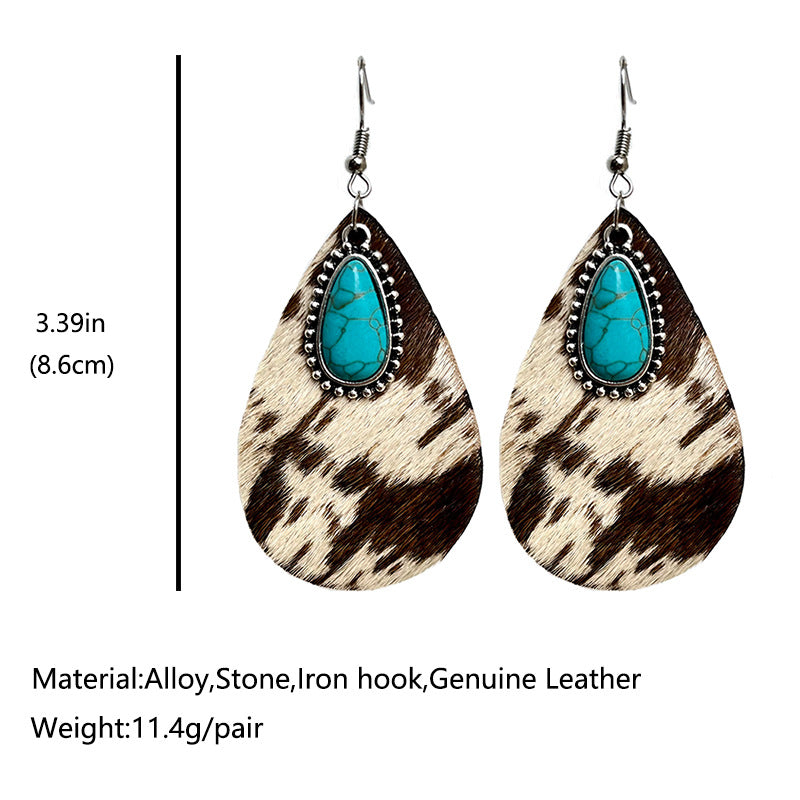
Product Verdict: Western Turquoise Vintage Earrings
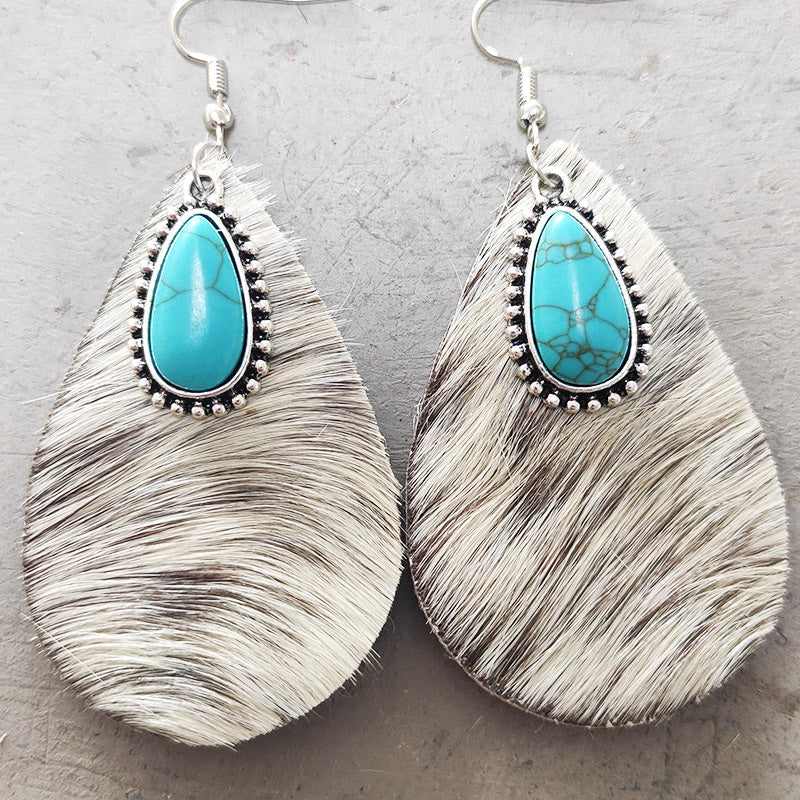
The current Western Turquoise Vintage Earrings page shows a large gallery and seven selectors labeled Design 1 through Design 7. That option range makes selection discipline especially important. Check that the chosen design button corresponds to the photographs you are evaluating and recheck the cart before payment.
Where they can work
They can serve as the lead in an outfit with a plain shirt, an open or partly closed jacket, and controlled collar-area competition. Pull hair behind one ear or test an updo if the chosen design needs visibility. A quieter necklace or no necklace can preserve a clean face focus. If you wear a hat, take a full-length image because the brim adds another strong line near the earrings.
Where they may not work
A high scarf, decorated collar, large necklace, and loose hair can hide or crowd the ear area. The earring may also touch the jacket collar during head movement. The product page does not visibly establish the weight or dimensions needed to predict comfort, so do not claim a particular design is lightweight or a particular size without documentation.
Decision questions
- Which of the seven designs is selected, and do all reviewed images show that design?
- What are the documented length, width, weight, post or hook style, and materials?
- Does the earring clear the actual jacket collar during head turns?
- Can it remain the lead when the hat, hair, glasses, and bag are added?
- What care, shipping, and return information applies to the order?
Verdict Card 4: Keep Motifs Far Enough Apart
What works
A motif near the face and a simpler color echo at the wrist. The distance allows each to be noticed in sequence. A floral necklace with quieter earrings can also work because the necklace controls the center while the face area remains calm.
What does not
Placing a bold shirt graphic, patterned scarf, shaped necklace, large motif earrings, and jacket pins within the same upper-torso rectangle. The eye cannot establish a first reading, and garment movement makes the overlaps unpredictable.
Repair test
Draw an imaginary circle around the face and another around the chest. Give each circle one main job. If both contain several contenders, remove or simplify one item from each circle. Then reintroduce only the piece that adds something unavailable elsewhere.
Product Verdict: Western Turquoise Vintage Floral Leather Necklace
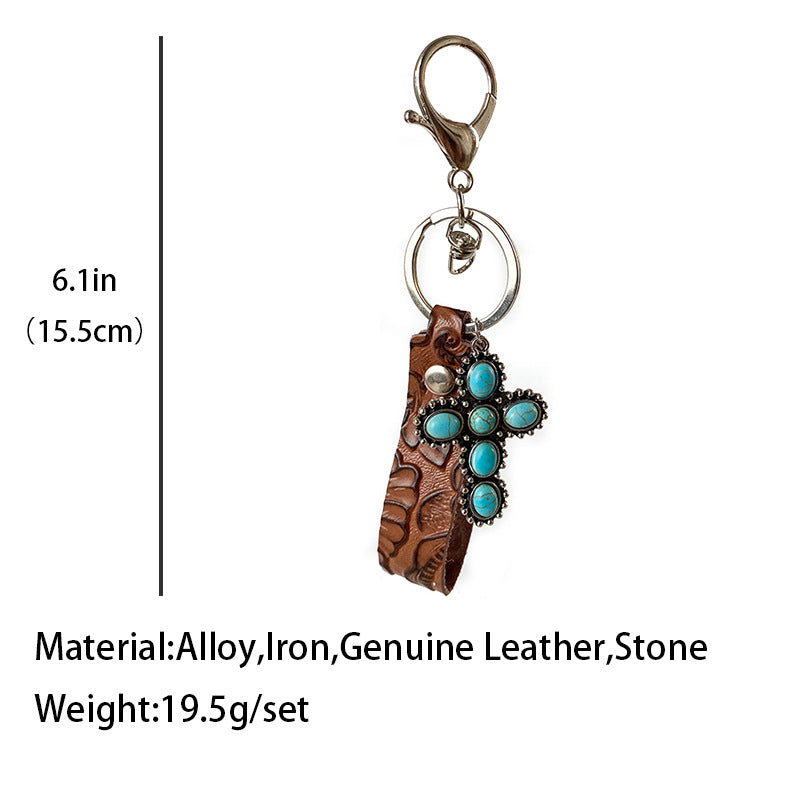
The Western Turquoise Vintage Floral Leather Necklace is a chest-level, floral-themed example. Its current page displays five choices labeled Design 1 through Design 5. The words “turquoise,” “vintage,” “floral,” and “leather” appear in the product name, but the visible descriptive text does not provide enough specification detail to verify exact composition, age, construction, chain or cord measurements, weight, or care requirements. Ask for facts that influence your purchase.
Where it can work
Use a solid underlayer and open the jacket to form a stable vertical frame. Keep chest pockets free of pins and check that the floral outline does not sit exactly on a seam or printed lettering. Quieter earrings can support the necklace without splitting attention. A lower-body detail such as boots can echo the Western direction while leaving the chest composition readable.
Where it may not work
A busy plaid shirt, embroidered jacket front, decorative scarf, and prominent buckle can compete with a floral chest motif. A crossbody strap may bisect the necklace, and a seat belt can disturb its placement. If the product’s documented length cannot put the motif in the clear zone you identified, the design may be better for another jacket configuration.
Decision questions
- Which of the five designs is selected and pictured?
- What are the necklace length, extension range, motif dimensions, weight, closure, and materials?
- Does the selected design clear lapels, buttons, seams, and bag straps?
- What item-specific care instructions are documented?
- Can the selected option be returned if the fit or placement fails?
Verdict Card 5: Judge Movement, Not a Frozen Arrangement
What works
An outfit that remains coherent when you walk, sit, turn your head, put on a bag, and roll or lower the sleeves. The focal point may move slightly, but it does not constantly collide with clothing or disappear.
What does not
Arranging every chain, lapel, hair section, and pendant for one photograph, then assuming it will stay there. Denim is structured, yet it shifts at the shoulders and chest. Earrings swing. Straps cross. A seated torso shortens the visible field.
Repair test
Run a two-minute motion circuit. Walk, raise both arms, sit, turn fully, add a shoulder bag, and button the jacket one step. Record the first collision. Fix that one failure by changing placement, clothing configuration, or accessory role. Repeat until the outfit requires no continuous adjustment.
Verdict Card 6: Build for the Destination
A look that works for dinner may not work for a crowded concert. A secure, low-maintenance plan can be more stylish in real use than a complicated arrangement that must be managed all evening.
- Everyday errands: prioritize bag clearance, sunglasses, hair movement, and easy jacket removal.
- Country concert: test dancing, venue rules, crowds, temperature, and the possibility of jewelry contact. See the published Country Concert Jewelry Guide.
- Work or class: inspect desk contact, video-call framing, headphones, and layers used during commuting.
- Dinner: evaluate the seated view and whether the table changes necklace or bracelet comfort.
- Travel: test seat belts, luggage straps, headphones, and storage when jewelry is removed.
Using the Matching Video Without Copying It
The paired video is “Turquoise Necklaces” by John Hartman. It can provide visual context for necklace forms and presentation, but it should be watched completely before any specific lesson is cited. The pieces, lighting, camera scale, terminology, and commercial context in the video are not automatically the same as the Oroxen products in this guide.
Use the video to generate questions, not unverified product facts. Note a visible silhouette or styling relationship, reproduce it with your own jacket, and decide whether it survives normal viewing distance and movement. Independently verify every claim about stone identity, treatment, materials, origin, construction, value, age, or care. Do not reproduce the transcript.
A What-Works Scorecard
Score the completed outfit from zero to two on each line: zero means unresolved, one means acceptable, and two means clear.
- Hierarchy: one focal point is immediately readable.
- Spacing: jewelry clears collars, lapels, graphics, and hardware.
- Contrast: the intended color and outline remain visible at normal distance.
- Option accuracy: the selected product design matches the evaluated gallery images.
- Evidence: necessary dimensions, materials, care, and terms are documented.
- Movement: the outfit survives walking, sitting, turning, bags, and layers.
- Destination: the jewelry suits the event’s practical conditions.
A low score is a diagnostic map, not a reason to add more accessories. Repair the lowest category first. A spacing problem needs placement changes. An evidence problem needs product-page research or a seller question. A destination problem needs a different role or piece.
Frequently Asked Questions
What does “turquoise cowgirl jewelry” mean in this guide?
It is shopping and styling language for Western- or cowgirl-inspired designs with turquoise-colored details. It does not certify material identity, maker, geographic origin, cultural affiliation, or age.
Can I wear earrings and a floral necklace together?
Yes. Let one lead and let the other support. Compare their visual weight at full-outfit distance, keep a quiet area nearby, and test collar and hair contact.
Does every Western outfit need a hat or boots?
No. A motif, color relationship, denim silhouette, or one accessory can establish the direction. Add a hat or boots because they serve the outfit and destination, not because a label demands them.
How do I choose among several design options?
Select one option, review only the images tied to it, record documented facts, and test its visible shape in the intended outfit. Reconfirm the selected design in the cart before paying.
Can the image prove that the product contains turquoise or leather?
No. Photography can show color and visible appearance, but it cannot independently verify composition, treatments, coatings, or construction. Obtain explicit documentation when those facts matter.
What should I do if dimensions are missing?
Ask the seller for the exact measurement and measurement method. Do not estimate precise length, width, weight, or fit from a product or model image.
Where should I continue shopping and learning?
Compare current options in Cowgirl Jewelry and the broader Western Jewelry collection. Use What Is Western Jewelry? for terminology, or return to the Oroxen home page for current store navigation.
Final Verdict: Edit the Relationship, Not Your Personality
What works is not a universal uniform. It is a relationship you can explain: this piece leads, that detail echoes it, the jacket creates the frame, and the quiet zone protects clarity. What does not work is equally specific: the pendant hits the lapel, the earring vanishes under hair, the graphic competes with the motif, or the selected option lacks a needed fact.
Specific failures are easy to repair. Change one variable, take another full-length photograph, and repeat the motion circuit. The result can still be expressive, colorful, personal, and unmistakably Western-inspired. It simply has an order—one that survives more than a close-up and more than a moment.