A black dress creates a large, quiet color field, while a turquoise-colored Western ring occupies only a few centimeters. That difference is useful: the dress can make the hand-level color look deliberate without requiring matching turquoise earrings, necklace, bracelet, bag, and shoes. The styling challenge is not “what goes with black?” It is deciding how the eye travels from face to neckline, waist, hands, and feet.
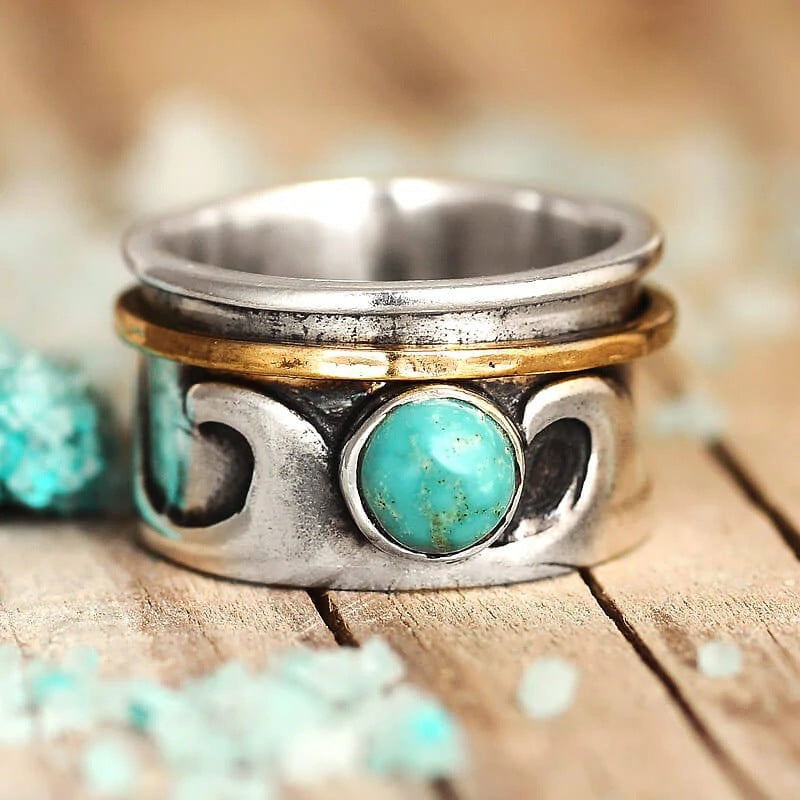
This guide builds five black-dress formulas around two current Oroxen examples: the Turquoise Vintage Ring for Women and the Turquoise Vintage Statement Cross Ring. Their listing names describe an appearance and motif; they do not independently prove turquoise composition, metal content, age, origin, or craftsmanship. Verify the selected size, materials, dimensions, and care before styling or purchasing.
Start With the Dress, Not the Ring
Photograph the dress alone from the front, side, and a normal walking angle. Record neckline, sleeve length, hem length, fabric sheen, texture, hardware, gathering, and waist structure. A matte sleeveless shift leaves different visual space than a satin long-sleeve maxi. “Black dress” is a category, not a complete styling description.
Mark the dress’s strongest line. It may be an open neckline, defined waist, long vertical seam, full skirt, or dramatic sleeve. The ring should support that line or provide a controlled counterpoint. If the dress already contains silver-tone hardware, sequins, cutouts, or elaborate trim, the hand may need fewer competing accessories.
For more ring-selection context, use the public Western Turquoise Ring Style, Fit & Care guide, then return to the exact dress and ring option.
Build a Five-Zone Styling Map
Divide the finished outfit into five zones: face, neckline, waist, hands, and feet. Give each zone one of three roles—lead, support, or quiet. The ring occupies the hand zone, but the amount of contrast determines whether it leads.
- Ring-led: quiet earrings, open wrist, restrained belt, simple shoes.
- Balanced: ring plus one distant supporting signal at face or feet.
- Supporting ring: stronger earrings, neckline, or boots lead; the ring repeats color or motif quietly.
Do not assign “lead” to every zone. Full-body photographs should show a sequence, not five equally loud stops. The Western Rings collection can help compare scale, but the final decision belongs to the real dress and hand.
Verify the Turquoise Vintage Ring for Women
The current product page offers US 6, 7, 8, 9, 10, and 11. Select the size only after measuring the intended finger and checking the seller’s sizing basis. A US label is more useful than “one size,” but fit can still be affected by band width, ring-face weight, finger taper, knuckle width, temperature, and time of day.
The visible page reviewed for this draft did not provide ring-face dimensions, band width, weight, materials, construction, or option-specific care. Request those facts. Confirm whether the turquoise-colored components are described by material, whether any finish or coating is present, and how the ring should be cleaned and stored.
Use a paper measurement only as a visual placement aid, never as proof of fit. If possible, compare with a known comfortable ring or obtain professional measurement. The selected ring should pass ordinary hand use without pinching adjacent fingers, rotating uncontrollably, or interfering with grip.
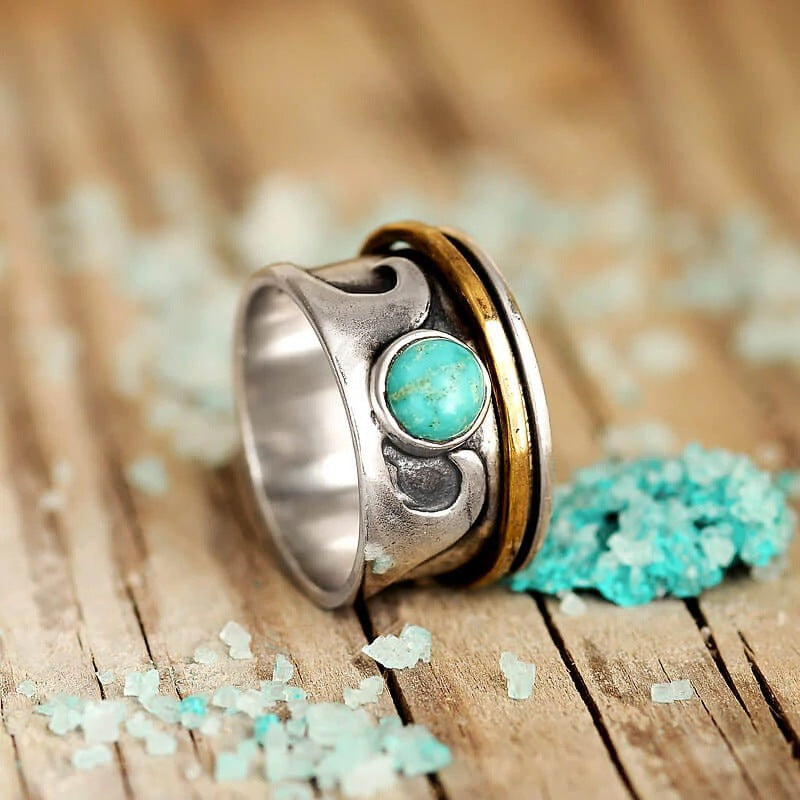
Verify the Statement Cross Ring
The Turquoise Vintage Statement Cross Ring page currently displays two Color selectors and a Size option labeled “Adjustable.” Adjustable does not mean every finger, unlimited bending, or repeated resizing. Ask for the exact starting measurement, approved range, adjustment method, and whether a specific part of the band is designed to move.
Also request face height and width, profile, band dimensions, weight, materials, surface finish, construction, and care. A cross-shaped face may create a strong directional signal. Determine how it sits on the chosen finger and whether the orientation remains stable during normal movement.
Never force an unknown construction. If the ring does not fit within its documented range, choose another option. Fit convenience should not become material fatigue or damage.
Formula 1: The Minimal Day Dress
Use a matte knee-length or midi black dress, everyday flats or low boots, a simple bag, and the sized vintage ring as the only turquoise-colored signal. Keep the wrist bare and choose small neutral earrings or none. This formula lets the ring punctuate the dress without turning the outfit into a costume theme.
Photograph the hand at rest, holding the bag, and near the waist. If the ring vanishes, do not immediately add matching jewelry. First remove competing bag hardware or move the ring to the hand that appears more naturally in the silhouette. If it dominates, that may be intentional; confirm it suits the setting.
Formula 2: The Black Shirt Dress
A shirt dress adds buttons, collar, cuffs, and possibly a belt. These structural details can support a geometric or cross motif, but they also create repetition. Use the statement cross ring with a quiet neckline and no motif-led necklace. Roll sleeves only if the cuff state is comfortable and does not place hardware against the ring.
Choose belt and shoe hardware carefully. One distant metal echo can connect the outfit; multiple decorated buckles, bag clasps, and stacked bracelets can make the hand zone crowded. Test the ring while fastening buttons, tying or buckling the waist, and using pockets.
Formula 3: The Evening Column Dress
A long black dress creates a strong vertical field. Place one turquoise-colored ring on an otherwise quiet hand and use a small face-level accessory to keep attention from dropping entirely to the hand. A structured clutch on the opposite side can balance the silhouette without covering the ring.
For a statement version, use the cross ring and omit a bracelet on the same wrist. For a quieter version, use the sized ring and allow earrings or neckline to lead. Walk, sit, greet someone, and hold a glass or phone in a safe test environment. An evening outfit must survive more than a standing pose.
Formula 4: The Black Dress With Denim
Add a denim jacket or shirt as an outer layer. The blue field introduces another color near the hands and can make turquoise-colored details feel more connected. Keep the jacket cuffs clean if the ring should remain the hand focal point. A heavily decorated jacket may require the smaller visual option.
Try the jacket worn, open, carried, and removed. The outfit should remain coherent in every state. Read the public Western jewelry with denim, dresses, boots, and workwear guide for broader layer ideas.
Formula 5: The Black Dress With Western Boots
Boots create a lower-zone signal. If they contain stitching, texture, contrast panels, or hardware, use the ring as a smaller upper echo rather than adding a large buckle and several turquoise-colored accessories. The full body should have two or three intentional destinations.
A simple boot allows the statement cross ring to lead more clearly. A decorated boot may pair better with the sized vintage ring, quiet wrist, and edited bag. There is no universal match; compare actual scale and contrast from several meters away.
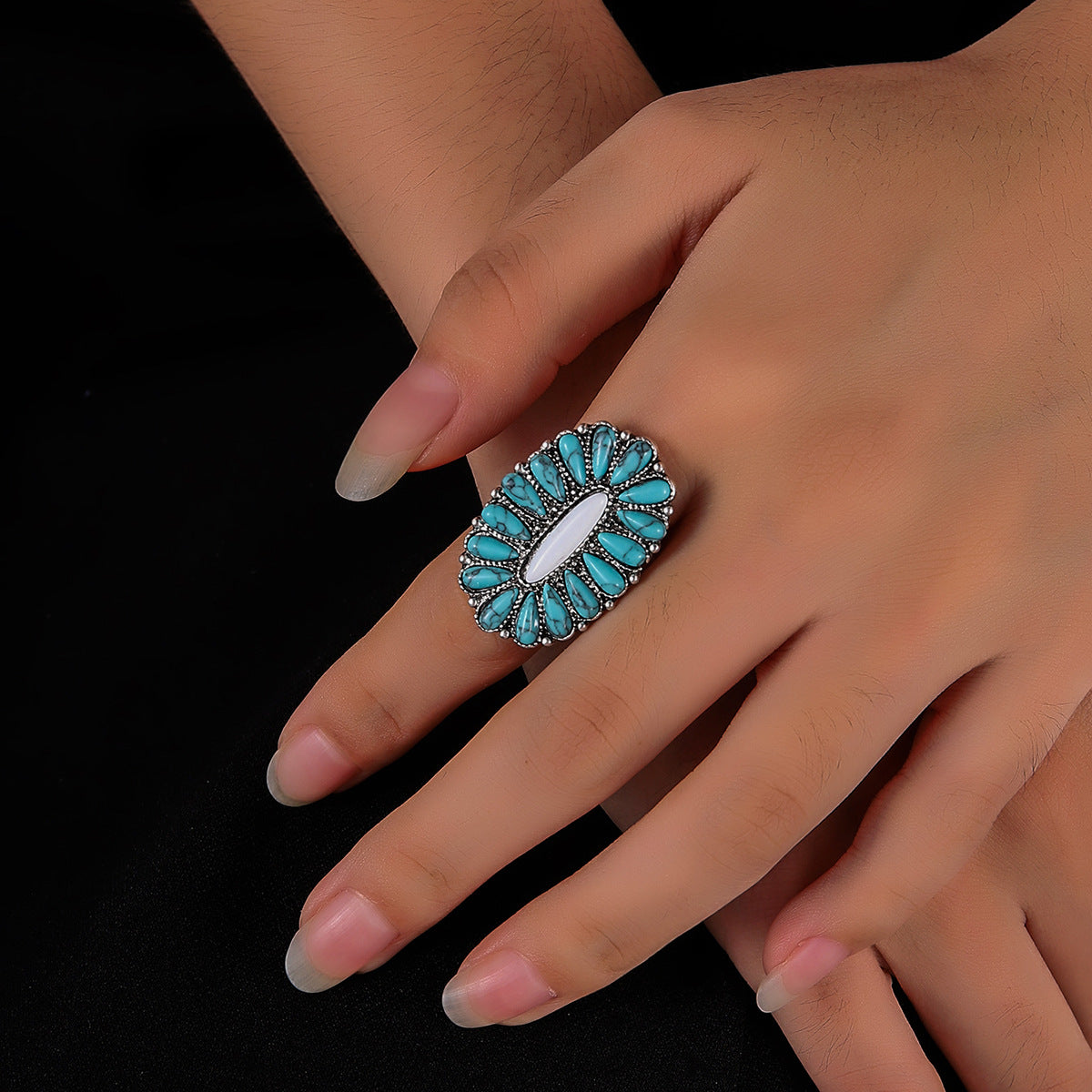
Choose One Color Echo
If the ring feels isolated, repeat only a small part of its visual language. Options include a subtle turquoise-colored earring, a cool-toned bag detail, a blue-denim layer, or a manicure color that complements rather than copies. The echo should be far enough from the hand to create movement through the outfit.
Avoid promising an exact color match between screen images and delivered components. Lighting, displays, photography, and product variation affect appearance. Style by relationship—cool versus warm, light versus dark, saturated versus muted—rather than demanding identical color.
Coordinate Bracelets Without Hiding the Ring
Begin with no bracelet. Add one narrow bracelet to the opposite wrist and photograph the full silhouette. Then test it on the ring wrist while flexing, holding the bag, and sitting. Remove any combination that strikes, catches, or compresses movement.
A chunky cuff beside a statement ring can turn the hand and wrist into one heavy block. That may work for a deliberately maximal outfit, but the black dress will amplify the contrast. If the ring is intended as a precise point of color, keep the wrist quiet.
Use an Occasion Ladder
Rather than labeling the ring “casual” or “dressy,” build three versions of the same black dress:
- Day: everyday shoes, practical bag, sized ring, minimal earrings.
- Dinner: structured shoe, smaller bag, one stronger ring, edited face accessory.
- Event: refined outer layer, intentional hand placement, jewelry hierarchy tested under venue lighting.
Change no more than three elements between levels. This reveals which items actually create formality. Often the ring can remain while shoes, bag, and outer layer shift.
Test Black Fabric Under Real Lighting
Black fabric absorbs and reflects light differently depending on weave and finish. Matte cotton, crepe, velvet, satin, and sequined surfaces do not provide the same backdrop. Photograph the outfit in daylight, indoor ambient light, and the approximate event lighting when practical.
Do not use harsh direct light merely to make a product sparkle. Judge whether the ring is readable, whether the dress texture remains visible, and whether other accessories create glare. Realistic lighting prevents an outfit from succeeding only in edited images.
How to Use the Styling Video
The supplementary video is Wear It With Style: Turquoise Jewelry by JTV. Its page was accessible while this draft was prepared, but no transcript was available for review. This article does not quote the video or use it to verify the two Oroxen rings.
Watch it fully and extract only general styling questions relevant to color placement, scale, and jewelry hierarchy. Independently verify any statements about gemstones, treatments, origin, value, construction, or care. A third-party video cannot authenticate a specific retailer’s product.
Common Black-Dress Styling Errors
- Adding a complete turquoise-colored set immediately: establish the ring’s strength first.
- Treating every black dress alike: neckline, sleeves, texture, hardware, and hem change the balance.
- Assuming adjustable means universal: obtain the documented range and method.
- Choosing size from memory: measure the intended finger and consider band design.
- Matching every Western motif: repeat one quality and edit the rest.
- Judging only a hand close-up: use upper-body, full-body, and movement frames.
- Using generic cleaning methods: follow instructions for confirmed materials and construction.
Care and Storage Before the Next Wear
Request option-specific care. Avoid soaking, steam, ultrasonic machines, abrasive cloths, chemical dips, and household cleaners unless confirmed materials and manufacturer directions permit them. Remove rings for swimming, exercise, tools, harsh chemicals, and activities where impact, contamination, or workplace rules create risk.
After wear, inspect the band, decorative face, connections, settings, and surface. Store rings separately in a dry, protected place so projecting motifs do not scratch other pieces. Stop wearing a ring if irritation, looseness, distortion, or surface change appears.
Frequently Asked Questions
Does a turquoise-colored ring work with every black dress?
It can work with many, but the best arrangement depends on neckline, sleeve, texture, hardware, event, ring scale, and full-outfit hierarchy.
Which finger is best?
No finger is universally best. Compare measured fit, adjacent-finger comfort, hand activity, motif orientation, and the bag or bracelet arrangement.
Can both example rings be worn together?
Only if documented fit and physical clearance work, and the two faces have a clear visual hierarchy. Begin with one ring before testing a second.
Where can I compare more options?
Browse Western Rings, explore the broader Western Jewelry collection, visit the Turquoise Jewelry Guides hub, or return to the Oroxen home page.
Final Black-Dress Formula
Give the dress one strong line, the ring one explicit job, and the remaining zones a clear order. Verify the exact ring size or adjustment range, test ordinary hand movement, photograph several distances, and change only one styling variable at a time.
The black dress does not need a complete themed accessory set. Its quiet field can make one turquoise-colored Western ring sufficient. When fit, contrast, motif, and movement agree, the hand-level detail will feel connected to the whole outfit instead of added at the last minute.