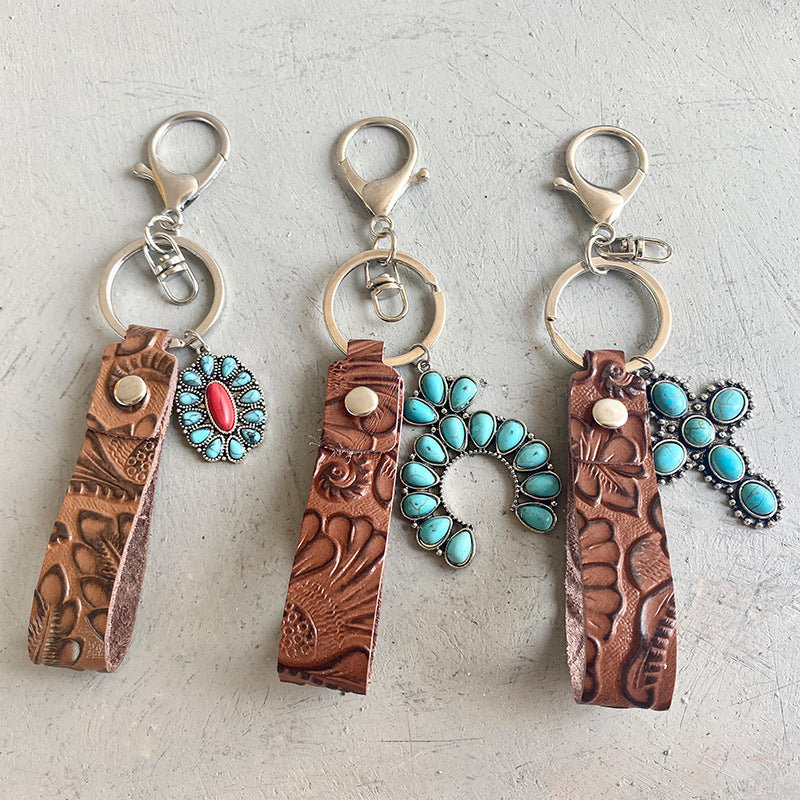
fu'hPairing turquoise-colored cowboy jewelry with leather is a problem of layers, not just matching. The necklace, shirt, jacket, bag strap, belt, and boots all occupy different distances from the body, and each surface adds color, texture, movement, and care requirements. A strong outfit gives those layers an order. A risky outfit lets unknown materials rub, catch, transfer color, or compete without a plan.
This guide examines the Western Turquoise Vintage Floral Leather Necklace and the Western Turquoise Vintage Leather Necklace. Their titles and galleries support discussion of Western, floral, vintage-inspired, turquoise-colored, and leather-related styling. They do not independently certify natural turquoise, leather composition, metal identity, age, maker, origin, construction, handmade status, or cultural affiliation.
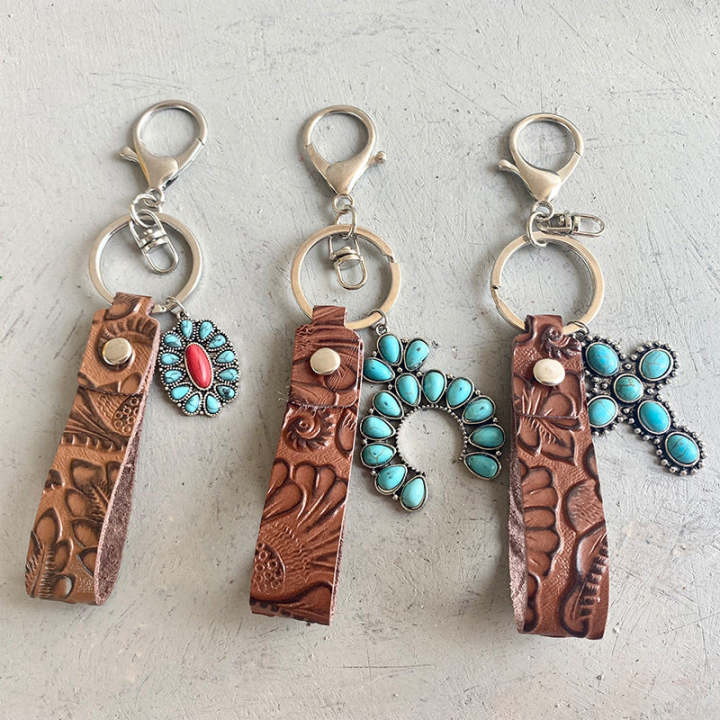
Quick Answer: Use the Layer Map
Write the outfit from inside to outside: skin, base garment, necklace, jacket, bag strap, and outer layer. For each layer, record its surface, color, hardware, movement, and care limits. Place the turquoise-colored necklace where it remains visible without repeated contact from a zipper, snap, collar edge, strap, fringe, or textured leather.
Choose one leather zone as the dominant texture. A jacket, bag, belt, boots, and necklace can all use leather-related language, but they should not automatically compete. Browse the Turquoise Jewelry collection by body location, and compare alternatives in the Western Jewelry collection if the planned leather layers make a necklace impractical.
First Principle: Confirm What “Leather” Means
Leather in a title is not a complete composition, source, finish, backing, coating, or care disclosure. Some shoppers require exact information for sensitivity, animal-derived material preferences, ethics, durability, weather exposure, or storage. Ask which parts are leather, the exact material name, any backing or coating, finish, source information relevant to the buyer, and product-specific care.
Do not infer composition from grain, edge, smell, flexibility, price, or a photograph. Do not perform burn, solvent, water, scratch, or other destructive tests. If the seller cannot provide a necessary fact, mark it unknown and decide whether that uncertainty is acceptable before purchase.
Second Principle: Separate Leather-on-Leather Contact
A leather-related necklace worn over a leather jacket may create friction, surface transfer, indentation, or catching depending on unknown finishes and construction. The same necklace on a smooth woven shirt beneath an open jacket may reduce contact while preserving the visual relationship.
Test the exact surfaces in a low-risk way only after receiving compatible care guidance. Observe whether the necklace slides, sticks, twists, or disappears into a similarly colored field. Avoid prolonged rubbing between unknown finishes. If contact creates marks, odor transfer, discoloration, or abrasion, stop and separate the layers.
Third Principle: Build Color Contrast Before Texture
Place the turquoise-colored area against a field where it can be read. Black, cream, denim, warm brown, tan, rust, or muted olive can provide useful contrast, but no palette is mandatory. Exact matching is unnecessary because screens, photography, daylight, indoor light, and venue lighting can shift apparent color.
Choose contrast first, then add texture. A turquoise-colored focal element over a plain shirt with one leather jacket often reads more clearly than the same element placed against leather, fringe, embroidery, and patterned fabric at once. Photograph the full torso from several distances before adding another accessory.
Fourth Principle: Assign Hardware a Supporting Role
Leather jackets, belts, bags, and boots often include zippers, snaps, studs, buckles, or conchos. Necklace components may add another finish. Do not assume all silver-colored or gold-colored surfaces share a metal or coating. Visual coordination is possible without material equivalence.
Select one hardware family as dominant and keep the others quieter. More importantly, keep necklace elements away from active zippers, strap adjusters, and bag closures. A coordinated finish is not useful if it repeatedly strikes or abrades another surface.
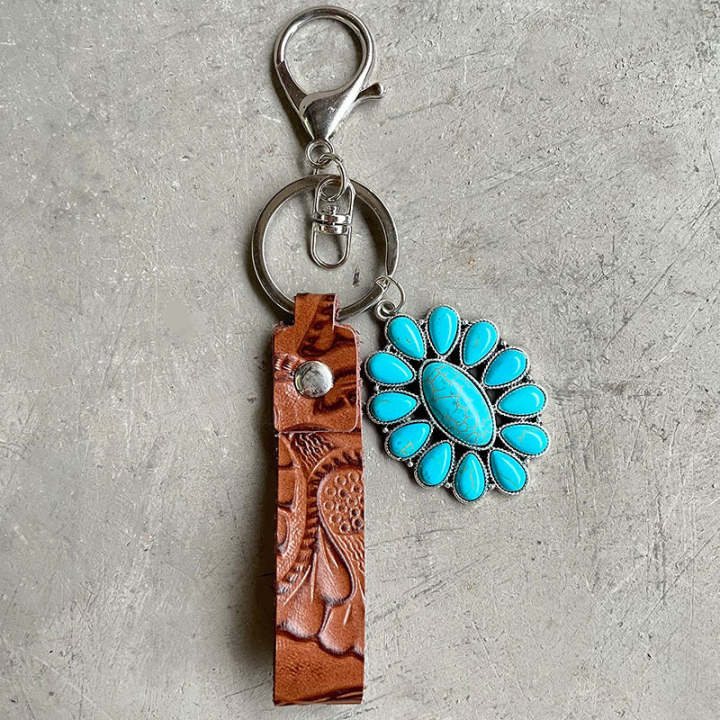
Product Study One: Western Turquoise Vintage Floral Leather Necklace
During the latest review, this listing displayed $141.40 USD. Five choices labeled Design 1 through Design 5 were visible, with Design 1 checked. The page used Western, turquoise, vintage, floral, leather, everyday, occasion, and gift language.
The visible page did not clearly provide a design-by-design inventory, wearable length, central dimensions, total mass, fastening, full strap, backing, skin-contact and decorative components, finish, construction, leather verification, turquoise identity, treatment, or care. A buyer should not transfer a gallery observation or seller answer from one design to another.
Map the selected label to its correct main image, thumbnails, price, availability, and cart text. Then ask where the leather-related component sits, what surface touches skin or fabric, and whether it can be worn over another leather surface. Confirm whether a floral center moves freely, stays fixed, or can strike buttons and hardware.
Formula One: Open Leather Jacket over a Plain Shirt
Use a smooth, plain shirt as the necklace field and wear the jacket open enough to create a vertical frame. Keep the necklace inside that frame without letting it fall under the lapel or onto a zipper. Let the floral composition lead; use simple earrings and leave the nearest wrist relatively quiet.
Stand, sit, reach, and zip the jacket partway. If the central element moves into the zipper path, change the necklace length or garment rather than relying on careful posture throughout the day. The country-concert necklace hierarchy in the turquoise jewelry for women styling guide offers a complete focal-zone method.
Formula Two: Leather Belt or Boots, No Leather Jacket
Place the necklace over denim, black, cream, or another quiet fabric. Use a belt or boots as the single leather zone lower in the outfit. This creates physical separation and allows the necklace's turquoise-colored and floral details to provide the upper-body focus.
Do not force exact brown matching. Different finishes, wear patterns, and lighting can make supposedly identical leather tones look unrelated. Coordinate through warmth, visual weight, and spacing instead. One piece can be darker while the other supplies texture.
Product Study Two: Western Turquoise Vintage Leather Necklace
The second listing displayed $104.03 USD during review. Six visible selections were labeled Design 1 through Design 6, with Design 1 checked. The page also stated “18.5 grams/set,” while using Western, turquoise, vintage, leather, everyday, occasion, and gift language.
Confirm whether the stated 18.5 grams applies to every design, what “set” includes, and whether the mass is total or limited to particular components. The visible page did not clearly provide a design-by-design inventory, wearable length, central dimensions, fastening, full components, finish, construction, leather composition, turquoise identity, treatment, or care.
Six designs can create materially different outfit problems. Map every serious candidate separately. A design with a longer visual path may interact with a belt or seated posture, while a wider center may contact lapels or straps. Photographs cannot replace numerical measurements.
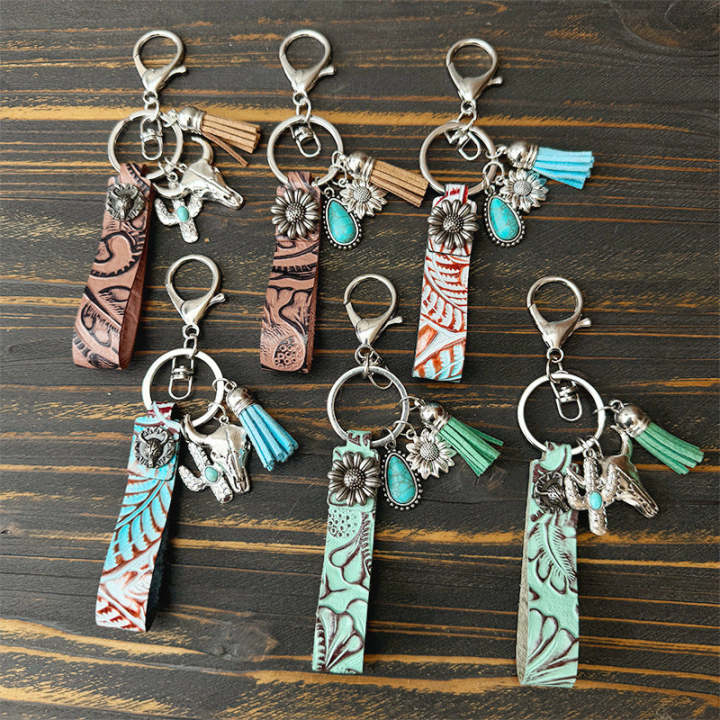
Formula Three: Quiet Dress with One Leather Bag
Use a simple dress as the necklace field and a compact leather or leather-like bag as the lower supporting texture. Keep the strap away from the necklace path. A cross-body strap can cut directly through the focal area, so test shoulder and cross-body configurations before committing.
Choose practical footwear and restrained earrings. The necklace can provide the Western-inspired visual signal without requiring boots, a hat, a large buckle, and fringe. This formula also makes it easier to inspect whether the chosen necklace turns or strikes the fabric during movement.
Formula Four: Denim Layer with Leather Accessories
Use an open denim jacket or shirt to separate the necklace from a leather bag, belt, or boots. Denim acts as a buffer between textures. Keep the upper hardware simple and let one turquoise-colored center provide contrast.
Check jacket buttons, collar points, and chest pockets. The necklace should not disappear under the denim edge or catch a snap. If it does, change the length, use another design, or move the primary focal point to the ears or hands.
Use the JTV Video for Scale, Not Product Proof
The YouTube video “Wear It With Style: Turquoise Jewelry” by JTV is a short styling overview that presents turquoise jewelry as capable of bold or subtler roles. That focal-role idea is useful here: decide whether the necklace is the dominant statement or a quieter accent inside a leather-based outfit.
The video does not inspect, measure, authenticate, price, or endorse either Oroxen listing. Its description's gemstone language cannot prove that an Oroxen turquoise-colored element is natural turquoise. It also cannot establish leather composition, metal, finish, construction, origin, care, or fit. Use the video as a visual prompt and verify every product-specific fact separately.
A Leather-and-Necklace Movement Audit
- Put on every layer, including the actual jacket, bag, belt, hat, and planned outerwear.
- Turn the head, bend forward, reach overhead, sit, stand, and walk at an ordinary pace.
- Open and close the jacket without bringing the necklace into the zipper or snap path.
- Lift, remove, and replace the bag while watching the strap and central necklace element.
- Use pockets, phone, keys, and the bag closure without forcing jewelry against hardware.
- Practice moving the necklace directly into a dedicated case if conditions require removal.
Stop if the necklace catches, transfers color, marks a surface, irritates skin, restricts movement, opens unexpectedly, or repeatedly strikes hardware. A home audit cannot guarantee compatibility, but it can expose predictable conflicts.
Common Pairing Mistakes
Using Every Leather Item at Once
Choose one dominant leather texture and one distant supporting reference. More zones add visual and physical interactions.
Assuming All Leather Browns Should Match
Coordinate warmth and visual weight instead of chasing an exact screen color.
Letting the Bag Strap Cross the Focal Point
Change strap position, necklace length, or body location. Repeated contact is not an acceptable styling compromise.
Treating “Leather” as Verified Composition
Request the exact material, finish, backing, source information relevant to the buyer, and care instructions.
Stacking Western Motifs Without Hierarchy
Choose floral, cross, buckle, fringe, cactus, or another motif as primary; do not require all of them. The evidence checklist in What to Know Before Buying Turquoise Cowboy Jewelry keeps a Western mood separate from product facts.
Care When Two Unknown Finishes Meet
Leather-related surfaces and jewelry finishes may have different moisture, cleaning, friction, and storage limits. Do not assume a product safe for a jacket is safe for a necklace, or vice versa. Avoid perfume, sunscreen, cosmetics, alcohol, detergent, solvent, steam, ultrasonic equipment, dips, polish, or conditioners unless the exact product instructions allow them.
After wear, inspect both the necklace and contacted garment under good light. Look for transfer, abrasion, loose elements, change in surface, or odor. Follow separate documented care methods and store the necklace away from straps, buckles, and treated leather surfaces. The fashion-finish care guide provides an uncertainty-first record.
Frequently Asked Questions
Can a leather necklace be worn over a leather jacket?
Possibly, but only after confirming both surfaces and their care limits. Test for friction, transfer, catching, and hardware contact. A smooth fabric buffer may be safer and visually clearer.
Should a necklace match leather boots or a belt?
No exact match is required. Use spacing, warmth, and visual weight. The necklace and lower leather zone can relate without sharing an identical brown or finish.
Does 18.5 grams per set apply to all six designs?
The second page displayed that weight, but the shopper should confirm its design-by-design applicability and what “set” includes before comparing comfort.
Can men use these styling formulas?
Any wearer can use the same layer map when the design, symbolism, fit, and comfort suit them. The men's country-concert turquoise jewelry guide uses a wearer-led method rather than fixed gender rules.
How should leather-related jewelry be gifted?
Confirm the recipient's neckline preferences, animal-derived material choices, sensitivities, symbolism, desired length, and care tolerance. Share a verified shortlist instead of guessing.
Final Layer-Map Checklist
- The exact design is mapped to the correct gallery, current price, availability, and cart text.
- Included components, length, dimensions, mass, fastening, materials, finish, construction, care, and returns are confirmed or marked unknown.
- Leather composition and turquoise identity are not inferred from a title or photograph.
- The necklace has a clear skin, fabric, or outer-layer position.
- The jacket, bag strap, zippers, snaps, collar, and belt do not create unresolved contact.
- One texture and one focal zone lead the outfit.
- Separate care and storage instructions are ready for every contacted surface.
Conclusion: Pair Layers, Not Labels
The most reliable leather-and-turquoise-colored combination begins with an exact option and a physical layer map. Choose the necklace's role, verify what each material word means, create enough contrast, control hardware, and rehearse the actual jacket and bag. Remove any layer that introduces competition or repeated contact.
Compare the five-design floral listing and the six-design leather listing through the same evidence fields. Explore additional options from the Oroxen homepage, but never let a cowboy, turquoise, vintage, or leather keyword replace fit and composition facts. A convincing outfit is built from disciplined spacing and honest information, not from the number of Western terms it can contain.