Making turquoise earrings the focal point of a black dress is an attention-design problem. The earrings occupy only a small part of the outfit, yet they must win against the dress neckline, hair, glasses, makeup or grooming, hat, necklace, bag hardware, belt, shoes, and even the background of the event. The answer is not automatically “wear the biggest pair.” It is to build a clear path for the eye.
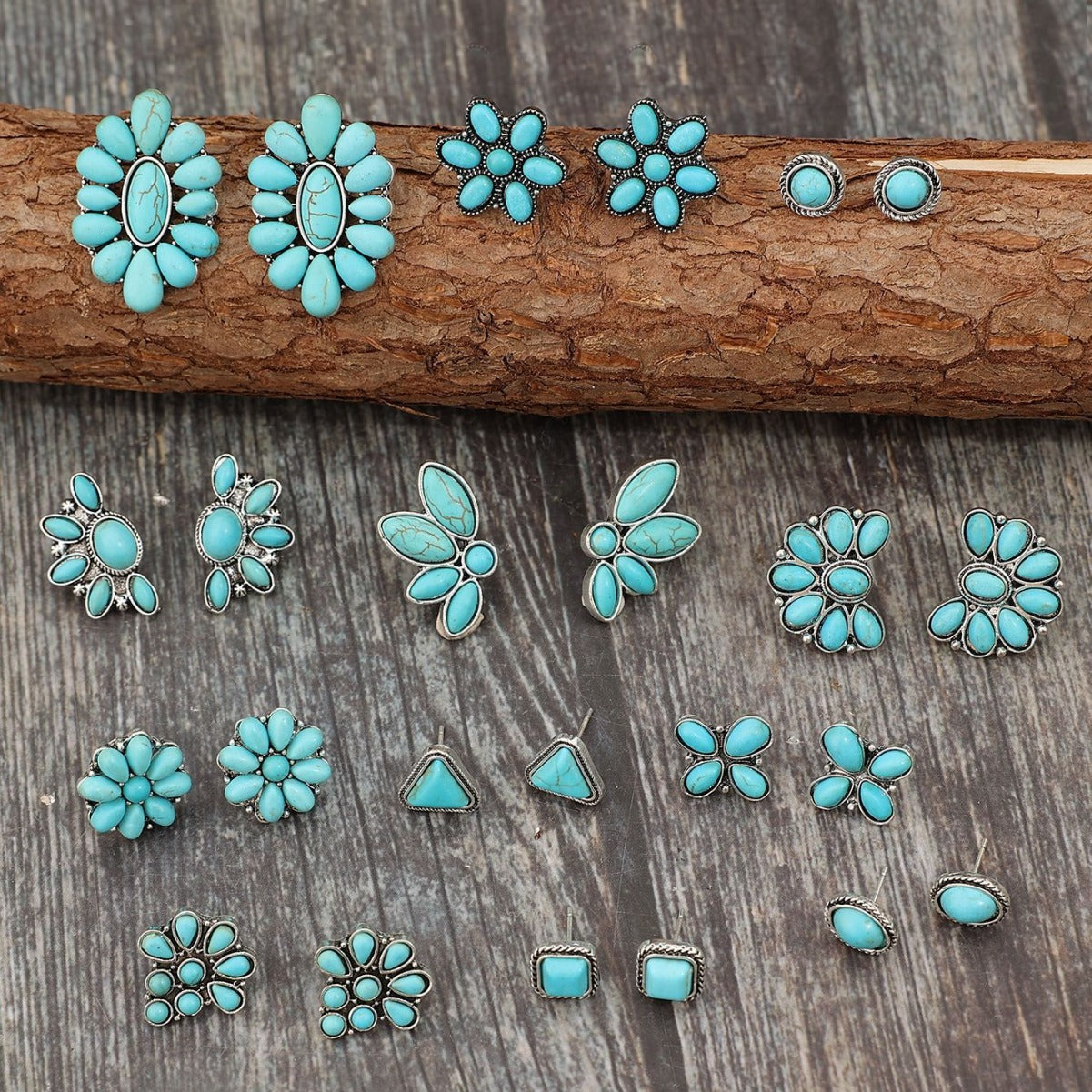
This guide compares a compact multi-shape example, the Turquoise Western Stud Earring Set, with the more motif-driven Western Turquoise Boho Vintage Cow Skull Earrings. Product names and photographs describe an aesthetic; they do not by themselves verify natural turquoise, metal, age, origin, maker, treatment, construction, or cultural affiliation. Physical facts must be confirmed for the selected option.
Quick Answer: Build an Attention Funnel
An attention funnel has four parts. The black dress supplies a quiet base. The neckline and outer layer point toward the face. Hair, eyewear, and headwear leave a visible window around the earrings. Supporting accessories repeat one restrained cue without becoming equal competitors.
Start by removing the necklace, large belt, decorative hat, and high-contrast bag. Add the earrings and photograph the outfit at close, conversational, and full-body distance. Return one supporting element at a time. Stop when the earrings remain the first intentional detail noticed near the face.
“First noticed” does not mean visually aggressive. A compact stud set may lead through blue-green contrast against black, while a cow-skull motif may lead through recognizable outline. Scale, contrast, spacing, and meaning can each produce emphasis.
For other black-dress hierarchy problems, read the public turquoise-style jewelry mistakes guide. The method below concentrates specifically on the face zone.
Measure Three Attention Distances
Online product images encourage close inspection, but an outfit is rarely experienced only in close-up. Evaluate the earrings at three repeatable distances.
| Distance | What should remain readable | Likely distraction | Correction |
|---|---|---|---|
| Close portrait | Visible shape, spacing, and face balance | Hair, glasses, makeup, beard, hat edge | Clear the earring window |
| Conversation | Blue-green contrast or recognizable motif | Necklace and neckline detail | Reduce the chest zone |
| Full outfit | Directional link from dress to face | Bag, belt, boots, hem, background | Lower remote accessory contrast |
Use the same camera height, lighting, and background for each comparison. Otherwise a brighter wall or closer crop may falsely appear to improve the jewelry. The goal is not a social-media effect; it is a repeatable outfit that directs attention in normal space.
Create the Earring Window
Draw an imaginary rectangle from the temple to the outer collar edge and from the earlobe to the jaw or collar line. Everything inside that rectangle affects the earrings. Record hair position, glasses arm, hat brim, facial hair, scarf, collar, headset, and any required equipment.
Next, request exact earring height, width, total drop, profile, per-earring weight, closure, and backing. Make a life-size paper outline and place it within the rectangle. Check whether the design is visible, covered, or likely to collide. Repeat on both sides because hair and accessories may be asymmetrical.
A black dress can strengthen the funnel when its neckline points upward or leaves a clean shoulder line. It can weaken the funnel when a high embellished collar, bright zipper, lace panel, or necklace stops the eye below the face.
Choose a Silhouette From Western Earrings
Use the Western Earrings collection as a current shape library. Separate compact studs, long drops, broad statements, symbolic motifs, geometric designs, and sets. The collection page helps with visual sorting; the exact item page and seller answers must establish the physical specifications.
For each candidate, write one proposed focus mechanism. Examples include color contrast, motion, repeated small shapes, broad outline, vertical drop, or recognizable motif. If three mechanisms are active at once, simplify the rest of the outfit more strongly.
Do not treat more detail as better. A small design with a clean black field can lead more clearly than a large design placed beside bright hair accessories, patterned eyewear, and a decorated neckline.
Product Example One: Turquoise Western Stud Earring Set
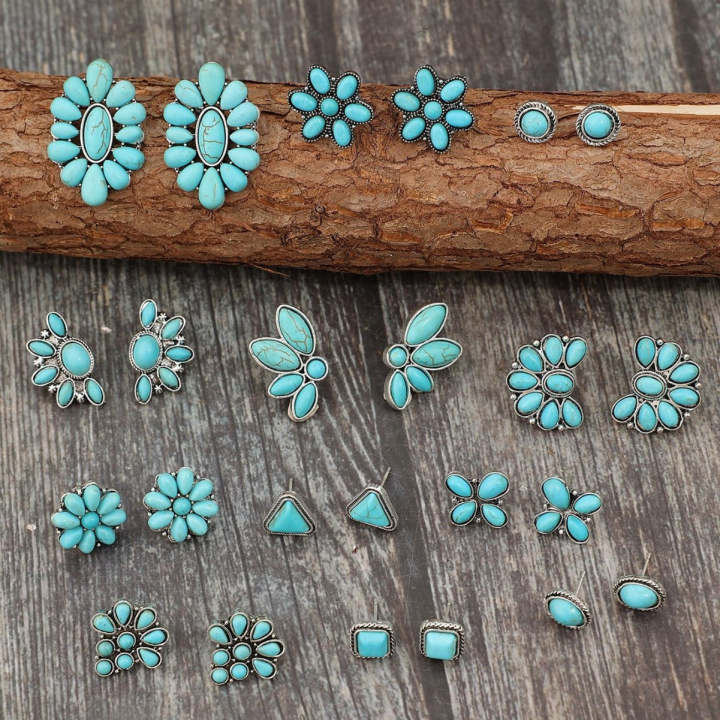
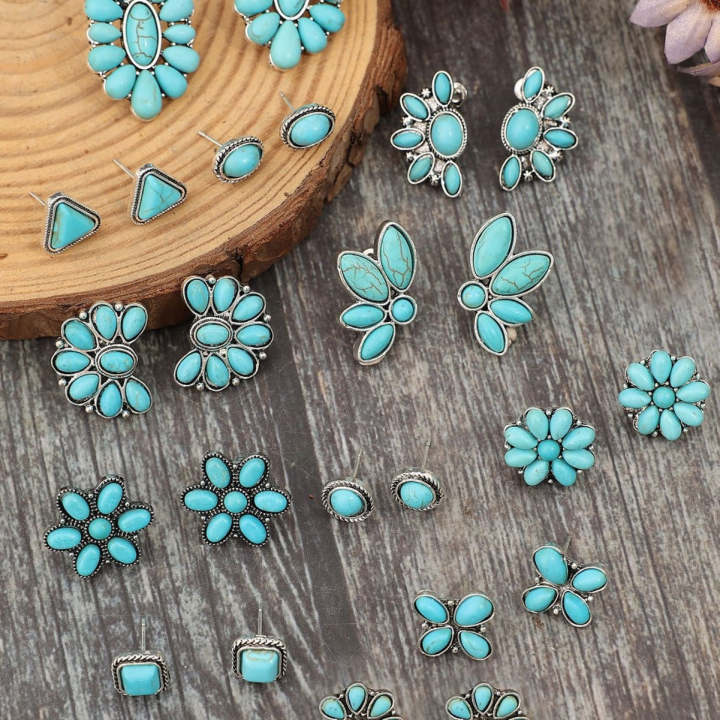
The current page describes a coordinated turquoise-style stud assortment with floral, geometric, and classic shapes. It shows one visible color choice. The visible information does not clearly disclose the exact number of wearable pairs, individual dimensions, per-earring weights, post and backing types, component materials, finishes, construction, or care for each shape.
The set can support focal styling through rhythm. Two or more small placements around the ear may create a clear blue-green cluster without a long drop. That possibility depends on the wearer's piercings, anatomy, comfort, and the actual contents. Do not assume the product includes a specific configuration from a styled photograph; request a complete component inventory and option mapping.
Formula A: Matte Black Crew-Neck Dress
Pull hair behind the ear or choose a stable style that preserves the window. Skip the necklace and use a quiet black or brown shoe. Select one apparent shape family from the set rather than wearing every available motif. Add a small ring only if it does not become the first color accent when hands are near the face.
Formula B: Black Blazer Dress
Let the lapels point toward the face and keep any blazer hardware understated. A compact stud grouping can balance structured shoulders without extending into the collar. Check the side view: posts and backings must not interfere with phone use or rest uncomfortably against the neck.
Formula C: Black Dress With an Open Denim Shirt
Use the open shirt as two vertical lines leading upward. Keep its collar below the earrings and limit other turquoise-colored items. This casual formula relies on framing, not maximum jewelry size.
Product Example Two: Cow Skull Earrings
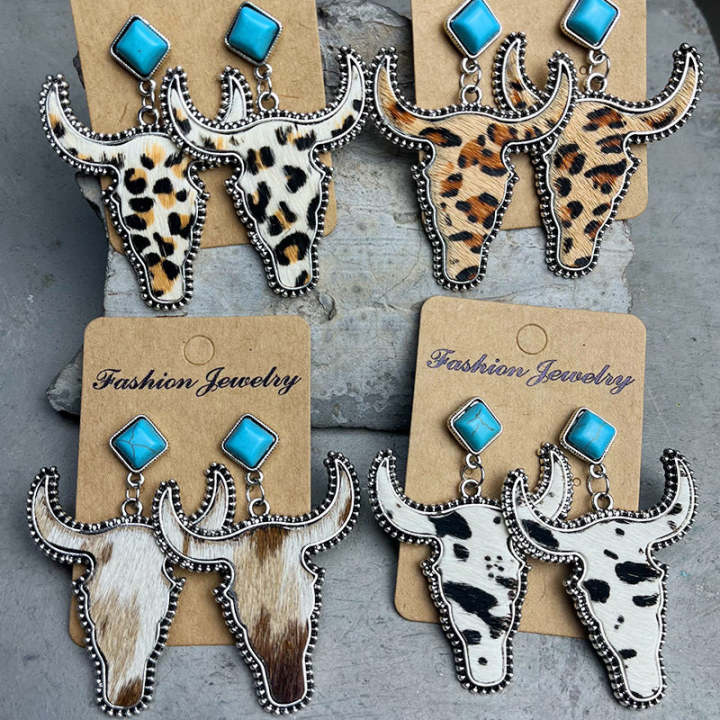
The current Western Turquoise Boho Vintage Cow Skull Earrings page shows Design 1 through Design 4 under a selector labeled “Size.” These are visible design labels rather than disclosed measurements. The page does not clearly state which image maps to each design or provide exact height, width, drop, profile, weight, closure, component materials, finish, construction, or care.
A cow-skull motif can create instant recognition, but it also introduces meaning. Make sure the wearer wants that motif and that it is appropriate for the event, workplace, and gift context. Do not attach unsupported tribal, spiritual, regional, artisan, or historical claims to it.
Formula A: Black T-Shirt Dress and Boots
Let the earrings carry the specific Western motif. Choose boots by silhouette and function rather than repeating another large skull or turquoise-colored decoration. Use a simple bag worn below the waist or carried away from the portrait zone.
Formula B: Black Slip-Style Dress and Structured Jacket
Frame the motif with a clean shoulder and restrained neckline. Keep the chest bare and make the shoe visually precise. The contrast between a minimal dress line and a figurative earring can create a dressier editorial effect, provided the verified weight and closure suit the wearing time.
Formula C: High-Neck Black Knit
Clear the hair and collar from the earrings. The high neckline removes necklace space, which can strengthen the face focus. Test fabric contact because raised or articulated components may catch some knits.
Control the Five Competitor Zones
- Hair and headwear: keep edges from hiding or striking the earrings.
- Neckline and necklace: remove equal-strength chest details.
- Waist and hands: reduce large buckles and high-contrast stacks.
- Feet: let boots support the direction without duplicating the focal motif.
- Bag and outerwear: route straps, zippers, collars, and hardware away from the face funnel.
Photograph each zone independently, then inspect the full image. A bracelet may appear quiet at the wrist but become a major competitor when the wearer gestures near the face. A bag may seem remote until its bright strap cuts across the black dress.
The public Western jewelry wardrobe guide provides more detailed checks for denim, dresses, boots, and workwear.
Plan Light, Background, and Photographs
Black fabric can absorb light while turquoise-colored details reflect or scatter it differently. Test the real outfit in indoor warm light, outdoor shade, and the intended event light. Avoid judging color identity or material from those changes; the purpose is only to confirm visibility and balance.
Choose a background that does not merge with hair or earrings. At an event, the background is not controllable, so the outfit should not depend on one perfect wall. A clean neckline and visible earring window are more robust than a lighting trick.
Use a six-photo set: straight portrait, three-quarter portrait, side view, seated half-body, standing full-body, and movement frame. Score earring visibility, comfort, security, hierarchy, contact, and wearer confidence from zero to two. Reject any formula that looks strong but fails safety or comfort.
Use the Styling Video as a Starting Point
The supplemental video is Wear It With Style: Turquoise Jewelry by JTV. Its short auto-generated transcript was available during review. The source presents general styling ideas involving casual denim-like dressing, collared shirts, earth-toned clothing, layering, and larger statement looks.
Those suggestions can inspire contrast and framing, but the video is retailer-produced and does not document either Oroxen earring. It cannot verify stone identity, components, maker, origin, treatment, value, measurements, closure, or care. Watch the complete video and confirm product-specific facts separately.
Common Focal-Point Failures
The Necklace Wins
A large or bright necklace sits closer to the black dress field and may dominate. Remove it or select a very quiet piece whose verified placement does not compete.
The Hat Creates a Second Portrait Frame
A decorated brim, hatband, or hanging cord can crowd the earrings. Use a simpler hat or no hat during the first successful formula.
The Dress Hardware Is Too Strong
Bright zippers, buttons, chains, or buckles may pull attention downward. Cover, remove, or select a different dress if the hardware cannot be visually controlled.
Both Earrings and Boots Carry Large Motifs
Separate support from competition. Let boots repeat texture, apparent finish, or general Western direction without duplicating the same scale of symbol.
The Earring Window Disappears During Movement
Hair, scarves, collars, and straps shift. Run a movement rehearsal rather than styling one still photograph.
Frequently Asked Questions About Turquoise Earrings
Are studs strong enough to be the focal point?
Yes. Color contrast, clustered placement, repetition, and a cleared face zone can make compact earrings lead. Exact contents and dimensions of a set still need confirmation.
Should a black dress have a V-neck for turquoise earrings?
No. Crew, high, scoop, square, and collared necklines can all work. Evaluate how each line directs attention and whether it interferes physically.
Can I add a turquoise-colored ring?
Possibly. Keep it quieter and in a separate zone. The public black-dress ring guide offers placement ideas that can support rather than replace the earring focus.
How do I choose among Design 1 through Design 4?
Ask for exact image-to-option mapping, dimensions, weight, closure, components, finish, construction, and care. Then compare life-size outlines inside the face window.
Is “vintage” proof that the earrings are old?
No. Treat vintage or vintage-inspired as a style description unless age and provenance are documented.
How should turquoise-style earrings be stored and cleaned?
Use seller instructions tied to the exact disclosed components. Keep pairs separated when contact could scratch or tangle them, and do not apply a natural-stone or metal method to unidentified materials.
Final Focal-Point Checklist
- Choose one earring focus mechanism: contrast, shape, motion, cluster, or motif.
- Obtain option-specific measurements, weight, closure, components, finish, and care.
- Map hair, glasses, hat, collar, headset, and equipment.
- Remove competing necklace, belt, bag, and footwear details.
- Test three attention distances and six photograph states.
- Confirm motif meaning and context with the wearer.
- Keep the formula only if visibility, security, contact, and comfort all pass.
Explore more current shapes in Western Jewelry and return to Oroxen for current product and store information. When the black dress, neckline, face window, and supporting accessories all direct attention upward, turquoise-style earrings can lead without making every other part of the outfit disappear.