Turning a white shirt and jeans from casual to dressy does not require replacing the entire outfit or piling on more jewelry. A controlled transition keeps the same verified turquoise-style necklace and changes garment finish, tuck, layer, shoes, bag, and grooming one at a time. The necklace should remain physically safe and visually intentional at every stop.
This guide uses the Turquoise Western Teardrop Pendant Necklace and the Western Turquoise Vintage Geometric Cross Necklace. On these pages, terms such as turquoise-colored, teardrop, geometric, cross, Western, and vintage-inspired function as design language. Those labels alone cannot establish gemstone identity, base metal, product age, enhancement, manufacturer, geographic source, handmade status, or association with a culture.
Quick Answer: Build a Five-Stop Outfit Dial
- Weekend: relaxed shirt, comfortable jeans, simple shoes, one necklace.
- Polished casual: cleaner tuck, tidier cuff, refined shoe, same necklace.
- Smart daytime: crisp shirt, dark denim, structured bag, controlled layer.
- Dinner: deliberate neckline, cleaner silhouette, minimal supporting jewelry.
- Event-ready denim: best-fitting garments, verified necklace corridor, planned storage and transition checks.
Change one dial per stop and photograph the result. Do not move the necklace to an unverified length merely to make the outfit look dressier. Fit, clasp, care, symbolism, and contact rules stay constant.
The published statement-versus-everyday turquoise styling guide explains intensity. This article focuses on garment formality while preserving one necklace system.
Verify the Necklace Before Styling the Dial
Record the exact option and obtain total wearable length, adjustment range, decorative height and width, profile, weight, clasp, chain or strap details, complete components, finish, construction, and care. Save the dated price, availability, shipping, and return conditions.
Make a full-scale mock-up using string and paper only after the measurements are confirmed. Mark collar points, top button, placket, pockets, belt line, jacket lapels, bag strap, and seat-belt path on a photograph of the actual outfit.
Turquoise color does not prove natural turquoise. Antique-silver color does not prove silver. Vintage-inspired does not prove age. Cross styling does not prove cultural, geographic, or artisan provenance. Accurate language is part of a polished outfit.
Choose the Base White Shirt
Use a shirt that can travel across several dress levels without changing its fundamental fit. Check collar shape, fabric, opacity, buttons, placket, pockets, hem, cuffs, yoke, embroidery, and pressing needs. A soft camp shirt may remain casual; a crisp poplin shirt may reach the dressier stops more easily.
Dressier does not mean tighter, stiffer, or less comfortable. The shirt should support sitting, movement, breathing, and the real event. A necklace corridor that looks clear while standing must remain clear when the fabric folds.
Photograph four shirt states: open collar, buttoned collar, full tuck, and untucked. Eliminate any state that places the verified pendant on a button, pocket, or hard edge.
Choose the Jeans by Finish, Not Price
Clean dark denim often appears more formal because fading, distressing, contrast stitching, and hardware are reduced. Medium wash can still look polished when the fit, hem, and surrounding outfit are intentional. Pale or distressed jeans usually keep the formula closer to casual.
Inspect the hand-to-pocket and pendant-to-belt relationships. A large buckle, exposed zipper, or decorative rivet can become a second focal point. The necklace should not be asked to compete with the entire lower half.
Use jeans appropriate to the venue. Some work, restaurant, ceremony, or event settings do not accept denim regardless of styling. Clothing rules outrank the desire to use the formula.
Stop One: Weekend Formula
Wear the shirt softly open or untucked, comfortable jeans, simple footwear, and one necklace. Leave earrings small or absent. Use a practical bag whose strap does not cross the pendant.
The weekend test establishes the necklace's normal movement. Walk, sit, use the phone, carry the bag, bend, and add a casual jacket. Record migration, contact, clasp behavior, and desire to repeat.
If the necklace requires constant correction here, it is not ready for a dressier setting. Resolve physical fit before upgrading appearance.
Stop Two: Polished Casual Formula
Keep the garments, add a clean half-tuck or full tuck, shape the cuff evenly, and replace the most casual shoe with a cleaner functional option. Use the same necklace position and bag contact map.
Photograph the outfit at full-body distance. The necklace should look deliberate, not newly added. If the shirt tuck exposes a large buckle or hardware, simplify the belt.
Do not add matching turquoise-colored earrings, bracelet, and ring simply because the clothing became cleaner. Polished casual benefits from edit and repetition.
Stop Three: Smart Daytime Formula
Choose the crisper shirt state, dark or clean denim, structured shoes, and a bag with minimal hand and neckline hardware. Add a blazer, jacket, or coat only after lapel and zipper testing.
The layer can narrow the necklace corridor. Put it on, button or close it as intended, sit, walk, and remove it three times. Reject persistent trapping, crossing, or hard contact.
The turquoise jewelry and denim jacket guide provides a more detailed layer audit if the smart daytime formula uses denim outerwear.
Stop Four: Dinner Formula
Use the best-performing shirt neckline, dark clean jeans, refined shoes, and a smaller or more structured bag. Keep the necklace as the neckline leader. Add only one quiet supporting zone, such as small earrings, after full-body comparison.
Consider table height, leaning, outerwear storage, hugs, photographs, and restroom transitions. A long pendant that meets a table edge or bag hardware does not become safer because the occasion is dressier.
Plan a protected jewelry parking place if removal is needed. A loose pocket, tabletop, sink edge, or bag bottom is not a care system.
Stop Five: Event-Ready Denim Formula
Confirm the venue accepts denim, the symbol suits the event, and the complete outfit remains comfortable for the scheduled duration. Press or prepare the shirt according to its care, use the most appropriate jeans and shoes, and keep additional Western motifs restrained.
Run a departure audit: clasp, connection, pendant position, collar, layer, bag, seat belt, dress code, storage, and current weather. Photograph front, profiles, back, conversational distance, and full body.
Event-ready does not mean adding a hat, boots, buckle, fringe, turquoise-colored set, and several symbols. It means every chosen element has a documented role.
Product Path One: Teardrop Pendant
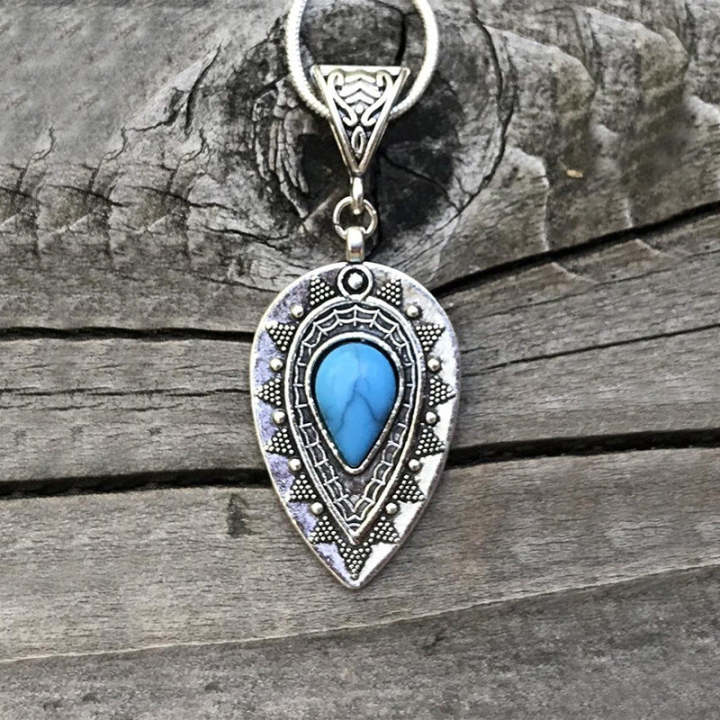
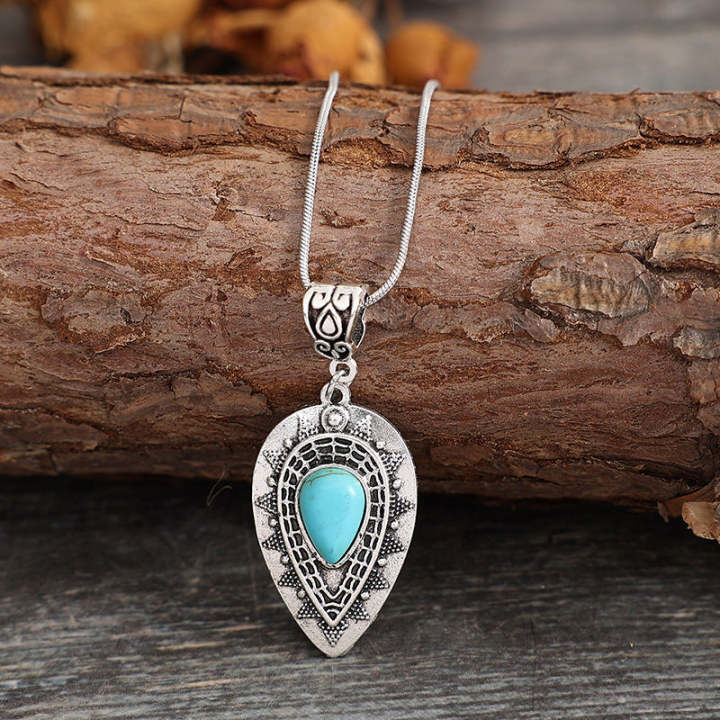
The current Turquoise Western Teardrop Pendant Necklace page displayed $39.99 USD and one visible color selection during review. It describes a Western-inspired pendant with a turquoise-style center, teardrop silhouette, antique-silver-colored appearance, and vintage-inspired detailing.
The visible summary did not clearly state total wearable length, adjustment, pendant dimensions, profile, weight, clasp, complete components, construction, or option-specific care. A Materials & Care area was present, but the exact selected product details must be opened and verified before purchase or cleaning.
Casual Strength
A simple vertical shape can work with a relaxed open collar and quiet jeans. It may need little supporting jewelry.
Dressy Strength
The same teardrop can create a centered line over a crisp shirt when its verified drop clears buttons, pocket, belt, and jacket. Formality comes from framing and garment finish, not from claiming precious materials.
Key Tradeoff
Unknown length and pendant size make the five-stop plan hypothetical. Request the numbers before choosing a corridor.
Product Path Two: Geometric Cross Necklace
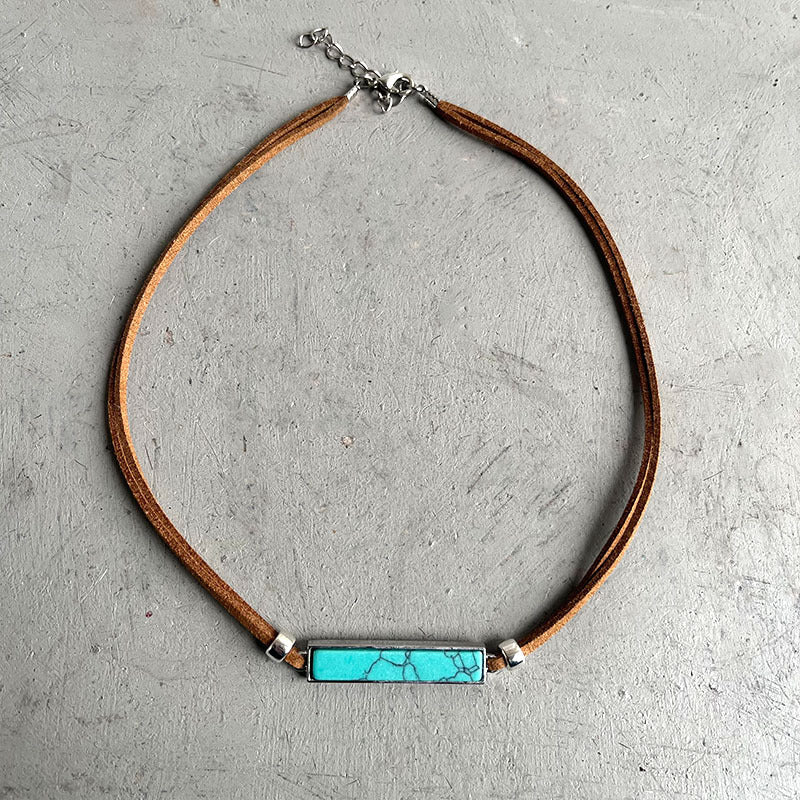
The current Western Turquoise Vintage Geometric Cross Necklace page displayed $126.25 USD and choices labeled Design 1, Design 3, and Design 4 during review. Its visible summary emphasizes Western, turquoise, and vintage-inspired styling.
The visible summary did not clearly provide image mapping, total length, adjustment, cross dimensions, profile, weight, clasp, complete components, finish, construction, or care. Do not interpret the absent Design 2 label without seller clarification.
Casual Strength
A selected cross design can anchor a plain shirt and jeans without a themed set. Keep earrings and buckle quiet.
Dressy Strength
A centered cross can look deliberate over a crisp shirt or inside a verified open collar. Confirm that the wearer wants the religious or personal symbol and the event permits it.
Key Tradeoff
Repeated cross motifs can turn editing into theme accumulation. Let one cross carry the symbolism and remove duplicates.
Compare Both Products Through the Same Five Stops
| Stop | Teardrop question | Cross question |
|---|---|---|
| Weekend | Does the vertical form remain clear in relaxed fabric? | Does the motif suit the casual setting? |
| Polished casual | Does the drop avoid newly exposed belt hardware? | Can the cross remain the only motif? |
| Smart daytime | Does it clear lapel and bag? | Does it suit work and dress rules? |
| Dinner | Does it avoid table and outerwear contact? | Does the symbol fit the occasion? |
| Event-ready | Can framing improve without altering placement? | Can the cross lead without a full Western costume? |
Use equal evidence fields before scoring. A lower price, stronger symbol, or more dramatic photograph cannot replace measurements and construction.
Build a Transition Kit
A useful kit contains no extra jewelry by default. Include a garment-appropriate lint tool, shirt-care item, shoe-care item, small compatible jewelry pouch, and a written event checklist. Use only products approved for the garments and necklace components.
The kit supports transitions between locations without exposing the necklace to sinks, cosmetics, heat, chemicals, or loose storage. Never polish or clean unknown surfaces as a last-minute styling step.
Record where the necklace is stored during travel and removal. A consistent location reduces loss and prevents contact with keys, coins, zippers, and other jewelry.
Video Perspective: Types Do Not Set Formality
The supplemental video is Turquoise Necklaces by John Hartman. At review, YouTube showed a 6-minute, 27-second video without closed captions. Its visible description discusses types including turquoise bead necklaces and pendants.
Type helps organize a collection, but formality depends on the entire wearing formula. The video does not document either Oroxen product and cannot verify their material identity, maker, origin, treatment, measurements, construction, care, or value.
No captions or transcript were available, so this article does not quote or reconstruct spoken content. Inspect the original source and verify any relevant claim independently.
Common Casual-to-Dressy Errors
- Changing the necklace length without evidence. Preserve a verified safe placement.
- Adding more jewelry at every stop. Change garments and finish first.
- Equating dark denim with formal permission. Check the venue.
- Calling color a material. Use option-specific disclosure.
- Ignoring dinner table or event transitions. Test the real sequence.
- Repeating the cross motif. Keep one intentional symbol.
- Assuming vintage means old. Use vintage-inspired unless age is documented.
- Cleaning before an event with a generic method. Follow exact care only.
The published cowgirl jewelry guide can help assign quieter roles to supporting earrings.
Use a Photograph to Audit the Transition
A mirror rewards movement and familiarity, so it can hide small conflicts. A front-facing phone photograph freezes the outfit and makes hierarchy easier to judge. Stand several steps from the camera in even daylight, keep the lens near chest height, and take one frame before adding the necklace and one after. Do not change posture, zoom, or lighting between frames. The comparison should answer a narrow question: did the pendant create a clearer focal point, or did it merely add another object?
Repeat the test after each dressier adjustment. A sharper tuck should clarify the waist without pulling the eye away from the neckline. A sleeker shoe should refine the lower half without making faded denim look accidental. A smaller bag should reduce visual bulk without making the necklace feel oversized. Label the five photographs weekend, polished casual, smart daytime, dinner, and event-ready. The sequence becomes a reusable decision record instead of a memory-based impression.
When two stages look almost identical, remove the weaker one from the wardrobe plan. When a stage suddenly appears crowded, return to the previous photograph and identify the single addition that caused the conflict. This audit is especially useful while browsing the Western Necklaces collection: compare scale and motif against the photographed outfit before introducing another piece. The goal is not to make every stage visibly expensive or heavily accessorized. It is to create five distinct levels of finish while preserving the same recognizable clothing foundation.
Frequently Asked Questions
Can the same necklace work for all five stops?
Yes, when verified placement, symbolism, care, dress rules, and movement remain compatible. Some products or occasions will not pass every stop.
Are boots required for the dressier formula?
No. Choose shoes for venue, weather, walking, comfort, and dress code. Western style can come from one documented necklace.
Should turquoise-colored earrings be added?
Only after the necklace formula succeeds. Use small or quiet earrings when they preserve spacing and one neckline leader.
Does turquoise in the title prove natural turquoise?
No. Request option-specific material disclosure and suitable documentation when identity matters.
Can a cross necklace be worn to work or an event?
It depends on the wearer's intent, workplace or venue rules, symbolism, scale, safety, and complete product facts.
What makes jeans look dressier?
Appropriate dark or clean denim, fit, hem, shirt finish, shoes, bag, venue, and editing can increase formality. No single wash guarantees it.
Final Transition Checklist
- Confirm exact necklace option, length, adjustment, dimensions, weight, clasp, components, construction, and care.
- Choose a shirt and jeans that suit every intended stop.
- Keep necklace placement stable while changing one outfit dial.
- Test collar, jacket, bag, seat belt, table, and storage transitions.
- Use one necklace and one primary motif.
- Check venue and dress rules before event-ready denim.
- Photograph and score all five formulas.
Explore current silhouettes in Western Jewelry or return to Oroxen for current store and product information. The most convincing casual-to-dressy transition keeps the necklace documented and stable while the outfit becomes cleaner, more deliberate, and more appropriate to the occasion.