Delicate styling is not a synonym for tiny jewelry. It is an arrangement in which every line has room to be seen, the body is not divided into too many decorated zones, and no accessory must fight the dress for attention. Against a black dress, even a small turquoise-colored detail can feel visually strong because the color contrast is high.
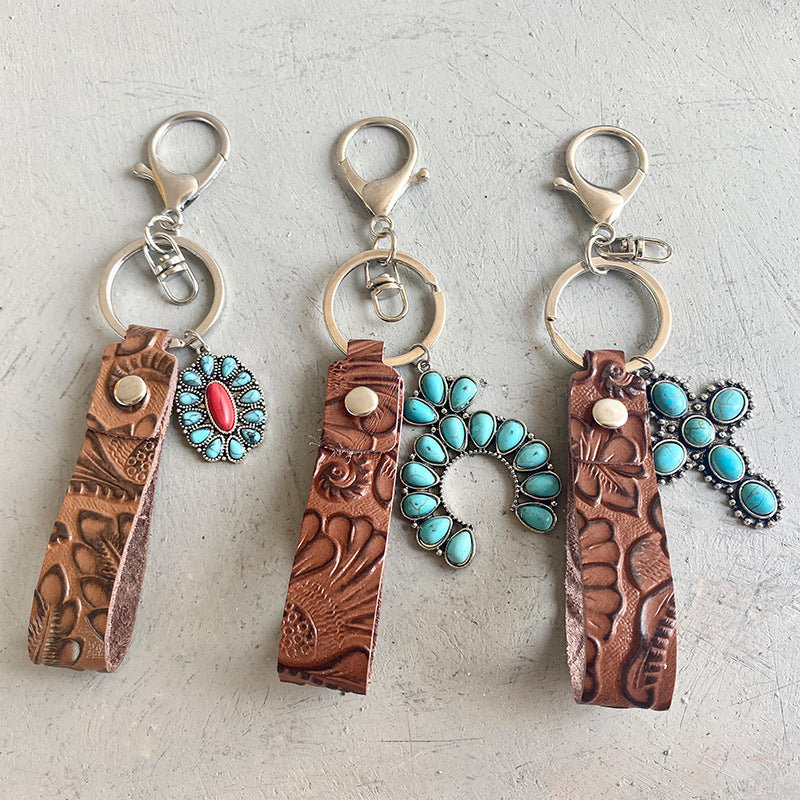
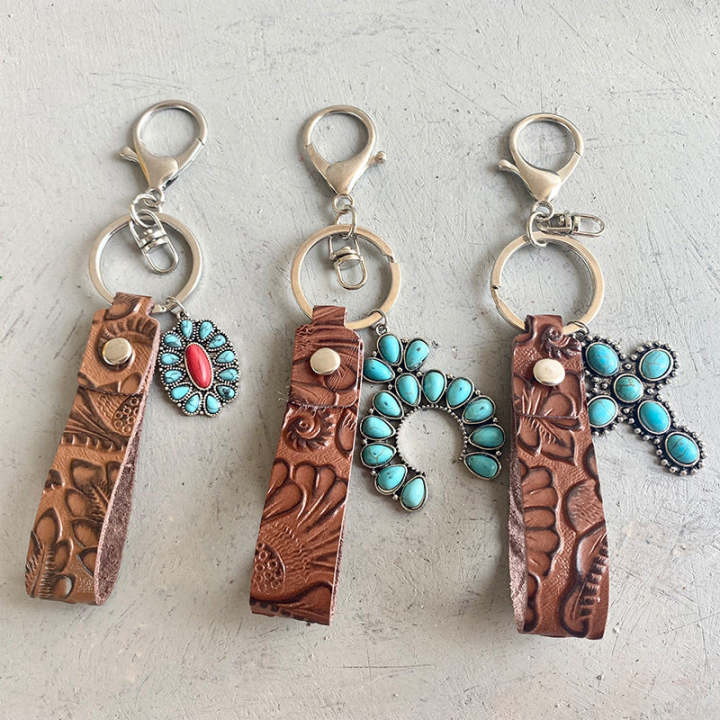
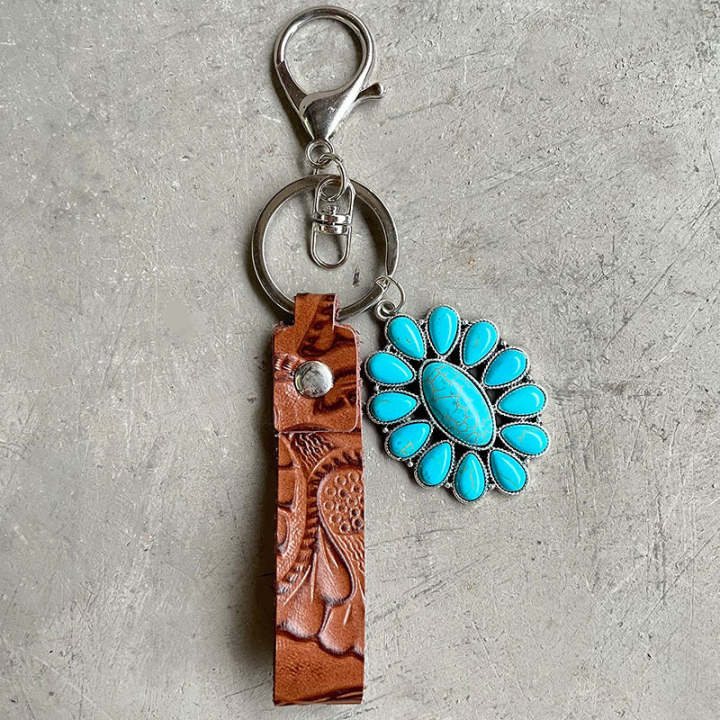
This guide treats “delicate turquoise jewelry” as a styling outcome rather than an unverified material or size claim. It uses two current Oroxen examples: the Western Turquoise Vintage Floral Leather Necklace and the Turquoise Western Cuff Bracelet Set. Their names communicate a Western, turquoise-style direction. They do not independently prove natural turquoise, leather composition, metal, vintage age, origin, maker, treatment, or cultural affiliation.
Quick Answer: Budget the Outfit in Visual Units
Give the outfit ten visual units. The black dress receives four because it forms the largest field. The leading jewelry zone receives three. Hair, shoes, bag, and any outer layer share the remaining three. If a second jewelry zone needs another three units, something else must become quieter.
Visual units are not measurements. They are a decision tool for contrast, outline, motion, shine, motif, and spacing. A slim blue-green line on a matte black crew-neck dress may use three units because it is the only color. Four bracelets worn separately over a detailed sleeve may use more than three even if each component is narrow.
Start with one necklace or one wrist arrangement, not both. Photograph the result from portrait, half-body, and full-body distance. Add a second zone only when the first still has room and the complete silhouette remains calm.
The public statement-versus-everyday turquoise-style guide helps separate visibility from repeat-wear practicality. This article focuses specifically on proportion and restraint.
Measure the Black Dress as a Field
Put on the exact dress and mark its uninterrupted areas. A simple sheath may provide a large black chest field. A lace bodice, button front, high-contrast stitching, cutout, ruffle, zipper, or embellished collar breaks that field into smaller sections. Jewelry should occupy one section cleanly instead of crossing several boundaries by accident.
| Dress field | Proportion opportunity | First risk to test |
|---|---|---|
| Open scoop or V | Short focal area within the neckline | Pendant touching the neckline border |
| High plain neck | Long vertical necklace over fabric | Hardware, seams, or texture catching |
| Sleeveless column | Clear wrist and shoulder zones | Bracelet scale overpowering the arm line |
| Long sleeves | One cuff outside or beside a clean edge | Fabric trapped under an open cuff |
| Button-front dress | Face-level or wrist jewelry | Pendant colliding with the placket |
| Decorated bodice | Move emphasis to the wrist | Too many motifs at chest level |
Measure the real spaces in centimeters or inches after the garment is on the body. Flat clothing measurements do not show how fabric shifts during sitting, walking, or layering.
Use Three Ratios Instead of Body-Type Rules
Generic advice often assigns jewelry to body shapes. A more useful approach compares objects that actually interact.
Jewelry-to-Neckline Ratio
Compare the verified necklace width and total drop with the open or fabric-covered neckline field. Leave visible black space around the focal shape. A pendant that nearly fills the entire field may be statement-oriented rather than delicate in this outfit.
Jewelry-to-Sleeve Ratio
Compare bracelet width and stack depth with the exposed wrist or sleeve end. A narrow bare wrist can support one clear accent; a wide stack may need a sleeveless or very simple sleeve to avoid compression.
Jewelry-to-Hardware Ratio
Count buttons, buckles, zippers, snaps, and bag fittings. If hardware already forms several bright points, either reduce jewelry zones or select a visually quieter dress and bag. Apparent color coordination does not prove metal compatibility.
Browse Turquoise Jewelry by Line and Spacing
Use the Turquoise Jewelry collection as a visual index. Sort current items by line: vertical, horizontal, circular, clustered, open, or repeating. Then sort by spacing: one focal component, several separated components, continuous surface, or adjustable arrangement.
Line controls direction; spacing controls visual air. A long necklace can look delicate when its elements are separated and the dress field is broad. A compact ring can look visually dense when its top contains many close motifs. Do not assign the delicate label before testing the complete outfit.
Create one candidate card per product with exact option, disclosed measurements, weight, closure, components, finish, construction, care, and current availability. Mark missing fields as unresolved rather than estimating from photographs.
Necklace Example: Floral Western Direction
The current necklace page shows Design 1 through Design 5 under a selector labeled “Size.” These are design labels, not disclosed physical measurements. The visible page does not clearly map every photograph to a design or state total length, adjustment range, focal dimensions, profile, weight, closure, cord or chain composition, pendant components, finish, construction, or care.
The product title contains “Leather,” but a title alone is not enough to establish the composition or grade of every strap or component. Ask the seller which part is leather, whether it applies to every design, and what care follows from that disclosure.
Formula One: One Vertical Line
Use a high-neck, matte black dress with no chest hardware. Place a life-size outline made from confirmed dimensions at the intended drop. Keep earrings close to the face and visually quiet, use one simple shoe, and route the bag strap away from the pendant.
The formula succeeds when the necklace creates one readable vertical route without touching a seam, belt, zipper, or bag. If the focal area occupies most of the torso or introduces several competing motifs, call the look statement rather than forcing a delicate description.
Formula Two: Framed Open Neckline
With a scoop or V-neck, keep the complete focal element inside the open field or entirely on the black fabric. Do not let it sit halfway across the boundary. Pull hair and jacket edges away from the same zone and leave the wrists undecorated during the first test.
Bracelet Example: Four Cuffs, Several Possible Densities
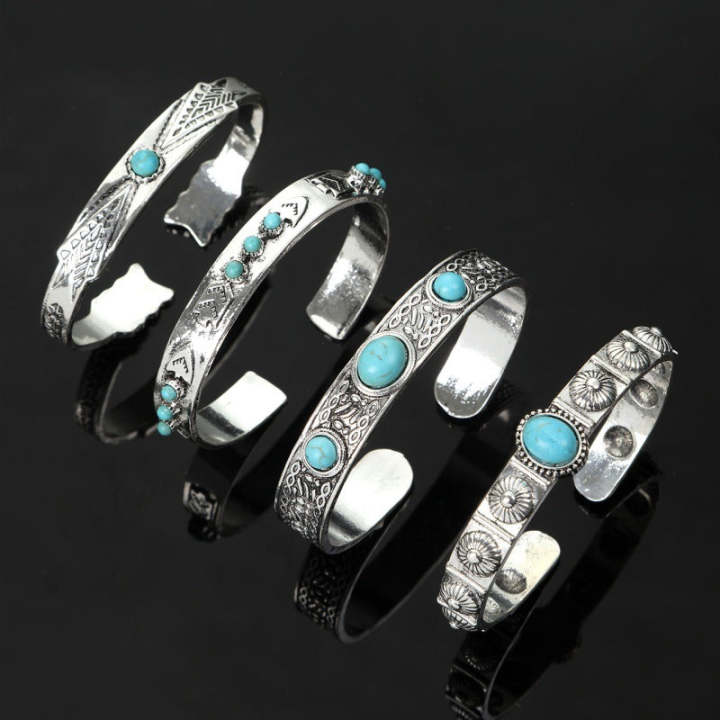
The current bracelet page identifies a 4Set and describes four open cuff bracelets with turquoise-colored accents and varied vintage-inspired motifs. It says they may be worn together or individually. The visible page does not clearly disclose each cuff's internal dimensions, opening width, adjustment method, thickness, profile, weight, components, finish, construction, or care.
A four-piece set is useful for proportion experiments because the visual density can change without adding a new product. That does not mean every combination is physically compatible or intended for every wrist. Confirm fit and adjustment instructions before bending or stacking the cuffs.
Formula One: Single-Cuff Wrist Punctuation
Choose one documented cuff beside a sleeveless or clean short sleeve. Keep the necklace area empty and let the wrist become the only turquoise-colored point. Photograph with arms relaxed and during normal gestures; hand movement can make a small accent more prominent than it appears in a still pose.
Formula Two: Two-Cuff Separated Pair
Use two cuffs only when their verified fit, profiles, and care allow nearby wear. Leave a small visual gap rather than compressing them into one dense block. Test typing, bag use, table contact, coat sleeves, and handwashing routines.
Formula Three: Full Set as Statement
Four cuffs may become the leading statement rather than a delicate accent. That can still work with a black dress, but rebudget the outfit: remove the necklace, reduce rings, choose quiet shoes, and keep the bag hardware remote from the wrist.
Can the Necklace and Bracelet Be Worn Together?
Yes, when one zone leads and the other supports. Start with a three-to-one ratio: three visual units for the necklace and one for a single cuff, or three for a wrist stack and one for a quiet neck detail. Avoid equal-size clusters at chest and wrist level.
Use motion to decide. During conversation, hands frequently rise toward the torso and face. A wrist stack that seems separate while standing may merge with the necklace in photographs and gestures. Record a short private movement test rather than relying only on a mirror pose.
Check physical care separately. Components with unknown materials or finishes should not be assumed compatible merely because their colors appear coordinated. Store and clean them according to item-specific instructions.
Apply a Negative-Space Audit
Take a front photograph and cover the jewelry with your finger or an editing block. Notice the uninterrupted black areas around it. Restore the jewelry and ask whether those areas still exist. A delicate arrangement needs breathing room above, below, or beside the focal line.
Repeat at half-body and full-body distance. Shoes, bare skin, outerwear, and background change the available space. If every zone contains a bright edge, motif, or color accent, remove one item before shrinking the jewelry. Restraint is usually achieved by subtraction before replacement.
The public black-dress styling mistakes guide offers additional checks for neckline collisions, competing accessories, and unsupported material assumptions.
Use the Styling Video as Proportion Inspiration
The supplemental video is Wear It With Style: Turquoise Jewelry by JTV. Its short auto-generated transcript was available during review. The source presents general styling ideas involving casual denim-like clothing, collared shirts, earth-colored outfits, layering, and larger statement arrangements.
Use those ideas to ask how scale, clothing color, and layering change visibility. The video is retailer-produced and does not document either Oroxen product. It cannot authenticate stone, leather, metal, maker, origin, treatment, age, dimensions, fit, or care. Watch the complete source before applying a suggestion.
Common Proportion Mistakes
Calling Every Small Object Delicate
A compact piece may still have dense color, strong shine, or a bold motif. Judge its visual role in the full outfit.
Filling Every Empty Zone
Open neckline, bare wrist, and unadorned waist are not problems. Empty space helps the selected line remain readable.
Estimating Scale From the Image
Product photos may be cropped or enlarged. Obtain exact option-specific dimensions and make life-size outlines.
Stacking Without a Contact Test
Nearby cuffs can strike or rub. Confirm their construction, fit, and care before combining them.
Using the Dress as a Generic Black Background
Texture, sheen, seams, neckline, sleeve, and hardware divide the field. Map the actual garment.
Frequently Asked Questions About Delicate Turquoise Jewelry
Can a long Western necklace look delicate?
Yes, when the verified line is narrow or separated, the black field is broad, competing accessories are reduced, and the complete outfit preserves negative space.
Should I wear all four cuffs?
Only when verified fit and care support the combination and you want a statement wrist. One or two cuffs usually produce a quieter effect.
Does a petite wearer need small jewelry?
No universal body rule is necessary. Compare the exact jewelry with the dress fields, neckline, sleeve, hardware, movement, and wearer preference.
Can I add turquoise-style rings?
Possibly, but keep the hand from becoming a second large cluster. The public black-dress ring guide provides options for separating hand and neckline emphasis.
How can I verify the necklace's “Leather” description?
Ask which exact component and design the term covers, what the composition is, and which care instructions follow. Do not generalize from the title.
How should these pieces be cleaned?
Follow seller instructions tied to the disclosed components and selected option. Avoid generic stone, leather, or metal methods when composition remains unresolved.
Final Proportion Checklist
- Map the black dress neckline, sleeves, seams, surface, and hardware.
- Assign ten visual units and one leading jewelry zone.
- Request option mapping, dimensions, weight, fit, closure, components, finish, and care.
- Make life-size outlines rather than estimating from photographs.
- Audit negative space at portrait, half-body, and full-body distance.
- Test movement, layering, bags, sleeves, and normal hand use.
- Describe “delicate” as the verified outfit effect, not an unsupported product fact.
Explore additional current lines in Western Jewelry and return to Oroxen for current product and store information. Proportion becomes dependable when the jewelry, garment fields, movement, and negative space are measured as one composition.